


LEARN
Pliability Team

You've been logging the miles, following your training plan, and showing up for every run. Yet when you check your pace, the numbers refuse to budge. If you've asked yourself, " Why am I not getting faster at running?”, you're not alone in this frustration. Runners at every level hit plateaus where improvement stalls, and the answer often lies beyond simply running more. This article will help you identify the hidden factors slowing your progress and give you actionable strategies to break through your speed barrier, becoming stronger and more efficient with each stride.
Your body's ability to move freely determines how much power you can generate when your foot strikes the ground. That's where Pliability's mobility app becomes a game-changer for runners seeking breakthrough performance. By targeting the specific muscle restrictions and movement limitations that hold you back, the app guides you through personalized routines that unlock your running potential, helping you move with less resistance and greater speed.
Summary
Running the same comfortable pace day after day teaches your body to handle that exact stress level and nothing more. Research shows that 80% of weekly mileage should stay easy and conversational, but the remaining 20% requires structured speed work, tempo runs, or intervals to trigger actual adaptation.
Speed gains occur during recovery periods, not during the run itself. Training creates microscopic muscle damage and depletes energy stores, but the adaptation that makes you faster happens when your body repairs and rebuilds stronger than before. Studies indicate that 7 to 9 hours of sleep per night is essential for runners seeking performance improvements.
Starting races too fast creates metabolic debt that guarantees late-race collapse. Data shows that 80% of runners begin races at unsustainable paces, accumulating protons and phosphate ions beyond levels that directly interfere with muscle contraction. The crash isn't gradual; research on cyclists with blocked pain signals found subjects felt great through the first half before experiencing complete muscular failure, proving that ignoring early warnings doesn't eliminate biochemical limits.
Movement restrictions compound mental fatigue in ways most runners never connect to performance. When hip flexors stay tight or ankles lose range of motion, stride length decreases and ground contact time increases, generating more fatigue signals that amplify perceived effort.
The 80-20 training method prescribes running 80% of weekly volume at a conversational pace, where you could speak full sentences, reserving only 20% for hard efforts. This distribution develops the aerobic base that supports all other training by increasing mitochondrial density, expanding capillary networks, and training fat metabolism.
Pliability's mobility app addresses the specific movement restrictions that limit stride efficiency by personalized routines targeting individual deficits, such as hip flexor tightness or ankle stiffness, helping runners maintain the range of motion that keeps effort perception manageable even as training stress increases.
Why You're Not Getting Faster at Running (Even If You're Training Consistently)

You're logging the miles. You're showing up consistently. Yet your pace remains stubbornly unchanged, week after week. The problem isn't your effort or commitment. The problem is that running more miles without structure, progression, or a recovery strategy doesn't automatically make you faster. It just makes you tired.
The Volume Trap
Most runners operate under a simple belief: more running equals faster times. It's logical, intuitive, and almost completely wrong. When you run the same routes at the same comfortable pace day after day, your body adapts to that specific stress level and stops improving. You've essentially taught your cardiovascular system and muscles exactly what they need to handle, nothing more.
80% of your weekly mileage should be run at an easy, conversational pace, but that remaining 20% needs intentional speed work, tempo runs, or intervals to create the stimulus your body needs to actually get faster. Without that structured variation, you're just maintaining fitness, not building it.
Effort-Outcome Disparity and Training Frustration
The emotional weight of this realization hits hard. I've watched runners pour months into training, tracking every mile with pride, only to cry when race results show no improvement. They've done everything they thought was right. The frustration comes from realizing that dedication alone doesn't guarantee progress, that time invested doesn't automatically translate to speed gains. It's the gap between effort and outcome that burns.
The Recovery Deficit
Speed improvements happen during recovery, not during the run itself. When you push your body during training, you create microscopic damage to muscle fibers and deplete energy stores. The adaptation that makes you faster occurs when your body repairs that damage and rebuilds stronger than before.
Skip adequate recovery, and you're just accumulating fatigue without the corresponding fitness gains. Runner's World reports that 7 to 9 hours of sleep per night is essential for runners seeking performance improvements, yet most athletes treat sleep as negotiable rather than foundational.
Active Recovery and Biomechanical Efficiency
Recovery isn't passive rest. It's active preparation. Your muscles need mobility work to maintain range of motion, blood flow to clear metabolic waste, and targeted stretching to prevent the compensatory movement patterns that slow you down. When hip flexors stay tight, or ankles lose dorsiflexion, your stride shortens and your ground contact time increases.
These restrictions don't announce themselves with pain; they quietly steal your speed, forcing your body to work harder to maintain the same pace.
The Missing Structure
Training without progression is just exercise. Real speed development requires systematic overload, where you gradually increase the stress on your body in specific, measurable ways. That might mean adding 30 seconds to your tempo run duration each week, dropping your interval pace by five seconds per quarter mile, or extending your long run by half a mile every two weeks.
The specific method matters less than the principle: your body needs a reason to adapt, and that reason comes from controlled, progressive challenge.
Structured Consistency versus Random Effort
Most runners never establish this structure because they confuse consistency with strategy. They run when they feel good, rest when they're tired, and wonder why their body never seems to know what's coming next. Your cardiovascular system, muscular endurance, and running economy all improve through predictable patterns of stress and recovery. Random effort produces random results.
But here's what most training plans completely overlook, and it's the reason talented runners plateau while others break through.
Related Reading
Common Mistakes That Keep Runners Stuck at the Same Pace

The mistakes that stall progress aren't dramatic. There are subtle shifts in how you warm up, pace your efforts, and train your body's response systems. Each creates a specific physiological crisis that compounds over miles and months, quietly eroding the adaptations you're working to build.
Skipping the Priming Warm-Up
Most runners treat warm-ups as optional movement before the real work begins. They jog slowly for five minutes, maybe add a few leg swings, then launch into intervals or race pace. What they miss is the oxygen deficit this creates. When you start running hard without priming your system, your muscles immediately spike their oxygen demand, but your heart, lungs, and blood vessels need two to three minutes to catch up.
During that gap, your muscles tap anaerobic fuel stores to cover the shortfall, producing metabolic waste that triggers fatigue signals and depletes the energy reserves you'll need for your finishing sprint.
Metabolic Priming and Pre-Race Protocols
According to Human Powered Health, 80% of runners train at the same pace for every run, meaning they never practice the specific warm-up protocol that helps prevent this oxygen debt.
The solution is precise: 10 to 20 minutes before your race or hard workout, include a 45- to 60-second burst at 5K race pace. This activates oxygen-processing enzymes and dilates blood vessels before the effort counts, eliminating the metabolic debt that never replenishes once you're racing.
Neglecting Long Runs That Train Fast-Twitch Fibers
Half marathons feel deceptively manageable in the early miles. You're not accumulating dangerous lactate levels; you're not depleting fuel stores like in a marathon. Yet somewhere around mile eight or nine, holding pace becomes progressively harder despite no obvious reason. This creeping difficulty stems from inefficient recruitment of muscle fibers.
Your body starts every run by deploying slow-twitch fibers, the endurance specialists that sip oxygen efficiently and resist fatigue. As individual fibers tire and run low on fuel, your brain recruits fast-twitch fibers to replace them. The problem? Without specific training, fast-twitch fibers are oxygen-hungry and inefficient at sustained efforts, demanding up to 25% more oxygen to deliver the same power output.
Physiological Drift and Fiber Adaptation
The drift happens silently. Over 10 to 20 minutes at half-marathon pace, your oxygen consumption climbs even though your speed stays constant, making each mile feel harder than the last. Long runs solve this by forcing adaptation through duration rather than intensity.
A two-and-a-half-hour run, even at a comfortable pace, eventually depletes your slow-twitch fibers and forces your fast-twitch fibers to practice sustained power delivery. In response, they build mitochondrial content and add capillaries to supply more blood, transforming from sprinters into endurance contributors.
Avoiding Intervals After Time Off
The first interval session after an off-season or recovery break feels catastrophic. Your legs burn, your breathing rasps, and the pace that felt controlled months ago now seems impossible. Many runners interpret this as a loss of fitness and ease back into training gradually, avoiding the intensity that triggers such discomfort.
What they're actually experiencing is hypersensitive metabolite receptors in their muscles. During hard efforts, your muscles produce a specific combination of lactate, protons, and ATP. When special receptors detect all three together, they send distress signals up your spinal cord that your brain interprets as burning and heaviness.
Receptor Desensitization and Intensity Adaptation
Without regular exposure, these receptors remain overly reactive, amplifying fatigue signals beyond what the actual metabolic stress warrants. The adaptation happens fast. After just one or two interval sessions, the receptors desensitize, and the same effort feels noticeably more manageable. Avoiding intervals to escape discomfort only extends the period where normal training stress feels unbearable.
Starting Races Too Fast
Feeling good at the start of a race is dangerous. Sport Speed Lab reports that 80% of runners start races too fast, seduced by legs that feel fresh and a pace that seems sustainable. Without early warning signals of fatigue, metabolites such as protons and phosphate ions accumulate beyond levels that directly interfere with muscle fiber contraction.
The crash isn't gradual. Researchers who blocked pain signals in cyclists found subjects flew through the first half feeling great, then experienced complete muscular failure, unable to unclip their feet from pedals or walk off the bike.
Metabolic Thresholds and Pacing
The fast start provided zero performance advantage because peripheral fatigue limits are real, and ignoring your body's early warnings doesn't eliminate them; it just delays the reckoning until catastrophic breakdown occurs.
Prudent pacing isn't conservative racing. It's respecting the biochemical reality that your muscles can only process metabolites at a certain rate, and exceeding that rate early guarantees you'll pay compound interest later when your legs simply stop responding to commands.
Training Only Your Body
Pain isn't what stops you in the final miles of a hard race. Dulling pain through transcranial stimulation doesn't improve endurance performance. What matters is effort, that mounting sense of struggle to continue against your body's desire to stop.
Effort combines every fatigue signal your body generates:
Oxygen deficits
Metabolite accumulation
Rising core temperature
Depleting fuel stores
Accumulating muscle damage
Most runners spend all their training time making their cardiovascular system and muscles more efficient, but never address how their brain interprets these combined signals.
Mobility Restrictions and Perceived Effort
Mobility limitations compound this mental load in ways most runners never connect. When hip flexors stay tight or ankles lose dorsiflexion range, your stride shortens, and ground contact time increases. Your body works harder for the same pace, generating more fatigue signals that feed into your perception of effort.
These restrictions don't announce themselves with sharp pain; they just quietly amplify every other stress signal your brain receives, making a sustainable pace feel harder than it should. Solutions like mobility apps provide targeted routines that address these specific movement restrictions, helping runners maintain the range of motion that keeps effort perception manageable even as training stress increases.
Related Reading
What Actually Makes Runners Faster (and How to Apply it)

Getting faster requires developing ten interconnected skills, each addressing a specific physiological or biomechanical limitation.
Speed workouts trigger cardiovascular adaptations
Strength training builds power output
Mobility work maintains stride efficiency
Recovery protocols allow those adaptations to solidify
Most runners dabble in two or three of these areas for a few weeks, then abandon them when progress feels slow or the routine gets boring. The breakthrough happens when you identify which underdeveloped skill currently limits your performance, then address it systematically until it no longer becomes the bottleneck.
Skills to Develop to Improve Running Performance
Pacing
Means feeling, controlling, and adjusting speed without constantly checking your watch. Your body generates internal cues about effort level through breathing rate, muscle tension, and perceived exertion. Training this skill requires running specific intervals by feel, then checking your actual pace afterward to calibrate your internal sense of speed.
Over time, you develop the ability to hold target paces in races without the cognitive load of constant monitoring, freeing mental energy for tactical decisions and managing discomfort.
Running form
Addresses body position during movement. Your torso angle, arm swing pattern, and head position all influence how efficiently you transfer force into forward motion. A forward lean from the ankles rather than the hips allows gravity to assist propulsion.
Relaxed shoulders and a compact arm swing that drives elbows backward rather than crossing the body's midline reduce energy waste. Small adjustments here compound over thousands of strides, making the same pace feel noticeably easier.
Technique
Focuses on the specific mechanics of foot strike, cadence, and stride length. According to Runner's World, elite runner Alicia Monson improved her 10,000-meter time to 33:01 through systematic technique refinement that increased her stride efficiency without raising her effort level.
Cadence around 170 to 180 steps per minute typically optimizes the balance between stride length and turnover rate, though individual biomechanics vary. Ground contact time matters more than where your foot lands; quicker transitions from landing to push-off mean less braking force and more propulsive power.
Heart-rate training
Teaches your cardiovascular system to deliver more oxygen with less effort. Most runners train too hard on easy days and too easy on hard days, creating chronic fatigue without adequate stimulus for adaptation.
Training zones based on heart rate or lactate threshold ensure your easy runs stay truly easy, allowing recovery while building aerobic base, while your hard sessions push intensity high enough to trigger speed adaptations. Over months, you'll run faster at the same heart rate, the clearest measure of improved fitness.
Breathing Efficiency
Connects oxygen intake to muscular demand. Shallow chest breathing limits oxygen exchange and creates unnecessary tension in neck and shoulder muscles. Diaphragmatic breathing, which expands your belly rather than lifting your chest, delivers more oxygen per breath while keeping your upper body relaxed. Rhythmic breathing patterns, such as inhaling for three steps and exhaling for two, help maintain consistent effort and prevent breath-holding during hard surges.
Nutrition
Fuels performance and accelerates recovery. Carbohydrate availability determines how long you can sustain high-intensity efforts before glycogen depletion forces you to slow. Protein intake within two hours post-run provides amino acids for muscle repair.
Chronic under-fueling, common among runners focused on staying lean, impairs adaptation by limiting the raw materials your body needs to build stronger muscles and denser mitochondrial networks. What you eat between runs matters as much as the training itself.
Mindset
Governs how you interpret and respond to discomfort. Self-talk during difficult intervals either reinforces your capability or amplifies suffering. Runners who practice reframing pain signals as evidence of productive stress rather than damage maintain higher intensities longer than those who catastrophize discomfort.
Resilience comes from repeatedly proving to yourself that temporary suffering leads to lasting improvement, building confidence through accumulated evidence rather than positive thinking alone.
Strength training
Builds the muscular power that propels you forward and protects against injury. Single-leg exercises like Bulgarian split squats address the unilateral demands of running while exposing strength imbalances between limbs.
Plyometric work, like box jumps, trains your muscles to generate force rapidly, improving the explosive push-off that distinguishes fast runners from slow ones. Progressive overload, gradually increasing weight or repetitions over weeks, ensures continued adaptation rather than maintenance.
Effective Warmups, Cooldowns, and Stretching
Prepare your body for work and facilitate recovery afterward. Dynamic movements before runs increase blood flow, elevate muscle temperature, and activate the neural pathways that coordinate complex movement patterns. Static stretching after runs, when muscles are warm and pliable, helps maintain the range of motion needed to prevent compensatory movement patterns. Most runners manage this through generic routines that ignore their specific restrictions.
Solutions like mobility app provide personalized routines targeting individual limitations, whether that's tight hip flexors shortening your stride or restricted ankle mobility increasing ground contact time, addressing the specific movement deficits that make your current pace feel harder than it should.
Recovery, Sleep, and Stress Management
Determine whether training stress produces adaptation or just accumulates as fatigue. Sleep deprivation blunts protein synthesis, impairs glycogen restoration, and elevates cortisol levels, all of which interfere with tissue repair. Active recovery techniques like foam rolling and light movement increase blood flow to damaged tissues without adding training stress. Managing life stress matters because your body experiences all stress, whether from running or work deadlines, as a unified demand on your recovery capacity.
Most runners cycle through these skills, spending a few weeks on strength training before switching to mobility work, then abandoning both when interval sessions feel hard. The pattern creates familiarity without mastery. Real improvement requires identifying your current limiting factor, whether that's inadequate aerobic base, poor running economy, or insufficient recovery, then addressing it with enough consistency that it stops being the constraint. Only then does the next limitation reveal itself, and the cycle begins again.
How to Build a Running Plan That Improves Speed Consistently

1. Find Your Race Pace
Take your current fastest time for your target race distance and calculate your per-kilometer or per-mile split. If you ran a 5K in 25 minutes, that's five minutes per kilometer. This number becomes your baseline, the speed you need to exceed if you want to call yourself faster. Without this reference point, you're guessing whether workouts are too easy, appropriately challenging, or pushing you toward injury.
Many runners avoid this step because seeing the actual number feels confronting, proof that they're slower than they imagined. But you can't improve what you don't measure, and race pace gives you the metric that makes progress visible.
2. Vary Your Training
Saying "I'm going for a run" without specifying workout type is why plateaus happen. Your body adapts to the specific stress you apply, so running the same comfortable pace repeatedly just teaches your cardiovascular system to handle that one intensity level. Reserve one session weekly for intervals or Fartlek runs where you practice faster paces for short bursts. These workouts create the physiological disruption that forces adaptation.
The remaining runs should include tempo efforts at sustained hard pace, long slow distance for aerobic base, and recovery runs that stay genuinely easy. Planning this variety in advance prevents the default behavior of running every session at moderate effort, the pace that feels productive but generates no training stimulus.
3. Build Speed Through Progressive Intervals
Start with 100-meter to 400-meter bursts at slightly faster than your current race pace, allowing two to three minutes of slow jogging between each repetition. Your goal is to practice the sensation of faster running without accumulating the fatigue that degrades form. Over four to six weeks, increase these intervals to 800 meters, then to 1 kilometer, while gradually reducing recovery time between efforts.
This progression teaches your body to sustain faster paces over increasing distances, the exact adaptation that translates to race performance. Include hill repeats weekly to build the leg strength that powers faster flat running. The structure matters more than the specific distances; you're creating predictable stress that your body learns to anticipate and prepare for.
4. Avoid Overtraining by Monitoring Recovery Signals
Pushing hard on every run feels productive until progress stops entirely. According to RunSmart, 80% of running injuries are caused by overtraining, when accumulated fatigue exceeds your body's recovery capacity. Watch for warning signs like persistent muscle soreness that doesn't resolve between sessions, declining performance despite maintained effort, or training that suddenly requires disproportionate willpower.
When these appear, take three to five days of complete rest or easy cross-training, then rebuild your schedule one hard session at a time. The sweet spot exists where training stress creates adaptation without overwhelming recovery systems, and finding it requires honest assessment of how your body responds rather than adherence to predetermined weekly mileage.
5. Run Slowly to Build Aerobic Capacity
Counterintuitively, slow runs make you faster by developing the aerobic base that supports all other training. The 80-20 method prescribes running 80% of weekly volume at a conversational pace, where you could speak full sentences, reserving only 20% for hard efforts. These easy runs increase mitochondrial density in muscle cells, expand capillary networks that deliver oxygen, and train fat metabolism that spares limited glycogen stores.
Runners chasing speed often skip this foundation, adding interval sessions to every workout and wondering why their hard efforts feel progressively harder. Your body needs the aerobic development that only occurs at low intensities, and the infrastructure to sustain faster paces when it matters.
6. Prepare Your Body Before Speed Sessions
A standard five-minute jog suffices for easy runs, but interval workouts and race efforts demand more extensive preparation. Include dynamic movements such as leg swings, high knees, and butt kicks to activate the neural pathways that control explosive movement. Add glute bridges and single-leg balance exercises that prime stabilizing muscles for the demands of faster running. This extended warm-up elevates muscle temperature, increases synovial fluid in joints, and rehearses the movement patterns you'll use at speed.
Runners who skip this preparation experience the oxygen debt described earlier, starting hard efforts before their cardiovascular system catches up, and creating metabolic waste that limits performance throughout the session. Cool down with five minutes of walking followed by static stretching when muscles are warm and receptive to lengthening.
7. Don't Just Run
Strength training builds the muscular power that propels each stride and protects joints from the repetitive impact of thousands of foot strikes. Focus on compound movements like squats, deadlifts, and lunges that develop force production in legs and glutes. Add single-leg exercises, such as Bulgarian split squats, that address the unilateral demands of running while exposing strength imbalances between limbs.
Just one or two 30-minute sessions weekly produce noticeable improvements in both speed and injury resilience over eight to twelve weeks. Many runners resist this because it feels like time stolen from running, but the return on investment is nearly unmatched among training modifications. Stronger muscles generate more force with each push-off, improving stride power without requiring cardiovascular improvements.
8. Add Speed With Group Interval Workouts
Fast running feels daunting alone, but becomes manageable with others who share the discomfort. Find a local running group or single training partner willing to meet weekly for structured intervals. Try 10 rounds of two minutes at your 5K goal pace with one minute of light jogging between efforts, totaling 20 minutes of hard work. You don't need a track, any flat path or road works fine.
The social accountability keeps you showing up consistently, and watching others push through the same struggle makes your own effort feel less isolating. According to TrainingPeaks data, runners who use premium run 9% faster on average, partly because structured plans create the consistency that solo training often lacks.
9. Unlock Speed with Short Uphill Sprints
Find a hill with a moderate incline, roughly a six to ten percent grade, and sprint uphill for 10 to 15 seconds at 80 to 90% effort. Walk back down slowly, allowing two minutes for full recovery, then repeat six to eight times. The incline activates fast-twitch muscle fibers while reducing impact forces that cause injury, making this one of the safest ways to develop explosive power.
Short duration means you can add these to the end of regular runs without requiring dedicated sessions. Focus on strong form with a driving knee lift and a powerful arm swing rather than on maximum speed. Over four to six weeks, gradually increase effort on those final few steps until you're running at full sprint, but prioritize staying healthy over chasing intensity. The neuromuscular adaptations from hill sprints transfer directly to faster flat running through improved stride power and ground contact efficiency.
10. Revamp Your Running Playlist
Music with faster beats per minute naturally elevates running cadence, pulling your turnover rate higher without conscious effort. Most streaming platforms offer running playlists organized by BPM, typically ranging from 150 for easy runs to 180 for hard efforts. Experiment with different tempos to find the rhythm that matches your target pace, then let the music carry you through intervals when maintaining speed becomes difficult due to mental fatigue.
This works because your stride naturally synchronizes with rhythmic beats, creating external pacing that reduces the cognitive load of speed maintenance. It's a small optimization, but over thousands of steps, that slightly faster cadence compounds into a measurably improved pace.
Personalized Mobility and Movement Efficiency
Most runners approach mobility work like they approach these training elements, sporadically and generically, stretching whatever feels tight without addressing the specific restrictions that limit their stride. Tight hip flexors shorten your stride length, restricted ankles increase ground contact time, and an immobile thoracic spine prevents the rotation that powers arm swing.
These limitations don't announce themselves with pain; they just make your current pace require more effort than it should. Tools like a mobility app provide personalized routines targeting your individual movement restrictions, whether that's hip flexor tightness stealing stride length or ankle stiffness increasing braking forces, addressing the specific deficits that make sustainable speed feel harder than it needs to be.
Related Reading
• Speed Training For Athletes
• Best Core Exercises For Athletes
• Strength Training Workout For Runners
• How To Build Mental Toughness In Athletes
• Conditioning Workouts For Athletes
• Best Plyometric Exercises For Speed
• Food For Athletes During Competition
• Exercises That Improve Muscular Endurance
• Hydration Tips For Athletes
• Balance Exercises For Athletes
If You’re Not Getting Faster, it Might Not be Your Running
Speed plateaus aren't always about running more miles or adding another interval session. Often, the limitation lives in how your body moves between strides, the range of motion you've lost without noticing, and the recovery work you're skipping because it feels less important than logging miles. When hip flexors stay tight, ankles lose dorsiflexion, or your thoracic spine can't rotate properly, every stride requires more energy than it should. These restrictions don't hurt; they just quietly make your current pace feel harder than it needs to be.
Targeted Mobility and Data-Driven Recovery
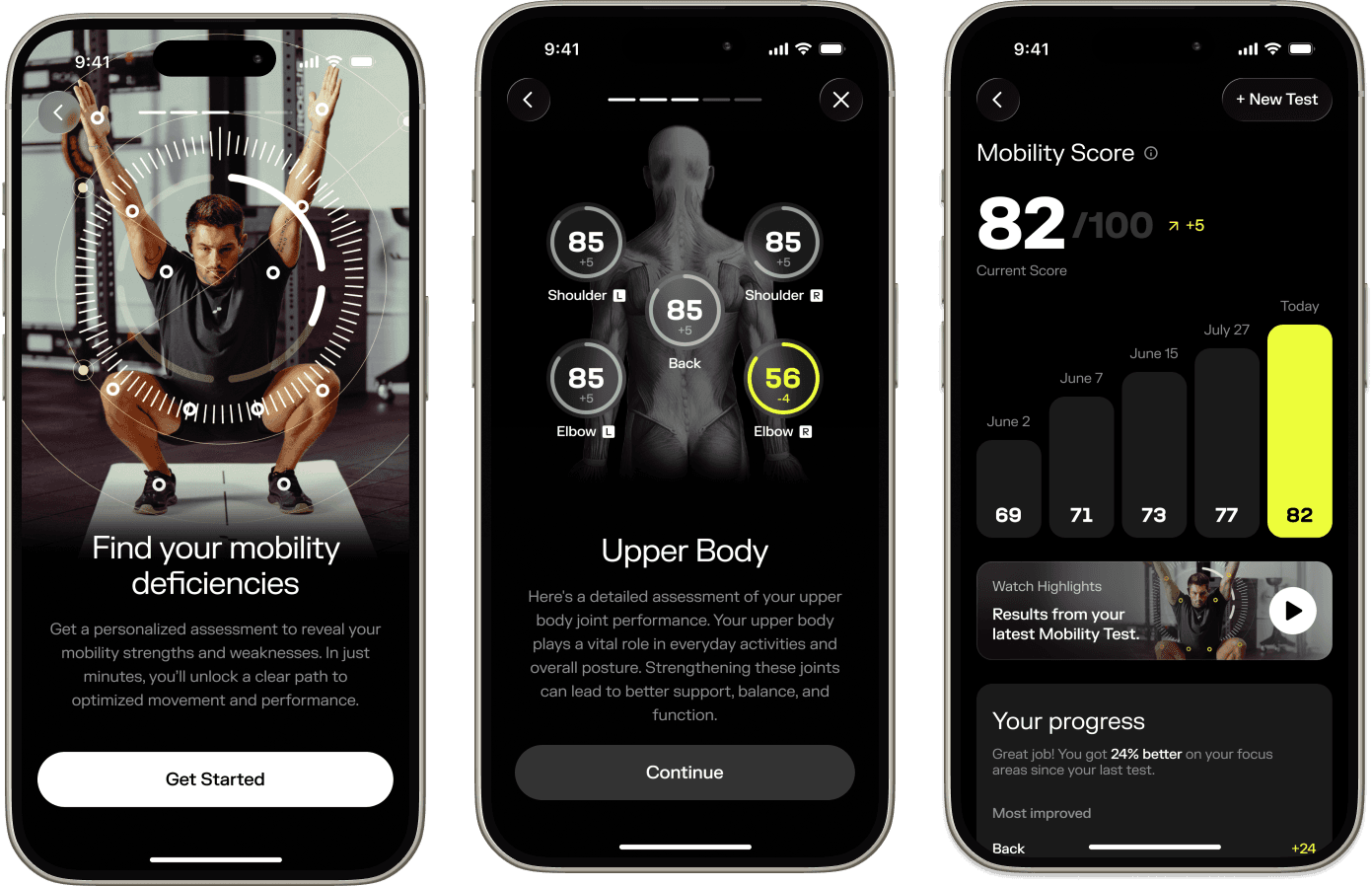
That's where Pliability comes in. It addresses the hidden movement restrictions slowing you down through daily mobility programs, guided recovery routines, and a body-scanning feature that identifies exactly where you're limited. Instead of guessing which stretches might help or following generic routines that ignore your specific deficits, you can target the restrictions actually stealing your speed.
Their data show 30% mobility improvements in just two weeks with three sessions per week, the kind of targeted work that translates directly to easier stride mechanics and lower effort at your goal pace.
Mobility Integration and Performance Foundations
Most runners treat mobility as optional, something to add when they feel tight or after an injury forces them to pay attention. But the runners who break through plateaus treat it like interval training, a consistent practice that builds the physical capacity their speed goals require. Your cardiovascular system might be ready for faster paces, but if your body can't access the positions those paces demand, the fitness gains never translate to race performance.
Get seven days free on any platform and start building the flexibility and recovery foundation that actually makes you faster.





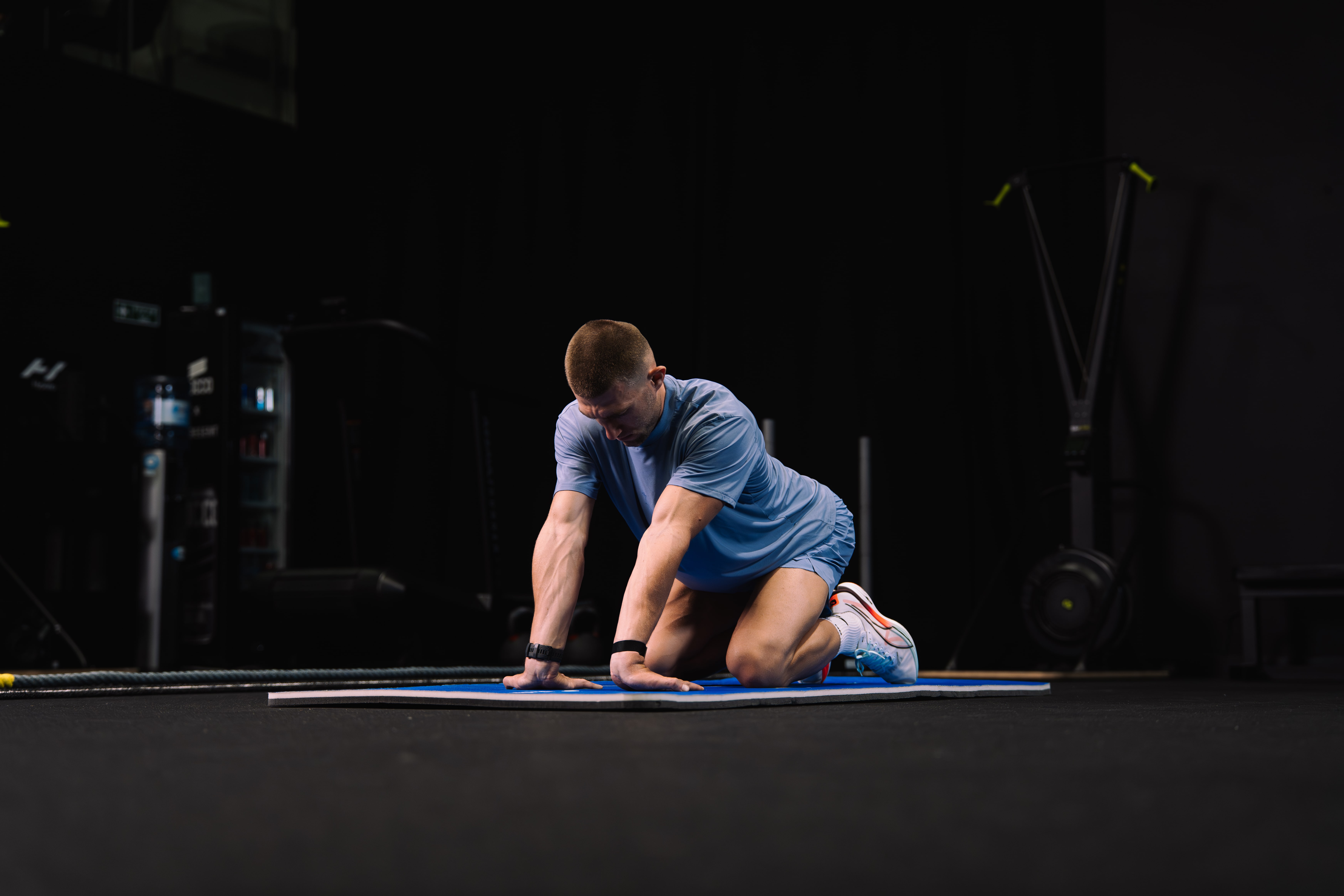








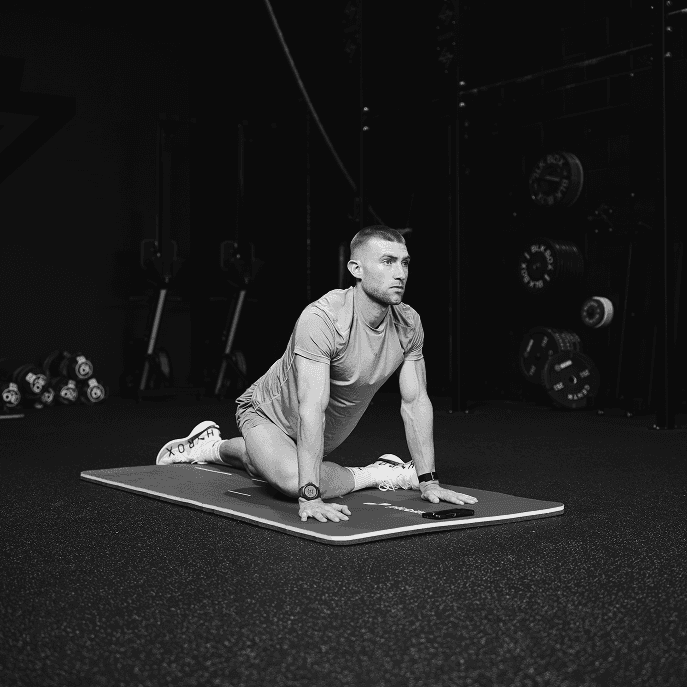
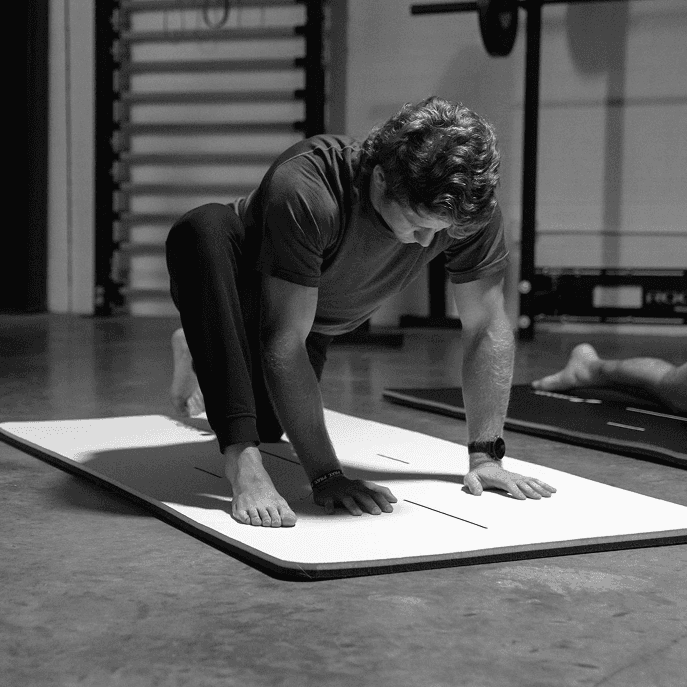




Move better in 10 minutes a day.
10,000+ five-star reviews.