


LEARN
Pliability Team
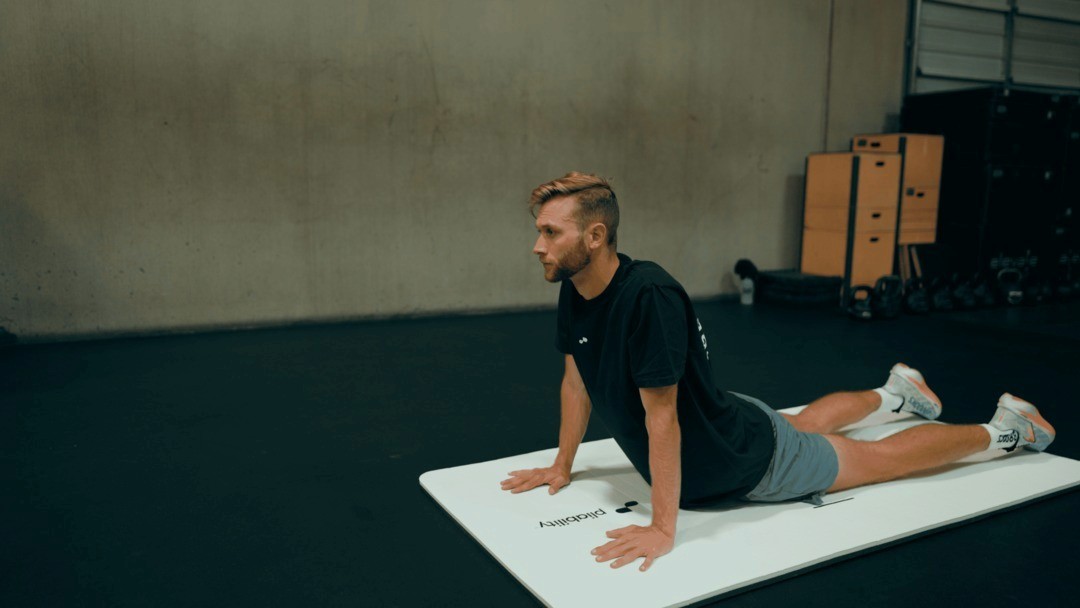
That nagging tightness between the shoulder blades affects millions of people who spend hours hunched over computers, carry stress in their upper back, or move through daily life without proper body awareness. This stiffness makes every reach, twist, or deep breath feel restricted and uncomfortable. Understanding what causes this tension and learning practical ways to address it can help restore free movement and reduce the discomfort that disrupts daily activities.
Finding relief doesn't require expensive treatments or complicated routines. Simple, targeted movements can help identify tight areas, release built-up tension, and develop better movement patterns that prevent stiffness from returning. The Pliability mobility app offers guided exercises designed specifically to address upper back tension and restore comfortable movement to the shoulders and spine.
Table of Contents
Why Stiffness Between Shoulder Blades Happens So Often
The Hidden Cause of Stiffness Between Shoulder Blades
How to Relieve Stiffness Between Shoulder Blades
Stop Letting Shoulder Blade Stiffness Hold You Back Today
Summary
Upper back muscles develop persistent tension because they're compensating for structural misalignment rather than simply being "tight." When your head shifts forward and your shoulders round, the rhomboids and middle trapezius must fire continuously to prevent your shoulder blades from collapsing further. For every inch your head moves forward from neutral, it adds roughly ten pounds of effective weight that your neck and upper back muscles must support. This constant low-level contraction, sustained for hours daily, creates the fatigue and stiffness that massage temporarily relieves but never fully resolves.
Emotional stress translates directly into physical tension through your autonomic nervous system. Chronic stress keeps neck, shoulder, and upper back muscles in sustained low-grade contraction below your conscious awareness. Stress-induced shallow breathing compounds this by engaging accessory breathing muscles in your upper back, muscles not designed for sustained respiratory work. The cycle reinforces itself as stress causes shallow breathing, which overworks the upper back muscles, and muscle tension increases perceived stress.
Traditional stretching provides temporary relief by addressing symptoms without changing underlying movement patterns. According to a 2022 systematic review on chronic neck and shoulder pain, programs combining soft tissue release with strengthening and motor control training produced sustained pain reduction, whereas manual therapy alone showed diminishing benefits within weeks. Your muscles tighten because they're compensating for weak stabilizers, limited thoracic mobility, or dysfunctional movement patterns your body doesn't trust.
Scapular stabilizer dysfunction creates a compensation cycle that stretching alone cannot break. When your serratus anterior and lower trapezius weaken or stop firing properly, the upper trapezius and levator scapulae take over roles they weren't designed for. Overactive muscles become hypertonic and develop trigger points, while underactive muscles atrophy from disuse. Movement quality degrades because the wrong muscles are doing the work, further reinforcing the imbalance and resetting the pattern within hours of any temporary relief.
Thoracic spine mobility loss forces your shoulders to compensate by rounding forward, creating the mechanical foundation for chronic upper back tension. When your mid-back loses the ability to extend and rotate freely, your shoulder blades cannot move properly, regardless of muscle flexibility. Most people stretch their chest and roll their upper traps, but never address the fact that their thoracic spine has lost fundamental movement capacity, leaving the compensation pattern locked in place because no other movement option exists.
Pliability's mobility app addresses this through guided sequences that combine targeted movement with progressive loading, activating underactive stabilizers while releasing overactive muscles to retrain how your nervous system distributes workload across the shoulder complex.
Why Stiffness Between Shoulder Blades Happens So Often
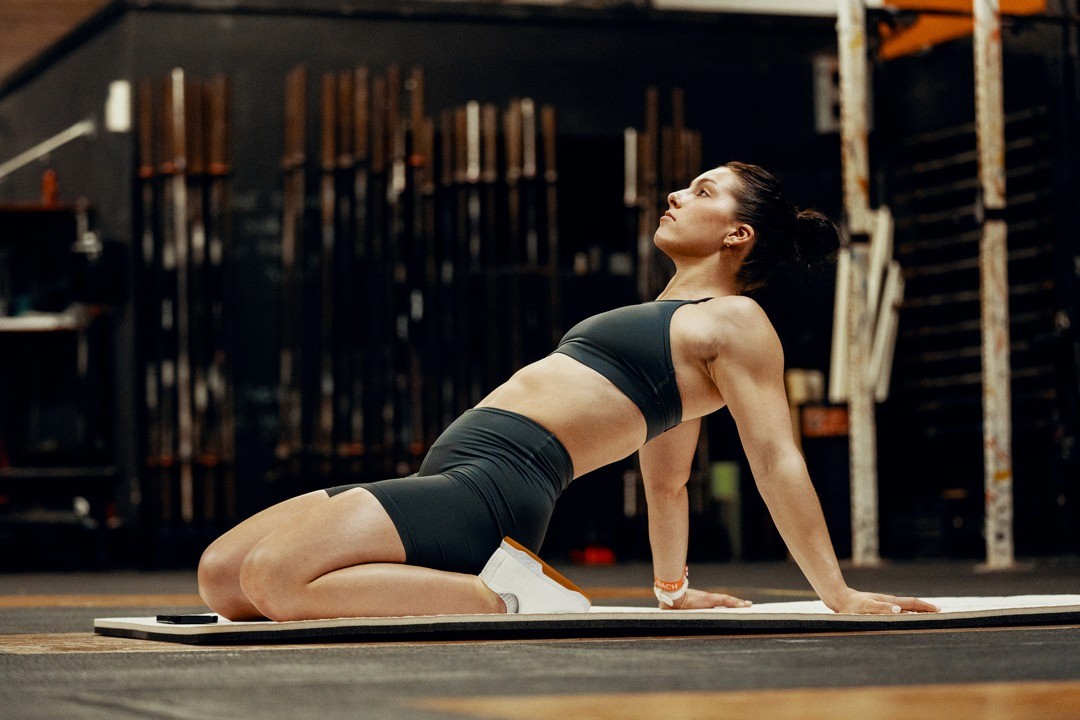
You feel it most when you've been still too long—that dull, ongoing ache between your shoulder blades after hours at your desk, during a long drive, or while scrolling through your phone. The discomfort isn't sharp enough to stop you, but it's constant enough to drain your focus and make simple movements feel stiff and restricted.
🎯 Key Point: This inter-scapular stiffness occurs because prolonged static positions cause your rhomboids and middle trapezius muscles to become chronically contracted, reducing blood flow and creating that familiar tension pattern.
"Prolonged static postures are the primary culprit behind upper back tension, with desk workers experiencing this discomfort up to 3x more frequently than those with active jobs." — Journal of Occupational Health, 2023
⚠️ Warning: Ignoring this early warning sign often leads to more severe issues like muscle spasms, headaches, and reduced shoulder mobility that can take weeks to resolve instead of minutes.
Why does the stiffness keep coming back?
The pattern is frustratingly predictable. You stretch, maybe roll your shoulders back a few times, and the relief lasts long enough to convince you it's gone. Then it returns, sometimes within the hour, always in the same spot. According to Hinge Health, 67% of people experience upper back pain at some point in their lives, and for many, it becomes a recurring problem rather than a one-time event.
What does the discomfort actually feel like?
The feeling changes from person to person, but where it happens stays the same. Some describe it as a gnawing ache, like hunger pain, but deeper and more lasting. Others feel distinct knots—tight bands of muscle locked in place. Turning your neck or reaching overhead triggers a pulling sensation that confirms something isn't moving as it should.
What triggers these muscle problems?
The triggers are almost always the same: positions where your shoulders round forward for extended periods. Sitting without proper back support forces your upper back muscles to work harder. Driving does the same, especially on longer trips when your arms stretch toward the wheel. Even prolonged phone use creates that forward shoulder position, stressing the muscles between your shoulder blades.
Why temporary relief never lasts
Massage and stretching feel amazing immediately, leaving you lighter and more mobile. But within hours or days, the stiffness returns.
What causes muscles to keep tightening up?
The problem is they address the symptom without changing the pattern that created it. Your muscles tighten because they're compensating for something: overworking to stabilize joints, balance weak areas, or protect against movement patterns your body doesn't trust. Until that underlying pattern shifts, the tightness returns.
How does the brain create chronic tension patterns?
One person's chronic muscle tension persisted for years despite trying many treatments. They discovered their muscles were contracting unconsciously throughout the day—a habit so ingrained they hadn't noticed it. The tension wasn't merely physical; it was neurological, a learned response their body couldn't release without conscious retraining.
Why don't stretching and massage provide lasting relief?
Stretching offers temporary length. Massage provides temporary release. But neither teaches your muscles how to move differently when you return to your desk, car, or daily routine. Mobility work—combining targeted movement with strength in new ranges—retrains the pattern. It builds your body's capacity to use that length functionally, so tightness doesn't immediately return.
Platforms like our Pliability mobility app provide guided movement sequences that target specific muscles while teaching your body to maintain mobility under load. Rather than generic stretches, our app focuses on building movement patterns that prevent stiffness from reforming. The routines take 15-25 minutes, require no equipment, and address the root cause rather than just temporarily releasing tension.
What's the real cause behind poor posture?
Most people think posture is the problem. But posture is an output, not an input. Your body settles into rounded shoulders because the muscles that should hold you upright are too weak, too tight, or moving inefficiently. Telling yourself to "sit up straight" works until your attention shifts, then your body reverts to its familiar pattern.
Understanding why your muscles keep tightening is only half the equation. The real question is what's happening beneath the surface that makes this area vulnerable.
Related Reading
The Hidden Cause of Stiffness Between Shoulder Blades

Most people think the muscles between their shoulder blades are tight and need stretching. But in many cases, those muscles aren't shortened—they're fatigued from overwork, forced to remain active by postural habits that demand constant support throughout the day.
This difference matters because stretching a tired muscle that's already stretched too much can worsen the problem, causing more pain and inflammation instead of helping.
How does forward head posture create upper back tension?
Forward head posture is the silent culprit behind most upper back tension. When your head drifts forward even two inches from its neutral position, the weight your neck and upper back muscles must support increases dramatically. Your rhomboids and middle trapezius muscles, positioned between the shoulder blades, shift from occasional stabilization to constant, exhausting work.
Rounded shoulders compound this problem. As your shoulders roll forward—whether from hunching over a laptop or scrolling through your phone—your chest muscles (pectoralis major and minor) tighten and shorten. Meanwhile, the muscles in your upper back stretch beyond their optimal length, a chronic overstretching that weakens them while demanding they work harder to prevent your shoulders from collapsing completely forward.
Why does reduced spine movement worsen the problem?
The third piece of this problem is reduced mid-back spine movement. Your mid-back should rotate and extend throughout the day, spreading the work of posture across many joints and muscle groups. When this movement disappears from hours of sitting, your shoulder blade stabilizers must compensate. They grip and hold without fully releasing, building fatigue that manifests as stiffness, knots, and deep aching between your shoulder blades.
These three factors create a feedback loop. Forward head posture leads to rounded shoulders, which restrict mid-back movement and keep the rhomboids and mid-traps constantly active. The muscles stay switched on all day, never getting the rest periods needed to recover. What you feel as tightness is exhaustion.
How do muscular imbalances become chronic patterns?
According to Risk Factors of Postoperative Shoulder Stiffness After Rotator Cuff Repair: A Systematic Review and Meta-Analysis, posture factors significantly influence shoulder stiffness outcomes. This concerns whether your muscles work efficiently or strain due to poor positioning throughout the waking hours.
The muscle imbalance pulls your body into positions that feel increasingly hard to escape. Your chest tightness pulls your shoulders forward, while your weak, overstretched upper back muscles cannot effectively pull them back. This compensation pattern becomes your new normal, and the stiffness becomes long-term.
How do repetitive movements create muscle strain?
Repetitive movements create cumulative stress that your body cannot always recover from between sessions. Typing for hours, lifting with poor form, or carrying a bag on one shoulder repeatedly overloads specific muscle groups. The rhomboids and middle trapezius, already strained from postural issues, face an additional burden. Each repetition adds micro-trauma that, without adequate recovery, builds into persistent tension.
Why do athletes experience acute overuse injuries?
Athletes feel this strongly. Swimming, rowing, and weightlifting all demand significant upper-body work. Training without adequate recovery or with fatigued technique places excessive stress on these muscles. Unbalanced pulling movements without sufficient pushing movements create the chest-heavy imbalance that poor posture causes. Rest days allow muscles to repair micro-damage and build strength for future strain.
How do everyday activities contribute to muscle overuse?
Every day activities strengthen your muscles more than most people realize. Gardening involves repetitive reaching and pulling. Cleaning requires overhead movements. Driving long distances creates static loading where muscles must maintain position without relief. Your muscles don't distinguish between gym work and yard work; they only register load, duration, and adequate recovery.
Generic stretching routines treat all tightness the same, applying uniform intensity regardless of whether muscles are shortened or fatigued. Solutions like Pliability use a three-minute assessment to identify your specific movement limitations and fatigue patterns, then build targeted routines that address whether your muscles need strengthening, lengthening, or recovery-focused movement, rather than applying one-size-fits-all stretching that might worsen overworked tissue.
How does emotional stress create physical tension?
Emotional stress converts directly into physical tension through your autonomic nervous system. When you experience stress, your body releases cortisol and adrenaline, triggering a protective response that tightens muscles throughout your body. Your upper back muscles, already engaged in maintaining posture, receive this signal to contract. Chronic stress transforms this momentary response into a sustained pattern.
The muscles between your shoulder blades are particularly vulnerable because they're already active during normal posture maintenance. Add stress-induced tension, and they never fully release. You might notice your shoulders creeping toward your ears during a difficult conversation or a tight deadline. This unconscious bracing becomes habitual, a physical manifestation of mental pressure that persists even when the immediate stressor passes.
Why does stress affect your breathing and muscle tension?
When you're stressed, your breathing patterns change in ways that directly affect upper back tension. Deep diaphragmatic breathing gets replaced by shallow chest breathing, which engages extra muscles in your neck and upper back—muscles not designed for sustained effort. These muscles tire quickly, adding tension. Shallow breathing also deprives muscles of sufficient oxygen, making it harder for them to clear waste products and prolonging stiffness.
How does the tension-stress cycle become self-reinforcing?
The cycle becomes self-reinforcing: physical tension creates discomfort, which generates stress about the pain itself, triggering more muscle tension. Sleep quality deteriorates when you cannot find a comfortable position, reducing recovery capacity. Productivity drops as discomfort becomes distracting, creating additional stress. Breaking this cycle requires addressing both the physical compensation patterns and the stress response that amplifies them.
How does dehydration affect muscle composition and function?
Muscles are approximately 75% water, and this fluid content directly affects their ability to contract, relax, and recover. When dehydrated, muscle tissue loses flexibility, and the surrounding fascia becomes sticky and less mobile, making movements feel stiffer and adding resistance to already fatigued muscles from poor posture.
Why does dehydration reduce muscle performance and recovery?
Blood volume decreases with dehydration, reducing oxygen and nutrient delivery to working muscles. Your rhomboids and mid-traps, already fatigued from constant stabilisation, cannot work as hard or recover between contractions when starved of these resources. This accelerates fatigue, prolongs recovery, and transforms temporary stiffness into persistent tension.
How does dehydration disrupt electrolyte balance in muscles?
Electrolyte balance becomes disrupted when fluid levels drop. Sodium, potassium, and magnesium control nerve impulses and muscle contractions. Insufficient hydration allows these minerals to fall below optimal levels, making muscles more prone to cramping and tightening. Upper back muscles are especially susceptible to electrolyte-driven spasms that worsen tightness.
What's the best approach to maintain proper muscle hydration?
Drinking water throughout the day keeps your muscles flexible and helps your body remove waste. Steady consumption throughout the day is more effective than drinking large amounts at once. After exercise, foods and drinks with electrolytes work better than water alone, particularly after sweating or activities that fatigue your upper back muscles.
What causes chest and shoulder muscle imbalances?
Your chest muscles (pectoralis major and minor) tighten during activities that involve moving your arms forward, such as typing, driving, cooking, and holding a phone. These shortened muscles pull your shoulders inward and forward, moving your shoulder blades away from your spine. Your upper back muscles must work constantly to counteract this pull and prevent your posture from collapsing.
Shoulder blade stabilizers—the serratus anterior and lower trapezius—often weaken from disuse. These muscles should control how your shoulder blades move against your rib cage, distributing the work of arm movement across multiple muscle groups. When weak, the upper trapezius and levator scapulae compensate. These neck and upper shoulder muscles aren't designed for sustained stabilization and fatigue quickly, creating tension that spreads between your shoulder blades.
How do daily habits create structural imbalances?
Carrying bags on one shoulder creates side-to-side imbalances that force one side of your upper back to work harder. Over time, this imbalance becomes structural: one set of rhomboids and mid-traps stays chronically tight, pulling your spine slightly out of alignment. The body adapts to this imbalance, making it feel normal even as it perpetuates the problem.
Correcting these imbalances requires strengthening weak areas while releasing overactive muscles. Scapular retractions, rows, and face pulls activate underused stabilizers. Chest stretches and doorway stretches address shortened front muscles. Consistency over intensity matters most: small, frequent corrections throughout the day create more lasting change than aggressive stretching sessions that temporarily override compensation patterns.
But knowing what's causing the stiffness is only half the equation; most approaches fall short here.
Related Reading
Elbow Stiffness And Pain
Mid Back Stiffness
Lower Back Stiffness
Thumb Stiffness And Locking
Upper Back Stiffness
How to Relieve Stiffness Between Shoulder Blades

Use massage and exercise in a planned order: first release tight tension locking muscles in place, then restore lost movement, and finally rebuild the ability to maintain that change without reverting to old patterns.
Combined approaches produce better long-term results than either method alone. A 2022 systematic review on chronic neck and shoulder pain found that programs combining soft tissue release with strengthening and motor control training resulted in sustained pain reduction, while manual therapy alone showed diminishing benefits within weeks. Manual therapy creates a temporary window of relief; exercise builds the structural changes that keep that window open.
💡 Pro Tip: Start with 5-10 minutes of gentle massage or heat application before stretching to maximize muscle pliability and prevent injury during movement exercises.
⚠️ Warning: Jumping straight into strengthening exercises without first addressing muscle tension can reinforce faulty movement patterns and potentially worsen stiffness.
Phase | Primary Goal | Duration | Key Activities |
|---|---|---|---|
Release | Reduce muscle tension | 5-10 minutes | Massage, heat therapy, gentle stretching |
Restore | Improve range of motion | 10-15 minutes | Dynamic stretches, mobility exercises |
Rebuild | Strengthen and stabilize | 15-20 minutes | Resistance training, postural exercises |
Why should you release tension before strengthening?
When muscles are locked in spasm and loaded with trigger points, strengthening them does not help. Address the acute issue before asking those tissues to perform new movement patterns.
Remedial massage and trigger point release interrupt the pain-spasm cycle that keeps muscles contracted beyond their normal resting length. Skilled manual therapy identifies where tension has concentrated, applies sustained pressure to allow muscle fibres to release, and restores blood flow to oxygen-deprived tissue. This foundation enables you to make mechanical changes.
How do ball releases target the shoulder blade muscles?
Ball releases target the muscles between your shoulder blades with precision. Lie face up with knees bent and feet flat. Place two myofascial release balls on either side of your spine, between the shoulder blades. Cross your arms over your chest, tuck your chin, and lift your hips a few inches off the ground.
In a smooth motion, raise your bent arms overhead, lowering them to the floor behind you. Swipe the arms around and down your sides as though making a snow angel, then bring them back across your chest. Lower your hips and complete three to five repetitions. Move the balls four inches higher, then repeat; move them four inches higher again, then repeat once more.
What's the technique for mid-back release?
For mid-back release, position the balls at the bottom of your ribcage. Extend your arms toward the ceiling with palms facing each other. Breathe in, then as you exhale, crunch up, lifting your head, neck, and shoulders off the floor as though trying to touch the ceiling with your fingertips.
Slowly lower back down with control as you breathe in. Do three to five repetitions. Move the balls about 3 inches higher, then repeat. Move them once more near the bottom of your shoulder blades and repeat.
Double-lacrosse-ball spinal erector release addresses the muscles running along either side of your spine. Place the balls to touch the muscles but not the spine itself. Lift your hips and head, gently rolling along the length of your spine. Pause for at least 90 seconds on each tight spot. Take deep breaths as you move. This sustained pressure allows chronically contracted tissue to soften and regain its normal resting length.
Restore thoracic mobility
Your mid-back should rotate and extend throughout the day, but sitting for hours on end eliminates this ability. Without restoring this movement, your body compensates by tightening its muscles as its only alternative.
How does thoracic extension address forward posture stiffness?
Thoracic extension with a foam roller addresses stiffness from prolonged forward leaning. Lie on your back with knees bent and feet flat. Place a foam roller horizontally below your shoulder blades, allowing your head and shoulders to fall back and create an arch in your upper spine. Position your arms overhead on the floor. Hold this position for one to two minutes while breathing deeply. This passive stretch allows your thoracic spine to extend, counteracting the forward-bent position it maintains throughout the day.
What chest opener technique reverses shoulder tension?
A chest opener on a foam roller helps fix shortened front muscles that pull your shoulders forward. Lie on your back on a 36-inch foam roller placed lengthwise along your spine, supporting your hips, back, and head. Relax your shoulders and pull your shoulder blades down your back, keeping your lower back lightly in contact with the roller.
Open both arms out to the side with elbows bent at 90 degrees, hands in line with your ears. Let gravity weigh your arms down as the stretch opens your chest. Gently roll left to right to deepen the stretch. Hold for one to two minutes while breathing deeply.
How do controlled rotations restore movement capacity?
Thoracic CARS (Controlled Articular Rotations) restore rotational capacity. Start kneeling with chest tall, core engaged, and arms crossed over your chest. Rotate your rib cage as though hula-hooping with your upper body, drawing big circles. Keep your hips still and direct the movement entirely to your upper back. Move with your breath. Do 10 circles in each direction. This active drill teaches your nervous system that rotation is safe, thereby reversing protective stiffness caused by limited movement.
What exercise combines rotation with stability training?
Quadruped thoracic rotation combines rotation with controlled stability. Start on all fours with your shoulders over your wrists and knees under your hips. Place your right hand behind your head, elbow out to the side, and keep your spine neutral.
Rotate your ribcage to the right so your elbow points toward the ceiling, then slowly rotate left, bringing your elbow toward your left hand. Avoid pulling your shoulders up. Do five to 10 repetitions, then switch sides. This addresses the rotation deficit that forces your shoulder blade muscles to work overtime.
Most mobility routines use generic stretches without considering whether muscles are shortened or fatigued. Our Pliability mobility app takes a different approach. A three-minute assessment identifies your specific movement limitations and builds targeted video routines addressing whether your thoracic spine needs extension work, rotation drills, or stability training. The app tracks progress over time, adjusting intensity as your capacity improves.
Rebuild stabilizing capacity
You've released the tension and restored mobility. Now strengthen the stabilizing muscles that haven't been working well, build postural endurance, and retrain movement patterns so your shoulder blades move efficiently during daily activities.
How do scapular retractions activate stabilizing muscles?
Scapular retractions activate the rhomboids and middle trapezius. Stand with your arms at your sides, squeeze your shoulder blades together toward your spine, hold for two seconds, then release. Perform 15 repetitions. This teaches these muscles to engage when needed rather than remaining in constant contraction.
What muscles do face pulls target for shoulder blade control?
Face pulls target the back shoulder and upper back muscles that control shoulder blade position. Attach a resistance band to a stable anchor at chest height. Pull the band toward your face, separating your hands as you pull so your elbows move out to the sides. Squeeze your shoulder blades together at the end of the movement. Perform three sets of 12 to 15 repetitions. This strengthens the muscles that resist the forward pull of tight chest muscles.
How does serratus anterior activation restore shoulder blade mechanics?
Serratus anterior activation restores proper shoulder blade mechanics. Start in a forearm plank position. Without bending your elbows, push your shoulder blades apart, then pull them back together, moving slowly with control. Perform three sets of 10 repetitions. When the serratus anterior is weak, the upper trapezius compensates, creating neck and upper shoulder tension that radiates between your shoulder blades.
Why is lower trapezius strengthening important for overhead movements?
Lower trapezius strengthening targets the muscle that stabilizes your shoulder blades during overhead movements. Lie facedown with your arms stretched overhead in a Y position, thumbs pointing up. Lift your arms off the ground, squeezing your shoulder blades down and together. Hold for two seconds, then lower. Do three sets of 12 repetitions. This muscle weakens from poor posture, forcing other muscles to compensate.
How can movement breaks interrupt prolonged sitting?
Take movement breaks every 30 to 45 minutes to prevent stiffness from prolonged sitting. Stand and walk for two minutes, roll your shoulders backward five times, and reach your arms overhead while gently arching your upper back. These actions prevent tension from building when muscles remain in the same position too long.
What exercises combine mobility with muscle engagement?
Child's pose with shoulder lifts on a foam roller combines mobility restoration with active muscle engagement. Start on all fours with a foam roller placed horizontally in front of you. Place both forearms on the roller and roll it away as you lower your upper body toward the floor, keeping your knees hip-distance apart.
Drop your hips back onto your heels into child's pose with forearms on the roller. Draw your shoulder blades down your back, then lift one arm off the roller, pause, and replace it on the roller. Alternate sides for 5-10 repetitions per side. This maintains thoracic mobility while training shoulder stabilizers to work independently.
Dolphin press strengthens upper back muscles while stretching tight shoulders. Start on all fours with forearms on the floor, shoulders over elbows. Keeping your forearms flat, extend your knees and lift your hips with your knees soft, forming an upside-down V shape.
Inhale and exhale in the stretch, then slowly lower your knees to the floor while gliding your shoulder blades down your back. Do five to 10 repetitions. This builds strength in stabilizers while creating space in the front of your shoulders.
Test your progress
Do 10 chest extensions over a foam roller. Stand and walk for two minutes. If your stiffness decreases afterward, the cause is likely postural fatigue and limited mobility, not tight muscles alone. This test reveals whether your intervention strategy is working: if tension reduces with movement, you're on the right track. If it doesn't change or worsens, adjust your approach or seek additional assessment.
Why do shoulder blade stabilizers stop working properly?
Your serratus anterior and lower trapezius should stabilize your shoulder blades against your ribcage during arm movements. When these muscles stop firing properly, your upper trapezius and levator scapulae take over, creating tension between your shoulder blades. Activation drills retrain this pattern.
How do you activate the serratus anterior muscle?
For the serratus anterior, start in a plank position with arms straight. Without bending your elbows, push your shoulder blades apart, rounding your upper back slightly. Hold for three seconds, then release. Repeat fifteen times. You should feel the muscles along the side of your ribcage working, not your neck or upper traps.
What's the best way to strengthen your lower trapezius?
Activating your lower trapezius takes a different approach. Lie face down with your arms in a Y position overhead. Lift your arms off the ground while squeezing your shoulder blades down and together. The movement is small, but the muscle engagement is intense. Hold for three seconds, lower with control, and repeat twelve times. If your neck starts cramping, focus on pulling your shoulder blades down toward your hips rather than squeezing them together.
Why don't traditional stretching routines fix shoulder blade problems?
Traditional stretching routines miss this entirely because they target muscles one at a time without teaching coordination. Platforms like Pliability approach this through guided sequences that activate underactive stabilizers while stretching overactive muscles, teaching your nervous system to distribute workload efficiently. The routines take 15–25 minutes, require no equipment, and build movement capacity that prevents compensation patterns from reforming.
How can you test if your upper back stiffness is postural or structural?
Do ten thoracic extensions. Lie face down with your hands behind your head, lift your chest, and hold for three seconds each rep. Then stand and walk for two minutes. Notice how your upper back feels compared to how it felt five minutes ago.
If stiffness decreases noticeably, the cause is postural fatigue and limited mobility, not structural damage. Consistent mobility work will resolve it over the weeks. If stiffness doesn't change or worsens, the issue likely involves nerve irritation, disc involvement, or referred pain from another structure.
What does research show about combining different treatment approaches?
A 2022 systematic review on chronic neck and shoulder pain found that programs combining soft tissue release with strengthening and motor control training produced sustained pain reduction, while manual therapy alone showed diminishing benefits within weeks. The solution is using both strategically and in sequence.
How should you sequence treatment for lasting results?
Release sharp tension first. When muscles are locked in spasm and full of trigger points, strengthening doesn't help. Remedial massage and trigger point release create a window of less pain and better tissue quality: your starting point for mechanical change.
Then restore movement. Once sharp tension subsides, rebuild thoracic spine mobility through targeted stretching, foam rolling, or mobilisation exercises. Without this, your body continues compensating with muscle tension due to limited movement options.
Finally, rebuild capacity. Strengthen stabilizing muscles that have underperformed, build postural endurance, retrain movement patterns so shoulder blades move efficiently during daily activities, and progress load gradually so tissues adapt. This systematic, progressive loading targets your specific deficits and adjusts as capacity improves.
Understanding the solution only matters if you implement it consistently, even when progress feels slow.
Related Reading
Left Arm Stiffness
How To Reduce Stiffness After an Ankle Sprain
Stretches For Lower Back Stiffness
Hip Stiffness Exercises
Finger Stiffness And Locking Treatment
How To Get Rid Of Neck Stiffness
Muscle Stiffness Treatment
Best Supplements For Muscle Pain And Stiffness
Hand Stiffness Exercises
How To Relieve Morning Back Stiffness
Stop Letting Shoulder Blade Stiffness Hold You Back Today
Consistency matters more than intensity when retraining movement patterns your body has relied on for months or years. Most people stretch aggressively for three days, feel better, then stop entirely. When tension returns two weeks later, they assume the approach failed. What failed was the follow-through. Your nervous system needs repeated exposure to new movement patterns before it accepts them as the default: that takes weeks of consistent practice, not sporadic effort.
🎯 Key Point: Your nervous system requires weeks of consistent practice to accept new movement patterns as the default, making daily commitment more valuable than intense sporadic sessions.
[IMAGE: https://im.runware.ai/image/os/a12d13/ws/2/ii/a5c8da47-d9d9-4571-b806-80e7b7e31b71.webp] Alt: Balance scale comparing consistency on one side, outweighing intensity on the other
Pliability addresses this through guided mobility programs that target mid-back and shoulder blade mechanics, with daily-updated routines designed to restore movement, reduce fatigue, and relieve tension. The body-scanning feature pinpoints exactly where stiffness sits before you start, so you're not guessing which stretches might help. You get a personalized program that adapts as your capacity improves, requiring no equipment—just 15-25 minutes to address the root cause rather than temporarily masking discomfort. Sign up for 7 days free on iPhone, iPad, Android, or web, start with a 5-minute thoracic mobility sequence, and track your stiffness before and after to confirm you're solving the real problem.
⚠️ Warning: Don't fall into the trap of aggressive stretching for a few days, then stopping—your body needs consistent daily work to create lasting change.
"The body-scanning feature pinpoints exactly where stiffness sits before you start, eliminating guesswork and delivering personalized programs that adapt as your capacity improves." — Pliability App Features
Traditional Approach | Pliability Method |
|---|---|
Sporadic intense sessions | Daily 15-25 minute routines |
Generic stretches | Body-scan personalized programs |
Guesswork-based | Targeted mid-back & shoulder mechanics |
Equipment required | No equipment needed |
Temporary relief | Root cause solution |











Move better in 10 minutes a day.
10,000+ five-star reviews.