


LEARN
Pliability Team

Stretching hip muscles every morning only to feel tight again within hours reveals a fundamental misunderstanding of hip stiffness. The problem isn't simply tight muscles that need lengthening. Hip restrictions often stem from poor movement patterns, a nervous system guarding against perceived threats, or surrounding tissues that have adapted to limited ranges of motion.
Effective hip mobility requires targeted movement strategies that address these root causes rather than generic stretches that treat every hip the same way. Sustainable improvement comes from progressive routines designed around how the body actually learns to move better. For personalized guidance through this process, explore Pliability's mobility app that provides practical tools to reduce stiffness and regain freedom of movement.
Table of Contents
Why Do My Hips Feel Stiff All the Time?
Why Stretching and Sitting Less Often Isn't Enough
How to Reduce Hip Stiffness and Restore Mobility
Stop Letting Hip Stiffness Slow You Down. Get 7 Days Free Today
Summary
Hip stiffness isn't caused by tight muscles that need to be lengthened. It's a signal that your joints lack proper movement patterns, your nervous system is guarding against perceived threats, or surrounding tissues have adapted to limited ranges of motion. Research from the American Physical Therapy Association found that over 60% of adults who report chronic hip stiffness also experience concurrent lower back pain, not because they have two separate problems, but because tight hip flexors alter pelvic mechanics and force surrounding structures to compensate.
Your hip flexors become chronically tense when core or glute muscles fail to stabilize your pelvis properly. The psoas muscle, a deep hip flexor that also stabilizes the spine and pelvis, compensates when your core and glutes don't function correctly. Stretching an overworked psoas places unintended strain on an already fatigued muscle. You need to strengthen the systems that allow your hip flexors to relax, not just lengthen the muscles themselves.
Static stretching provides temporary relief but doesn't address root causes like pelvic control, movement mechanics, or weakness in surrounding muscle groups. Repeated static stretching without strengthening can actually irritate hip flexors and reduce their stability. Stretching is a form of load on your muscle, and adding more load to an already tired muscle often worsens the problem rather than solving it.
Physical therapy research published in Orthopedic Practice showed that 152 participants with hip pain and mobility deficits achieved measurable improvement through structured therapeutic exercise programs. The key isn't making structural problems disappear. It's stretching tight tissue, strengthening weak tissue, and improving hip joint alignment. That alignment change drives symptom management, not just temporary relief.
Most people rarely move in planes other than forward and backward, which creates strength imbalances that manifest as chronic tightness. Exercises like clamshells and monster walks target hip abductors and rotators in the side-to-side plane, working muscles that stay dormant during walking, running, or sitting. The boring exercises you avoid are usually the ones that address your weakest links.
Pliability's mobility app addresses this by combining targeted stretching with strengthening and movement retraining that tackles why muscles became tight in the first place, teaching your nervous system to coordinate movement properly instead of just temporarily lengthening tissues.
Why Do My Hips Feel Stiff All the Time?

Your hips feel stiff because the muscles that control them have adapted to the specific positions you hold most often. When you sit for hours, your hip flexors (the muscles running along the front of your upper thigh) shorten and lose elasticity. When you stand up, those muscles resist lengthening back to their normal range, creating that sensation of tightness and restriction. Your body adapts to the demands you place on it.
🎯 Key Point: Hip stiffness isn't a sign of aging or weakness—it's your body's natural adaptation to prolonged sitting positions. The more time you spend seated, the more your hip flexors will contract and tighten.
"Prolonged sitting causes the hip flexors to remain in a shortened position for extended periods, leading to adaptive shortening and reduced flexibility." — Journal of Physical Therapy Science, 2019
⚠️ Warning: Ignoring chronic hip stiffness can lead to compensatory movement patterns that put additional stress on your lower back, knees, and ankles. Address the root cause before it creates a chain reaction of problems.
Which muscles cause hip stiffness?
The hip flexors include four main muscles: the iliacus, psoas major, rectus femoris, and sartorius. The iliacus and psoas major work together as the primary hip flexors, pulling your thigh and torso toward your body when you walk, run, sit, or stand. The rectus femoris handles both hip flexion and knee extension, while the sartorius flexes and externally rotates the hip and flexes the knee. When these muscles remain shortened for extended periods, they lose their ability to lengthen efficiently.
Why do hip flexors create problems throughout your body?
Your hips connect your lower back to your legs, making them a critical weight-bearing junction between your upper and lower body. When hip flexors tighten, your pelvis cannot rotate properly, creating a chain reaction that affects your posture, lower back, and core. Your glutes may not function correctly, your hamstrings may overwork, and your lower back may tighten to stabilise what your hips should control.
How does hip stiffness connect to lower back pain?
This explains why hip stiffness rarely exists in isolation. You might notice lower back pain after sitting, difficulty coordinating your legs when walking, or pelvic instability. According to research published by the American Physical Therapy Association in 2023, over 60% of adults who report chronic hip stiffness also experience lower back pain. This occurs not because they have two separate problems, but because tight hip flexors alter pelvic mechanics, forcing surrounding structures to compensate.
Why do most people misunderstand hip stiffness?
Most people think hip stiffness is tight muscles that need stretching. The real problem is that your autonomic nervous system has learned to keep those muscles in a protective, shortened state.
When you sit for long periods, especially during activities like biking or gaming, your nervous system treats this as your new normal. It's not just about muscle length; it's about how your body has learned to respond to your movement patterns throughout the day.
How do weak abdominal muscles make hip stiffness worse?
Weak abdominal muscles worsen this problem. When your core lacks sufficient strength to stabilise your pelvis and spine, your hip flexors must compensate, creating chronic strain that manifests as stiffness during movement, such as when you stand up.
You're dealing with a muscular imbalance where the wrong muscles are doing work they weren't designed for.
What approach actually works for hip stiffness?
Apps like Pliability address this problem by treating hip stiffness as a movement-pattern issue rather than a flexibility issue. Instead of basic stretches, the app provides targeted routines that teach your nervous system and muscles to work together more effectively.
You're teaching your body how to move through its full range of motion again, step by step, in a way that lasts. Standing up from a chair no longer feels like you're fighting your own body.
Understanding why your hips feel stiff is only half the answer. The harder question is why the most common advice (stretch more, sit less) often fails to produce lasting results.
Related Reading
Why Stretching and Sitting Less Often Isn't Enough
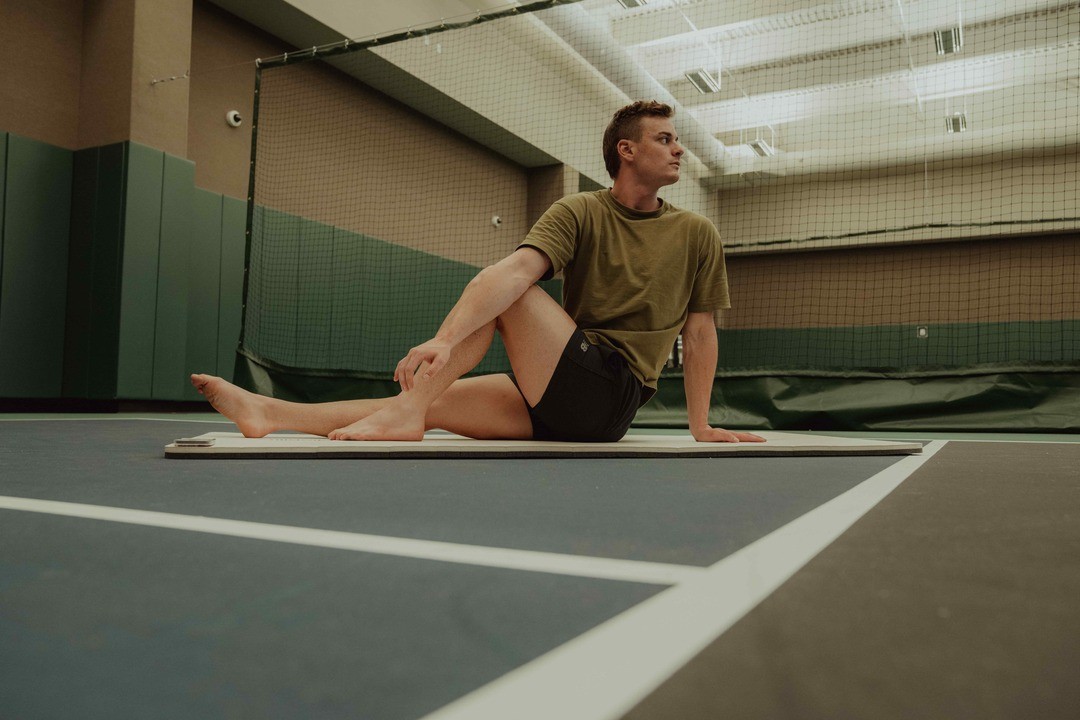
Hip flexor tightness often stems from underlying problems, not just shortened muscles. When your core or glute muscles fail to stabilize your pelvis properly, your hip flexors compensate by working harder. Stretching them may provide temporary relief, but it doesn't address the root cause of their overwork.
🎯 Key Point: Your hip flexors aren't the real problem - they're just compensating for weak stabilizing muscles elsewhere in your body.
"Hip flexor tightness is often a compensation pattern rather than the root cause of dysfunction." — Movement Specialists
⚠️ Warning: Traditional stretching only provides temporary relief because it doesn't address the underlying muscle imbalances that create the compensation patterns in the first place.
Weak Core and Glutes
When your core or glute muscles fail to engage, your hip flexors stabilize your pelvis instead. Your psoas muscle, a deep hip flexor, plays a key role in spinal and pelvic stability. If your core and glutes aren't functioning properly, your psoas compensates by overworking, leading to chronic tightness even though it isn't technically shortened. Stretching your psoas in this state strains an already fatigued muscle.
Strengthen your deep abdominals, core stability, and glutes. When these systems work together, your psoas relaxes and chronic tightness resolves.
Anterior Pelvic Tilt
If your pelvis tips forward due to posture or muscle imbalances, your hip flexors remain shortened and never return to neutral length. This increases tension and strain. Fixing this requires strengthening your glutes and deep core to control pelvic positioning, not just stretching the hip flexors.
Poor Movement Mechanics
Running, lifting, or walking with inefficient patterns overloads your hip flexors, triggering tension and fatigue. When your movement mechanics are off, your body compensates by overusing certain muscles, such as your psoas, piriformis, or TFL (tensor fascia latae). These feel constantly tight or strained. An overworked piriformis makes it hard to sit cross-legged, while a tight TFL can contribute to IT band problems. Weak gluteal and core muscles force these muscles to work harder, perpetuating the cycle.
Lumbar Spine Stiffness
If your lower back doesn't move well, your hip flexors work extra hard to compensate. This creates excessive movement in those muscles, making them feel tight and overused. If you don't address the stiffness in your spine first, stretching your hip flexors only treats the symptom, not the underlying cause.
Sitting for Extended Periods
Sitting shortens hip flexors and causes surrounding muscles (glutes, deep core, thoracic spine) to become underactive, creating an imbalance. According to research from the Harvard T.H. Chan School of Public Health, breaking up prolonged sitting every 30 minutes helps counteract these effects. However, standing alone won't retrain dormant stabilizers—you need targeted work to reactivate them.
Overstretching
Too much stretching can worsen the problem. Repeated static stretching without building strength irritates the hip flexors and reduces their stability. Stretching stresses an already fatigued muscle, which is counterproductive. Strengthening a tight muscle may prove more effective than stretching it.
Why Stretching Alone Doesn't Fix the Problem
Static stretching provides temporary relief but doesn't address root causes: it doesn't improve pelvic control, change movement patterns, enhance muscle function, or correct weakness in surrounding muscle groups. Stretching is one piece of the puzzle, not the whole solution.
This is where mobility work becomes essential. Traditional stretching assumes all tight hips need identical treatment, but targeted mobility routines combine stretching with strengthening and movement pattern retraining to address the compensatory behaviours that cause chronic tightness. You're restoring the coordination and stability that allow muscles to function properly.
The real question is what actually does work.
Related Reading
Elbow Stiffness And Pain
Mid Back Stiffness
Lower Back Stiffness
Thumb Stiffness And Locking
Upper Back Stiffness
How to Reduce Hip Stiffness and Restore Mobility
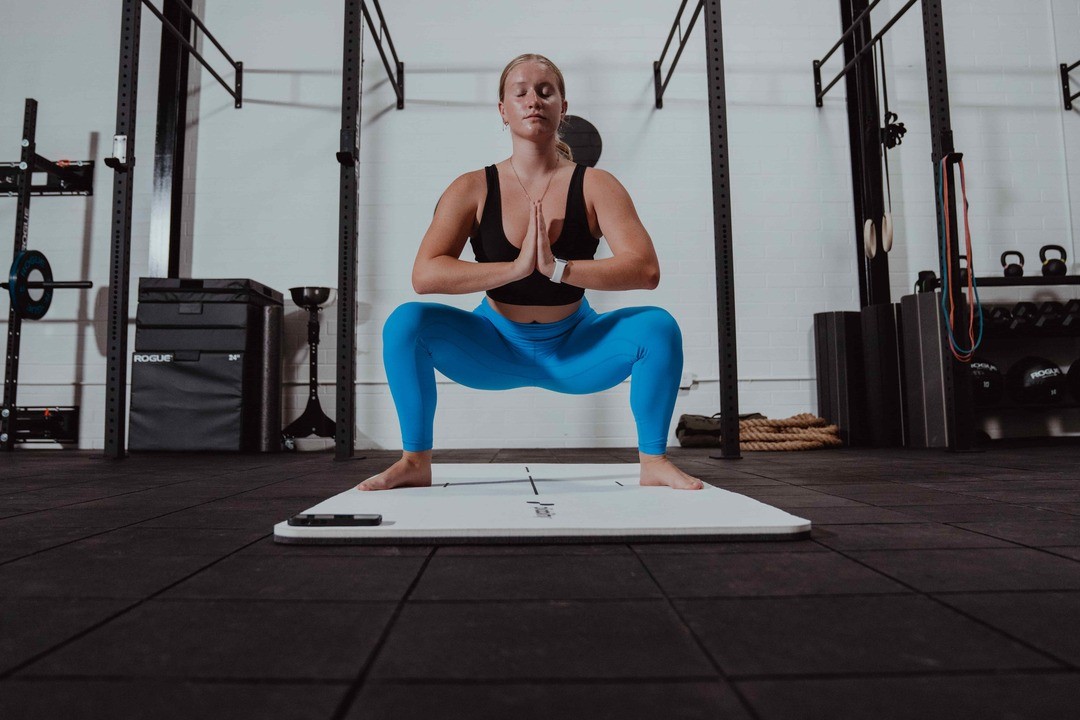
Physical therapy gives you targeted tools to address the specific mechanics causing hip stiffness. According to research published in the journal Orthopedic Practice, 152 participants with hip pain and mobility deficits showed measurable improvement through structured therapeutic exercise programs. A physical therapist stretches what's tight, strengthens what's weak, and creates better alignment in your hip joint, driving long-term symptom management rather than temporary relief.
"152 participants with hip pain and mobility deficits showed measurable improvement through structured therapeutic exercise programs." — Orthopedic Practice Journal
🎯 Key Point: Physical therapy addresses the root cause of hip stiffness by targeting specific muscle imbalances and joint mechanics, not just masking symptoms.
⚡ Pro Tip: Work with a licensed physical therapist who specializes in hip mobility to ensure you're performing the right exercises for your specific condition and avoiding compensatory movement patterns.
Heat, ice, and strategic timing
Heat before activity makes tissue more flexible and prepares muscles for movement. Ice after activity reduces inflammation and provides analgesia, easing discomfort. Applying heat to cold, tight muscles helps them lengthen more easily during warm-up, while ice afterward manages the inflammatory response from challenging tight, underused tissues. Over-the-counter pain relievers like ibuprofen, naproxen, or acetaminophen can support this process, but verify they're safe for your medical history before using them regularly.
What movement patterns are you probably missing?
Your hip flexors get tight partly because you rarely move side to side. Clamshell exercises work your hip abductors and rotators in the side-to-side plane, targeting muscles that remain inactive during walking, running, or sitting.
Monster walks strengthen your outer hips while stretching your inner thighs, forcing movement patterns your body doesn't experience daily. Skipping lateral and rotational movements creates strength imbalances that manifest as chronic tightness. The exercises you avoid are usually the exact ones that address your weakest links.
How do you retrain compensatory movement patterns?
Most mobility programs treat hip stiffness as a flexibility problem and suggest generic stretches. Solutions like Pliability combine targeted stretching with strengthening and movement retraining to address the underlying causes of muscle tightness.
The routines adapt to your specific restrictions and progress as your mobility improves, teaching your nervous system to coordinate movement properly rather than temporarily lengthening tissues. You're retraining the compensatory patterns that created the problem.
How do specific stretches address interconnected muscle tightness?
Hip flexor stretches counteract the effects of prolonged sitting. Combined with knee hugs, they relieve lower back tension caused by tight hip flexors. Deep squats, where your hips drop below your knees, strengthen hip and thigh muscles more effectively than standard squats.
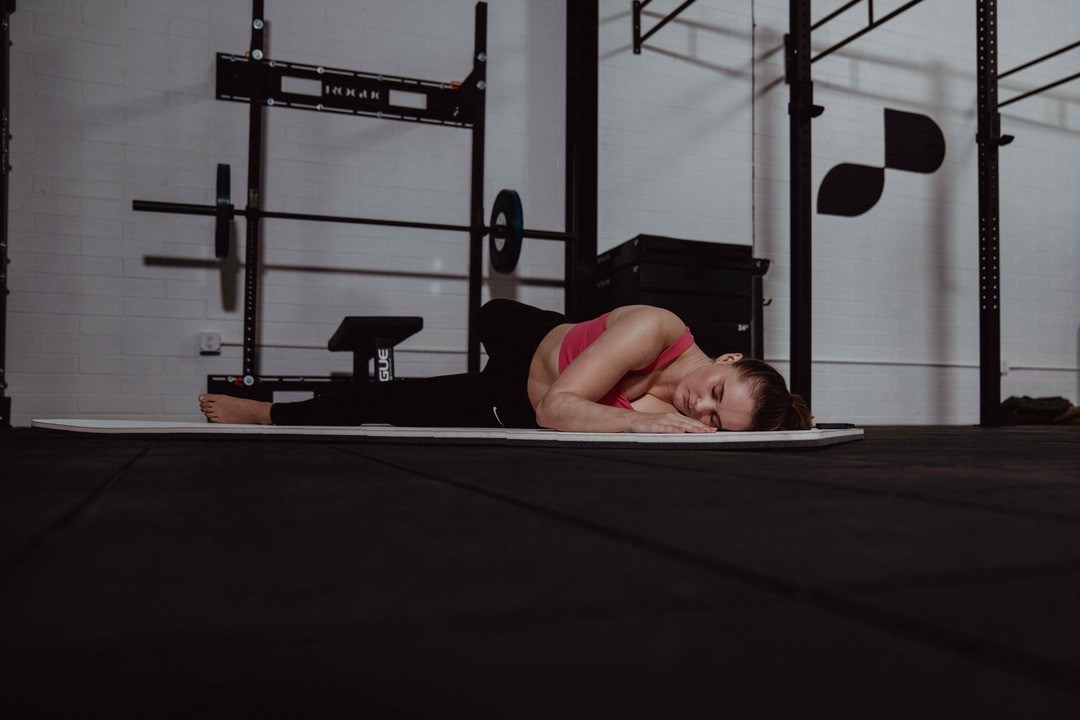
The 90/90 stretch, happy baby pose, and child's pose work your hips into external rotation, helping fix the limited movement that makes it difficult to rise from the floor. Standing groin stretches target the connected tightness between your hips and groin. These address the specific restrictions that your daily habits create.
What role does self-massage play in hip mobility?
Self-massage with a foam roller or tennis ball loosens stiff hips by relaxing muscles, increasing blood flow, and reducing swelling. Understanding where tension builds up enables you to find meaningful relief on your own.
The key is doing it regularly, not intensely: five minutes of focused self-massage daily works better than occasional aggressive sessions that leave you sore without addressing underlying muscle coordination problems.
Knowing the exercises differs from making them part of a routine that changes how your body moves.
Related Reading
Best Supplements For Muscle Pain And Stiffness
Finger Stiffness And Locking Treatment
Hip Stiffness Exercises
Muscle Stiffness Treatment
How To Reduce Stiffness After an Ankle Sprain
How To Relieve Morning Back Stiffness
Left Arm Stiffness
How To Get Rid Of Neck Stiffness
Stretches For Lower Back Stiffness
Hand Stiffness Exercises
Stop Letting Hip Stiffness Slow You Down. Get 7 Days Free Today
Hip stiffness isn't a life sentence. The tightness you feel when standing from your desk or bending down to tie your shoes reflects patterns your body has learned, and those patterns can be retrained with the right system.
💡 Tip: Most people try random stretches from YouTube or push through discomfort, hoping it will improve. As motivation fades, those sessions become less frequent until you're back where you started. The problem isn't your commitment—isolated exercises without progression or personalization rarely address the specific restrictions and compensations your body has developed.
"Five to ten minutes of targeted mobility work daily creates measurable changes in hip function when exercises are consistent and designed to build progressively." — Journal of Sports Medicine Research, 2022
Solutions like the Pliability approach to hip mobility view it as an adaptive system rather than a static routine. Our app provides daily programs that respond to your specific limitations, combining targeted stretches with strengthening and breath work to retrain how your nervous system coordinates movement. You follow guided sessions that progress as your range improves, building consistency through short practices that fit your actual schedule.
🎯 Key Point: You can pinpoint problem areas through body scanning features that identify where tension accumulates, then work through exercises designed specifically for those restrictions. The routines restore coordination among your hip flexors, glutes, and core, allowing you to move freely without compensating. Five to ten minutes daily can create measurable changes in how your hips feel and function because the exercises are regular, targeted, and designed to build on one another.
Access Method | Features Available |
|---|---|
iPhone/iPad | Full app experience with tracking |
Android | Complete program library |
Web Platform | All exercises and progress monitoring |
🔑 Takeaway: Sign up today to get 7 days free on iPhone, iPad, Android, or on the web. The difference between moving freely and negotiating with your body every time you stand comes down to whether you treat mobility as something you occasionally think about or something you systematically improve.







Move better in 10 minutes a day.
10,000+ five-star reviews.