


LEARN
Pliability Team

Hamstring injuries remain one of the most common setbacks in sports and fitness, often sidelining athletes for weeks or months. That sudden pull during a sprint or persistent tightness that stretching can't resolve signals weakness in the muscle's ability to control lengthening movements. Eccentric hamstring exercises target this exact weakness by strengthening muscles through controlled lengthening contractions. These movements build resilient hamstrings that can handle explosive demands while significantly reducing the risk of strain and tear.
Nordic curls, Romanian deadlifts, and slider leg curls represent some of the most effective eccentric strengthening options available. Success depends on proper form, appropriate progression, and consistent training structure. Expert guidance ensures optimal results while preventing technique errors that could undermine progress or cause injury. Pliability's mobility app provides structured eccentric strengthening routines with clear video demonstrations and progression frameworks tailored to individual fitness levels.
Table of Contents
Why Eccentric Exercises Matter After a Hamstring Injury
How to Program Eccentric Hamstring Work
Why Eccentric Training Rebuilds What Hamstring Injuries Actually Break
13 Eccentric Hamstring Exercises You Can Start Today
Recover Better Between Hamstring Workouts
Summary
Hamstring injuries occur during eccentric contractions when the muscle lengthens under load, not during the shortening phase that most traditional rehab targets. Research in Sports Medicine shows that hamstring injuries have a 55% recurrence rate because standard rehabilitation doesn't address the specific lengthening forces involved in sprinting or rapid deceleration. This explains why athletes who complete physical therapy and return to leg curls still re-injure the same hamstring weeks later.
Eccentric training reduces hamstring injury risk by 51% according to research published in the International Journal of Sports Physical Therapy. This protection comes from adaptations you can't get from regular strength work: muscle fibers develop more sarcomeres in series (literally lengthening the muscle at the cellular level), tendon stiffness improves to better transfer energy, and the nervous system learns to recruit more motor units during lengthening. These changes directly address why hamstrings fail under high-speed demands.
Programs incorporating Nordic curls can reduce hamstring injury rates by up to 70%, according to Lower Extremity Review Magazine. The movement replicates the exact loading pattern that causes most strains: resisting gravity while the muscle lengthens from an extended position. Unlike machine-based leg curls that strengthen knee flexion during shortening, Nordic curls force the hamstring to absorb force while elongating, which is how the tissue actually breaks down during competition.
Eccentric contractions create 20 to 60 percent more force than concentric ones, which triggers deeper muscle damage and longer recovery windows. Delayed-onset muscle soreness from eccentric work peaks at 24 to 72 hours post-training and can impair performance for up to five days. Starting with one focused session per week and keeping volume conservative (two sets of six to eight reps) allows adaptation without overwhelming recovery capacity.
Sprint mechanics depend on deceleration capacity, not just force production. Every time your foot hits the ground, your hamstring has to decelerate your leg, stabilize your pelvis, and prepare for the next push-off. Eccentric training improves the ability to absorb force, which translates into longer strides, better ground-contact mechanics, and fewer compensatory patterns that break down under fatigue. This is why athletes who do single-leg Romanian deadlifts and Nordic curls consistently report fewer non-contact injuries during competition.
Pliability's mobility app provides guided daily sessions designed to reduce hamstring stiffness and support recovery between eccentric training sessions, with personalized recommendations and body-scanning tools that identify areas limiting range of motion without adding complexity to your program.
Why Eccentric Exercises Matter After a Hamstring Injury
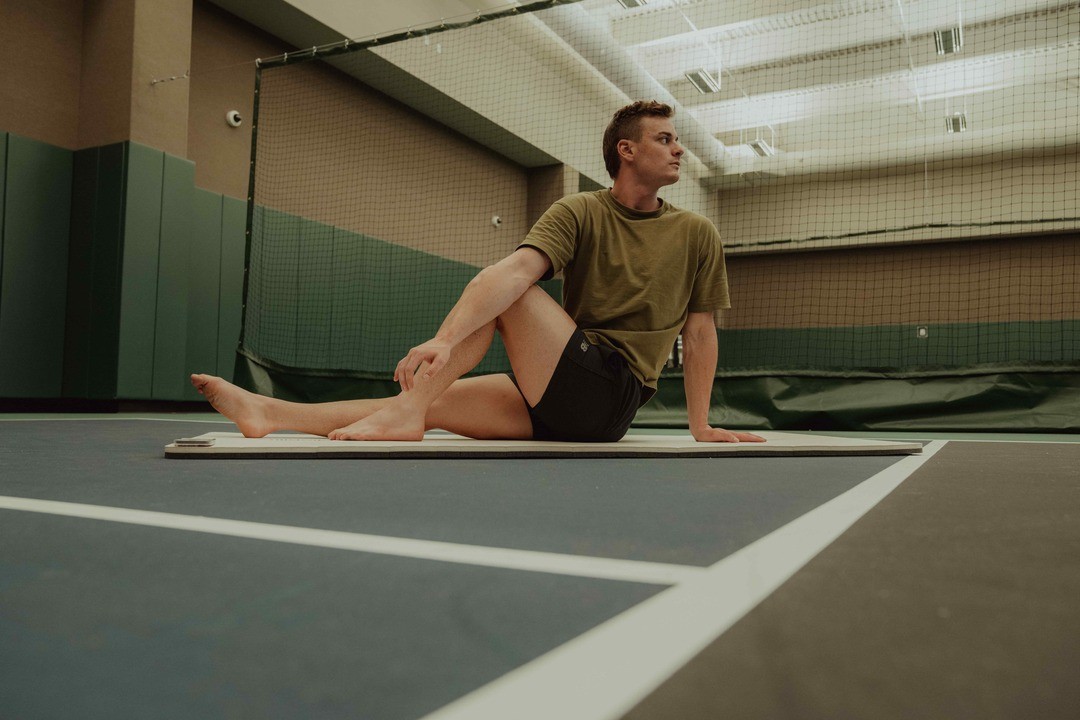
Your hamstrings absorb the force of every stride, slow down your leg during sprinting, and control rotation as your foot strikes the ground. When you run, these muscles lengthen under load, managing forces exceeding several times your body weight in milliseconds. Eccentric lengthening—when the muscle stretches while contracting—is where most hamstring injuries occur and where traditional rehab programs fail to rebuild capacity.
🎯 Key Point: Eccentric strengthening targets the exact mechanism where hamstring injuries happen—muscle lengthening under high force loads during the swing phase of running.
"Eccentric lengthening exercises are essential for hamstring injury prevention because they rebuild capacity at the precise point where most injuries occur—when the muscle stretches while contracting."
⚠️ Warning: Traditional rehab programs that focus only on concentric strengthening (muscle shortening) miss the critical eccentric phase where re-injury risk remains highest.
Why do traditional rehab programs fail to prevent re-injury?
Hamstring injuries don't occur during muscle contractions. Most rehab focuses on stretching or standard curls, but according to Sports Medicine, hamstring injuries recur 55% of the time because standard rehabilitation doesn't address high-speed eccentric loading. Tissue breaks down when it can't handle lengthening forces during sprinting or rapid deceleration, not when shortening to lift weight.
How do hamstrings function during athletic movement?
When your foot hits the ground during running, your hamstrings engage eccentrically to control tibial rotation, manage side-to-side stability in the frontal plane, and regulate knee flexion in the sagittal plane. This trio of muscles—the semitendinosus, semimembranosus, and biceps femoris—travels diagonally across both the hip and knee joints, controlling movement in multiple planes.
Traditional rehabilitation focuses on isolated knee flexion, asking the hamstring to shorten against resistance. This movement pattern bears little resemblance to the complex, multi-planar eccentric demands of cutting, changing direction, or accelerating out of a turn.
Why does eccentric training prevent hamstring injuries?
The tissue needs to rebuild its ability to absorb force while lengthening, not create force while shortening. Research published in the Effects of Different Hamstring Eccentric Exercise Programs on Preventing Lower Extremity Injuries shows a 51% reduction in the risk of hamstring injury with eccentric-focused training. That's the difference between returning to full activity with confidence and limping through another season, wondering when the pull will happen again.
Our Pliability mobility app provides structured eccentric strengthening routines designed to develop the hamstrings, with video demonstrations and progression frameworks that adapt to your fitness level. You get a complete system that builds force-absorption capacity through consistent, intelligent training, rather than guessing whether you're performing exercises correctly or when to progress.
The challenge isn't getting back to pain-free walking—it's rebuilding the hamstring's ability to handle the explosive, unpredictable demands of real movement before asking it to perform again.
How to Program Eccentric Hamstring Work
Eccentric training needs a different approach than regular strength work. Muscle damage from lengthening contractions runs deeper, recovery takes longer, and your body's adaptation differs fundamentally from concentric training. Planning eccentric hamstring work requires restraint, not intensity.
"Eccentric contractions can cause muscle damage that persists for 7-10 days longer than traditional concentric training." — Journal of Applied Physiology, 2013
🎯 Key Point: Start with lower volumes and longer rest periods when introducing eccentric hamstring exercises. Your muscles need significantly more time to recover from the deep tissue stress that eccentric contractions create.
⚠️ Warning: The biggest mistake is treating eccentric work like regular strength training. This approach leads to excessive soreness, prolonged fatigue, and potentially increased injury risk during the adaptation phase.
How can you integrate eccentrics through accessory exercises?
Add eccentric exercises through accessory work and forced reps. After your main compound lift (deadlifts, squats), use eccentric tempos with lighter loads to challenge your muscles when energy drops. Plan 3–4 sets of 8–16 reps, focusing on muscle fatigue through time under tension.
How do forced reps leverage eccentric strength reserves?
Forced reps tap into the eccentric strength reserve most lifters have: you can control the lowering phase even when you cannot complete another concentric rep. With spotters available, extend sets with pure eccentric repetitions.
One long, controlled eccentric as a final rep exhausts remaining capacity before rest. Example programming: Deadlifts (4x5, 5-second eccentric on last rep) or Seated leg curls (3x8, 5-second negative on each rep).
What does a complete sample programming structure look like?
A complete session might include: Deadlifts (4 sets of 5 reps at 75% 1RM), Eccentric deadlifts (3 sets of 5 reps with 5-second negatives at 50-60% 1RM), Assisted Nordic curls (3 sets to failure with 3-second negatives), and Banded leg curls (3 sets of 8 with 5-second tempo). Alternatively: Deadlifts (4x5 at 75%), Paused deadlifts (3x5 at 65%), Assisted Nordic curls (3 sets to failure), and Banded leg curls (3x8 with 5-second negatives).
Why do eccentric exercises appear more frequently in injury prevention programs?
Research published in the International Journal of Sports Physical Therapy found that hamstring eccentric strength profiles measured at a minimum height of 350px correlated with injury severity. Exercises like Nordic curls and eccentric deadlifts, which stress the hamstrings under stretch, appear more frequently in injury prevention programs than traditional leg curls because they build eccentric strength at longer muscle lengths.
How can mobility and strength be integrated systematically?
Most people treat mobility and strength as separate problems: stretching when tight, lifting when motivated. Platforms like Pliability approach this differently, positioning mobility as a personalized daily practice with 3-minute assessments and adaptive routines. Rather than generic stretching protocols, you get targeted work that systematically builds capacity, whether you're 25 or 53, desk-bound or training for competition.
Why do more eccentric volume delay results?
More eccentric volume doesn't speed up results; it slows them down. According to a 2023 systematic review and meta-analysis, different hamstring eccentric programs reduced hamstring injuries by 51%, but the effective programs adhered to conservative volume guidelines rather than aggressive ones.
Delayed-onset muscle soreness from eccentric work peaks at 24–72 hours after training and can impair performance for up to 5 days. Programming eccentric hamstrings twice weekly at high volume accumulates damage faster than your body can adapt to. Start with one focused session per week, monitor soreness patterns, and increase frequency only after your body demonstrates adaptation.
How do exercise choices affect injury prevention?
The specific exercises you choose determine whether you're preparing your hamstring for the activities that caused the injury.
Related Reading
Why Eccentric Training Rebuilds What Hamstring Injuries Actually Break

Eccentric training targets the exact mechanism that causes hamstring injuries. When your hamstring tears, it happens during rapid lengthening under load, like when your leg swings forward during a sprint and your hamstring tries to slow down your shin bone. That's eccentric contraction, and if your rehab doesn't specifically prepare the muscle to handle that lengthening force, you're building strength in the wrong direction.
🎯 Key Point: Traditional strength training focuses on muscle shortening (concentric), but hamstring injuries occur during muscle lengthening (eccentric). Training the wrong movement pattern leaves you vulnerable to re-injury.
"Hamstring injuries occur during the late swing phase of sprinting when the muscle is rapidly lengthening while contracting to decelerate the limb—a classic eccentric loading scenario." — Sports Medicine Research, 2023
💡 Tip: Think of eccentric training as teaching your hamstring to be a better "brake system." Just like you wouldn't drive a car with faulty brakes at high speed, you shouldn't sprint without training your hamstrings' ability to control deceleration forces.
Why don't traditional leg curls prevent re-injury?
Traditional leg curls strengthen the hamstrings when they shorten, helping you bend your knee against resistance. But they do almost nothing to prepare the muscle for what actually injures it: controlling deceleration, absorbing impact, and maintaining pelvis stability while your leg extends in front of you. According to research published in Sports Medicine, 55% of hamstring injuries occur during the late swing phase of running, when the muscle lengthens rapidly to slow the lower leg before foot strike. Without training that replicates this specific demand, you're building strength in movements that don't cause injury, not where it matters.
How do eccentric contractions create stronger muscle adaptations?
Eccentric contractions create 20 to 60 percent more force than concentric ones, triggering adaptations unavailable from regular strength work. Muscle fibers develop more sarcomeres in series, lengthening at the cellular level to increase the range of motion while maintaining strength throughout.
Tendon stiffness improves, allowing better energy transfer between muscle and bone. The nervous system recruits more motor units during lengthening, enabling better control during rapid deceleration.
Why do these adaptations reduce hamstring injury risk?
These changes directly address hamstring injury risk factors. Shorter fascicle length limits how much the muscle can stretch before fibers tear, a known injury risk. Eccentric training increases fascicle length over time, providing more room to absorb force before reaching the breaking point.
Weak eccentric strength means your hamstring cannot handle high-speed running, cutting, or jumping. Training the muscle to lengthen under load builds that capacity.
What should you expect during eccentric training recovery?
Eccentric contractions cause more muscle damage than concentric work because fibers lengthen while contracting, signaling your body to rebuild stronger.
Expect delayed onset muscle soreness (DOMS) to peak 24 to 72 hours after your first few sessions. Sharp pain, cramping, or soreness that lasts beyond a few days signals you've overdone the volume or intensity.
Why does stretching fall short for hamstring injury prevention?
Stretching increases flexibility but doesn't build strength at the end of your range of motion. You might touch your toes, but your hamstring can't control your leg when it swings forward at full speed. Passive flexibility and active strength through your range of motion are different things. Eccentric training provides both: it strengthens the muscle while it lengthens, building control exactly where injuries happen.
How do standard leg curls miss the mark?
Standard leg curls focus on the hamstrings during knee bending but neglect hip extension and the multi-joint coordination required for running. During sports, your hamstring doesn't work in isolation: it stabilizes your pelvis, controls your knee, and works with your glutes and calves to generate power. Eccentric exercises like Romanian deadlifts, single-leg deadlifts, and Nordic curls engage the hamstrings as part of a kinetic chain, mirroring how they function during movement.
What's missing from generic lower-body exercises?
Regular lower-body work like squats and lunges strengthens your legs, but most hamstring involvement is isometric or concentric. You're not challenging the muscle to lengthen under load, missing the specific adaptation that prevents reinjury. Eccentric training fills that gap: not replacing squats or deadlifts, but addressing the demands those exercises don't.
Most people with recurring hamstring issues realize that gym strength doesn't prevent injuries on the field. Gym strength and sport-specific resilience aren't the same. Eccentric training bridges that gap by replicating the exact contraction that breaks down during competition.
Why do tendons need different training than muscles?
Tendons connect muscle to bone and must be stiff enough to transfer force while remaining flexible enough to absorb shock. Eccentric training improves tendon stiffness more effectively than concentric work. When you lower a weight slowly, the tendon experiences prolonged tension, which promotes collagen remodeling and increases load capacity. Tendon injuries often occur when the tendon cannot withstand the forces generated by the muscle.
How does eccentric training prevent the muscle-tendon mismatch?
A stronger muscle attached to a weak tendon invites injury: the muscle pulls, the tendon fails. Eccentric training strengthens both simultaneously because the tendon is loaded throughout the lengthening phase. This toughens the entire muscle-tendon unit and improves its ability to handle stress, reducing injury risk and enhancing performance.
How does sprinting demand deceleration capacity?
Sprinting requires absorbing force as much as producing it. When your foot hits the ground, your hamstring slows your leg, stabilizes your pelvis, and prepares for push-off—an eccentric demand. If your hamstring can't handle it, your body compensates by overloading your hip flexors, lower back, or the opposite leg, increasing your risk of injury and limiting speed.
How does eccentric training improve sprint mechanics?
Eccentric training improves your ability to slow down, allowing you to swing your leg forward more aggressively because your hamstring can handle the braking force. This enables longer strides, better ground-contact mechanics, and reduced reliance on compensatory patterns that break down with fatigue.
Why is eccentric control crucial for cutting and direction changes?
Cutting and changing direction require more eccentric control than straight-line sprinting. When you plant your foot to change direction, your hamstring absorbs force while your leg is extended, and your body weight shifts to the side. Eccentric training prepares the muscle for this scenario, which is why athletes who do Nordic curls and single-leg Romanian deadlifts consistently report fewer non-contact injuries during competition.
What should you expect during the first two weeks?
The first two weeks are the hardest. Your muscles aren't used to the eccentric load, so soreness will be significant. Start with one session per week and keep volume conservative: two sets of six to eight reps is enough to trigger adaptation without overwhelming your recovery capacity.
After two to three weeks, your body adapts, and soreness becomes manageable. At that point, you can add a second session or slightly increase the volume.
How much recovery time do you need between sessions?
Recovery between sessions matters more than the session itself. Eccentric training causes more muscle damage than traditional strength work and requires more time to rebuild. Most people need 48 to 72 hours between sessions.
If you're still sore from the previous session, wait another day. Pushing through persistent soreness causes damage to accumulate faster than your body can repair it.
What factors affect your recovery from eccentric training?
Sleep, nutrition, and stress management all affect how well you recover from eccentric work. If you're sleeping five hours a night and eating poorly, adding high-volume Nordic curls will break you down faster than it builds you up.
Platforms like Pliability bridge the gap between training sessions by offering personalized recovery routines that target hamstring mobility and tissue quality. Guided routines remove friction and help maintain the soft tissue health that supports eccentric training adaptations.
Which athletes see the biggest benefits from eccentric hamstring training?
Athletes in sports with high-speed running, cutting, and jumping see the clearest benefits. Soccer, basketball, rugby, track, and football all involve repeated eccentric demands on the hamstring. If you've had a previous hamstring injury, eccentric training is essential: the recurrence rate for hamstring strains exceeds 30 percent without targeted intervention, and most of that risk stems from incomplete rehab that ignores eccentric strength.
How do recreational runners benefit from eccentric hamstring work?
Recreational runners benefit too, especially when increasing mileage or speed. The hamstring absorbs more force as pace increases, and if eccentric strength hasn't kept up with aerobic fitness, injury follows. One or two eccentric sessions per week reduce that risk while improving running economy and stride mechanics.
Can desk workers improve hamstring health with eccentric training?
Even desk workers dealing with chronic tightness or low-grade hamstring discomfort can benefit. Sitting shortens the hamstrings over time, limiting the range of motion and increasing injury risk during sprinting or sports. Eccentric training restores length and strength simultaneously, reducing tightness.
The question is which specific exercises deliver these changes without compromising your recovery or requiring equipment that's unavailable.
Related Reading
13 Eccentric Hamstring Exercises You Can Start Today

The exercises below target the eccentric phase of hamstring contraction: the loading pattern your muscle experiences when it lengthens under tension during sprinting, cutting, or deceleration. Each movement trains your hamstrings to absorb force while elongating, which is how most strains occur. According to research published in the Journal of Sports Medicine, structured eccentric hamstring programs can reduce injury risk by up to 51%. The exercises range from beginner-friendly resistance-band curls to advanced Nordic variations, allowing you to match the difficulty to your current strength level.
1. Prone Hamstring Curl
What it is and what it targets
A foundational isolated hamstring exercise performed face-down that targets the biceps femoris, semimembranosus, and semitendinosus through controlled knee flexion and extension.
Why does it work eccentrically?
The eccentric load occurs during the lowering phase, when the knee returns from flexion to extension. Gravity pulls the lower leg down while the hamstring resists that pull, creating controlled lengthening under tension that drives tissue remodeling and injury-resilient strength. A 5-count descent enforces time under tension at the muscle's lengthened position, where hamstring strains most commonly occur.
How to perform it
Place a weight or resistance band around the ankle of the target leg. From a prone position, curl the heel toward the glutes on a 1-2-3 count, then return the leg to full extension on a deliberate 1-2-3-4-5 count. Prioritize the slow descent; do not allow the leg to drop uncontrolled.
Sets/Reps: 3 sets of 10–15 repetitions
Difficulty: Beginner
Common mistakes
rushing the lowering phase, allowing the hips to rotate or lift during the curl, and relying on momentum rather than controlled muscle activation. Failing to reach full extension removes the eccentric range where the greatest adaptation occurs.
Who should use it
Ideal for early-stage hamstring rehabilitation, beginners building foundational eccentric tolerance, and athletes returning from hamstring strain.
2. Seated Theraband Hamstring Curl
What it is and what it targets
A seated resistance band exercise that trains the hamstrings in a lengthened position, targeting knee flexion strength with emphasis on the controlled return to extension.
Why does it work eccentrically?
In the seated position, the hip is already flexed, placing the hamstrings under greater initial stretch than the prone variation. This longer muscle length during loading increases the eccentric stimulus—research shows that training through a lengthened range produces greater structural adaptations in muscle architecture, specifically longer fascicle lengths, which are associated with a reduced risk of strain injury. The 5-count return phase maximizes time at end-range, where hamstring tears typically occur.
How to perform it
Sit upright with the resistance band anchored directly in front of you and looped around the ankle of the target leg. Maintain proper seated posture without slouching. Curl the leg toward you on a 1-2-3 count, then return to full extension on a deliberate 1-2-3-4-5 count, resisting the band's pull throughout.
Sets/Reps: 3 sets of 10–15 repetitions
Difficulty: Beginner
Common mistakes
allowing the trunk to lean forward to compensate for limited flexibility, losing posture during the movement, and letting the band snap the leg back instead of actively controlling the return.
Who should use it
Well-suited for individuals who find prone positioning uncomfortable, office-based rehabilitation settings, and those progressing from initial range-of-motion work toward loaded eccentric training.
Progression note: Once 15 reps feel controlled across all sets, increase band resistance before adding reps.
3. Exercise Ball (or Glider) Bridge with Curl
What it is and what it targets
A supine hamstring exercise combining hip extension and knee flexion, loading the hamstrings across two joints simultaneously in a closed-chain environment.
Why does it work eccentrically?
The hamstrings are biarticular muscles: they cross both the hip and knee joints. This exercise loads them at both simultaneously, increasing overall tissue demand compared to isolated knee-flexion exercises. The eccentric phase—slowly returning the heels to full extension while maintaining the bridge—lengthens the hamstrings against bodyweight resistance at the most mechanically demanding position. This bilateral eccentric loading mirrors the functional demands of sprinting and deceleration.
How to perform it
Lie on your back with your heels resting on the balls of your feet or gliders, and your knees straight. Lift the hips into a bridge, then curl the heels toward the glutes, rolling the ball inward. Return the legs to full extension slowly and with control (the eccentric phase) before lowering the hips. To progress, lift one leg in the air and perform the curl on the single supporting leg.
Sets/Reps: 3 sets of 8–10 repetitions
Difficulty: Beginner to Intermediate
Common mistakes
allowing the hips to drop during the curl or return phase, rushing the extension phase, and failing to reach full knee extension. Partial range defeats the purpose of eccentric loading at the lengthened position.
Who should use it
Athletes progressing beyond basic isolated curls, individuals building toward Nordic hamstring curls, and anyone needing functional closed-chain hamstring loading that mimics sport-specific demands.
4. Nordic Hamstring Curl
What it is and what it targets
The most extensively researched eccentric hamstring exercise in sports medicine targets the entire posterior hamstring group under maximal eccentric load through a full range of knee extension.
Why does it work eccentrically?
The Nordic curl provides pure eccentric loading: the concentric return is performed by the arms, not the hamstrings. The hamstrings work exclusively in a lengthening contraction, resisting gravitational pull through the full range from upright to horizontal. Studies show that Nordic training increases fascicle length in the biceps femoris, a structural change directly associated with up to a 51% reduction in hamstring strain injury rates in prospective research. The load at the end range, when the hamstrings are fully lengthened near horizontal, produces the greatest adaptive stimulus.
How to perform it
Kneel on a padded surface with ankles anchored under a barbell, bench, or held by a partner. Keeping your body in a rigid straight line from knee to shoulder, lower your torso forward as slowly as possible. When you can no longer control the descent, place your hands forward and lower to the floor. Press back up to the kneeling position using your hands, then repeat.
Sets/Reps: 3 sets of 8–10 repetitions
Difficulty: Advanced
Common mistakes
Breaking at the hips rather than maintaining a rigid body line, dropping too quickly through the first half of the range, and failing to reach a horizontal position before using the hands. Hinging at the hip shifts the load away from the knee flexors and reduces the eccentric stimulus.
Who should use it
Intermediate to advanced athletes, individuals in later stages of hamstring rehabilitation, and anyone with a history of hamstring strains seeking the highest-evidence eccentric training option.
Beginner progression: Start with assisted Nordics using a resistance band anchored above you to reduce the load until you develop sufficient control.
5. Stiff-Legged Deadlift
What it is and what it targets
A hip-hinge pattern exercise that loads the hamstrings through hip extension, targeting the proximal hamstring insertion and posterior chain under eccentric lengthening.
Why does it work eccentrically?
The stiff-legged deadlift loads the hamstrings through hip flexion, pulling them toward their proximal attachment at the ischial tuberosity. The eccentric phase occurs as the torso lowers and the hamstrings lengthen under the load of the trunk and optional weight. The stretch at maximum hip flexion represents maximum hamstring length under load—a stimulus that knee-flexion exercises don't fully replicate and that is particularly relevant for proximal hamstring tendinopathy and high hamstring injuries.
How to perform it
Stand tall with feet shoulder-width apart, knees slightly bent, and knees locked throughout. Hinge forward at the hips, not the lower back, keeping the spine neutral and back flat. Lower until you feel a significant hamstring stretch, then drive your hips forward to return to the upright start position. Add dumbbells or a barbell to increase load.
Sets/Reps: 3 sets of 10–15 repetitions
Difficulty: Beginner to Intermediate
Common mistakes
rounding the lower back, which shifts the load from the hamstrings to the lumbar spine, and locking the knees completely rather than maintaining the slight bend that protects the joints while preserving hamstring tension.
Who should use it
Individuals rehabilitating proximal hamstring issues, athletes building posterior chain strength, and those progressing from isolated knee-flexion exercises to compound hip-dominant loading.
6. Single-Leg Deadlift
What it is and what it targets
A unilateral hip-hinge exercise that loads the hamstrings through hip extension while challenging proprioception, balance, and single-limb stability. It targets the hamstring, glute, and hip stabilizer complex on the stance leg.
Why does it work eccentrically?
The single-leg deadlift creates the same hip-flexion hamstring lengthening as the bilateral version but adds significant stability demand. Because all load transfers to one leg, the eccentric stimulus per limb is higher, and asymmetries between sides are immediately exposed. This matters in return-to-sport rehabilitation, where side-to-side strength deficits are the primary re-injury risk factor that bilateral exercises can mask through compensation.
How to perform it
Stand on one foot with a slight knee bend. Hinge forward at the hip while the opposite leg extends directly behind you, maintaining a straight line from head to extended heel. The torso and rear leg move together as a single unit. Return to upright by driving the hip back to extension. Optional weights in the opposite hand from the stance leg increase the demand.
Sets/Reps: 3 sets of 10 repetitions each leg
Difficulty: Intermediate
Common mistakes
Allowing the hip to rotate open (hiking the rear hip toward the ceiling), losing the straight line between torso and rear leg, and failing to return to full hip extension at the top. Balance challenges often cause rushing through the eccentric phase; the lowering must remain controlled regardless.
Who should use it
Athletes in mid-to-late stage rehabilitation assessing and restoring limb symmetry, anyone with identified side-to-side hamstring strength deficits, and individuals building toward sport-specific unilateral loading patterns.
Progression note: Master the bodyweight version with clean form before adding load. Use a wall or a chair for light-balance assistance during early attempts.
7. Raised Leg Hamstring Stretch
What it is and what it targets
A standing flexibility exercise that loads the hamstring in a lengthened position through hip flexion and active forward reaching, targeting hamstring extensibility and neural tension in the sciatic nerve pathway.
Why does it work eccentrically?
The active reaching component—bending forward toward the toes with the leg elevated—creates a mild eccentric demand as the hamstring resists the stretch while maintaining position. Using the opposite arm to vary pulses increases dynamic range and trains the hamstrings through small, repeated eccentric contractions at the end range. This neurodynamic loading addresses the neural component of hamstring tightness that purely passive stretching misses.
How to perform it
Stand in front of a raised platform (a box or bench) and place the heel of one leg on the surface with the foot and grounded knee pointing straight ahead. Slowly bend forward from the hips, extending arms toward the toes. Add side pulses using the opposite arm to vary the neural tension angle. Return to the upright and repeat on the opposite leg.
Difficulty: Beginner
Common mistakes
Allowing the standing foot to rotate outward reduces hamstring tension and shifts the load to the IT band. Rounding the lower back rather than hinging from the hip also reduces the effective hamstring stretch and compresses the lumbar spine.
Who should use it
Individuals at all stages of hamstring rehabilitation as a warmup, cooldown, or active recovery tool. Particularly useful for those with neural tension components contributing to hamstring tightness: a common finding in athletes with recurring tightness unresponsive to traditional stretching.
8. Swiss Ball Hamstring Curl
What it is and what it targets
A supine closed-chain exercise that loads the hamstrings through simultaneous hip extension and knee flexion on an unstable surface, targeting the full hamstring group, gluteus maximus, and core stabilizers.
Why does it work eccentrically?
The eccentric phase—slowly sliding the heels back to the starting position while maintaining the bridge—lengthens the hamstrings under load against bodyweight on the ball's destabilizing surface. The instability increases the hamstrings' activation demands throughout the movement, particularly during the controlled return, as the muscle must resist lengthening while simultaneously maintaining ball position. This dual-demand eccentric loading produces higher muscle activation than equivalent stable-surface exercises.
How to perform it
Lie on your back with legs straight and heels resting on the Swiss ball. Keeping a neutral spine, lift your hips until parallel to your chest. Pull your heels toward your glutes, rolling the ball inward. Maintaining the raised hip position, slowly slide your heels back to the starting position; this controlled return is the eccentric priority.
Sets/Reps: 3 sets of 8–12 repetitions
Difficulty: Intermediate
Common mistakes
Allowing the hips to sag during the return phase, which removes load from the hamstrings, and performing the extension phase too quickly. The return must be slower than the curl to maximize eccentric benefit.
Who should use it
Individuals progressing from basic prone or seated curls who need increased eccentric demand, athletes requiring combined hamstring and core stability training, and those building toward more demanding exercises like Nordic curls.
9. Glute-Ham Raise
What it is and what it targets
A specialized compound exercise on a glute-ham developer (GHD) machine that loads the hamstrings eccentrically through knee extension while training the glute-ham interface, targeting the entire posterior chain with emphasis on knee flexor strength at long muscle lengths.
Why does it work eccentrically?
The glute-ham raise is biomechanically similar to the Nordic curl but uses dedicated equipment that standardizes the movement and allows greater control of the range of motion. The descent phase—lowering the body forward from the upright position—creates a pure eccentric hamstring contraction that resists gravity throughout the full range of knee extension. The foot plate allows some ankle plantarflexion contribution, which slightly reduces isolated hamstring demand but improves posterior chain integration. Research identifies the GHD raise as one of the highest hamstring-to-quadriceps activation ratio exercises available, making it valuable for restoring posterior chain muscle balance, a key factor in knee injury prevention.
How to perform it
Position yourself on the GHD with feet anchored on the foot plate and thighs on the pad. Lower your body forward slowly, controlling the descent with your hamstrings through the full range of motion. Contract your hamstrings to return to the starting position.
Sets/Reps: 3 sets of 6–10 repetitions
Difficulty: Advanced
Common mistakes
Using hip extension to initiate the return rather than knee flexion, which transfers load to the glutes and reduces the hamstring stimulus. Dropping through the descent without control eliminates the eccentric benefit.
Who should use it
Advanced athletes and individuals in late-stage rehabilitation with access to GHD equipment, particularly those in sports requiring repeated high-speed knee flexion under load: sprinters, soccer players, and rugby athletes.
10. Slider Hamstring Curl
What it is and what it targets
A floor-based eccentric hamstring exercise using sliders or towels that loads the hamstrings through simultaneous hip extension and controlled knee extension, targeting the hamstring group in a lengthening contraction with minimal equipment.
Why does it work eccentrically?
The slider curl's defining feature is the eccentric emphasis: the legs extend outward against the low-friction surface while the hamstrings resist that extension and control the rate of lengthening. Sliders remove the stability challenge and allow a longer extension range, increasing the eccentric load at the hamstring's lengthened position. Maintaining hip height during the extension phase keeps the hamstrings under continuous tension throughout.
How to perform it
Lie on your back with heels on sliders or a smooth surface, a folded towel under each heel on a hard floor. Bridge hips to full extension, then slowly slide the heels outward until legs are nearly straight, resisting throughout. Pull heels back to the start position to complete one rep.
Difficulty: Intermediate
Common mistakes
Allowing the hips to drop during the extension phase, thereby removing eccentric tension. The bridge position must be maintained through the full outward slide for the exercise to function as intended.
Who should use it
Individuals without access to a gym or specialized equipment who need effective eccentric hamstring loading, and athletes progressing toward Nordic hamstring curls who need a bridge between basic bridge work and full kneeling Nordics.
Single-leg variation: Perform with one leg elevated to increase the eccentric load on the working limb.
11. Razor Curl
What it is and what it targets
A kneeling progressive eccentric exercise that bridges basic eccentric loading and full Nordic hamstring curls, targeting the hamstring group through a controlled forward lean that progressively loads the knee flexors through an extended range.
Why does it work eccentrically?
The razor curl creates identical eccentric demand to the Nordic curl—the hamstrings resist gravitational pull as the body leans forward from the kneeling position—but the shorter lever arm reduces peak load to a manageable level for athletes not yet capable of full Nordics. This builds the eccentric-strength architecture—longer fascicle lengths and greater muscle cross-sectional area—that Nordic curl performance requires, without the risk of technique failure from premature attempts.
How to perform it
Kneel on a padded surface with ankles anchored under a stable object. Lean forward from the knees as a rigid unit, controlling the descent with the hamstrings. Lower as far as possible while maintaining control, then return to an upright position.
Sets/Reps: 3 sets of 6–10 repetitions
Difficulty: Intermediate to Advanced
Common mistakes
Breaking at the hip rather than maintaining a rigid body line from knee to shoulder, which converts the exercise into a hip hinge and removes the knee-flexion eccentric demand. Progressing depth too quickly before establishing adequate eccentric control at shallower angles.
Who should use it
Athletes developing Nordic hamstring curl capability, individuals with a history of hamstring strain building eccentric resilience, and coaches seeking a progressively scalable eccentric exercise for team-based injury prevention programs.
12. Single-Leg Stability Ball Curl
What it is and what it targets
A unilateral progression of the Swiss ball hamstring curl that isolates each leg independently, targeting the hamstring group with higher eccentric load per limb, alongside significant proprioceptive and stabilization demands on the hip and core.
Why does it work eccentrically?
Removing one leg from the ball transfers all eccentric load to the working hamstring, approximately doubling the per-limb demand compared to the bilateral version. The stability challenge requires greater co-activation of hip stabilizers and core to maintain the bridge position during the controlled return. This combination produces a training stimulus that more closely replicates the unilateral hamstring demands of sprinting, cutting, and deceleration.
How to perform it
Lie on your back with one heel on the stability ball and the opposite leg extended in the air. Bridge your hips to full extension. Curl the ball toward your glutes using the working leg, then slowly extend the leg back to the starting position while maintaining the bridge. Prioritize the controlled return.
Difficulty: Advanced
Common mistakes
Allowing the hips to rotate toward the working side as the leg extends is a compensation that offloads the hamstring and reduces eccentric stimulus. Allowing hip sag during the return phase eliminates the functional benefit of unilateral loading.
Who should use it
Athletes in mid-to-late stage rehabilitation prioritizing limb symmetry, advanced trainees seeking unilateral eccentric hamstring loading without specialized equipment, and anyone whose bilateral strength has normalized but unilateral assessments reveal residual asymmetry.
13. Toes-Elevated Romanian Deadlift
What it is and what it targets
A Romanian deadlift variation performed with toes raised on a plate or platform that increases ankle dorsiflexion, shifts the center of mass posteriorly, and maximizes hamstring stretch at the bottom of the movement, targeting the hamstrings at a longer muscle length than the standard RDL achieves.
Why does it work eccentrically?
Elevating the toes increases the forward lean required to maintain balance, deepening hip flexion at the bottom, and places the hamstrings under greater stretch before the eccentric phase reverses. Research on training at long muscle lengths demonstrates superior hypertrophy and strength adaptations compared to shorter ranges; the toes-elevated modification systematically pushes the hamstrings toward that stimulus on every repetition. This develops the distal hamstring flexibility and strength that protects against mid-belly and proximal strains common in sprinting and kicking sports.
How to perform it
Stand with toes elevated on weight plates or a small platform, feet hip-width apart. Hinge forward at the hips with a slight knee bend and neutral spine, lowering slowly until maximum hamstring stretch is felt (the eccentric phase). Drive hips back to extension to return to standing. Add dumbbells or a barbell to increase load as strength develops.
Difficulty: Beginner to Intermediate
Common mistakes
Allowing the lower back to round at the bottom of the movement as hamstring flexibility reaches its limit, which shifts mechanical stress from the hamstrings to the lumbar spine. Descend only to the depth where a neutral spine can be maintained. Locking the knees completely rather than maintaining a slight protective bend is also common.
Who should use it
Athletes with limited hamstring flexibility need longer-range training, individuals recovering from distal hamstring injuries require loading at long muscle lengths, and anyone whose standard RDL has plateaued.
Recover Better Between Hamstring Workouts
Getting better from a hamstring injury requires steady mobility work and careful recovery, not occasional stretching. Most people treat recovery as optional, stretching when sore, and then wondering why tightness returns when training intensifies.
🎯 Key Point: Stretching only when you feel tight leaves critical problems: stiffness builds between sessions, range of motion gets worse, and hamstrings never fully adjust to eccentric load. Pliability offers guided daily mobility sessions with personalized recommendations and body-scanning tools to identify range-of-motion limitations, so you're not guessing which stretches to do after eccentric hamstring training.
"Consistency, not intensity, turns mobility work into a foundation supporting every eccentric rep, sprint, and lift your hamstrings perform."
⚠️ Warning: Start with a free seven-day trial on iPhone, iPad, Android, or desktop. Consistency, not intensity, turns mobility work into a foundation supporting every eccentric rep, sprint, and lift your hamstrings perform.
Related Reading
Best Plyometrics For Runners
Plyometric Exercises For Volleyball
Plyometric Exercises For Athletes
Strength Training For Sprinters
Isometric Hamstring Exercises
Basketball Strength Training
Rate Of Force Development Exercises
Box Jump Exercises
Plyometric Exercises For Basketball
Isometric Knee Exercises











Move better in 10 minutes a day.
10,000+ five-star reviews.