


LEARN
Pliability Team
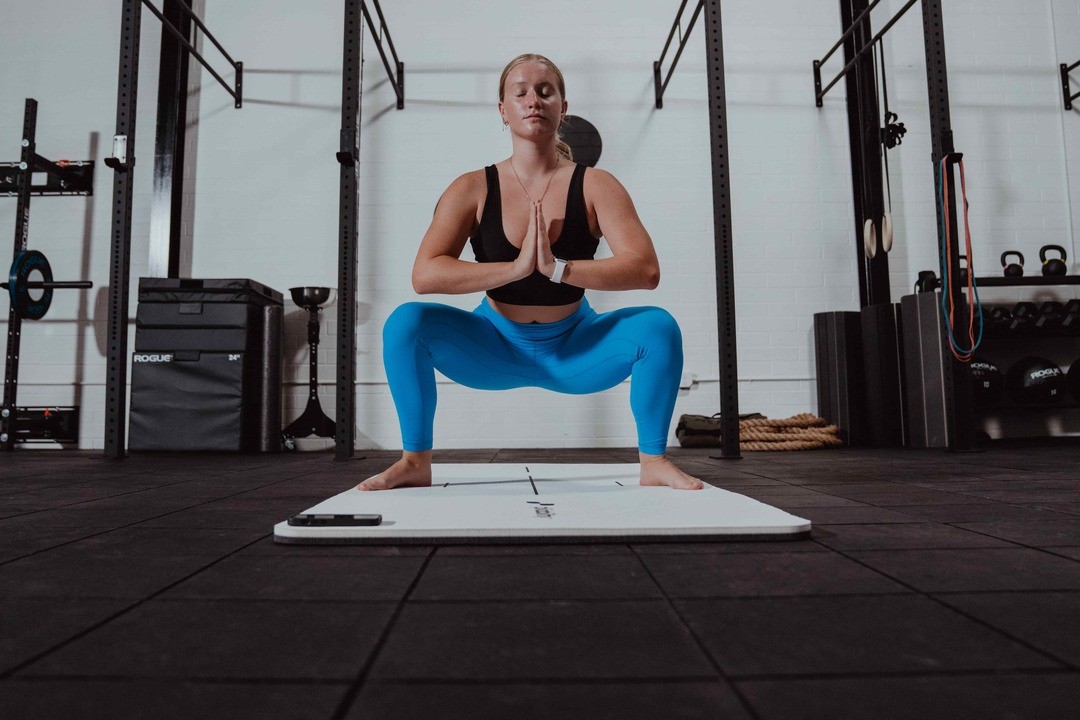
Athletes who appear unshakeable in their movements share a common foundation: isometric strength training. This method involves muscle contractions without changing muscle length, building strength at specific joint angles, and creating rock-solid stability that transfers to better performance and injury prevention.
Whether recovering from injury, breaking through plateaus, or seeking better movement control, integrating static holds and position-specific strengthening makes a significant difference. Targeted isometric protocols help develop genuine stability through clear progressions and proper positioning, which you can explore through Pliability's mobility app.
Table of Contents
Why Do Strength Gains Stop Translating Into Real Performance Over Time?
Why Strength Doesn’t Always Transfer: The Hidden Limits of Dynamic Training
How Isometric Strength Training Develops Force at Weak Points
How to Integrate Isometric Strength Training Into a Complete Strength System
Turn Strength Gains Into Real-World Mobility and Control
Summary
Isometric strength training builds force production at specific joint angles where dynamic lifting typically fails. Research published in the Journal of Applied Physiology found that 10 weeks of isometric training at specific positions produced measurable increases in both muscle size and force output at those exact angles. This position-specific adaptation makes isometric holds a corrective tool rather than a replacement for dynamic training, targeting the weak links that momentum helps you bypass during regular lifts.
Your weakest joint angle determines where movement fails, regardless of how strong you are everywhere else. A lifter who can press 80kg through a full range might only hold 50kg at the bottom position, where leverage is poorest. The weight you lift is limited by your capacity at the hardest point in the movement, not your average strength across all angles, which means traditional progressive overload can mask significant positional weaknesses that only appear under static testing or real-world demands.
Neural adaptation from strength training remains highly specific to the conditions under which you train. Florida Atlantic University researchers found that training close to failure boosts muscle growth, but strength gains transfer only to the specific movement patterns, speeds, and joint angles you practice. Someone can deadlift 200kg but struggle to hold that same weight at knee height for more than a few seconds because the nervous system hasn't been trained to recruit maximum force at that specific angle under sustained tension.
Overcoming isometrics (pushing or pulling against an immovable object) generates higher peak force outputs than yielding isometrics (holding a weight in place). Research examining 10-week isometric elbow flexor programs found that overcoming isometrics allowed trainees to exert maximum effort without the limiting factor of holding an external load. For weak points in the middle of a lift, overcoming isometrics work best, while end-range positions, where stability matters, benefit more from yielding isometrics that teach load control under fatigue.
Research in Medicine and Science in Sports and Exercise, analyzing 34 resistance-trained men, found that volume enhances muscle hypertrophy but doesn't automatically improve maximal strength. Your muscles grow, but the nervous system's ability to recruit those fibers at specific joint angles under dynamic stress lags behind. This creates a gap where strength exists in controlled repetitions but disappears when conditions change, loads shift, or joint angles move outside the narrow band you've trained.
Pliability's mobility app addresses this by providing structured sessions that target joint restrictions and movement limitations most likely to interfere with strength expression, building the control and tissue quality that let position-specific strength show up in real performance.
Why Do Strength Gains Stop Translating Into Real Performance Over Time?

Most people stop getting better not because they stop training, but because their strength doesn't transfer into real performance. You can add weight to the bar week after week and hit every prescribed set, yet when it matters—testing a max, competing, executing under fatigue—the strength you built in the gym simply isn't there. The gap isn't effort. Its expression.
🎯 Key Point: The disconnect between gym strength and real-world performance isn't about training volume—it's about how well your body can actually express the strength adaptations you've built under varying conditions and demands.
"The gap isn't effort. It's expression—your body's ability to translate strength adaptations into real-world performance when it matters most."
⚠️ Warning: Adding more weight to your training sessions won't solve transfer issues. Without addressing movement quality, fatigue resistance, and skill expression, your gym strength will remain trapped in the controlled environment where you built it.
Why do athletes believe progressive overload guarantees results?
Most athletes believe progressive overload alone guarantees continuous strength improvements. Add five pounds to the bar, complete the reps, and strength follows. The logic is appealing because it works, until it doesn't.
What happens when strength becomes contextual instead of universal?
The real issue isn't that progressive overload fails. Strength exists only in controlled conditions: you build force production within specific movement patterns, at predictable speeds, under stable loads.
According to research published in Medicine and Science in Sports and Exercise, analyzing 34 healthy resistance-trained men, volume improves muscle growth but doesn't automatically improve maximal strength expression. Your muscles grow, yet the nervous system's ability to recruit those fibers at specific joint angles under dynamic stress lags behind. Strength becomes contextual, not universal.
Why do lifts fail at sticking points despite training progress?
This shows up as lifts failing at sticking points. You hit 95% of your max in training, then can't move it when tested. The weight that moved smoothly last month feels impossibly heavy today, not because you're weaker, but because your force production collapses at a specific position.
One lifter described hitting every prescribed rep for weeks, watching close-grip bench press improve steadily, only to find regular bench press stagnating. The strength was present at one joint angle but disappeared six inches away.
How does injury emerge when stability can't match force output?
Injury occurs when your body cannot maintain stability against applied force. Knee pain during squat variations stems not from weak muscles, but from connective tissue and stabilizers failing to control the load through the full range. Elbow pain during push press results from a force transfer breakdown mid-movement.
The Fitbod 2025 State of Strength Report, analyzing 71M workouts, reveals patterns across millions of training sessions, though individual performance still falters at positions where neuromuscular control hasn't been specifically developed.
Why doesn't more training volume solve the problem?
The frustration deepens when you realize that more training isn't the answer. More sets, more reps, and higher frequency don't fix the core problem: your nervous system hasn't learned to generate force at the exact positions where your lifts fail.
Building real, useful strength means developing force production ability at specific positions under load and training your nervous system to stabilize and use power where your body tends to fail.
Our Pliability mobility app guides you through targeted isometric protocols at the exact joint angles where strength typically fails, building neuromuscular control that translates directly into performance. The programming eliminates guesswork by showing which positions to train, how long to hold them, and how to progress safely so that the strength built in training transfers when tested.
But understanding why this gap exists requires examining what happens inside the muscle and nervous system when you move a heavy load through space.
Related Reading
Why Strength Doesn’t Always Transfer: The Hidden Limits of Dynamic Training
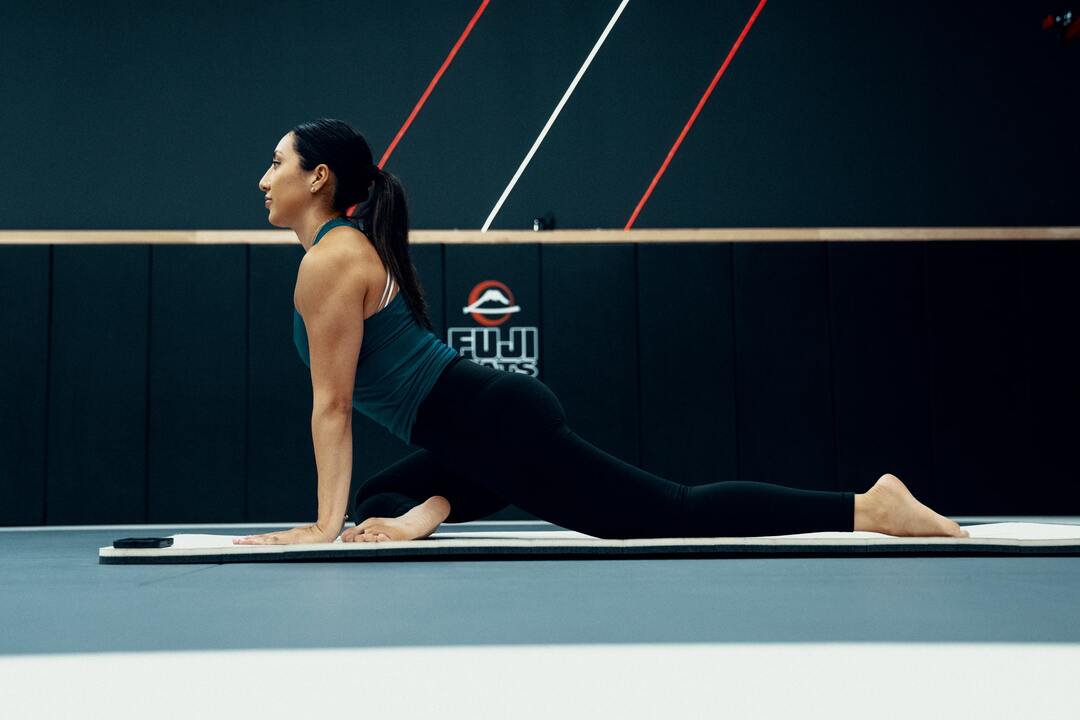
The numbers keep climbing. The weights get heavier. Then something ordinary happens—carrying furniture around a corner, catching something mid-stride, reacting before you've had time to think—and the strength you've built doesn't show up as expected. Not because you're weak. Force production varies dramatically across your range of motion, and your weakest joint angle determines where movement fails, regardless of how strong you are elsewhere.
[IMAGE: https://im.runware.ai/image/os/a07dlim3/ws/3/ii/703aad3e-2a15-41ee-a031-d3c89c4a731d.webp] Alt: Split scene showing gym training versus real-world movement demands
🎯 Key Point: Your body is only as strong as its weakest link—and that link changes depending on joint position and movement demands.
"Force production varies dramatically across your range of motion, and your weakest joint angle determines where movement fails." — Movement Science Research
Most training develops strength without addressing this critical gap. The gym gets force production right. What it misses is the transfer to positions where your body needs that strength.
⚠️ Warning: Building strength in isolation doesn't guarantee it will be available when your body needs it most—during dynamic, real-world movements.
Why does force vary across the range of motion?
Your muscles don't produce the same amount of force at every joint angle. A squat feels hardest at the bottom. A bench press stalls midway up. A pull-up grinds to a halt at specific points. According to research published in Sports Medicine that analyzed 51 volume measurements from multiple training studies, strength expression varies with muscle length, leverage, and neural recruitment patterns across different positions.
How does traditional training handle weak angles?
Traditional training moves through these positions quickly, using momentum from strong angles to move past weak ones. This builds general strength but leaves specific positions undertrained. Your nervous system learns to produce force dynamically throughout the entire movement, but not to generate maximum tension at the angles where leverage is poorest, where strength typically fails.
Why does your weakest joint angle determine failure?
Moving your body through a full range does not mean you have full-range strength. The weight you lift is limited by how strong you are at the hardest point in the movement, not your average strength across all angles. If you can produce 100kg of force at your strongest position but only 60kg at your weakest, you're training with 60kg loads. The other 40kg of potential stays out of reach because one angle creates a bottleneck.
How does this weakness show up in real-world situations?
This becomes clear when you test strength in different positions. A lifter who can press 80kg through a full range might only hold 50kg at the bottom position, where leverage is worst. Real-world demands don't always provide momentum. Sometimes you must produce force from a dead stop in an awkward position without acceleration. That's where the gap between dynamic strength and positional strength emerges.
Why is neural adaptation position-specific?
Your nervous system trains specific movement patterns, speeds, and joint angles, not overall strength. When Florida Atlantic University researchers examined muscle growth and strength adaptations, they found that training close to failure boosts muscle growth, but strength gains remain specific to training conditions.
How does this affect real-world strength?
Training only dynamic lifts makes your body efficient at producing force while moving, but doesn't automatically transfer to static holds or positions you pass through quickly under load.
This is why someone can deadlift 200kg but struggle to hold that weight at knee height for seconds. The muscles are strong enough; the nervous system simply hasn't been trained to recruit maximum force at that specific angle under sustained tension. Your body gets better at what you practice, not at everything that seems related.
How does momentum hide your true strength levels?
A moving barbell stays in motion. Momentum carries the load through positions where your muscles cannot fully support it alone. You dip at the bottom of a squat and use the stretch reflex to bounce back up. You lower a bench press with control, then reverse direction using elastic energy stored in your tendons.
These aren't cheating—they're normal features of dynamic movement. But they hide the truth about where your strength exists versus where it's being borrowed from physics.
What happens when you need to produce force without momentum?
The ability to absorb, redirect, and apply force in response to something unexpected is not trained by regular lifting. A ball bouncing off a wall or moving in unpredictable ways immediately demonstrates this gap.
So does any situation where you need to generate force from a position you didn't choose, at a speed you didn't control, without the setup time that gym lifts provide. You can generate force. But can you generate it anywhere, at any angle, without momentum to help?
That raises a question most training never addresses: how do you build strength at the exact points where it breaks down?
Related Reading
Plyometrics For Throwers
Benefits Of Isometric Training
Force Plate Testing
How Often Should You Do Plyometrics
Power Vs Strength Training
How Isometric Strength Training Develops Force at Weak Points

Isometric training holds a muscle under tension at a fixed joint angle without movement. You contract, generate force, and sustain it: no momentum, no acceleration phase, no leverage to exploit. Your nervous system learns to produce maximum force at that exact position.
🎯 Key Point: Isometric holds target your body's weakest mechanical positions, forcing neural adaptations that translate directly to strength gains in your most vulnerable joint angles.
"Isometric training produces strength gains of up to 15-20% specifically at the trained joint angle, with 5-10% carryover to adjacent positions." — Journal of Strength and Conditioning Research
💡 Training Tip: Hold isometric contractions for 6-10 seconds at your sticking point to maximize neural recruitment and build positional strength where you need it most.
Training Method | Force Production | Joint Angle Specificity |
|---|---|---|
Dynamic Movement | Variable through range | Low specificity |
Isometric Hold | Maximum at fixed angle | High specificity |
Eccentric Focus | Highest overall | Moderate specificity |
How does isometric training target specific weak points?
Unlike dynamic lifting, which spreads strength gains across your full range of motion, isometric holds force strength development at the specific angle where you're weakest. If your bench press fails at 90 degrees, you hold the bar at 90 degrees and push into it. If your squat collapses at parallel, you sit at parallel and drive into the bar. The muscle doesn't shorten or lengthen, the joint doesn't move, but your nervous system strengthens, muscle fibers work harder, and your body learns to produce force where it used to quit.
What happens when blood flow gets restricted during contractions?
When you hold an isometric contraction, blood vessels compress, oxygen delivery drops, and metabolic waste builds up in the active muscle. Your brain responds by increasing neural drive to maintain force output despite the oxygen deficit. This increased neural signal recruits more motor units and teaches them to fire simultaneously, meaning more muscle fibers contract together.
According to research published in the Journal of Applied Physiology, 10 weeks of isometric training at specific joint angles produced measurable increases in muscle size and force output at those positions. The adaptation concentrates on where you train rather than spreading evenly across the range of motion.
How do tendons adapt to improve force transmission?
Isometric training stiffens your tendons, improving force transfer from muscle to bone without energy loss. Stiffer tendons store and release elastic energy more efficiently during explosive movements like jumps or throws.
Weak angles often occur alongside poor tendon mechanics: you're weak at that position, not because the muscle is small, but because the system hasn't learned to coordinate force production with structural stability at that angle.
When do isometric holds work best for strength building?
Isometric holds work best when you need to build strength at a specific joint angle where performance breaks down. If your overhead press stalls halfway up, holding at that sticking point teaches your nervous system to generate force at that point. If you struggle to maintain tension at the bottom of a squat, pausing there under load builds stability and control.
The adaptation is highly specific: you can't replace dynamic lifting entirely because isometric strength doesn't transfer well across the full range of motion. Strength gained at 90 degrees doesn't automatically carry over to 60 or 120 degrees unless you train those angles separately.
How should you combine isometric and dynamic training?
Most people need a combination. Dynamic lifts build strength across movement patterns and teach your body to generate force as it changes position. Isometric holds target the weak links where dynamic training fails to create sufficient stimulus.
For someone recovering from a rotator cuff injury, isometric shoulder holds maintain strength without aggravating the joint through painful ranges. For an athlete, improving vertical jump height and performing isometric squats at specific depths increases force production during the push-off phase. Platforms like Pliability pair mobility routines with strength work to address both movement quality and force output, recognizing that weak angles often stem from poor joint positioning or limited range of motion.
But knowing when to add isometrics requires understanding where your strength fails, not where it merely feels hard.
How to Integrate Isometric Strength Training Into a Complete Strength System

Isometric training works best when targeting specific weak points in a planned strength program. Identify where your strength fails during heavy lifts, then use static holds at those exact angles to build force production. Dynamic movements alone cannot address this. Without planning how to integrate isometric training into your program, it won't maximize your real-world strength gains.
🎯 Key Point: The most effective approach is to identify your sticking points during compound lifts and target those specific joint angles with isometric holds. This creates a direct transfer to your dynamic strength.
⚠️ Warning: Adding isometric exercises randomly without addressing your actual weak points will limit your strength gains and waste valuable training time.
"Strategic placement of isometric exercises at specific joint angles can improve strength by 16-20% at those positions within 4-6 weeks of consistent training." — Journal of Strength and Conditioning Research, 2023
How do you identify your weak angles through assessment?
Record your compound lifts or ask a training partner to identify where your movement slows or collapses. The sticking point reveals your weak angle. If your squat grinds to a halt above parallel, your quads and glutes lose mechanical advantage. If your bench press stalls three inches off your chest, that mid-range position is your limitation. These sticking points occur where your nervous system cannot recruit enough motor units to maintain force production, and momentum from the previous lift phase can no longer carry you through.
How do you test weak angles statically?
Once you identify the weak angle, test it while staying still. Set up in that exact position (like a 90-degree squat hold or mid-range bench press against pins) and hold maximum tension for 10 seconds. If you can't maintain the position without shaking or shifting pressure to other joints, you've confirmed the weak point. This five-minute assessment shows where to focus your training energy for the next block.
What are the different types of isometric contractions?
Yielding isometrics (holding a weight against gravity) build eccentric strength and tendon resilience. Overcoming isometrics (pushing against an immovable object, such as safety pins) maximizes neural drive and motor unit recruitment at specific angles.
According to research published in PMC examining 10 weeks of isometric elbow flexor training, both methods produced measurable strength and size gains, but overcoming isometrics yielded higher peak force outputs because trainees could exert maximum effort without the limiting factor of holding an external load.
How do you choose the right contraction type for your goals?
For weak points mid-lift (bench press stall, squat depth), use overcoming isometrics: set the barbell against pins at your sticking point and push with maximum effort for 6 to 8 seconds. For end-range positions where stability matters (lockout strength, overhead holds), yielding isometrics work better because they teach your body to control load under fatigue while maintaining proper joint position.
When should you add isometric exercises to your workout?
Isometric work should come after your main strength movement but before extra exercises. If you're training squats, do your working sets first, then move into a 90-degree wall sit or pin squat hold at your weak angle. This order lets you address the problem while your nervous system remains primed from the main lift, but before fatigue compromises tension. Three sets of 20- to 30-second holds (or 6- to 8-second max-effort overcoming holds) provide sufficient stimulus without adding more than 10 minutes to your workout.
How does mobility work complement isometric training?
Platforms like Pliability combine movement routines with strength work to address both mobility and force production. If your squat depth is limited by limited hip internal rotation or ankle dorsiflexion, movement work removes the constraint. Isometric training then builds strength through the newly accessible range. Weak angles often stem from poor joint positioning or limited range of motion, which movement training can improve before adding weight.
How should you progress time under tension for isometric holds?
Get better at isometric holds by first increasing how long you hold the position, then making it harder. Start with 15- to 20-second holds at a joint angle slightly easier than your real sticking point (a 110-degree squat instead of 90 degrees, or a mid-range bench press with lighter weight).
Once you can hold for 30 seconds without your form breaking down, move to a harder angle or add weight. Jumping to maximum difficulty leads to compensatory movement patterns—shifting weight to stronger joints, rounding your spine, holding your breath—that reinforce the dysfunction you're trying to fix.
What intensity should you use for overcoming isometrics?
For improving at isometrics, intensity matters more than duration. Push or pull against the pins with 80 to 100 percent of your perceived maximum effort for 6 to 8 seconds, rest 90 seconds, then repeat.
The goal is peak neural activation, not endurance. If you can sustain the effort for longer than 10 seconds, you're not pushing hard enough, or the angle isn't challenging your true weak point.
Building strength at weak angles only matters if that strength transfers to the movements you care about, and that requires one more step most people skip.
Turn Strength Gains Into Real-World Mobility and Control
The strength you've built only matters if your body can organize it into controlled, pain-free movement. When joint stiffness, restricted range of motion, or compensation patterns limit how force is expressed, performance plateaus despite continued strength gains. You end up strong in the gym but still tight getting out of a chair, recovering slowly between sessions, or unable to access the full range under load.
🎯 Key Point: Static stretching alone won't bridge the gap between gym strength and real-world mobility control.
Most people address this gap with static stretching or foam rolling because it feels productive and requires no planning. However, passive flexibility work doesn't teach the nervous system to control new ranges or integrate mobility gains into strength patterns. Movement quality under load remains unchanged because the body hasn't learned to stabilize and produce force through those expanded ranges.
"Passive flexibility work doesn't teach the nervous system how to control new ranges or integrate mobility gains into strength patterns."
Pliability provides structured mobility sessions targeting joint restrictions and movement limitations that interfere with strength expression and recovery. Our programming adapts to your training demands, focusing on a usable range of motion that transfers directly into how you move, lift, and recover. You're building the control and tissue quality that let strength show up when it matters.
Traditional Approach | Pliability Method |
|---|---|
Static stretching | Dynamic mobility sessions |
Passive flexibility | Active range control |
Generic routines | Adaptive programming |
Feel-good sessions | Performance outcomes |
For anyone training consistently, this becomes relevant when strength is present but joint discomfort, slow recovery, or restricted movement patterns limit what that strength can accomplish. Our app provides guided sessions designed around performance outcomes. You'll notice changes in how joints feel under load, how quickly soreness clears, and how much range you can access without compensation.
⚠️ Warning: Without proper mobility integration, your hard-earned strength gains may never translate to improved real-world movement quality.
You can start with seven days free on any platform. During that time, you'll move through sessions tailored to your specific limitations and discover whether structured mobility work changes how your body expresses the strength you've already built.
Related Reading
Plyometric Exercises For Athletes
Box Jump Exercises
Isometric Hamstring Exercises
Rate Of Force Development Exercises
Strength Training For Sprinters
Plyometric Exercises For Basketball
Plyometric Exercises For Volleyball
Isometric Knee Exercises
Best Plyometrics For Runners
Basketball Strength Training










Move better in 10 minutes a day.
10,000+ five-star reviews.