


LEARN
Pliability Team

Waking up with shoulders that feel like concrete or legs that refuse to cooperate after a workout signals muscle stiffness that can disrupt daily activities. Understanding what causes muscle stiffness helps identify whether tight, achy muscles stem from overuse, poor posture, dehydration, or inflammation. Common triggers include prolonged sitting, inadequate sleep, intense exercise, and underlying health conditions. Recognizing these patterns allows people to address the root causes rather than simply enduring the discomfort.
Effective relief requires targeted approaches that address specific stiffness triggers through proper movement and recovery techniques. Simple strategies like gentle stretching, adequate hydration, and posture adjustments can provide significant improvement for many people. For comprehensive guidance on addressing muscle tension through personalized routines, the mobility app offers targeted movements designed to loosen tight muscles and restore comfortable movement patterns.
Table of Contents
What Causes Muscle Stiffness (Real Mechanisms and Root Causes)
When “Just Tightness” Becomes Long-Term Dysfunction
How to Restore Mobility and Protect Long-Term Muscle Function
Muscle Stiffness Doesn’t Fix Itself. Structured Mobility Does.
Summary
Muscle stiffness isn't caused by short muscles that need stretching. It's a protective response controlled by your nervous system that increases muscle tone when it detects instability, inflammation, or a perceived threat. This neurological guarding happens automatically and often persists long after the original trigger resolves, creating chronic tension that feels like tightness but is actually your brain maintaining a defensive posture against movement it considers risky.
Delayed-onset muscle soreness peaks 24 to 72 hours after exercise due to inflammation and tissue repair, not muscle damage requiring stretching. The biochemical cascade of swelling, immune cell migration, and increased blood flow mechanically restricts movement and triggers pain receptors, further boosting muscle guarding. Chronic low-grade inflammation from repetitive stress or systemic conditions maintains this protective tension continuously, explaining why some people feel persistently stiff despite never experiencing acute injury.
Compensation patterns develop when your body unconsciously shifts movement away from painful or restricted areas, creating secondary stiffness in regions that weren't originally problematic. A 16-year-old with minor back pain from tight muscles and compensation patterns received invasive intervention instead of addressing the underlying movement dysfunction, ultimately causing permanent spinal nerve damage that transformed manageable stiffness into chronic, debilitating pain. These patterns outlast the injuries that created them because your nervous system learns them as the new baseline, maintaining restrictions even after tissues fully heal.
Adults can lose 3% to 8% of muscle mass per decade after age 30, according to CNN Health, making proper nutrition and consistent movement increasingly critical for maintaining tissue compliance and joint mobility. Dehydration reduces synovial fluid viscosity and muscle pliability at the cellular level, while inadequate magnesium and calcium prevent muscles from completing normal contraction and relaxation cycles. These systemic factors compound neurological guarding, creating stiffness that passive treatments like ice or massage temporarily relieve but do not resolve the underlying metabolic or movement dysfunction.
Consistency beats intensity for long-term mobility improvement because your nervous system adapts to what you do regularly, not what you do occasionally with high effort. Small amounts of daily movement create lasting changes in motor patterns and tissue compliance that sporadic aggressive stretching sessions never achieve, requiring frequency over duration to retrain coordination and reduce protective tension. Most people approach mobility reactively, stretching hard when stiff and ignoring it when comfortable, which creates inconsistent signals that prevent the motor learning necessary for permanent change.
Pliability's mobility app addresses this by providing expert-designed daily routines that systematically target restricted ranges and compensation patterns through progressive, guided movements that require just your phone and a few minutes.
What Causes Muscle Stiffness (Real Mechanisms and Root Causes)

Muscle stiffness isn't simply about tight muscles needing to be stretched. It's a complex body response involving your nervous system, inflammation pathways, joint mechanics, and how your body adjusts for stress or injury.
🎯 Key Point: True muscle stiffness stems from multiple interconnected systems working together, not just mechanical tightness that stretching alone can fix.
"Muscle stiffness involves complex interactions between the nervous system, inflammatory responses, and biomechanical adaptations that go far beyond simple muscle tension." — Clinical Research on Muscle Physiology
Root Cause | Body System Involved | Primary Effect |
|---|---|---|
Nervous System Protection | Central & Peripheral Nervous System | Muscle guarding and protective tension |
Inflammatory Response | Immune System | Tissue swelling and chemical irritation |
Joint Dysfunction | Musculoskeletal System | Compensatory muscle patterns |
Stress Adaptation | Endocrine System | Chronic muscle tension and poor recovery |
⚠️ Warning: Treating muscle stiffness with only stretching or massage ignores the underlying mechanisms that may be driving your body's protective responses.
Why do muscles feel tight when they're not actually short?
When you feel stiff, your muscles often aren't short. Instead, your nervous system increases protective tension to guard against perceived threat: accumulated tissue stress, inflammation around a joint, or a movement pattern your body has learned to avoid.
What systems create the sensation of muscle tightness?
The feeling you interpret as "tightness" comes from multiple overlapping systems. Neurological tone increases when your brain detects instability or potential harm. Inflammation from repetitive stress or minor tissue damage triggers swelling and restricts movement. Joint restriction forces surrounding muscles to work harder.
Compensation patterns develop when you unconsciously shift movement away from a painful or unstable area, creating secondary stiffness elsewhere. Overuse, dehydration, psychological stress, and reduced movement variability all contribute to this locked-up feeling.
How does your nervous system control muscle tension?
Your nervous system controls muscle tension far more than muscle length does. When tissue is irritated, inflamed, or mechanically stressed, your brain increases muscle tone as a protective mechanism—an automatic response that limits movement in vulnerable areas. Deutsches Ärzteblatt International's clinical analysis of muscle pain mechanisms details how nociceptive signaling and central sensitization drive this protective tension, independent of actual muscle fibre length.
Why do you feel stiff after staying in one position?
You wake up stiff after sleeping in one position because your nervous system kept your joints tight to stabilize them while they weren't moving. You feel rigid after sitting for hours because moving less signals your brain that certain positions need protection. The stiffness isn't damage to your body—it's your nervous system doing its job, sometimes excessively. Stretching may feel better by signalling your nervous system that everything is safe, but it doesn't explain why your body started protecting itself in the first place.
What happens when you misinterpret neurological guarding?
The real challenge emerges when people misunderstand this neurological guarding as a flexibility problem. They stretch aggressively, attempting to lengthen muscles that aren't short, often worsening the underlying irritation that triggered the protective response. Recognising that stiffness represents nervous system communication rather than muscle shortness fundamentally changes your approach to relief.
How does inflammation create muscle stiffness?
Inflammation creates stiffness through biochemical pathways independent of muscle length. Intense exercise or repeated stress causes tissue damage, triggering an inflammatory cascade: increased blood flow, immune cell movement, and fluid buildup. This swelling mechanically restricts movement and activates pain receptors, increasing muscle guarding.
What causes delayed onset muscle soreness and stiffness?
Delayed onset muscle soreness (DOMS) illustrates this mechanism. Stiffness peaks 24 to 72 hours after exercise due to swelling and tissue repair, not to muscle damage that requires stretching. The stiffness results from swelling, heightened pain sensitivity, and protective muscle tone responding to potentially injured tissue.
Why do some people experience chronic stiffness?
Long-lasting, low-level inflammation from repeated stress, poor posture, or body-wide conditions like thyroid dysfunction creates ongoing stiffness that rest cannot resolve. Inflammatory substances keep muscles tight even without significant tissue damage, explaining why some people feel constantly stiff despite no sudden injury.
How does joint movement affect synovial fluid production?
Joints need movement to stay lubricated. Synovial fluid is released during movement; without it, your body produces less of this fluid. The stiffness you feel after sleep or prolonged sitting occurs because your joints lack adequate lubrication, and your muscles must work harder to initiate movement.
This stiffness indicates your joints aren't moving as well as they should, not that your muscles are tight. It typically resolves within 20 to 30 minutes as movement prompts your body to produce more fluid and your joints function normally again.
Why does prolonged sitting create chronic joint restriction?
Sitting still for long periods creates stiff joints because synovial fluid production slows down: reduced movement causes stiffness, which discourages further movement, worsening the cycle.
Joint capsule restriction from previous injury or arthritis worsens this problem. When connective tissue around a joint loses elasticity or develops scar tissue, movement becomes limited. Muscles crossing that joint must work harder to move it, creating stiffness even though the muscle fibres themselves function normally.
How does your body create compensation patterns?
Your body adapts well, sometimes in ways that hurt you. When one area hurts or moves poorly, you unconsciously shift the load to other regions. The hamstring tightness that accompanies lower back pain often isn't a hamstring problem: it's a protective response to spinal instability or disc irritation. Your nervous system increases hamstring tone to limit forward bending, reducing stress on the vulnerable area.
These patterns persist long after the original problem resolves because your nervous system has learned them as the new normal. You feel stiff in your upper back and neck, not because those tissues are damaged, but because they're compensating for limited thoracic mobility or prolonged forward head posture. Treating it locally without addressing the underlying movement dysfunction shifts the problem elsewhere.
Why does reduced movement variability worsen stiffness?
Reduced movement variability worsens this problem. When you repeat the same positions and movements daily, certain muscles stay shortened while others stay lengthened. Your nervous system adapts to these patterns, increasing baseline tone in muscles that rarely move through their full range. This is a neurological adaptation to a restricted movement repertoire, not a loss of flexibility.
What makes mobility work more effective than traditional approaches?
Traditional approaches focus on symptom relief without identifying root causes. Ice packs and NSAIDs temporarily reduce inflammation, while stretching provides short-term neurological calming. Neither addresses why inflammation developed, why your nervous system maintains protective tension, or which compensation patterns created the problem. Many people cycle through these interventions repeatedly, gaining temporary relief but never resolving underlying dysfunction.
Mobility work offers a different path. Guided movement routines systematically address neurological tone, joint restriction, and compensation patterns through progressive loading and controlled range of motion. Apps like Pliability provide expert-designed programs that target specific movement limitations, helping your nervous system learn that protected ranges are safe while gradually restoring joint mobility and reducing inflammatory triggers.
How does dehydration contribute to muscle stiffness?
When your body lacks sufficient water, your muscles become less flexible, and your joint fluid thickens. Dehydrated muscles don't move smoothly past each other, and your joints lack adequate lubrication. The stiffness may feel muscular, but it stems from how fluids move at the cellular level.
Why does stress make your body feel stiffer?
Psychological stress increases baseline muscle tone through the sympathetic nervous system. Chronic stress maintains heightened tension in postural muscles even in the absence of physical threat, explaining why people feel stiffer during high-stress periods despite unchanged activity levels.
What medical conditions cause widespread stiffness?
Vitamin D deficiency, thyroid dysfunction, and autoimmune conditions can lead to systemic inflammation and altered muscle metabolism, resulting in generalized stiffness. These metabolic states affect how tissues respond to loading and recover from stress.
Medical conditions like rheumatoid arthritis or Lyme disease produce stiffness through immune-mediated inflammation that stretching cannot address. If stiffness persists despite appropriate movement strategies, worsens over time, or accompanies systemic symptoms such as fever or unexplained weight changes, medical evaluation is necessary to rule out underlying pathology.
Is stiffness something you can actually solve?
Most stiffness isn't a disease or serious condition. It's your body's normal response to how you move, how much you move, and how your nervous system perceives danger. Understanding this mechanism transforms stiffness from a confusing problem into a solvable one with identifiable causes and step-by-step solutions.
The real question is whether you understand stiffness enough to prevent it from becoming something more serious.
Related Reading
What Causes Stiffness In Legs
What Causes Knee Stiffness
Pain And Stiffness Behind Knee
When “Just Tightness” Becomes Long-Term Dysfunction

Stiffness doesn't stay in one place. Left unaddressed, it changes how you move, shifts load to structures never designed to carry it, and creates cascading dysfunction. Minor hamstring tightness can lead to chronic lower back pain because your body compensates by overusing the spinal erectors. Shoulder restriction forces your neck into positions that trigger headaches and thoracic rigidity. The progression is incremental, predictable, and entirely preventable if you recognize warning signals early.
⚠️ Warning: The real danger isn't the stiffness itself—it's how your nervous system responds by building compensation patterns that become your new movement baseline. These adaptations feel normal until they break down under load, fatigue, or repetitive stress. By then, the original problem has compounded into multiple dysfunctions, each reinforcing the others and obscuring the root cause.
"Minor restrictions create major problems when compensation patterns become the body's new normal movement strategy." — Movement Dysfunction Research, 2023
🔑 Takeaway: Early intervention is always more effective than treating established dysfunction. What starts as simple tightness can evolve into complex pain patterns that require months of corrective work to unravel.
Why does your body activate this protective response?
Tightness works like your body's emergency brake when your muscles cannot move properly. When your coordination, timing, or balance breaks down, your nervous system tightens your muscles to protect you from injury. This keeps you safe in the short term by slowing you down, limiting your range of motion, and preventing you from getting into dangerous positions.
What happens when the brake stays engaged?
The problem arises when the brake stays engaged long after the threat has disappeared. A minor back strain from lifting incorrectly triggers protective tightness in the hamstrings and hip flexors. Weeks later, the strain heals, but the tightness persists because your nervous system never receives the signal that it's safe to release.
You're now moving with a permanent restriction that wasn't necessary, wasting energy on every step, and losing efficiency in every athletic movement.
How does survival mode become the problem?
This protective tone isn't a weakness; it's your body prioritizing survival over performance. But survival mode becomes problematic when it persists. You adapt to reduced capacity, accepting limited mobility as your new normal while the underlying motor control dysfunction that triggered the response remains unresolved.
How does compensation redistribute damage throughout the body?
When one area moves poorly, nearby structures compensate by taking on extra load. Limited ankle dorsiflexion forces your knee to turn inward during squats, increasing stress on the medial meniscus and patellar tendon. Tight thoracic spine mobility shifts extension demands to your lumbar spine, creating hypermobility and instability where you need stability most.
What happens when compensations accumulate over time?
These compensations feel smooth until the redistributed load accumulates in joints unprepared for chronic overuse. Tendons develop inflammation. Joint surfaces wear unevenly. Muscles that should stabilize become prime movers, fatiguing rapidly and losing their protective function. Stiffness in one region cascades into pain, weakness, and dysfunction elsewhere.
How can minor compensation patterns lead to serious injury?
A 16-year-old received treatment for minor back pain from tight muscles and compensation patterns, but the underlying movement dysfunction was never addressed. Invasive intervention caused permanent spinal nerve damage, transforming manageable stiffness into chronic, debilitating pain. This progression illustrates what happens when compensation patterns aren't corrected before they compound.
How does untreated stiffness create chronic pain cycles?
When stiffness goes untreated, it creates a cycle in which pain causes more stiffness, which in turn causes more pain. When a joint cannot move freely, surrounding muscles tighten to protect it. This tightening stresses the joint, causing swelling. The swelling activates pain signals that prompt your nervous system to further tighten the muscles. This cycle repeats and worsens with each iteration.
Why doesn't the body adapt to chronic pain over time?
This isn't adaptation—it's progressive deterioration. Chronic pain wears down physical capacity, mental resilience, and quality of life over time. Pain levels fluctuate unpredictably between manageable discomfort and complete immobilization, making it impossible to plan activities or maintain consistent training. The difference between manageable and debilitating pain transforms your entire day from productive to survival-focused.
The misconception that you adapt to chronic pain keeps people trapped in worsening dysfunction. It consumes energy needed for performance, recovery, and living fully.
How do movement patterns persist after healing
Movement patterns stick around long after injuries heal. A child breaks a leg, completes physical therapy with a full range of motion and strength, passes every movement screen, yet still limps when running. The limp became a habit. The tissues are healthy, but the nervous system never updated its threat assessment.
Why do adults maintain old injury compensation patterns?
This processing problem frequently occurs in adults with old injuries. The sprained ankle from two years ago healed completely, but you still avoid pushing off that foot during sprints. The shoulder impingement improved, but you unconsciously limit overhead reaching. These are learned movement limitations your nervous system maintains because compensation became the default pattern.
How can deeply embedded movement habits be corrected
The longer these habits persist, the more deeply embedded they become. Correcting the pattern requires more than stretching or strengthening: retraining motor control through regressive developmental positions that remove opportunities to compensate, forcing your nervous system to rebuild proper sequencing from the ground up.
How does stiffness limit your athletic potential?
Stiffness limits performance by forcing your body into inefficient movement patterns that waste energy and reduce power output. Insufficient hip flexibility shortens your stride, requiring more steps per second to maintain pace, which boosts heart rate and accelerates fatigue. Limited shoulder flexibility prevents efficient force transfer during throwing or swimming, limiting your access to full speed and power despite strength gains.
These losses add up over time. Reduced efficiency means you tire more quickly, increasing injury risk and compensation costs. The cycle gradually lowers your functional capacity despite consistent training: you work harder for smaller results because movement restrictions prevent you from using the capacity you're building.
Why don't rest and recovery solve mobility issues?
Most athletes accept this decline as a result of aging or overtraining. It's neither. It's unresolved mobility dysfunction building into a performance limitation. Rest reduces soreness but won't correct motor control problems, restore joint mobility, or eliminate compensation patterns. You return with the same restrictions, ready to repeat the cycle.
Traditional approaches address symptoms without changing the system. Ice temporarily reduces inflammation; massage releases tension for a few days. Neither trains motor control nor eliminates the compensation patterns driving dysfunction. Athletes cycle through these interventions indefinitely, gaining short-term relief but never resolving why stiffness keeps returning.
What approach actually fixes the root cause?
Systematic mobility work targets the root cause through guided routines that progress through developmental positions, challenge end-range control, and load-restricted patterns. This teaches your nervous system that protected ranges are safe while rebuilding proper movement sequencing. Our Pliability mobility app provides expert-designed progressions that address compensation patterns, restore joint mobility, and retrain motor control with only your phone and a few minutes daily.
How does stiffness create injury conditions?
Stiffness doesn't cause injuries directly; it creates conditions where normal loads become excessive. Restricted ankle mobility increases knee valgus during landing, multiplying ACL strain. Limited hip internal rotation forces compensatory lumbar rotation during cutting, overloading spinal facet joints. Tight pectoral muscles narrow the subacromial space, setting up impingement with overhead reaches.
These mechanical disadvantages accumulate silently until a routine movement triggers acute injury. The injury feels sudden, but conditions developed over months or years of ignored stiffness and uncorrected compensation. You didn't tear your hamstring from sprinting too hard—you tore it because chronic hip stiffness altered your stride mechanics, overloading the muscle repeatedly until tissue capacity failed.
What are the warning signals of developing dysfunction?
Early intervention stops this progression. Addressing stiffness before compensation patterns solidify prevents the cascade from reaching the injury threshold. Warning signals are clear: persistent tightness in the same areas, asymmetrical movement patterns, reduced performance despite consistent training, and minor aches that never fully resolve.
Ignoring these signals allows dysfunction to compound, moving you toward breakdown while you remain convinced you're managing fine. The cost of inaction is cumulative, building silently until structures fail under routine stress.
Why is stiffness actually an opportunity?
Understanding how things progress reveals where opportunities lie. Stiffness is an early warning sign, not a permanent condition. The question is whether you'll address it while it's still fixable, or wait until your body must compensate for the problem.
Related Reading
Elbow Stiffness And Pain
Mid Back Stiffness
Lower Back Stiffness
Thumb Stiffness And Locking
Upper Back Stiffness
How to Restore Mobility and Protect Long-Term Muscle Function

Relief starts with understanding why your nervous system keeps muscles tight to protect you, not by forcing muscles into positions they're guarding against. Restore joint mobility where restricted, rebuild strength through ranges you've been avoiding, and retrain movement patterns stuck in compensation. Stretching alone won't fix this: you're working with a system that learns, adapts, and protects based on what you consistently demonstrate as safe and functional.
🎯 Key Point: Your nervous system creates muscle tension as a protective mechanism, not a punishment. Work with this system, not against it.
The approach requires consistent, progressive loading through restricted ranges while eliminating chances to compensate. This is active reprogramming of how your nervous system interprets threat and coordinates movement. Most people cycle through temporary relief without changing underlying patterns, so stiffness keeps returning.
"The nervous system creates muscle tension as a protective mechanism based on perceived threat and functional demand." — Movement Science Research, 2023
Traditional Approach | Nervous System Approach |
|---|---|
Force stretching tight muscles | Restore mobility where restricted |
Ignore compensation patterns | Eliminate compensation opportunities |
Temporary relief focus | Reprogram movement patterns |
Work against the system | Work with protective mechanisms |
⚠️ Warning: Forcing muscles into positions they're guarding against can increase protective tension and delay long-term recovery.
Use Heat and Cold Therapy
Warmth increases blood flow and reduces muscle guarding, making it easier to access restricted ranges without triggering protective tension. Heat before mobility work signals your nervous system that the area is safe, lowering the pain threshold and allowing freer movement through normally locked positions.
Cold reduces inflammation and numbs acute pain, helping with recent tissue irritation or swelling that limits movement. Alternating between heat and cold (about 20 minutes each) addresses both inflammatory response and neurological guarding simultaneously. Neither changes motor patterns or restores joint mobility long-term; they're preparation tools, not solutions.
How does proper hydration improve flexibility?
Water affects how easily your tissues move and stretch at the cellular level. When you don't drink enough water, the fluid around your joints becomes thinner, and your muscles lose flexibility, making movement feel stiffer. Eight glasses daily is the baseline your tissues need to glide smoothly past each other and maintain the fluid movement that allows unrestricted joint motion.
What nutrients support muscle flexibility and relaxation?
Magnesium and calcium control how your muscles contract and relax. Without enough of these minerals, your muscles stay tight even when they should be resting. Leafy greens, nuts, seeds, and dairy provide these minerals in forms your body can use.
According to CNN Health, adults lose 3% to 8% of muscle mass every decade after age 30, making good nutrition critical as you age. Eating the right foods reduces unnecessary stiffness.
Incorporate Gentle Movement
A variety of movements teaches your nervous system that limited ranges are safe. Short, frequent movement breaks throughout the day prevent tissues from staying in the same positions for too long, which can trigger protective guarding. You're demonstrating through steady, low-threat motion that your body can use these ranges without danger.
The key is removing intensity while keeping frequency. A few minutes of gentle movement every hour does more for motor pattern retraining than one aggressive stretching session weekly. Your nervous system updates its threat assessment based on what you consistently do, not on what you do intensely.
How does sleep quality affect morning stiffness?
Sleep helps your body lock in motor learning and repair tissues. Without enough deep sleep, inflammation remains boosted, and your muscles never fully relax. You wake up stiff because your body didn't complete its recovery cycle, leaving you in a state of partial guarding that carries into the next day.
What sleep habits reduce morning stiffness?
A consistent sleep routine and an optimized environment (dark, quiet, cool) improve sleep architecture, allowing your body uninterrupted time to repair tissue and recalibrate your nervous system. If morning stiffness persists despite good sleep habits and consistent movement, seek medical evaluation to rule out systemic inflammation or metabolic dysfunction that stretching cannot address.
How Regular Exercise Fights Stiffness
Exercise forces your nervous system to coordinate movement under load, retraining motor control while building capacity to stabilize end ranges that previously felt threatening. When you strengthen muscles through a full range of motion, you teach your body that these positions are functional, not merely tolerable.
Regular exercise improves circulation, delivering oxygen and nutrients that speed tissue recovery while removing metabolic waste that contributes to soreness. Regular loading through varied ranges updates your nervous system's movement map, gradually expanding what it considers safe and reducing the protective tension that creates stiffness.
Increase Your Flexibility and Range of Motion
Flexibility isn't about muscle length: it's about your nervous system's willingness to allow movement through a range. When you move through full ranges under control, you show your brain these positions are stable and safe, reducing protective tone and increasing the range your nervous system permits.
Stretching helps when it's active and controlled, not passive and aggressive. Moving slowly through restricted ranges while maintaining tension builds the strength and coordination to own these positions, which is what your nervous system prioritises when deciding whether to allow or restrict movement.
Why do weak muscles cause stiffness?
Weak muscles can't stabilize joints effectively, so your nervous system increases protective tone in surrounding tissues to prevent injury. This creates stiffness that feels like tightness, but is your body compensating for inadequate strength? Building strength around commonly stiff areas reduces joint load and eliminates the need for protective guarding.
How does strength training improve movement coordination?
Strength training improves proprioception and motor control, teaching your nervous system to coordinate complex movements efficiently. When muscles can handle the demands you place on them, your body stops restricting movement as a protective strategy. The stiffness resolves not because you stretched more, but because you removed the underlying reason for protection.
Improve Circulation for Faster Recovery
When you move, blood flow increases, which helps repair tissue faster and reduces swelling that keeps your muscles tight. Better blood flow also delivers nutrients your muscles need to recover between workouts and removes waste products that cause soreness and stiffness.
This recovery ability builds up over time. When tissue repairs faster, damage and swelling don't accumulate, breaking the cycle where stiffness restricts movement and causes further stiffness. Regular movement maintains blood flow and promotes active tissue recovery instead of prolonged, low-level swelling.
Build a Movement Habit That Lasts
Doing something every day works better than doing a lot occasionally when you want to improve movement. Your nervous system learns from regular practice, not from sporadic, intense effort. Small amounts of daily movement create lasting changes in how your body moves and how your tissues function that sporadic aggressive sessions never achieve.
Most people work on mobility when they feel stiff and ignore it when they feel fine, which stops the motor learning necessary for lasting change. Apps like Pliability provide expert-designed daily routines that systematically address restricted ranges and compensation patterns through progressive, guided movement requiring only your phone and a few minutes.
The Best Stretches for Common Stiff Areas
Targeted stretching addresses the specific restrictions driving your stiffness, not just the areas that feel tight. Your neck might feel stiff because your thoracic spine is immobile; your hamstrings might feel tight because your pelvis can't tilt properly. Stretching the symptom without addressing the cause provides only temporary relief.
The most effective stretches challenge end-range control while eliminating opportunities for compensation. You're teaching your nervous system to coordinate movement through ranges it currently avoids, building the motor control necessary to maintain these positions without protective guarding.
Stretches for Neck and Shoulder Tension
Neck stiffness usually results from holding your head forward for extended periods without moving your upper back. Gentle stretches—chin to chest, ear to shoulder, and head turns—can immediately release tight muscles. However, they won't address the underlying issue: poor posture or limited upper back mobility. These stretches work best as preparation for movements that improve your posture and movement patterns.
Hold each position for 15 to 30 seconds, moving slowly and stopping before it hurts. You're signalling your nervous system it's safe, not forcing your neck farther. If tightness returns within hours, the stretch addressed the symptom, not the cause: you need to restore upper back mobility and retrain proper head positioning through consistent movement patterns.
Why does lower back stiffness occur?
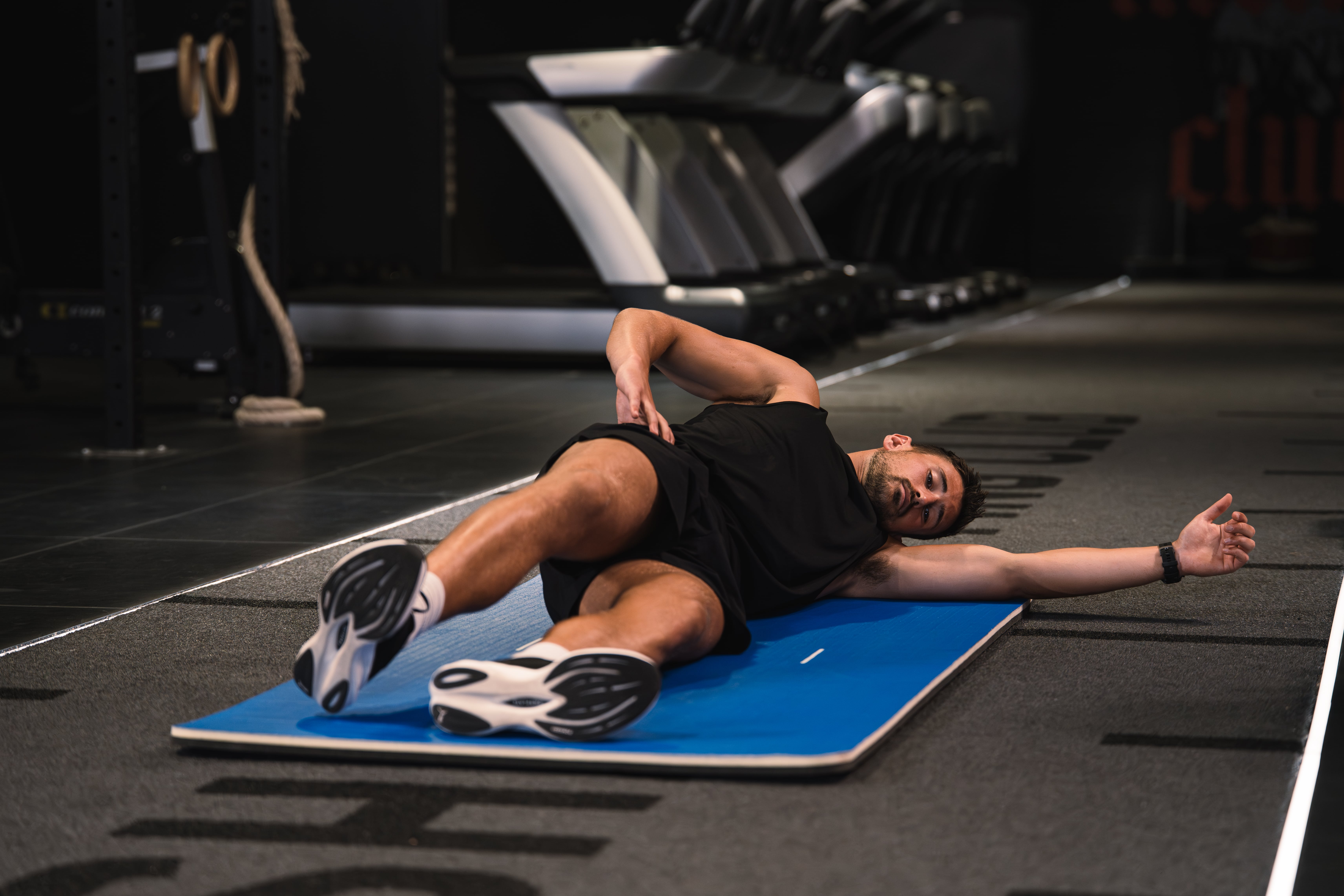
Lower back stiffness often indicates poor hip mobility, forcing your spine to compensate. The lumbar rotation stretch (knees to one side while shoulders stay on the ground) provides temporary relief by loosening the spine, but it doesn't address why your hips aren't rotating properly or why your nervous system is protecting these movements.
What approach works better than static stretching?
To work your hips and lower back effectively, gradually add weight while moving in limited ways and keeping your spine stable. Teach your pelvis to move independently from your spine by training muscle coordination. Stretching alone won't resolve the coordination problems causing stiffness, despite providing temporary relief.
Stretches for Legs and Ankles
Hamstring and hip flexor tightness often stems from core instability or limited ankle mobility. Stretching provides temporary relief, but if the underlying instability persists, tightness returns because your nervous system maintains that protective tone to stabilise movement.
The piriformis stretch targets a deep hip rotator that becomes overactive when glute strength is insufficient. Stretching provides temporary relief, but building glute strength and improving hip motor control eliminates the need for piriformis compensation. The stretch addresses the symptom; strength and coordination training address the cause.
Simple Full-Body Routines
Regular, short routines work better than occasional long sessions because your muscles learn through repetition, not intensity. A few minutes of focused movement daily retrain how your body moves and keep your joints more flexible than stretching for an hour once a week.
Getting help from a professional stretching therapist accelerates progress when you have deeply ingrained movement patterns or restrictions that you cannot fix on your own. A trained therapist can guide your body through movements that prevent compensation, forcing your nervous system to relearn correct movement patterns and creating breakthroughs that self-directed work often misses.
Lifestyle Changes for Long-Term Relief
Real mobility improvement means changing the daily habits that cause stiffness. You can stretch perfectly and still wake up stiff if you spend eight hours in positions that trigger your body's protective response. The goal is to create an environment where your body doesn't need chronic tension because the demands you place on it are varied, manageable, and supported by proper recovery.
These adjustments are small, consistent changes to how you move, sit, and manage stress throughout the day. Each one removes a variable that contributes to boosted muscle tone and restricted movement, gradually shifting your baseline from protective to functional.
Weave Movement into Your Day
When you stay in the same position for a long time, your nervous system treats certain ranges of motion as unnecessary. Over time, you lose the mobility you don't use regularly. Setting a timer to move every hour prevents your tissues from becoming stuck in limited positions and keeps your nervous system's movement map up to date.
These movement breaks don't have to be structured exercise. Walking, reaching overhead, rotating your spine, or squatting briefly all demonstrate that these ranges of motion still work. Variety matters more than intensity.
Set Up an Ergonomic Workspace
A poor workspace setup forces your body into chronic postural changes that become your normal movement pattern. A low monitor trains forward head posture; your neck and shoulders develop chronic tension from constantly supporting a mechanically inefficient position, not from weakness.
Adjusting chair height, monitor position, and keyboard placement eliminates this compensation. Your body maintains neutral alignment without constant muscular effort, reducing protective tension that builds up over hours. Ergonomics isn't about comfort: it's about removing unnecessary load that creates dysfunction over time.
Manage Stress to Relax Your Muscles
Psychological stress increases baseline muscle tone through sympathetic nervous system activation. Your body maintains boosted tension even without physical threat, creating stiffness unrelated to movement patterns or tissue restriction. This stress-induced tension is real, measurable, and resistant to stretching because the cause is neurological rather than mechanical.
Meditation, deep breathing, and gentle movement, such as walking or yoga, calm your sympathetic nervous system, reducing baseline tension that contributes to chronic stiffness. These practices don't stretch muscles; they change your nervous system's state, which alters how much protective tone it maintains. Managing stress is foundational to mobility work, not supplementary to it.
Consider Professional Assisted Stretching
Long-lasting stiffness that doesn't improve with self-treatment often indicates deep compensation patterns you cannot fix alone. Professional-assisted stretching guides your body through movements that prevent compensation, forcing your nervous system to rebuild proper movement patterns from basic positions.
A trained therapist can detect when you're compensating and adjust your position to stop it. You're retraining movement patterns that have been wrong for months or years. This work requires external help and feedback that you cannot provide yourself.
But here's what most people miss: the method matters less than whether you're changing the patterns causing the problem.
Related Reading
Left Arm Stiffness
Stretches For Lower Back Stiffness
How To Relieve Morning Back Stiffness
Finger Stiffness And Locking Treatment
Hand Stiffness Exercises
Muscle Stiffness Treatment
How To Get Rid Of Neck Stiffness
How To Reduce Stiffness After Ankle Sprain
Best Supplements For Muscle Pain And Stiffness
Hip Stiffness Exercises
Muscle Stiffness Doesn’t Fix Itself. Structured Mobility Does.
Your nervous system needs proof, delivered through movement, that restricted ranges are safe and functional. That proof comes from deliberate practice, not passive hope. You can't think your way out of protective muscle tension or wait for compensation patterns to resolve on their own.
🎯 Key Point: Your nervous system adapts to what you demonstrate consistently, not what you do occasionally.
Most people stretch reactively—when pain forces them to—creating inconsistent signals that prevent motor learning. Your nervous system adapts to what you demonstrate consistently, not what you do occasionally. Random stretching provides temporary relief without addressing the underlying coordination problems, compensation patterns, or joint restrictions that created the stiffness. You feel better for a few hours, then the cycle repeats.
"Random stretching provides temporary relief without changing the underlying coordination problems that created the stiffness."
Random Stretching | Structured Mobility |
|---|---|
Reactive approach | Proactive system |
Temporary relief | Long-term adaptation |
Inconsistent signals | Consistent motor learning |
Addresses symptoms | Targets root causes |
Pliability is built for performance-minded individuals seeking more than random stretching. Our app delivers guided mobility sessions designed to restore joint range of motion, reduce protective muscle tension, improve recovery between training sessions, and build strength through controlled movement. With daily-updated programs and a built-in body-scanning feature to identify mobility restrictions, Pliability helps you address stiffness at its source.
⚠️ Warning: Waiting for muscle stiffness to resolve on its own only reinforces compensation patterns and prolongs dysfunction.
Start with structure. Try Pliability free for 7 days on iPhone, iPad, Android, or web.












Move better in 10 minutes a day.
10,000+ five-star reviews.