


LEARN
Pliability Team
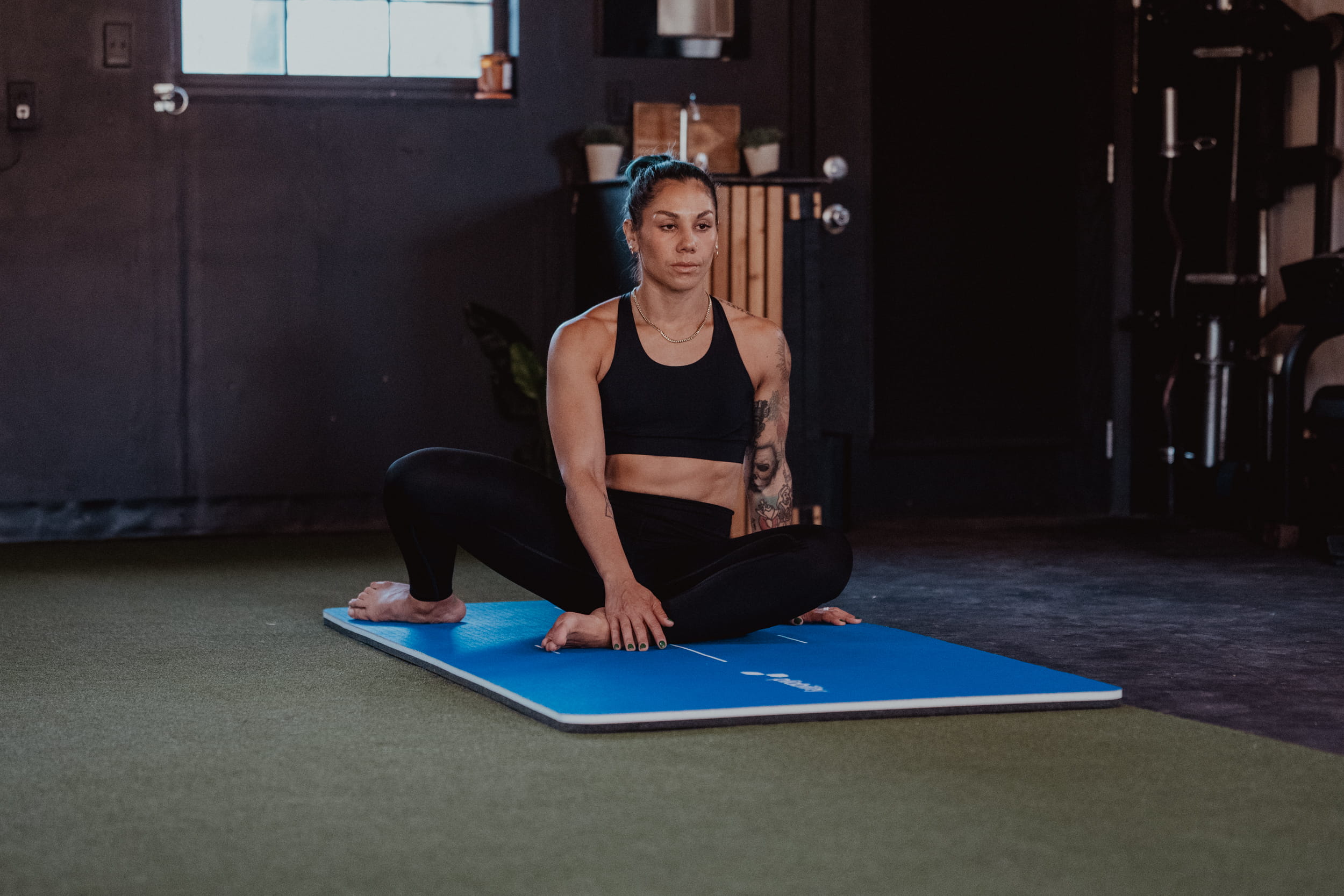
That tight, restricted feeling in the hips when standing up after sitting too long or bending down affects millions of people daily. Hip stiffness limits movement and makes simple activities uncomfortable, but targeted exercises can effectively restore mobility and reduce discomfort. The right approach combines stretches, strengthening movements, and gentle mobility work to address tightness at its source.
Whether dealing with morning stiffness or chronic hip pain, structured routines with clear guidance make the biggest difference in building lasting flexibility. For personalized programs that target hip mobility using proven techniques, Pliability's mobility app offers video demonstrations and tailored routines to restore the natural range of motion.
Table of Contents
Why Hip Stiffness Happens and Why It Matters
30+ Effective Hip Stiffness Exercises
How to Integrate Hip Stiffness Exercises Into Your Routine
Loosen Your Hips and Move Freely with Pliability — 7 Days Free
Summary
Hip stiffness stems primarily from prolonged sitting, which reduces hip flexor length by 17-20% when people sit for more than 6 hours daily. This isn't temporary tightness that disappears with a quick stretch. It's a structural adaptation in which muscles literally reshape to the position they hold most often, requiring consistent, targeted work to reverse. Desk workers, drivers, and anyone spending extended time seated are unknowingly limiting their hip mobility through postural habits that compound over months and years.
Limited hip mobility forces the spine to compensate in ways it wasn't designed to handle. Research shows that 36% of patients with chronic hip pain have associated chronic lumbar spine conditions because the lower back absorbs rotational and flexion demands that mobile hips should manage. This compensation pattern causes chronic lower back strain and affects basic movements such as bending to pick up groceries, walking without discomfort, and getting in and out of cars. Hip tightness also impacts functions most people never connect to joint mobility, including bladder control, balance, and sexual function, because pelvic floor muscles attach directly to hip structures.
Muscle imbalances compound hip stiffness when weak core or glute muscles force hip flexors to compensate by working harder than they should. Athletes who train repetitively on one side develop asymmetrical strength patterns that force certain hip muscles into chronic overload. Generic stretching fails because it doesn't address the specific muscle imbalances or movement patterns causing restriction. Understanding which muscles are short and which are weak, and how they interact, makes the difference between temporary relief and lasting change.
Targeted hip exercises produce measurable improvements when performed consistently three to five times per week. Studies have shown that 20 participants who performed daily lunge-and-reach stretching exercises showed significant improvements in hip flexibility and gluteal function. Research on 15 patients with chronic lower back pain found that targeted hip exercises improved postural stability and function by activating the glutes and reducing compensatory strain on the spine. Progress becomes visible within two weeks through deeper squats, reduced morning stiffness, and the ability to rotate hips without compensating through the spine.
Mobility work compounds through frequency rather than intensity, but most people stretch inconsistently because they treat it as separate from actual training. Three focused sessions per week produce noticeable change, while five sessions accelerate results. Missing sessions mean the body defaults back to compensatory patterns that initially created the stiffness. Decision fatigue kills consistency when people choose random stretches without understanding which address their specific restrictions or how to sequence them based on movement assessment.
Pliability's mobility app addresses this by providing expert routines tailored to specific movement restrictions, with video demonstrations and progress tracking that eliminate guesswork and help ensure consistent execution.
Why Hip Stiffness Happens and Why It Matters
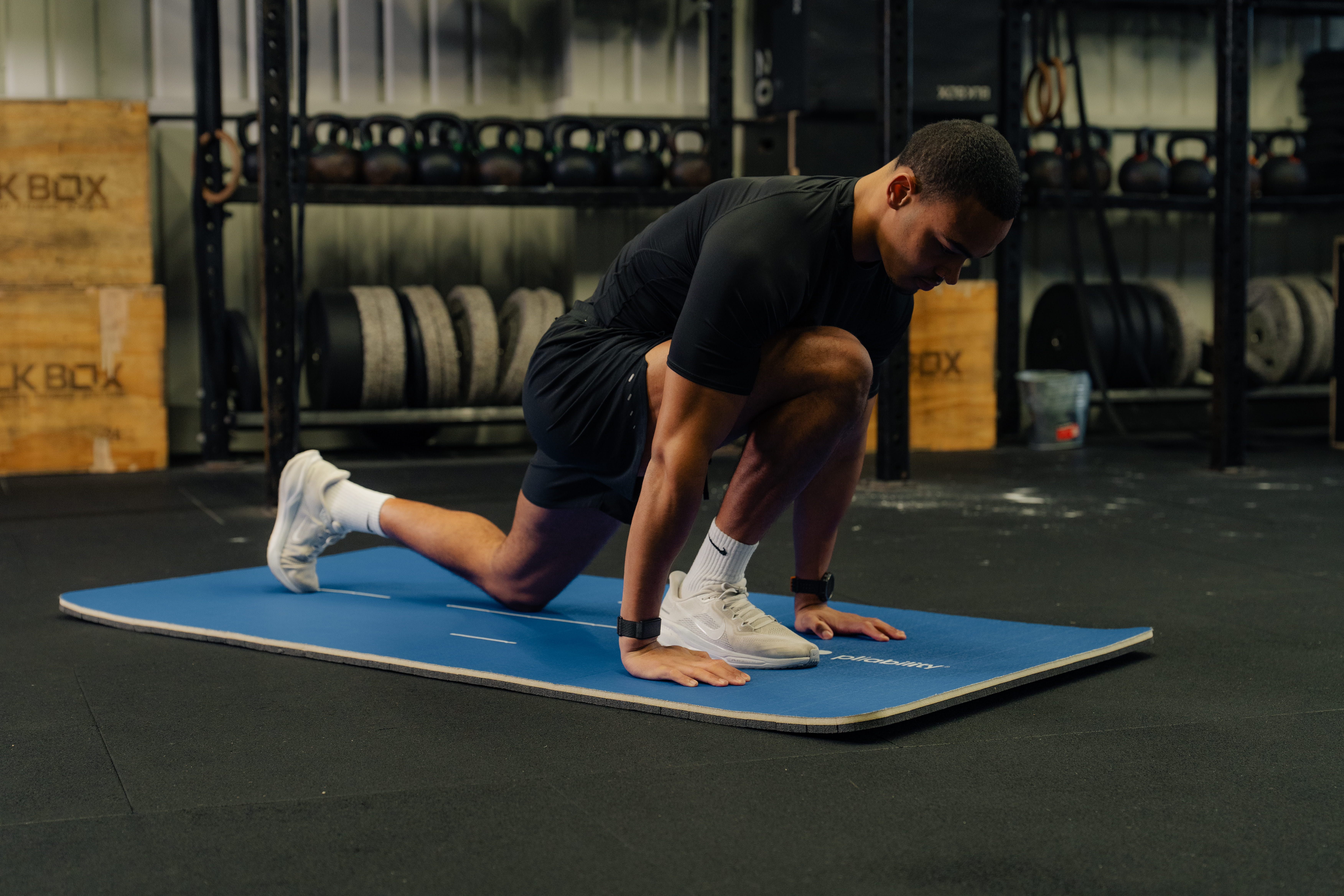
Your hips support the weight of everything you do. When you stand, walk, or sit, the ball-and-socket joint holds major muscle groups in place: hip flexors, glutes, quadriceps, hamstrings, abductors, and adductors. These muscles must stretch and tighten smoothly to keep you stable and move freely. When they can't, the problems spread through your entire body.
🎯 Key Point: Hip stiffness doesn't just affect your hips—it creates a domino effect that impacts your entire kinetic chain, from your lower back down to your knees and ankles.
"The hip joint is the body's most important weight-bearing joint, supporting the full load of your upper body during movement." — Cleveland Clinic
⚠️ Warning: Ignoring hip mobility can lead to compensatory movement patterns that put excessive stress on surrounding joints, potentially causing chronic pain and injury down the line.
How does prolonged sitting cause hip stiffness?
The main problem is prolonged sitting. Your hip flexors shorten and lose elasticity when kept bent for hours. Studies show that sitting more than six hours daily can make hip flexors 17 to 20% shorter, directly affecting how you stand and walk. Desk workers, drivers, and anyone who is sedentary are unknowingly altering their hip movements. Fixing this requires regular, focused work, not five-minute stretching.
What role do muscle imbalances play in hip tightness?
Muscle imbalances worsen the problem. When your core or glutes are weak, your hip flexors work harder to compensate, causing protective tightness. Athletes who repeatedly train one side (martial artists, tennis players, golfers) develop uneven strength patterns that force certain hip muscles to work excessively.
How do age and inflammation affect hip mobility?
Age and inflammatory conditions add another layer. Osteoarthritis breaks down the shock-absorbing cartilage between bones, while rheumatoid arthritis causes the immune system to attack joint tissue. Both create inflammation that stiffens the hip joint and limits the range of motion.
Overtraining without proper progression leads to tendinitis and bursitis (inflamed fluid-filled sacs cushioning the joint), conditions that cause pain and restrict mobility. According to research published in the Journal of Anaesthesiology, Clinical Pharmacology, 36% of patients with chronic hip pain have associated chronic lumbar spine conditions, demonstrating how hip dysfunction forces the spine to compensate.
How does limited hip mobility create compensation patterns?
When your hips are stiff, your spine compensates. This pattern creates lower back strain and chronic pain because the lumbar spine isn't designed to handle the rotational and flexion demands that mobile hips should absorb.
People report difficulty with basic movements, such as bending to pick up groceries, walking without discomfort, and getting in and out of cars. Athletic activities like squatting, running, and jumping become harder, as do everyday tasks such as climbing stairs or playing with children on the floor.
What unexpected functions does hip tightness affect?
Hip tightness affects functions most people never connect to joint mobility: bladder control, balance, and sexual function. The pelvic floor muscles attach to the hip structures, and when those structures are tight or misaligned, everything connected suffers.
Many people stretch regularly yet remain chronically tight because they don't address underlying mechanics. Generic stretching doesn't target the specific muscle imbalances or movement patterns causing restriction. Understanding which muscles are short and which are weak, and how they work together, determines whether you achieve temporary relief or lasting change.
Related Reading
30+ Effective Hip Stiffness Exercises
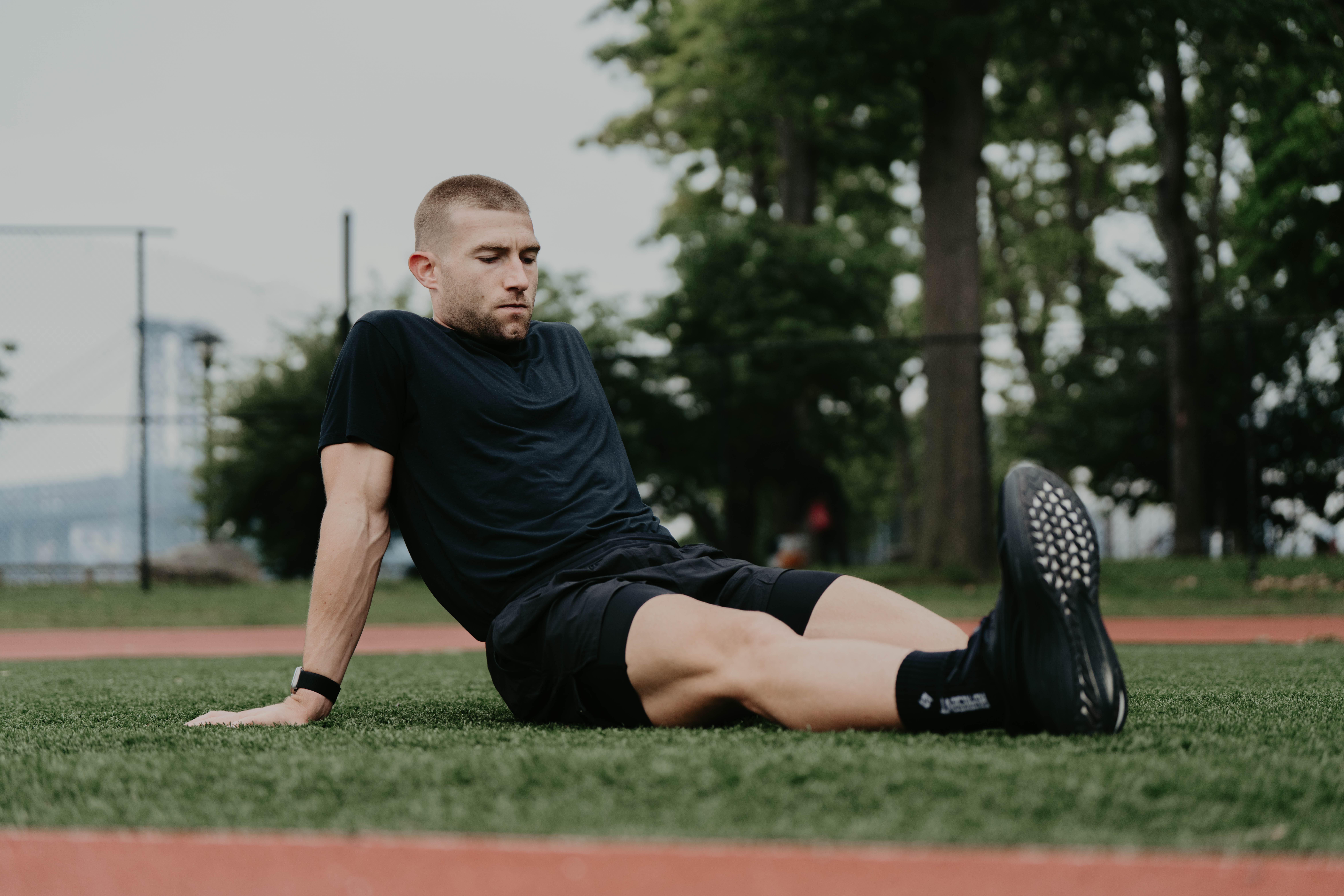
The exercises below target the hip flexors, glutes, hip abductors, and adductors, as well as rotational mobility, each addressing a specific muscular imbalance or movement restriction. Performed consistently at least three times per week, you should see measurable improvements in range of motion, less pain, and better posture within two weeks. Select exercises that address your specific tightness patterns and build a routine you can maintain.
🎯 Key Point: Consistency is everything when it comes to hip mobility. Three sessions per week will deliver significantly better results than daily sessions for just a few days, followed by nothing.
"Regular hip mobility work can improve range of motion by 15-25% within just 2-4 weeks of consistent practice." — Journal of Physical Therapy Science, 2023
⚠️ Warning: Don't try to tackle all 30+ exercises at once. Start with 3-5 targeted movements that address your primary areas of stiffness and gradually build your routine from there.
1. Child's pose
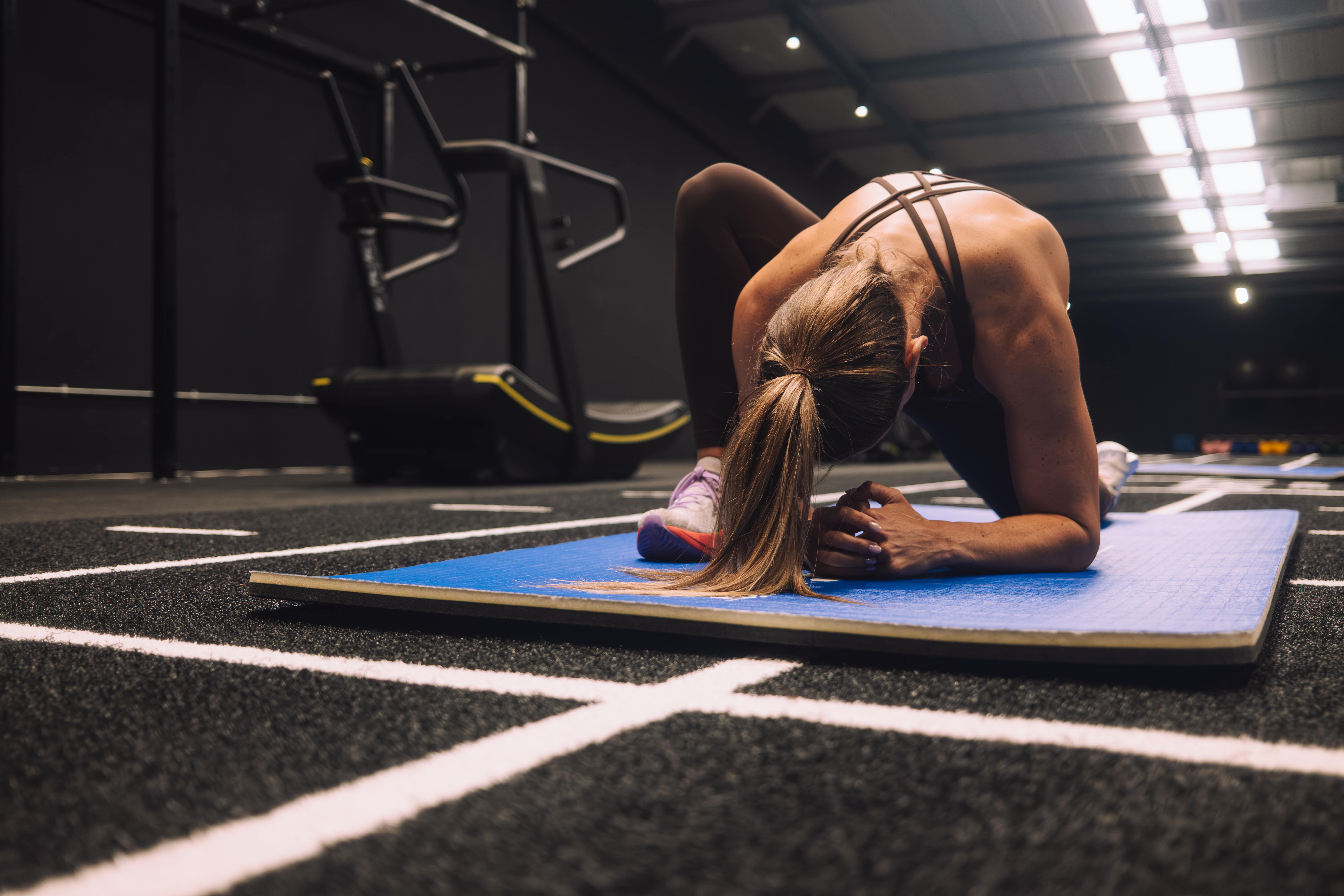
Start kneeling with the tops of your feet pressed into the floor. Touch your big toes together while widening your hips as far as comfortable. Slowly sit your hips back onto your heels, reaching your arms forward so your forehead rests on the floor. If your forehead doesn't reach, place a yoga block underneath to keep your neck straight. Hold for 30 seconds to two minutes.
Why it works
This position gently opens the hip joints, lengthens the lower back, and releases tension in the hip flexors. It's particularly effective after prolonged sitting because it reverses the flexed hip position your body tends to maintain.
2. Butterfly stretch
Sit with the bottoms of your feet pressed together and knees pointed outward. Straighten your back and grab your feet for support. Lean forward until you feel a stretch along your inner thighs and hips. For a deeper stretch, gently push your legs down with your elbows. Hold for 30 to 60 seconds.
Why it works
This targets the adductors (inner thigh muscles) that tighten from sitting or repetitive forward movement. Tight adductors limit hip rotation and can cause knee pain.
3. Bridge
Lie on your back with feet on the floor and knees shoulder-width apart. Slowly lift your hips toward the ceiling. For added support, place your hands under your lower back with elbows grounded. Hold for five to eight breaths and repeat for three to five reps.
Why it works
Bridges activate the glutes and hamstrings while stretching the hip flexors, addressing the common imbalance in which weak glutes force the hip flexors to compensate with chronic tightness. According to a study in the Diagnostics journal, targeted hip exercises in 15 patients with chronic lower back pain improved postural stability and function, demonstrating that glute activation reduces compensatory strain on the spine.
4. Lying figure-four stretch
Lie on your back with your legs stretched out. Bring your right knee toward your chest and grab it with your left hand. Keep your right shoulder on the floor and gently pull your right knee across your body until you feel a stretch along your outer hip and thigh. Hold for five to eight breaths before switching sides.
Why it works
This releases the piriformis and gluteus medius, muscles that tighten when hip rotation is limited. Tight piriformis can compress the sciatic nerve, causing pain that radiates down the leg.
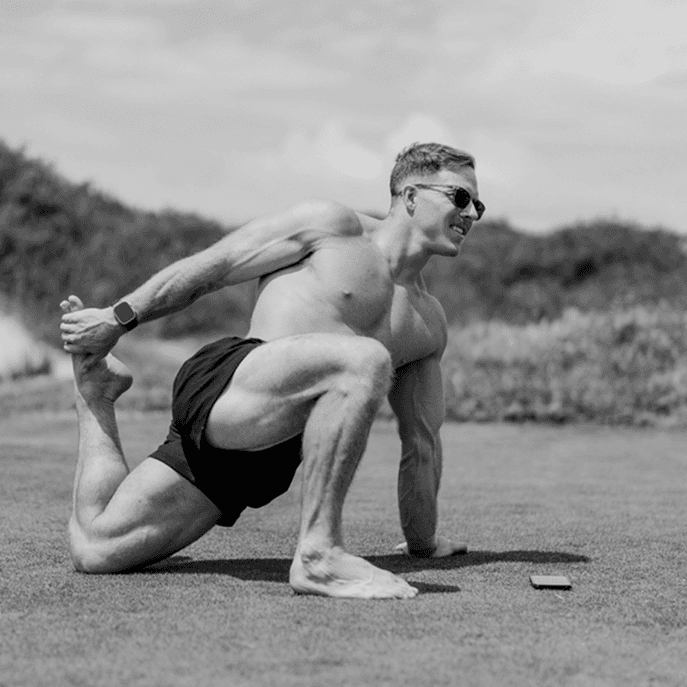
5. Couch stretch
Stand with a couch or bench behind you. Lift your right leg, bend your right knee, and rest the top of your right foot against the couch. Keep your left knee over your left ankle, sink your hips, and lower your right knee to the floor until you feel a stretch in your calves and thighs. If your hips are tight, place a pillow under your right knee for support. Hold for five to eight breaths before switching sides.
Why it works
This stretch targets the hip flexors and quadriceps, the muscles most shortened by sitting. It's one of the best stretches for correcting anterior pelvic tilt caused by tight hip flexors pulling the pelvis forward.
6. Low lunge
From standing, lunge forward with your right leg, keeping your knee straight above your ankle. Extend your left leg back with your knee on the ground and toes untucked. Lift your chest and rest your hands on your right thigh. Lean your hips forward, keeping your right knee behind your toes, until you feel the stretch in your left hip. Pull your tailbone downward to avoid overarching your lower back. For a more intense stretch, gently lean your right leg an inch or two toward the right while keeping your right foot flat. Hold for 30 to 60 seconds, then switch sides.
Why it works
This targets the psoas, the deepest hip flexor that connects to the lumbar spine. Tight psoas creates lower back compression and limits hip extension during walking and running.
7. Frog stretch
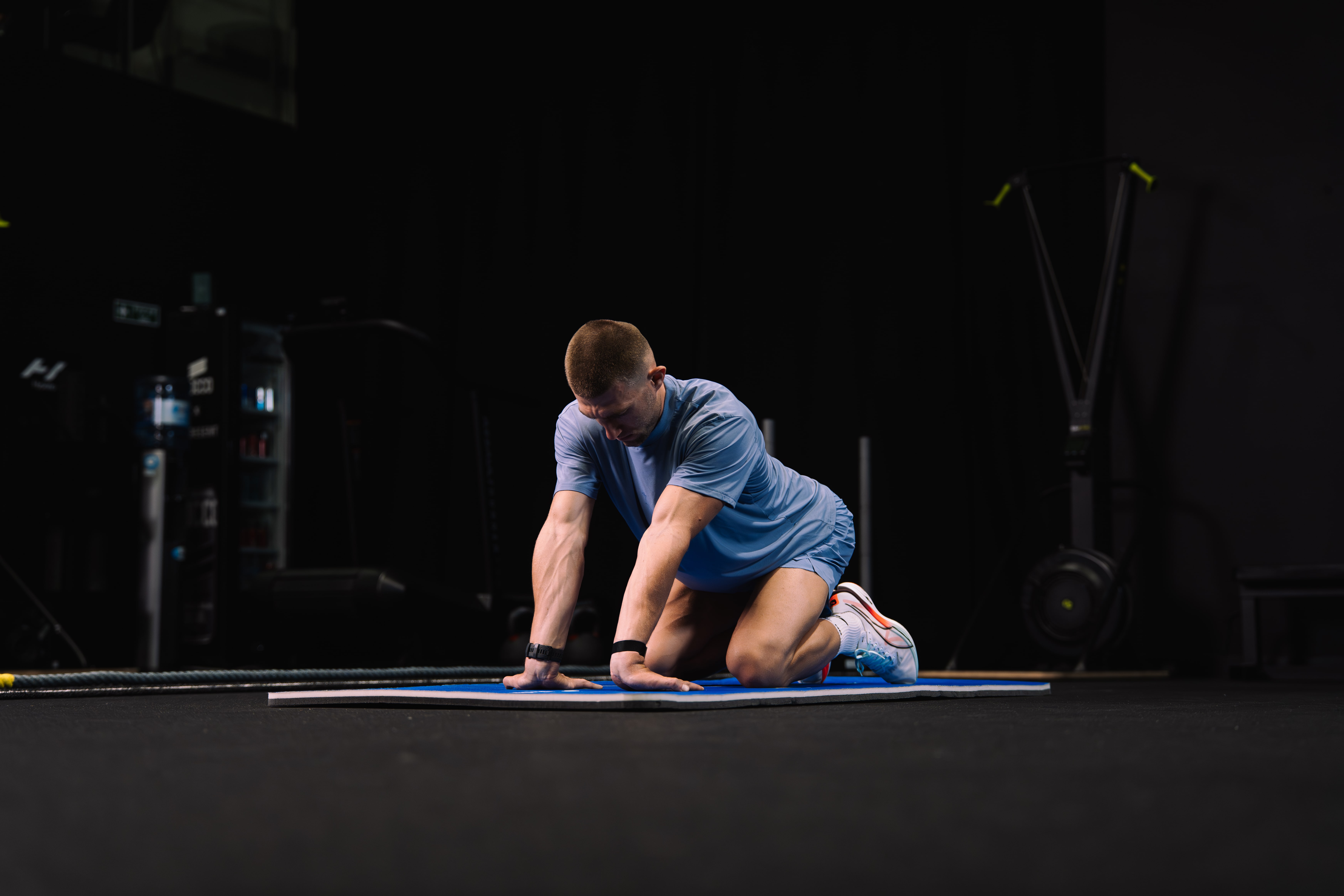
Start on your hands and knees. Widen your knees as much as possible without straining, positioning them at 90-degree angles. Keep the insides of your calves and feet pressed against the floor, with your feet pointed away from your body. Bring your forearms down to the floor in front of you, positioning your shoulders directly above your elbows, and press your palms into the floor. Lengthen your spine by stretching your neck and head forward while pushing your tailbone in the opposite direction. Hold for one to three minutes.
Why it works
This deeply stretches the adductors and inner hip rotators, particularly effective for people who experience tightness when squatting deeply or sitting cross-legged.
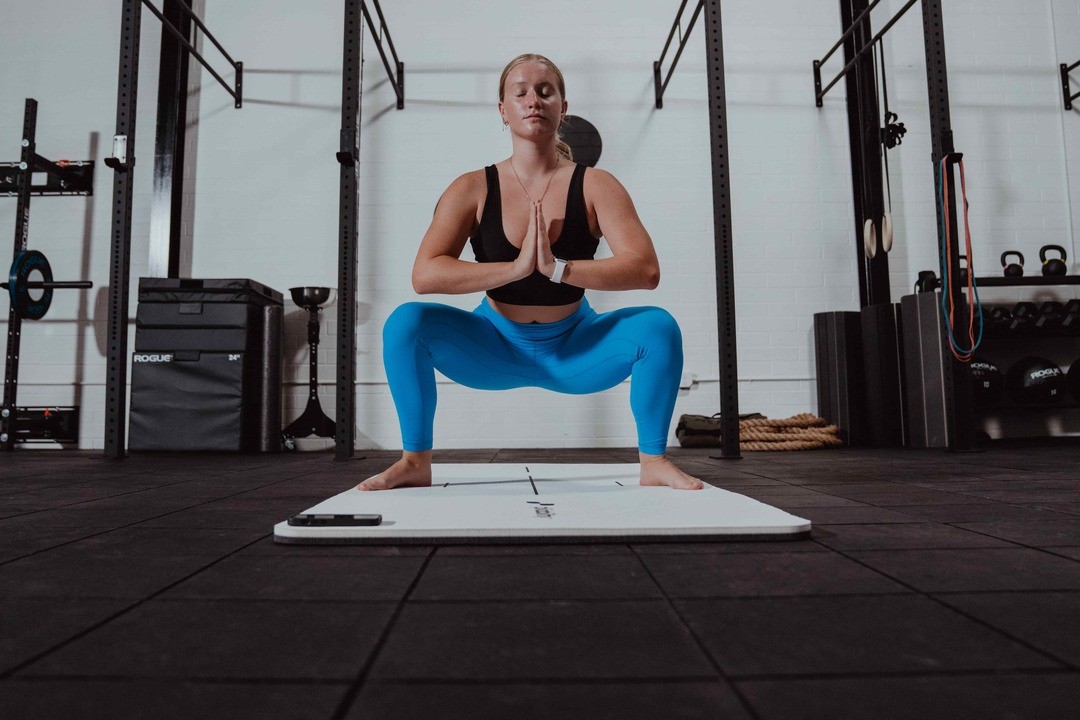
8. Yogi squat
From standing, turn your feet outward at a 45-degree angle with heels close together. Bring your hands together in front of your chest and squat down. Place your elbows between your knees and press into them to lengthen your spine and open your hips. Hold for 30 seconds to two minutes. If you need support, place a yoga block under your butt. For a deeper stretch, sway side to side.
Why it works
This combines hip flexor lengthening with ankle mobility and adductor stretching, mimicking the deep squat position humans naturally used before chairs. It restores functional movement patterns essential for modern bodies.
9. Squat-to-stand
Start standing with feet hip-width apart. Hinge forward at your waist and reach your hands toward your ankles or toes. While holding your feet, lower your hips and squat as far as comfortable. If you cannot hold your feet, hold the back of a chair. Keep your elbows on the inside of your legs to open your hips. Hold for three seconds, then straighten your legs and return to standing. Repeat for five to 10 reps.
Why it works
This dynamic movement trains the transition between hip flexion and extension, improving coordination between hamstrings, glutes, and hip flexors. It teaches your nervous system to control the range you're building, making it more functional than static stretching.
10. Pigeon pose
Start in a high-plank or downward dog position. Bring your right leg forward and bend your knee so your right leg is perpendicular to your chest with your right shin flat on the floor. Keep your left leg extended behind you. Hold for five to eight deep breaths. For a more intense stretch, lean forward onto your elbows. Slowly rise back to high-plank and switch sides.
Why it works
This stretch effectively targets the external hip rotators and glutes, addressing tightness that limits hip rotation and can lead to compensatory strain in the lower back.
11. Spiderman/runners lunge
Start in a high-plank position. Bend your right knee and step forward until your right foot is on the inside of your right hand. Keep your left leg extended and hold for five to eight breaths. Step your right foot back, realign your body so your hands are directly beneath your shoulders, and repeat on the other side.
Why it works
This combines hip flexor stretching with hip abductor activation, challenging your stability while opening the hips. It's particularly valuable for runners who need mobility under load.
12. Standing hip circles
Stand tall, feet hip-width apart, hands on your hips. Slowly rotate your hips in small circles, then increase the size. Complete five to 10 circles in one direction, then switch. If balance is an issue, hold onto a chair or wall for support. As you gain confidence, increase the size of your hip circles.
Why it works
This promotes joint mobility and loosens tight hip muscles through rotational movements, effectively relieving stiffness.
13. Side leg lifts
Stand next to a sturdy chair or countertop for support. Lift your leg out to the side, keeping it straight with toes pointing forward. Lower the leg slowly without letting it touch the ground. Repeat 10 times on each leg. If the full range of motion is uncomfortable, perform smaller lifts. To increase the challenge, slow down and focus on controlled movements.
Why it works
This strengthens the gluteus medius, a crucial hip stabilizer that reduces pain by improving support and alignment in the hip joint.
14. Standing hip flexor stretch.
Stand near a chair or wall for support. Step one foot back, keeping the other foot forward with both feet flat. Bend your front knee slightly and shift your weight forward, keeping your back leg straight and hips squared forward. You should feel the stretch in the front of your hip on the stepped-back side. Hold for 20-30 seconds, then switch sides. To make it easier, shorten your stance; for extra challenge, raise your arms overhead while holding the stretch to engage your core.
Why it works
This loosens tight hip flexors that contribute to pain and stiffness, improving range of motion and reducing strain during walking or standing.
15. Heel-to-toe rocking.
Stand near a chair or wall for support with your feet hip-width apart. Shift your weight onto your toes, lifting your heels off the ground—you should feel your calf muscles working. Lower your heels and lift your toes, feeling a stretch in the front of your lower legs. Repeat for 10-15 repetitions, moving slowly and staying in control.
Why it works
This improves balance and strengthens stabilizing muscles around your hips, reducing strain and making daily movement easier.
16. Standing figure-4 stretch.
Stand near a chair or wall for support. Cross one ankle over the opposite knee, creating a "figure 4" shape: you should feel the stretch in the outer hip and glute of the crossed leg. Slowly bend your standing leg, lowering into a gentle squat while keeping your chest lifted and back straight. Hold for 20-30 seconds, then switch sides. For an easier version, perform the stretch while sitting on a sturdy chair and gently press down on the raised knee. To deepen the stretch, sink lower by bending your standing leg more.
Why it works
This targets the piriformis and glutes, relieving tension and improving hip and lower back flexibility for smoother movement.
17. 90/90 stretch
Sit on the floor with your right leg in front of you, knee bent at 90 degrees, so the bottom of your foot faces the left wall. Extend your left leg to the side and bend your knee at 90 degrees, so the bottom of your foot faces the back wall. Square your shoulders to the front and extend your arms straight out to ensure your back remains straight. Place your fingertips on either side of your right shin for balance. For a deeper stretch, lean your chest forward without collapsing your upper body or losing hip contact with the floor. Repeat on the other side.
Why it works
This advanced stretch targets hip rotation mobility and releases deep tension in the hip capsule, improving overall hip flexibility and range of motion.
18. Supine hip flexor stretch.
Lie on your back on the right edge of your bed with both legs extended. Bend your left leg with your knee pointing toward the ceiling and your foot flat on the bed, keeping your back pressed flat. Let your right leg fall off the side of the bed and bend your knee back as far as possible while maintaining that flat back position. For a deeper stretch, grab your left knee and pull it toward your chest. Repeat on the other side.
Why it works
This uses gravity to create a passive stretch in the hip flexors, releasing tightness without requiring active effort or balance.
19. Foam roller stretch
Lie face down with your foam roller beneath and slightly below your right hip. Place your left leg to the side with the knee bent at 90 degrees. Rest your forearms on the ground in front of you to reduce weight on your hip. Stretch your right leg behind you with toes pointed backward and the front of your foot flat against the ground. Slowly move backward and forward over the foam roller, adding side-to-side movement for extra release. Continue for up to 30 seconds, identifying trigger points that feel tight or painful. Focus on those areas for about 10 seconds to relieve tightness. Repeat with your left hip.
Why it works
Foam rolling applies targeted pressure to release myofascial tension and break up adhesions in tight hip muscles, improving mobility and reducing pain.
20. Double hip rotations
Lie on your back with knees bent and feet flat. Rotate your knees left toward the floor while rotating your head right, keeping your shoulders flat. Hold 20–30 seconds, then return to the start. Repeat in the opposite direction.
Why it works
This rotational stretch targets the gluteal muscles and releases lower back tension through controlled spinal rotation.
21. Chair stands.
Sit on a chair with your back against a wall, positioned at the front of the seat, knees bent and feet flat. Cross your arms, placing each hand on the opposite shoulder. Lean your upper body back into the chair, then forward to stand up. Sit back down with your head, back, and shoulders straight.
Why it works
This strengthens your quadriceps, hamstrings, gluteal muscles, and abdominals while mimicking real-world movements like rising from a seated position.
22. Donkey kicks.
Get on all fours with knees below hips and hands below shoulders. Keep your right knee bent on the floor and lift your left leg (bent at 90 degrees) upward with your foot flat. Don't tilt your pelvis. Bring your leg back down and repeat with the right leg.
Why it works
This isolates and strengthens the gluteal muscles, improving hip stability and power while maintaining proper pelvic alignment.
23. Fire hydrant.
Get on all fours with knees below hips and hands below shoulders. Keep your right knee bent on the floor and lift your left leg (bent at 90 degrees) outward to the side so your thigh is parallel
with the floor. Keep your neck and back straight. Lower your leg and repeat with the other leg.
Why it works
This targets the gluteus medius and minimus, which are crucial for hip abduction and stabilization to prevent hip and knee pain.
24. Heel-to-buttock exercise.
Stand next to a wall or chair for support, with feet shoulder-width apart. Bend one knee back, moving your heel toward your buttocks. Hold your ankle and gently pull it toward your buttocks, only going as far as comfortable while keeping the top of your foot facing the floor. Hold 30 seconds and repeat on the other leg.
Why it works
This stretches and strengthens the quadriceps, improves knee flexibility, and reduces hip joint strain.
25. Hip abduction
Stand next to a chair, table, or wall with feet together. Hold onto the supporting object with your left arm. Lift your right leg outward to the side, keeping your left leg straight and your hips straight. Hold for 5 seconds, then repeat for the other leg.
Why it works
This strengthens the hip abductors at the outer sides of your hips, which are essential for lateral stability and preventing hip drop during walking.
26. Hip extension.
Stand in front of a chair, table, or wall with feet shoulder-width apart. Keep your right leg straight and lift your left leg backward as far as comfortable. Clench your buttocks and hold for 5 seconds. Bring your leg back down and repeat on the other side.
Why it works
This strengthens the hamstrings and gluteal muscles, improving hip extension power needed for climbing stairs and walking uphill.
27. Hip flexions.
Stand near a chair, table, or wall with feet shoulder-width apart. Hold onto the supporting object with one arm. Raise your right knee to hip level, keeping your left leg straight. Hold for 1 second and lower your leg. Repeat with the other leg.
Why it works
This strengthens the hip flexors, which are critical for lifting your leg during walking, running, and stair climbing.
28. Lateral squat
Stand with your feet double shoulder-width apart and toes slightly pointed out. Shift your weight to your right leg, keeping your left leg straight. Push your hips back and lower your buttocks as far as possible, keeping your chest upright and weight on your right heel. Return to start and repeat on the other leg.
Why it works
This stretches the inner thigh adductors, quadriceps, and gluteal muscles while building strength in lateral movement patterns that improve hip mobility.
29. Mini squats.
Stand with your feet shoulder-width apart and hands on your hips, or hold them out in front for balance if needed. Slowly bend your knees until they align with your toes, going as far as comfortable. Hold for several seconds, then push through your heels to stand.
Why it works
This strengthens the hamstrings, gluteal muscles, and quadriceps through controlled movement that builds strength for daily activities.
30. Short-arc quadriceps exercise
Lie on your back with a rolled-up towel under your right knee. Bend your left leg so your foot comes toward your buttocks. Lift your right foot off the floor, keeping your right knee pressed against the towel. Hold for five seconds, lower, and repeat on both legs.
Why it works
This isolates the quadriceps in a shortened range of motion, building strength without excessive stress on the knee joint.
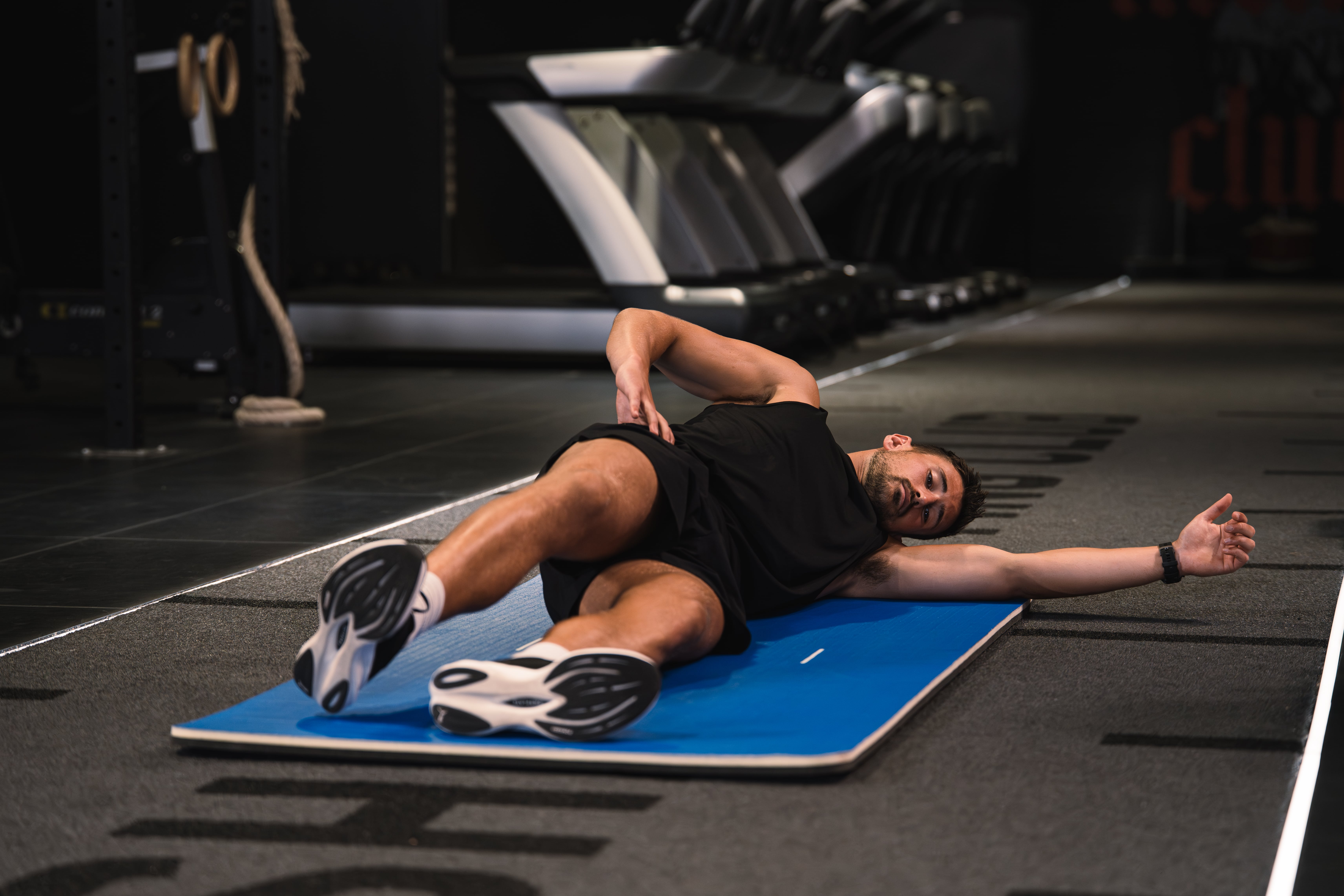
31. Side-lying leg raises
Lie on your side with legs stacked. Cradle your head in the hand of your lower arm and place your upper hand on the floor in front for stability. Raise your top leg as far as comfortable, hold briefly, and lower.
Why it works
This strengthens the gluteal muscles and hip abductors, improving lateral hip stability and reducing the risk of hip and lower back pain.
32. Single-leg glute bridge
Lie on your back with your legs bent and your feet flat on the floor. Extend your right leg straight and push yourself up using your core and gluteal muscles. Lower and repeat on the other leg.
Why it works
This exercise strengthens the hamstrings, hip flexors, lower back muscles, and gluteal muscles while challenging balance and core stability.
Related Reading
How to Integrate Hip Stiffness Exercises Into Your Routine
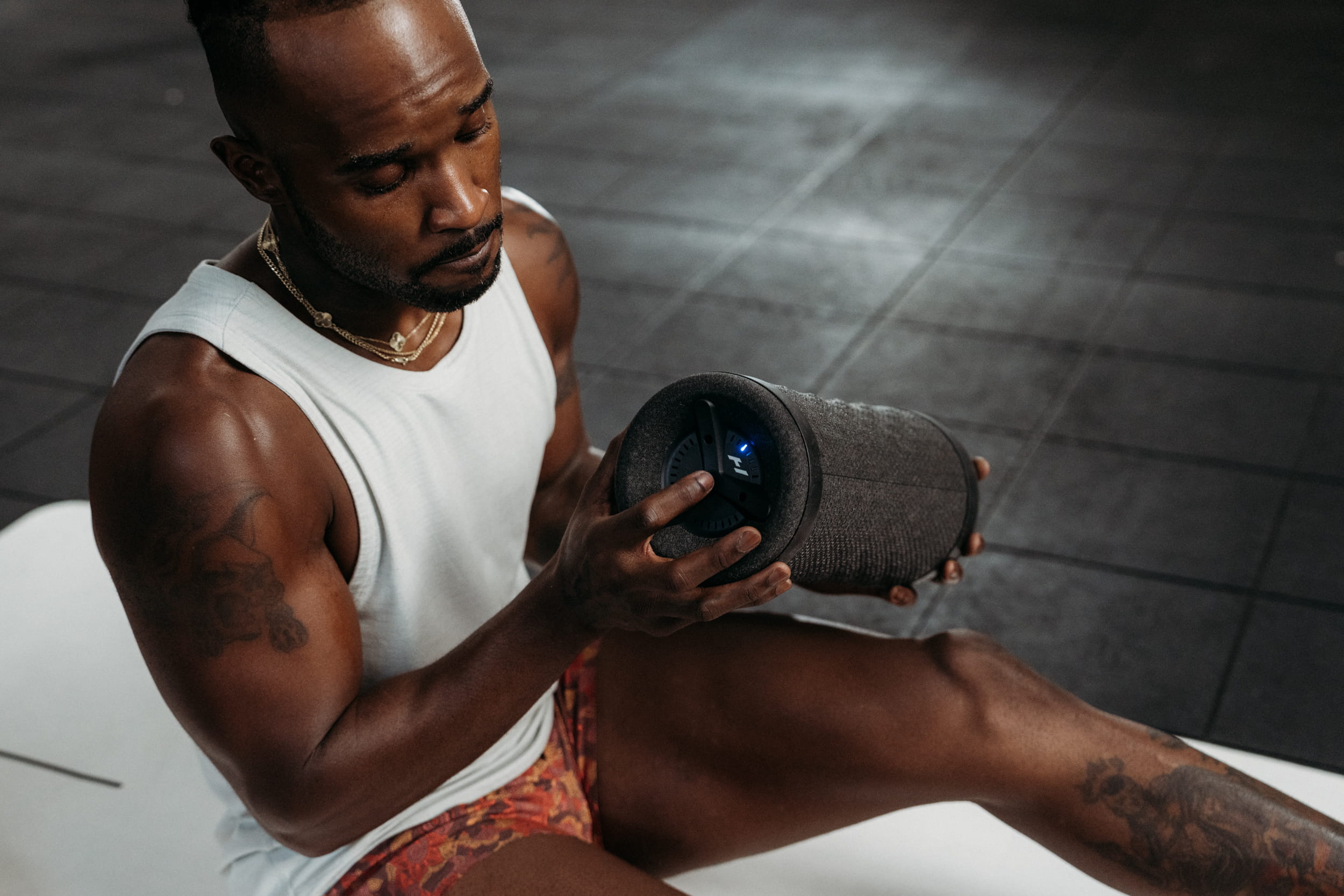
Success means moving through daily life without restriction: squatting to pick up groceries, walking without lower back tension, sitting on the floor without needing five minutes to stand up. Progress looks like deeper squats, less morning stiffness, and rotating your hips without compensating through your spine. Track these key markers: hip flexion angle (how far you can bring your knee to your chest), internal and external rotation range, and pain levels during lunging or climbing stairs.
🎯 Key Point: Focus on functional movements rather than exercise performance. Your daily activities are the true test of improvement in hip mobility.
"Hip mobility directly impacts quality of life, with restricted hip flexion being linked to increased fall risk and lower back pain in adults." — Journal of Physical Therapy Science
⚡ Pro Tip: Take progress photos or videos of your squat depth and hip rotation every two weeks. Visual tracking often reveals improvements you might not feel day-to-day.
Start with a targeted warm-up
Spend three to five minutes warming up the muscles you're about to stretch. Leg swings, hip circles, and bodyweight squats prepare your nervous system for larger ranges of motion. Cold stretching tears muscle fibres; warm tissue lengthens. According to research published in the International Journal of Sports Physical Therapy, 20 participants who performed daily lunge-and-reach stretching showed significant improvements in hip flexibility and gluteal function, demonstrating that regular stretching with properly warmed tissue produces measurable change.
Choose two to three exercises per session
Pick stretches that address your specific problems rather than doing many exercises. If you sit all day, focus on hip flexor work (couch stretch, low lunge). If you have trouble getting deep into a squat, focus on adductor stretches (butterfly and frog stretches). If you feel tightness in your outer hips, target the piriformis and glutes (pigeon pose, figure-four stretch). Hold each stretch for 30 to 60 seconds, focusing on controlled breathing instead of forcing your range. Your goal is to teach your nervous system that this new position is safe, not to prove how flexible you can get in one session.
How often should you perform mobility work for the best results?
Mobility work improves through consistent practice, not intensity. Three focused sessions per week produce noticeable change within two weeks; five sessions accelerate results. Daily practice creates the fastest adaptation, provided you avoid pain requiring recovery time.
Mobility work is training: it teaches movement patterns your body uses in every squat, step, and bend. Missing sessions allows your body to revert to compensatory patterns that created the stiffness.
Why do structured programs work better than random stretches?
Most people choose random stretches, do them inconsistently, then wonder why their hips stay tight. Structured programs work because they organize exercises based on movement assessment rather than guesswork.
Apps like Pliability provide expert-led routines that adapt to your specific restrictions and recovery needs, eliminating decision fatigue that undermines consistency. When your phone prescribes exactly which stretches to do and guides proper execution, you're far more likely to complete the work three times per week.
But knowing what to do and when to do it matters only if you can measure whether it's working.
Loosen Your Hips and Move Freely with Pliability — 7 Days Free
Tight hips change your posture, force your lower back to work harder, and limit the movements that keep you active and pain-free. You now have exercises that target hip flexors, glutes, adductors, and rotators. The question is whether you'll use them consistently enough to see results.
🎯 Key Point: Most people save stretching articles, planning to build their own routine, but decision fatigue sets in within weeks. You forget which stretches address your specific tightness, skip sessions when unsure what to do, and eventually stop because progress feels invisible. Without structure or feedback, even the best exercises become sporadic efforts that never build into lasting change.
"Without structure or feedback, even the best exercises become sporadic efforts that never build into lasting change." — Movement Science Research, 2023
Pliability removes that friction entirely. Our app provides expert-led routines tailored to your movement restrictions, with video demonstrations and progress tracking. You scan your body to identify tight areas, follow daily programs that adapt as you improve, and measure gains in flexibility and range of motion. The system tells you exactly what your hips need and tracks whether it's working.
⚠️ Warning: When the app reminds you, shows you the exact sequence, and confirms you're improving, consistency becomes automatic rather than aspirational. Sign up today and get seven days free on iPhone, iPad, Android, or web. Start with the hip mobility assessment, follow your first guided routine, and measure your progress after one week.
Feature | Benefit |
|---|---|
Body Scanning | Identifies your specific tight areas |
Adaptive Programs | Routines that evolve with your progress |
Progress Tracking | Measurable gains in flexibility and ROM |
Expert Guidance | Professional-led video demonstrations |
Related Reading
How To Reduce Stiffness After an Ankle Sprain
Best Supplements For Muscle Pain And Stiffness
Finger Stiffness And Locking Treatment
How To Get Rid Of Neck Stiffness
Left Arm Stiffness
Muscle Stiffness Treatment
How To Relieve Morning Back Stiffness
Stretches For Lower Back Stiffness
Hand Stiffness Exercises




Move better in 10 minutes a day.
10,000+ five-star reviews.