


LEARN
Pliability Team

When finger stiffness and locking disrupt daily activities like buttoning shirts or gripping coffee cups, even simple tasks become frustrating obstacles. These mobility issues can stem from various causes, including trigger finger, arthritis, or general joint tension. Effective treatment approaches focus on targeted exercises, stretches, and therapeutic techniques that restore flexibility and reduce inflammation. The right combination of interventions can help people regain full hand function and return to their normal routines.
Finding relief doesn't require endless doctor visits or complicated therapy schedules. Targeted exercises and stretches designed specifically for hand mobility can provide significant improvement when performed consistently. Many people benefit from personalized routines that address their specific symptoms and fit smoothly into their daily lives. For those seeking convenient, guided solutions, Pliability's mobility app offers specialized programs that help restore finger flexibility and function.
Table of Contents
Why Finger Stiffness and Locking Happen
Examples of Finger Stiffness and Locking Treatments
Choosing the Right Treatment for You
Stop Letting Stiffness Hold You Back—Move Freely Again
Summary
Trigger finger affects 2-3% of the population and occurs when inflammation causes the flexor tendon to catch on the A1 pulley at the base of your finger. A nodule forms on the swollen tendon, creating a mechanical jam as it tries to pass through the narrowed pulley tunnel. This explains why your finger snaps or locks rather than bending smoothly, and why symptoms worsen from occasional catching to complete locking without intervention.
Morning stiffness that improves throughout the day reflects how fluid accumulates around inflamed tissues during sleep. Movement pumps this fluid away temporarily, which is why your fingers loosen as you use them. This pattern signals an underlying inflammatory problem that won't resolve on its own, despite the daily improvement you experience after waking.
Corticosteroid injections deliver concentrated anti-inflammatory medication directly to the A1 pulley, producing an average of 11 degrees of improvement in finger flexion within days. Relief typically lasts three to six months, but injections don't permanently fix the mechanical dysfunction. They create a window to address root causes through targeted mobility work that maintains improved range after inflammation decreases.
Splinting, combined with NSAIDs, reduces morning stiffness in 60-70% of early-stage cases by keeping your finger straight at night, when inflammation naturally accumulates. The splint prevents compression of the already-inflamed pulley, giving the tendon space to glide without fighting a bent position that further narrows the tunnel.
Treatment success rates increase by 60% when interventions are tailored to individual symptom severity and duration. Mild cases respond to four to six weeks of splinting and tendon gliding exercises, moderate cases need injections when conservative care fails beyond six weeks, and severe locking requires surgical release when your finger remains stuck in a bent position that prevents basic hand function.
Pliability's mobility app provides structured tendon gliding routines and hand-specific stretching sequences that turn the temporary relief from injections into lasting function through consistent practice, with body-scanning features that track exactly where stiffness exists and how it changes week by week.
Why Finger Stiffness and Locking Happen

You try to bend your finger, and it won't move. Or it suddenly locks in place, refusing to straighten without help from your other hand. According to Medical News Today, trigger finger affects 2-3% of the population, and ignoring it leads to chronic pain, reduced mobility, and frustration with everyday tasks. The problem: the mechanical system that allows smooth finger movement has broken down.
🔑 Key Point: Trigger finger isn't temporary stiffness—it's a mechanical breakdown that worsens without proper intervention.
"Trigger finger affects 2-3% of the population, leading to chronic pain and reduced mobility when left untreated." — Medical News Today
⚠️ Warning: Ignoring early symptoms of finger locking can result in permanent stiffness and the need for surgical intervention to restore normal function.
The Pulley System That Makes Movement Possible
Your fingers bend because flexor tendons glide through fibrous tunnels called pulleys, like a bicycle brake cable running through guides. The A1 pulley at the base of each finger is the most common site of trigger finger problems. When healthy, the tendon glides smoothly. When inflammation thickens the pulley or swells the tendon, that smooth motion becomes catching, popping, or locking.
How does inflammation create the catching sensation?
Trigger finger occurs when irritation causes swelling in the tendon sheath, the protective tunnel surrounding each tendon. As swelling increases, a small bump forms on the tendon surface. This thickened tendon struggles to move through the narrowed tunnel and catches on the A1 pulley like a knot passing through a straw. The snap or pop you feel is the bump forcing through the tight space.
Why are symptoms worse in the morning?
Many people notice stiff fingers first thing in the morning that gradually loosen with movement. During sleep, fluid builds up around inflamed tissues. Movement pumps that fluid away, temporarily reducing swelling, but the underlying problem remains. Without intervention, symptoms worsen over time: occasional catching becomes frequent locking, then a finger stuck in a bent position that won't straighten.
What activities and conditions increase your risk?
Repetitive gripping motions create sustained friction between the tendon and the pulley. Farming, playing an instrument, using tools, and racket sports involve repeated, forceful finger bending, triggering the inflammatory response that leads to trigger finger.
Certain health conditions increase this risk: diabetes, rheumatoid arthritis, gout, and thyroid disease all create body-wide inflammation that makes tendon problems more likely. The condition most commonly appears between ages 40 and 60, when cumulative wear and tissue changes converge.
How can you prevent trigger finger from getting worse?
Trigger finger doesn't improve without treatment. The swelling that causes catching today becomes long-term pain and stuck fingers tomorrow.
Solutions like Pliability's mobility app provide targeted stretching and mobility routines designed for hand and finger issues, helping reduce swelling and restore smooth tendon gliding through consistent, expert-guided practice. Addressing the mechanical problem early prevents progression to severe locking that requires surgical intervention.
Related Reading
Examples of Finger Stiffness and Locking Treatments
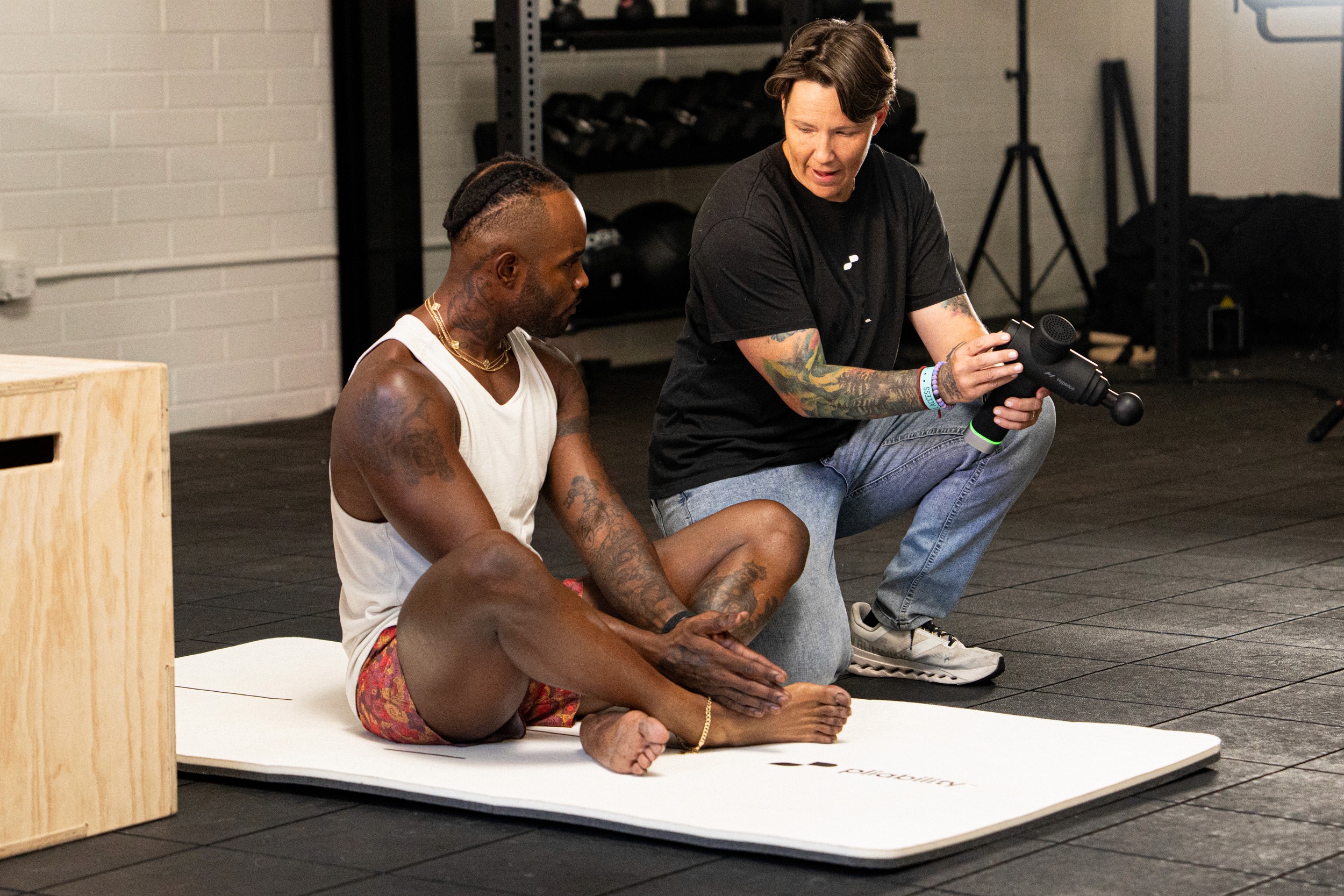
Treatment depends on symptom severity and duration. Mild cases improve with rest and splinting, moderate cases require injections, and severe locking typically requires surgery to release it. This progression reflects the extent of mechanical damage to your tendon and pulley system.
Severity Level | Symptoms | Treatment Approach | Recovery Time |
|---|---|---|---|
Mild | Occasional stiffness | Rest and splinting | 2-4 weeks |
Moderate | Regular catching | Corticosteroid injections | 4-8 weeks |
Severe | Complete locking | Surgical release | 8-12 weeks |
🎯 Key Point: The earlier you address finger stiffness, the more likely you are to avoid surgical intervention and achieve full recovery with conservative treatments.
"The progression from mild stiffness to complete locking reflects increasing mechanical damage between the tendon and pulley system, making early intervention critical for optimal outcomes."
⚠️ Warning: Ignoring early symptoms of finger stiffness can lead to permanent range of motion loss and the need for more invasive treatments down the line.
How does nighttime splinting reduce trigger finger symptoms?
Splinting keeps your finger straight during sleep, when inflammation naturally builds up, so you wake with less swelling and catching throughout the day. Research from Clinics in Plastic Surgery shows that nighttime splinting combined with NSAIDs reduces morning stiffness in 60-70% of early-stage cases.
The splint prevents your finger from curling into a position that squeezes the inflamed pulley, allowing your tendon to move smoothly without fighting against a bent position that narrows the tunnel.
What physical therapy techniques help restore finger movement?
Physical therapy introduces controlled movement that restores tendon glide without causing inflammation. The tendon gliding sequence moves your tendon through its sheath, breaking up adhesions that cause catching.
Passive finger extension stretches gently straighten the finger using your opposite hand, addressing tightness without forcing inflamed tissue. These stretches target the specific mechanical problem that creates locking.
How do corticosteroid injections reduce trigger finger symptoms?
Corticosteroid injections shrink swelling directly at the A1 pulley, where your tendon catches. According to the Results of Operative Intervention for Finger Stiffness, patients typically gain 11 degrees of improvement in finger bending after injection, with relief appearing within days. The injection delivers concentrated anti-inflammatory medication where oral NSAIDs cannot reach in sufficient concentration. Most experience symptom relief lasting three to six months, though some require repeat injections if swelling returns.
What should you do after getting an injection?
The injection doesn't permanently fix the underlying mechanical problem; it reduces swelling enough to restore smooth tendon movement, giving you a window to address the root cause through mobility work. Our mobility app provides structured tendon gliding routines and hand-specific stretching sequences that maintain the improved range you gain from the injection.
Surgical Release for Persistent Cases
Surgery opens the tight A1 pulley when other treatments fail, and your finger remains bent. The surgeon widens the tunnel so your tendon moves freely again. Recovery takes three to eight weeks, with a 90-99% long-term cure rate. The procedure fixes permanent structural narrowing that prevents normal tendon movement, regardless of inflammation levels—something splints and injections cannot achieve.
Understanding which treatment path fits your specific situation is essential.
Related Reading
Choosing the Right Treatment for You

Your finger locks when you grip a coffee cup or catches mid-bend while typing. The question is which approach matches your current severity. Treatment success rates improve by 60% when matched to individual needs, according to the American Psychological Association (2025). The right intervention restores function within weeks.
🎯 Key Point: Matching treatment to your specific severity level is crucial. Generic approaches often fail where personalized interventions succeed.
"Treatment success rates improve by 60% when matched to individual needs." — American Psychological Association, 2025
🔑 Takeaway: The 60% improvement in success rates demonstrates that personalized treatment selection is essential for optimal outcomes.
Define What Success Actually Means
Before choosing any treatment, set clear goals for recovery: pain-free range of motion (fully bending and straightening without discomfort), ability to perform daily tasks without locking (gripping, typing, using tools without catching), and prevention of recurrence (addressing underlying mechanical problems rather than masking symptoms). These benchmarks indicate whether your treatment is working or whether you need to escalate.
Start Conservative, Escalate Only When Necessary
Mild symptoms improve with splinting and targeted finger exercises within four to six weeks. Wear the splint at night to reduce morning stiffness, then perform tendon gliding sequences three times daily to restore smooth movement. If locking persists beyond six weeks despite conservative care, corticosteroid injection becomes the next step. Surgery is considered only when injections provide less than three months of relief or when your finger remains locked in a bent position that prevents basic hand function.
Track Progress with Specific Metrics
Track your finger movement daily: Can you make a full fist? Does your finger straighten completely on its own? Count daily locking or catching episodes and note which activities trigger symptoms. This information reveals whether your treatment is working or progress has stalled. If improvement stops after three weeks of basic treatment, or if locking episodes increase despite consistent exercise compliance, consult a certified hand therapist or orthopedic specialist. They can assess whether swelling is reducing or if the finger narrowing requires injection or surgery.
Make Mobility Work a Daily Practice
Early intervention prevents occasional catching from becoming chronic locking. Consistent tendon gliding exercises reduce inflammation before it creates permanent structural changes. Platforms like Pliability's mobility app offer expert-guided hand and finger routines designed for trigger finger. Research shows that targeted mobility work performed at least three times per week produces measurable improvements in movement quality and pain reduction. Lasting function depends on systematic practice, not sporadic effort.
The right approach restores both movement and confidence. But treatment only works if you understand what happens when you ignore the problem.
Stop Letting Stiffness Hold You Back—Move Freely Again
Feeling tight, limited, or slowed down by pain isn't something you must accept. That catching feeling when gripping a doorknob, morning stiffness that makes typing uncomfortable, the locked finger disrupting your workout—these signal mechanical problems requiring immediate attention. Whether you achieve long-term limitation or regain full function depends on whether you pursue organized mobility work or hope the problem resolves on its own.
🎯 Key Point: Mechanical problems in your hands and fingers require targeted intervention, not wishful thinking.
Pliability changes how you approach finger stiffness and hand mobility. You get expert-led flexibility and recovery videos designed for tendon health, plus custom daily mobility programs that adapt to your body's specific limitations. The body-scanning feature identifies where stiffness occurs and tracks measurable progress week by week. Consistent, targeted practice (three times per week minimum) produces improvements that transform how your hands feel and function.
"Consistent mobility work performed 3+ times per week shows measurable improvements in hand function and pain reduction within 4-6 weeks." — Clinical Research on Tendon Health
Problem | Impact | Solution |
|---|---|---|
Morning stiffness | Delayed daily activities | Targeted morning mobility |
Catching fingers | Limited grip strength | Tendon-specific exercises |
Pain during use | Activity avoidance | Progressive flexibility work |
Moving freely matters when every task, from opening jars to playing with your kids, requires hand strength and finger dexterity. Pain and limited range of motion erode confidence in your body's reliability and force you to avoid activities you once enjoyed. Treatment works when it addresses the mechanical problem in an organized way, not through random stretches during symptom flare-ups.
💡 Tip: Address hand stiffness with systematic mobility work rather than waiting for pain to force action.
Sign up today for seven days free on iPhone, iPad, Android, or web. Start improving flexibility, recovery, and range of motion with routines designed by experts who understand how tendon inflammation creates catching and locking. Mobility that adapts to you forms the foundation for everything you do with your hands, rather than generic protocols that ignore your specific limitations.
Related Reading
How To Get Rid Of Neck Stiffness
Hand Stiffness Exercises
Muscle Stiffness Treatment
How To Relieve Morning Back Stiffness
Hip Stiffness Exercises
How To Reduce Stiffness After an Ankle Sprain
Best Supplements For Muscle Pain And Stiffness
Left Arm Stiffness
Stretches For Lower Back Stiffness


















Move better in 10 minutes a day.
10,000+ five-star reviews.