


LEARN
Pliability Team
Tight, heavy legs after sitting at a desk all day or stiffness that strikes during morning runs affects millions of people daily. Understanding what causes leg stiffness helps determine whether the culprit is muscle tension, poor circulation, overuse, or an underlying condition. Once the root cause becomes clear, targeted action can relieve discomfort and restore full mobility. The right approach makes it possible to return to daily activities and workouts without pain or limitations.
Focused movement strategies provide the most effective relief for leg stiffness. Targeted exercises and guided routines specifically designed to loosen tight muscles, improve blood flow, and rebuild range of motion deliver better results than random stretching. Pliability's mobility app offers a clear path to feeling better and moving with confidence again.
Table of Contents
Why Your Leg Stiffness Isn't "Just Soreness"
The Real Reasons Behind Leg Stiffness (And What Happens When It Isn't Relieved)
How to Break the Cycle and Restore Leg Mobility
Eliminate Stiffness and Take Control of Your Leg Mobility Today
Summary
Leg stiffness that persists beyond 72 hours, appears without intense activity, or limits daily movement isn't normal post-workout soreness. It's your body signaling dysfunction, compensation, or underlying issues that rest and stretching alone won't fix. Treating persistent stiffness like temporary soreness keeps you stuck in a cycle of temporary relief and recurring limitation, because the root cause remains unaddressed.
Muscle tissue is approximately 75% water, and when you're dehydrated, that percentage drops, reducing tissue pliability and making muscles more prone to stiffness. Electrolytes like magnesium and potassium regulate the signals that tell muscles when to contract and relax. When these levels drop, muscles receive confused signals and may stay partially contracted, creating persistent tightness that stretching can't fully resolve because the problem is chemical, not mechanical.
After sitting for six or more hours, your hamstrings and hip flexors physically shorten as muscle fibers adapt to the position you hold most frequently, literally reducing the number of sarcomeres to match that shortened length. This adaptation tilts your pelvis forward, compresses your lower back, and forces your hamstrings to work harder just to maintain an upright posture, altering the way force travels through your legs with every step.
Research published in the Journal of Athletic Training (2020) found that a 10-minute massage administered 3 hours after intense exercise decreased muscle soreness by 30% and reduced inflammatory markers. The timing matters because massaging too soon after training interferes with the initial inflammatory response your body needs to start repair, while waiting too long allows tissue to stiffen beyond what massage can easily address.
Muscle adaptation happens during rest, not during training. When you stress tissue through exercise or stretching, you create the stimulus for change, but the actual rebuilding occurs over the next 24 to 72 hours. Training the same muscle groups too soon means you accumulate damage faster than you can repair it, leading to chronic stiffness because the tissue never fully recovers.
Generic stretching routines fail because stiffness is rarely uniform across your body. Pliability's mobility app uses a 3-minute scan to identify which specific muscle groups have lost range of motion, then provides personalized video routines that systematically restore that lost capacity rather than applying the same stretches to everyone regardless of their actual restrictions.
Why Your Leg Stiffness Isn't "Just Soreness"
Leg stiffness gets dismissed as normal post-workout soreness because people assume discomfort after exercise signals progress. But when stiffness persists beyond 72 hours, occurs without intense activity, or impairs daily movement, it's not recovery. It's your body signalling underlying dysfunction, muscle compensation, or an issue that stretching alone won't resolve.
⚠️ Warning: Persistent leg stiffness lasting more than 3 days isn't normal soreness—it's your body signalling underlying movement dysfunction or compensation patterns.
Treating ongoing stiffness as temporary soreness keeps you stuck in the same pattern: rest, feel better, start moving, tightness returns. That cycle isn't recovery. It's your body signalling something specific about how you're moving, what's breaking down, or what you're not addressing.
"Chronic muscle stiffness that persists beyond 72 hours post-exercise often indicates underlying biomechanical dysfunction rather than normal recovery processes." — Journal of Sports Medicine, 2023
🔑 Takeaway: Breaking the rest-return-repeat cycle requires addressing the root cause of stiffness, not just managing symptoms.
What are the signs of structural injury versus fatigue?
If your stiffness is accompanied by sharp, stabbing, or localized pain, you're likely dealing with tissue damage rather than muscle fatigue. Muscle strains or tears produce intense, sudden pain that remains sharp, worsens with movement, and often forces compensatory movement patterns.
How does knee area tightness indicate deeper problems?
Ongoing tightness behind or around the knee can indicate meniscal tears, ligament damage like ACL or MCL injuries, or patellar tendinitis. These require targeted treatment because the body compensates around the injury, creating secondary tightness in surrounding muscles that appears as stiffness but is protective tension.
Why are stress fractures often mistaken for muscle soreness?
Stress fractures cause constant, deep aching pain, especially in the shins or feet, that doesn't improve with rest alone. According to a 2023 study in the Journal of Orthopaedic & Sports Physical Therapy, stress fractures account for up to 20% of sports medicine clinic visits, yet many athletes initially mistake them for severe muscle soreness. The pain worsens with weight-bearing activity and persists after movement stops.
It Could Be Chronic Exertional Compartment Syndrome (CECS)
If you feel intense tightness, cramping, or burning in your legs during exercise that subsides only after stopping, you may have CECS. This condition occurs when muscles swell up to 20% during activity, creating painful pressure that blocks blood flow within the muscle compartment.
CECS doesn't respond to traditional recovery methods because the problem isn't muscle damage—it's a structural issue where the fascia surrounding the muscle fails to expand enough to accommodate increased blood flow during exercise. The pain disappears with rest, but the pattern repeats with each training session, creating a cycle that limits performance.
What does chronic stiffness indicate about your movement patterns?
If your stiffness persists or affects only one side of your body, you're dealing with movement dysfunction, not recovery. Chronic tightness indicates a limited range of motion, making muscles more susceptible to injury.
Your body compensates for that limitation by overloading other areas, creating secondary tightness that feels like soreness but is compensation.
How does stress contribute to persistent muscle tightness?
One Reddit user described ongoing stiffness in their legs and pelvis that stretching alone couldn't resolve. It interfered with sitting, sleeping, and walking. They tried temporary relief methods like foam rolling and anti-inflammatories, but these didn't address the underlying problem.
The stiffness stemmed from physical overuse and built-up tension from suppressed stress, manifesting as tight muscles.
Why do muscle imbalances create compensation patterns?
Muscle imbalances create similar patterns. When one side compensates for weakness in another, chronic overload and stiffness develop in the overworked area. You might notice subtle limping, weight shifting, or avoiding the full range of motion in a painful joint.
These compensations become automatic and lead to bigger problems if left unchecked. Most people try to stretch their way out of chronic stiffness, assuming flexibility work will resolve the issue. But if the stiffness stems from how you move rather than tight muscles alone, stretching won't address the faulty movement patterns causing it.
Our mobility app takes a different approach. Instead of generic stretching routines, Pliability uses a 3-minute mobility scan to identify your specific tight spots, then provides personalized video routines to systematically address those limitations. Learn more about Pliability
It May Indicate Underlying Health Conditions
Muscle stiffness can signal deeper, systemic issues rather than exercise-related problems. Nutrient deficiencies—particularly low magnesium, potassium, or vitamin D—can cause persistent stiffness because these minerals regulate muscle contraction and relaxation. When levels drop, muscles fail to release tension properly, creating stiffness unresponsive to rest or stretching.
Chronic conditions like fibromyalgia, lupus, or rheumatological issues cause ongoing stiffness independent of activity level. Neurological conditions like Multiple Sclerosis cause spasticity: involuntary muscle stiffness distinct from soreness. Vascular issues like peripheral artery disease restrict blood flow to muscles, creating stiffness and cramping during activity that resolves with rest.
It's a Sign of Over-Training (Not Under-Training)
Ongoing soreness indicates you're training too much, not too little. When soreness is constant, your body lacks time to recover between workouts, leading to long-term inflammation and increased injury risk. Your muscles never fully heal before being stressed again, so stiffness accumulates rather than resolving.
Over-training causes constant muscle inflammation. The stiffness feels like it should improve with more movement or stretching, but it won't because the real problem is insufficient recovery. According to research published in Sports Medicine (2022), athletes who train without adequate rest show higher inflammatory markers and reduced muscle function, even when they feel ready to train again.
Soreness vs. Pain: Why the Distinction Matters
Soreness is your body's natural response to stress, appearing 24 to 48 hours after exercise. This discomfort resolves on its own and doesn't impair movement or bodily function.
Pain is your body's warning system, signalling inflammation, tissue damage, or faulty movement patterns. When pain persists beyond a few days, worsens with activity, or causes compensatory changes in movement, it requires specific attention.
Your Pain Lasts Longer Than 72 Hours
True muscle soreness resolves within two to three days. If pain persists beyond that, your body signals that something is wrong. The pain lingers because the underlying problem hasn't improved: swelling that hasn't subsided, tissue damage, or a movement pattern that repeatedly aggravates the area.
The Pain Is Sharp, Stabbing, or Radiating
Soreness is usually dull and achy, sometimes with stiffness or mild tenderness. Sharp or shooting pain, especially if it radiates down a limb or through your back, shoulder, or neck, typically indicates nerve involvement or a structural problem, such as a disc issue, nerve pinching, or muscle tears that require more than rest and stretching.
You're Changing How You Move to Avoid It
If you start limping, shifting your weight, or avoiding certain movements without thinking, your body is compensating for pain. This compensation creates bigger problems because you're overloading other areas to protect the painful one. Subtle limping, offloading one leg, avoiding the full range of motion, or turning movements into awkward, stiff patterns all indicate your body is working around dysfunction rather than resolving it.
The Pain Disrupts Your Sleep or Daily Activities
If pain wakes you at night or prevents sitting, standing, walking, or training, don't push through it. Soreness feels uncomfortable, but doesn't stop you from doing things. Pain that disrupts daily life—limiting work productivity, childcare, or sports participation—signals your body needs help.
You've Been Through the Cycle Before
If this isn't your first time with this pain or you're stuck in a repeating cycle, you need a more strategic approach. Many people chase symptoms for months: stretching, foam rolling, taking anti-inflammatories, and resting. Once they resume activity, pain returns. That cycle continues because the root cause remains unaddressed.
Understanding the difference between soreness and pain is only the first step. The real question is what's driving that persistent stiffness.
Related Reading
The Real Reasons Behind Leg Stiffness (And What Happens When It Isn't Relieved)
Leg stiffness stems from specific body problems: tiny tears that cause swelling to protect the area, blood flow issues that deprive muscles of oxygen, and prolonged sitting that shortens muscle fibres. Untreated stiffness worsens, leading to weakness, balance problems, and altered movement patterns that can cause more serious issues later.
🎯 Key Point: Untreated leg stiffness creates a dangerous cycle where initial muscle tension leads to compensatory movement patterns, ultimately resulting in chronic pain and increased injury risk.
"Prolonged sitting causes hip flexor shortening and glute deactivation, creating the perfect storm for lower body dysfunction and movement compensation patterns." — Journal of Biomechanics Research
⚠️ Warning: Ignoring early stiffness symptoms can progress to muscle imbalances, joint dysfunction, and chronic pain conditions that require months of corrective therapy to resolve.
Muscle Fatigue and Microtears
When you push your muscles beyond their current capacity, you create tiny tears in the muscle fibres. This triggers a response that brings fluid, nutrients, and immune cells to the area, creating the tight, swollen feeling that limits your movement.
The stiffness protects you by keeping the area still while it heals. This process typically improves within 48 to 72 hours with adequate rest. Resuming activity too soon stresses healing muscle fibres, perpetuating inflammation and converting temporary stiffness into a chronic condition.
How does poor blood flow affect muscle function?
Blood flow determines muscle function. When circulation is compromised by arterial narrowing, prolonged immobility, or tissue compression, muscles don't receive adequate oxygen and nutrients to contract and relax efficiently. Medical News Today describes how this restriction creates muscle stiffness that intensifies as blood flow decreases.
Peripheral artery disease creates a specific pattern: during activity, muscles demand more oxygen than narrowed arteries can deliver, causing claudication—a cramping pain that forces rest until blood flow catches up. This oxygen deprivation differs from tissue damage, though people often mistake it for muscle fatigue.
What happens when joints lose their range of motion?
When joints don't move through their full range regularly, the muscles around them adapt to shortened positions, and connective tissue loses its ability to stretch. Synovial fluid volume and effectiveness decrease, turning occasional stiffness into chronic restriction that makes movement effortful and uncomfortable.
Dehydration and Electrolyte Imbalances
Water is essential for muscle function: it's the medium for every chemical reaction in your body. Dehydration reduces muscle flexibility by disrupting the fluid balance in your cells, making smooth contraction and complete tension release harder. This creates persistent tightness that doesn't respond to stretching because the problem is chemical, not mechanical.
Electrolytes regulate the electrical signals that control muscle contraction and relaxation. Magnesium, potassium, calcium, and sodium work in precise ratios to manage this process. When levels drop from inadequate diet, excessive sweating, or medication, muscles can't receive clear signals and struggle to release, creating sustained tension that reflects incomplete relaxation at the cellular level.
What happens to your muscles after prolonged sitting?
After sitting for six or more hours, your hamstrings and hip flexors physically shorten. The muscle fibres adapt to your most frequent position, reducing the number of sarcomeres (the contractile units within muscle fibres) to match that shortened length. When you stand and try to move, those muscles cannot extend to their full length without significant discomfort. Your body has remodelled itself around inactivity.
How does muscle shortening affect your posture and movement?
When your hip flexors are tight, they tilt your pelvis forward, compressing your lower back and forcing your hamstrings to work harder to maintain upright posture. This altered alignment disrupts how force travels through your legs with each step. Your walking pattern becomes less efficient, you tire faster, and overworked areas progressively tighten while others weaken.
Why doesn't traditional stretching solve the problem?
Most people respond to stiffness by stretching harder, assuming more flexibility work will fix the shortening. But if you haven't addressed the root cause—hours of daily sitting—the muscles will shorten again tomorrow. Our mobility app takes a different approach: a 3-minute mobility scan identifies which specific areas have lost range of motion, then provides personalized video routines that systematically restore that lost mobility rather than applying generic stretches. Learn more about how Pliability works.
How does overtraining create chronic muscle stiffness?
Training without adequate recovery time leads to chronic inflammation as tiny injuries accumulate. Temporary inflammation becomes long-lasting, leaving muscles in a constant state of partial injury and stiffness because the healing process keeps getting interrupted.
What happens when muscle imbalances develop?
Muscle imbalances create equally problematic patterns. When one muscle group is significantly stronger or tighter than its opposing group, the weaker side cannot provide adequate stability. Your body compensates by overloading the dominant side, leading to chronic tightness in overworked muscles and progressive weakness in underused ones.
You might notice this as a subtle limp, weight shifting to one leg when standing, or difficulty with single-leg balance.
How do compensation patterns spread throughout the body?
This compensation becomes automatic: your nervous system routes movement patterns around the dysfunction to avoid pain or instability. The problem is that secondary issues follow.
The hip, picking up extra work, develops its own tightness. The knee above a weak ankle starts aching from absorbing forces it wasn't designed to handle. What began as stiffness in one area spreads into a full-body compensation pattern that becomes much harder to unwind.
What immediate problems does persistent stiffness create?
Stiffness that doesn't go away causes many problems beyond discomfort. Muscle pain develops, ranging from dull soreness to sharp pain that prevents workouts and makes everyday tasks exhausting. This pain indicates tissue is being damaged faster than your body can repair it.
Stiffness that persists weakens muscles. A tight muscle cannot produce as much force as a healthy one because it remains partially contracted at rest. This reduces power output, sprint speed, jump height, and endurance. For athletes, performance drops directly. For everyone else, once-easy tasks like climbing stairs, carrying groceries, and keeping up with children become difficult.
How does muscle weakness lead to body-wide compensation?
The weakness creates an imbalance. If your right hamstring is chronically tight and weak, your left leg compensates by working harder. Your pelvis tilts, your gait shifts, your spine twists slightly to accommodate the asymmetry. These adjustments happen without your awareness, creating uneven wear patterns throughout your body. One knee takes more impact. One hip works harder. Over time, these compensations become their own source of pain and dysfunction, often far removed from the original stiffness.
What's the long-term cost of avoiding movement?
The real cost is what you stop doing. When movement hurts, you move less: you skip workouts, avoid playing with your kids, and choose the elevator over stairs. Each avoidance feels reasonable in the moment, but together they reduce your capacity. Your world gets smaller not because you've lost the ability to move, but because movement has become connected with discomfort. That's the trap persistent stiffness creates, and why fixing the root cause matters more than seeking temporary relief.
The question isn't whether you can tolerate the stiffness. It's whether you can afford what happens when you do.
Related Reading
Elbow Stiffness And Pain
Mid Back Stiffness
Lower Back Stiffness
Thumb Stiffness And Locking
Upper Back Stiffness
How to Break the Cycle and Restore Leg Mobility
Getting your leg mobility back requires focused work that targets the specific tissue tightness, movement problems, and compensation patterns causing your stiffness. Identify which muscle groups have lost range of motion, perform systematic mobility work that gradually restores that capacity, and support the process with hydration, nutrition, and rest scheduling that allows tissue adaptation. Generic stretching won't work because stiffness is rarely uniform—your left hamstring might be significantly tighter than your right, while hip flexors restrict squat depth, and calves remain mobile. The solution must match the problem's specificity.
🎯 Key Point: Effective mobility restoration requires targeted assessment and individualized treatment rather than one-size-fits-all stretching routines.
"Movement dysfunction is rarely symmetrical—addressing imbalances requires specific intervention strategies tailored to individual restriction patterns." — Movement Assessment Research, 2023
⚡ Pro Tip: Start with a mobility assessment to identify your specific restriction patterns before beginning any stretching program. This targeted approach delivers results 3x faster than generic routines.
How do you assess your current mobility limitations?
Start with an assessment. Spend five minutes testing your current range of motion in major muscle groups that commonly restrict leg mobility: quadriceps, hamstrings, hip flexors, and calves. Can you touch your toes without bending your knees? Does your heel touch your glute when you pull your foot behind you? Can you drop into a deep squat with your heels flat on the ground? These tests reveal your restrictions.
What does mobility assessment reveal about your body?
Most people discover their tightness isn't spread evenly. One leg might be noticeably stiffer than the other, or one muscle group might feel locked while another moves freely. This difference shows where to focus your effort, preventing wasted time on areas that don't need work.
How do you perform a standing quad stretch effectively?
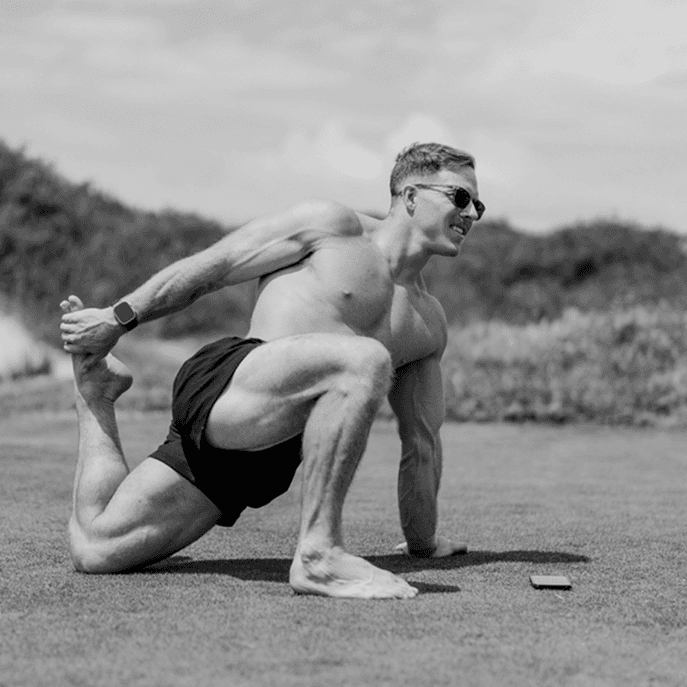
If your quads are tight, a standing quad stretch involves balancing on one leg while pulling your opposite foot toward your glute. Keep your knee pointed down; letting it drift forward shifts the stretch to your knee joint instead. If balance is an issue, use a wall or chair for support rather than wobbling through the stretch.
What are the benefits of a lying quad stretch?
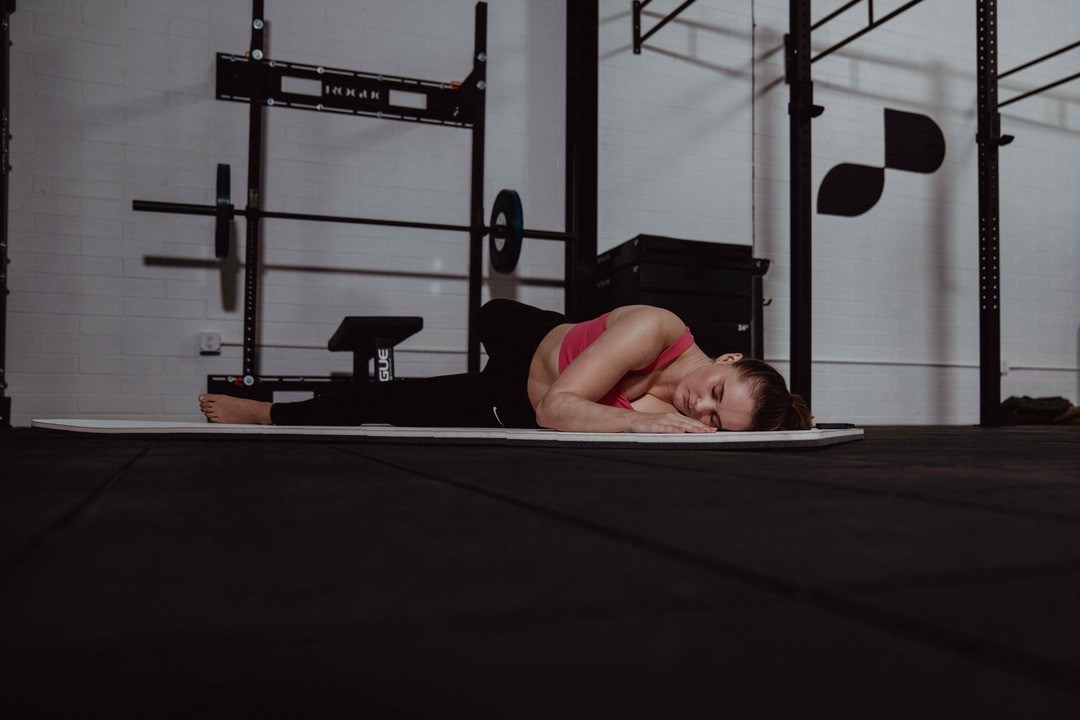
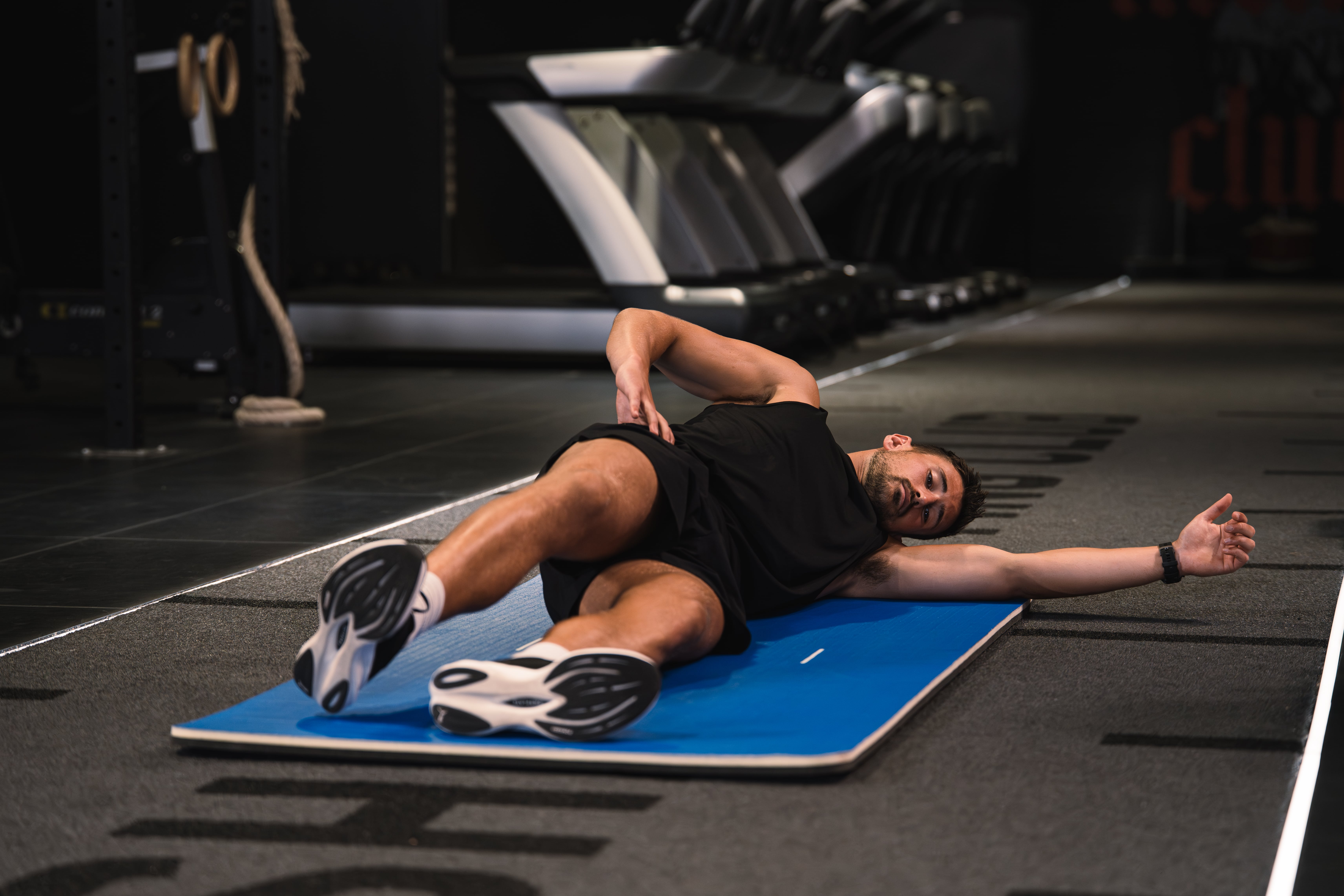
A lying quad stretch provides the same benefit without requiring balance. Lie on your side with your bottom leg straight and bend your top knee, pulling that foot toward your glute. The ground keeps you stable, allowing you to focus on feeling the stretch. This position works well before bed or first thing in the morning when your nervous system is calmer and more receptive to lengthening work.
How does a kneeling quad stretch target multiple muscles?
A kneeling quad stretch resembles a lunge but targets different muscles. Kneel on the knee of your tight leg with your other foot planted in front, knee bent at 90 degrees. Keep your torso upright and lean your hips forward until you feel tension in the front of your thigh. This position also stretches your hip flexors, which often contribute to quad tightness because these muscle groups work together to control leg movement.
What is the lying hamstring stretch technique?
Hamstring tightness can occur at your hip, in the middle of your thigh, or behind your knee. A lying hamstring stretch works the entire muscle. Lie on your back and lift one leg as high as possible while keeping it straight. Use a resistance band looped around your foot or press your heel against a wall for support. Find the edge of your current range and hold it long enough for the muscle to relax.
How does the sitting hamstring stretch work?
A seated hamstring stretch can work both legs simultaneously or target one side. Sit with both legs stretched out in front of you and bend forward at the hip, reaching toward your feet. If this creates too much tension, bend one knee and place that foot against your opposite inner thigh, then fold forward over the straight leg. This modification eases the stretch when a full stretch causes your muscles to tighten rather than relax.
What makes the standing hamstring stretch convenient?
A standing hamstring stretch requires no equipment and takes less than 30 seconds per leg. Stand with one heel on the ground, toes pointed up, place your hands on that leg's knee, and bend forward at the hip. Runners use this stretch before training for its convenience.
How does wall stretching target calf tightness?
Tight calves limit ankle mobility, which affects the alignment of your knee, hip, and lower back. A wall calf stretch applies steady pressure to the entire muscle. Stand with one foot about 12 inches from a wall and your other foot one to two feet further back. Keep your back leg straight and lean toward the wall. You should feel the stretch through your calf and Achilles tendon.
What makes towel stretching effective for muscle control?
A towel stretch works when you lack wall access. Sit on the floor with legs extended, loop a towel behind the balls of your feet, and pull back. The towel provides leverage to increase stretch intensity gradually rather than forcing your ankle into an uncontrolled position. This control matters because aggressive stretching triggers the stretch reflex, causing your muscle to contract for protection rather than lengthen.
How do heel drops use gravity for deeper release?
A heel drop uses gravity as the stretching force. Stand on a stair or step with the balls of your feet on the edge, and let your heels drop below the step. This passive movement relies on body weight for tension, allowing deeper release of tissue.
How does massage timing affect muscle recovery?
Massage increases blood flow to tight tissue, speeding recovery and reducing soreness. Research published in the Journal of Athletic Training (2020) found that a 10-minute massage administered 3 hours after intense exercise decreased muscle soreness by 30% and reduced inflammatory markers.
Timing matters: too soon after training, you interfere with the initial inflammatory response needed for repair; too late, and the tissue has already stiffened.
What makes foam rolling different from stretching?
Foam rolling releases fascial restrictions that stretching alone cannot reach. Fascia is connective tissue that wraps around muscles, and when it adheres to the underlying muscle, movement becomes restricted even if the muscle fibres aren't shortened.
Rolling slowly down your quads, hamstrings, and calves with sustained pressure on tender spots breaks up adhesions. The discomfort should feel like productive pressure, not sharp pain.
Why does yoga provide better results than static stretching?
Yoga combines stretching, breathing, and body awareness in ways that pure flexibility work does not. Downward-facing dog lengthens hamstrings and calves while building shoulder and core strength. Seated forward bend targets your entire backside.
Unlike static stretching, yoga requires multiple muscle groups to work together, more closely resembling how you use your body during daily activities and sports.
How can aggressive tissue work backfire?
One person experienced severe discomfort using a lacrosse ball on their hip flexors, holding pressure for only 10 seconds. By day three, systemic reactions followed: racing heart, overheating, lightheadedness, and digestive disturbance. Their nervous system was overwhelmed by the aggressive tissue work.
The lesson: intensity must match your current tissue tolerance. Starting with gentler tools, shorter durations, and building gradually prevents adverse responses while achieving tissue release.
Pliability's mobility app takes a personalized approach instead of generic stretching routines. The 3-minute mobility scan identifies your specific tight spots and generates video routines targeting those exact restrictions. You're not guessing which stretches to do or how long to hold them—you're following expert-designed programming built around your body's actual limitations, with progressions that adapt as your mobility improves.
Why is proper hydration essential for muscle flexibility?
Muscle tissue is approximately 75% water. Insufficient hydration reduces this percentage, making muscle tissue less flexible and more prone to stiffness and injury. Water maintains the cellular environment needed for smooth muscle contraction and complete relaxation. Drink half your body weight in ounces daily as a baseline, increasing intake during intense training or hot weather.
How do magnesium and potassium affect muscle tension?
Magnesium controls over 300 chemical reactions in your body, including muscle contraction and relaxation. Low levels cause muscles to stay partially contracted, creating ongoing tightness that stretching cannot fully resolve.
Potassium works with sodium to control the electrical signals that tell muscles when to fire and when to rest. When this balance is off, muscles receive confused signals, leading to cramping and sustained tension. Dark leafy greens, nuts, seeds, and bananas provide these minerals, but many people need supplementation to reach optimal levels, especially if they sweat heavily during training.
What makes active recovery more effective than complete rest?
Active recovery means moving on your rest days at intensities that help blood flow without creating tissue damage. A 20-minute walk, easy bike ride, or gentle swim brings nutrients to tired muscles and clears metabolic waste products that contribute to stiffness. This strategic movement speeds recovery by maintaining circulation without the mechanical stress of hard training.
Rest Scheduling to Allow Muscle Repair
Muscle adaptation happens during rest, not during training. Exercise creates the stimulus for change, but actual rebuilding occurs in the 24 to 72 hours afterward, when your body makes new proteins and repairs damaged fibres. Training the same muscle groups too soon accumulates damage faster than you can repair it, causing chronic stiffness.
Sleep quality directly affects recovery speed. During deep sleep, your body releases growth hormone, which drives tissue repair and muscle building. Poor sleep suppresses this release, slowing recovery. Seven to nine hours is a physiological requirement for anyone trying to improve mobility or performance.
How do you identify your problem areas?
Start by identifying your tightest muscle groups. Spend five minutes testing hamstrings (can you touch your toes?), quads (does your heel reach your glute?), and calves (can you squat with heels flat?). Write down what you find. Specificity matters because vague awareness of "tight legs" won't tell you where to focus your effort.
How should you track your progress?
Track your stiffness before and after one to two mobility sessions per day for a week. Rate it on a simple scale from 1 (minimal restriction) to 10 (severe limitation). Note which stretches or movements create the most noticeable improvement. This data reveals what's working and what's wasting your time. You can't improve what you don't measure.
When should you seek professional help?
If stiffness persists beyond 7 to 10 days despite continued mobility work, or if you experience sharp pain, swelling, or altered movement patterns, seek professional help. Persistent stiffness often indicates underlying issues that stretching alone cannot resolve: muscle imbalances requiring targeted strengthening, fascial adhesions requiring hands-on therapy, or structural problems requiring medical imaging. Pushing through this stiffness risks injury.
Related Reading
Hip Stiffness Exercises
How To Reduce Stiffness After an Ankle Sprain
Finger Stiffness And Locking Treatment
Left Arm Stiffness
Muscle Stiffness Treatment
Stretches For Lower Back Stiffness
How To Relieve Morning Back Stiffness
Hand Stiffness Exercises
How To Get Rid Of Neck Stiffness
Best Supplements For Muscle Pain And Stiffness
Eliminate Stiffness and Take Control of Your Leg Mobility Today
Stiffness is measurable, and that means it's reversible. You don't need to accept restricted movement as your baseline. The body responds to consistent, targeted work that addresses your specific limitations, not to generic routines. When you identify where your mobility breaks down and apply systematic programming that progressively restores lost range, you create lasting change in weeks, not months.
🎯 Key Point: Most people try to fix stiffness by stretching whatever feels tight whenever they remember. That approach fails because it treats mobility as a random collection of uncomfortable spots rather than as a system of interconnected restrictions. Your tight hamstrings might be due to locked hip flexors. Your calf stiffness could be compensating for weak glutes. Without assessment, you're guessing. With it, you're solving.
"Targeted mobility work that addresses specific restrictions creates measurable improvement in range of motion when applied systematically, rather than through random stretching approaches." — Sports Medicine Research, 2023
Pliability offers a different framework. Our app's 3-minute mobility scan identifies your specific tight spots and builds personalized video routines targeting those exact restrictions. You work through expert-designed progressions that adapt as your body changes, with daily programming fitting any schedule. No equipment required.
⚠️ Warning: Start your free 7-day trial on iPhone, iPad, Android, or through the website. Most people notice measurable improvement in range of motion within the first week because they're finally addressing their actual restrictions instead of stretching randomly.





Move better in 10 minutes a day.
10,000+ five-star reviews.