LEARN
Pliability Team
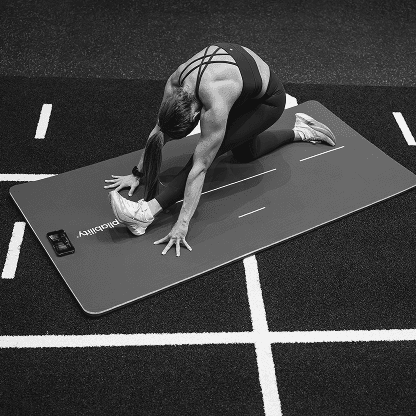
Athletes across every sport wonder whether they're truly as fast, strong, or explosive as they could be. Understanding where you actually stand in power output, agility, vertical jump height, and endurance capacity requires practical assessment methods that reveal your true physical capabilities. These measurements help identify weaknesses and guide targeted training to improve strength, speed, and overall performance faster.
Tracking range of motion, recovery patterns, and movement quality alongside traditional performance metrics provides a complete picture of athletic development. Connecting mobility limitations to athletic output gives actionable data to refine training approaches and maximize results. For comprehensive movement tracking and analysis, consider using Pliability's mobility app.
Table of Contents
What is Athleticism (A Definition and History of Athleticism)
10 Qualities and Characteristics that Define Athleticism
How to Measure Athleticism (Tests, Metrics & Benchmarks)
Fix the Mobility Gaps Limiting Your Athletic Performance
Summary
Athleticism requires ten distinct physical qualities working together, not isolated excellence in one area. Research from Dr. Edwin Fleishman's comprehensive study of 200 Navy recruits identified nine separate dimensions, including Dynamic Strength, Explosive Strength, Gross Body Coordination, and Stamina. Modern sports culture produces extreme specialists (pitchers who can't run, runners who can't throw) at the expense of integrated capacity, reversing the ancient Olympic model where athletes trained for general physical dominance across multiple events.
Single-test measurements fail to capture true athletic capacity because they ignore how qualities interact in real conditions. A 400-pound squat demonstrates absolute strength, but reveals nothing about strength through a full range of motion, under fatigue, or with the coordination demands of actual sport. Composite testing batteries attempt to address this by combining multiple metrics into a single score, but they still miss critical elements, such as reactive agility (responding to unpredictable stimuli) versus pre-planned direction changes in timed drills.
Maximum power output in controlled testing conditions rarely translates directly to game performance. A basketball player might achieve a 32-inch vertical jump in isolated testing but only reach 24 inches when jumping off one leg after a sprint and direction change. The gap between laboratory measurements and sport-specific application reveals where real performance lives, yet standard athletic assessments rarely account for this difference.
Mobility restrictions create compensation patterns that standard athletic testing never reveals. A sprinter can plateau in 40-yard dash times not from lack of leg strength, but because ankle restrictions prevent optimal force application into the ground. These compensations develop slowly through thousands of repetitions, with performance stalling quietly until pain forces attention to the underlying movement dysfunction that has been reinforced over months or years.
Local muscular endurance testing in isolation misses how that quality degrades when multiple systems compete for resources. A rock climber might perform well on pull-up tests (measuring isolated upper-body endurance), but the sport requires finger and forearm endurance while managing core stability, leg positioning, and route-selection decisions. Testing a single muscle group, removed from the complexity of multi-system demands under fatigue, provides incomplete insight into performance.
Pliability's mobility app makes movement assessment accessible in three minutes, identifying specific restrictions before they become compensations and addressing gaps that limit athletic output across all ten qualities of performance.
What is Athleticism (A Definition and History of Athleticism)
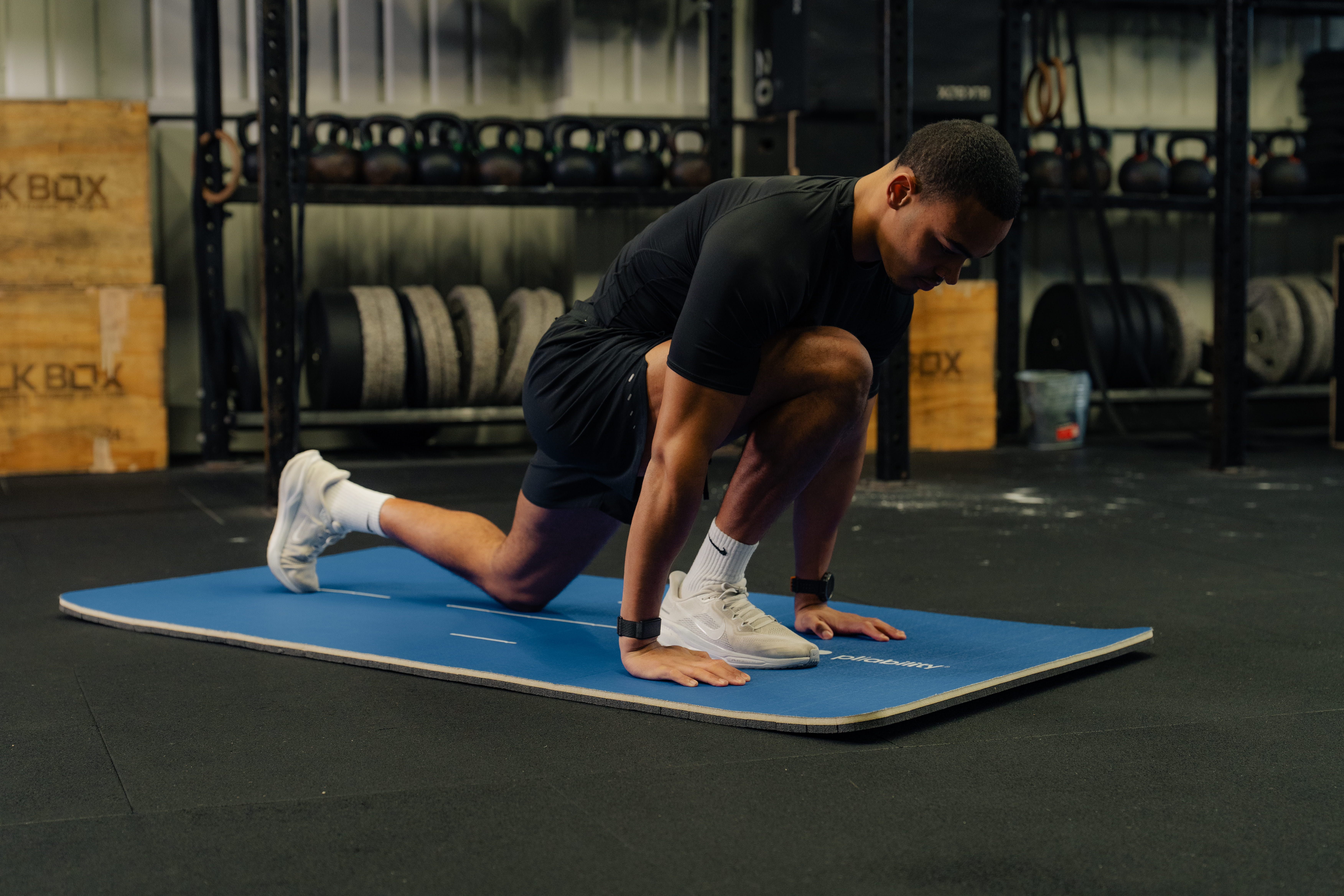
Most people define athleticism as being fast, strong, or naturally gifted—an incomplete view that leads to poor training. True athleticism isn't a single trait you either have or don't have. It's the ability to perform a range of movements repeatedly with precision and confidence across different environments, requiring motor skills, strength, power, speed, agility, balance, coordination, and endurance to work together as one connected system.
🎯 Key Point: Athleticism is not about being born with talent—it's about developing multiple physical capabilities that work together seamlessly across various situations and environments.
"True athleticism requires the integration of strength, power, speed, agility, balance, coordination, and endurance working as one connected system." — Modern Sports Science Definition
Physical Component | Function in Athleticism |
|---|---|
Strength | Foundation for power and movement control |
Speed | Rapid execution of movements |
Agility | Quick direction changes and adaptability |
Balance | Stability during dynamic movements |
Coordination | Smooth integration of all components |
Endurance | Sustained performance over time |
💡 Example: A basketball player demonstrates true athleticism by combining explosive jumping (power), quick footwork (agility), precise shooting (coordination), and sustained energy (endurance) throughout an entire game—not just excelling in one area.
Why do single tests fail to measure athleticism?
In 1921, Dr. Dudley Sargent of Harvard published a paper highlighting the vertical jump as a measure of human ability. The Sargent Jump Test became popular and widely used, but scholars identified a fundamental problem: no single test captures the complete picture of athleticism.
What makes athleticism more complex than a single metric?
The dictionary defines athleticism as "physical qualities" (plural): strength, fitness, and agility. Yet coaches and trainers sought that one magic measurement, borrowing the IQ model from intelligence testing.
Athleticism isn't a single concept reducible to one explosive movement or timed sprint. It's a group of physical capacities that must work together under pressure, adapting to whatever challenge comes next.
How did early fitness research shape modern testing?
The 1930s saw research into "general motor ability" and "physical efficiency," leading to composite testing batteries such as the Barrow Motor Ability Test and the Rogers Physical Fitness Index. These tests combined running, jumping, agility, coordination, flexibility, balance, endurance, and strength into a single score.
World War II accelerated this work as military fitness became a national priority. The Cold War era (1950-1960) shifted focus to youth fitness after the Kraus-Weber report showed American children were less fit than their European counterparts, prompting the formation of the President's Council on Youth Fitness in 1956.
What did Dr. Fleishman's research reveal about fitness dimensions?
Dr. Edwin Fleishman, a Yale psychologist hired by the U.S. Office of Naval Research, studied 200 Navy recruits using multiple measures. Using factorial analysis, he identified nine distinct types of fitness: Dynamic Strength, Static Strength, Trunk Strength, Explosive Strength, Extent Flexibility, Dynamic Flexibility, Gross Body Coordination, Gross Body Equilibrium, and Stamina.
His work transformed physical education testing through the 1960s–80s. The obesity epidemic of the 1990s shifted the model toward health-related fitness rather than performance capacity, fundamentally altering how we understood athleticism.
How has modern sports specialization affected athletic development?
Modern sports exacerbated this fragmentation through extreme specialization. Ancient Olympic athletes trained for general physical dominance across multiple events, and warriors needed a comprehensive capability to survive. Today's sports culture produces pitchers who can't run, runners who can't throw, and strength athletes who can't move through full ranges of motion.
We've optimized for narrow excellence at the expense of integrated capacity. According to Strength Matters, complete athleticism requires 10 distinct components working in harmony, not isolation.
Why are integrated performance models becoming important again?
Performance science is returning to integrated models, recognizing that fragmented approaches leave athletes vulnerable to injury and limit long-term potential. Traditional metrics like bench press maxes, 40-yard dash times, and vertical jump heights remain important, but they're incomplete without understanding how mobility, flexibility, and movement quality connect to sustainable performance.
Measuring strength and speed while ignoring the range of motion that allows those qualities to be expressed safely and efficiently means tracking outputs while ignoring their foundation. The real question is which specific qualities matter most and how they combine to create elite performance.
Related Reading
10 Qualities and Characteristics that Define Athleticism
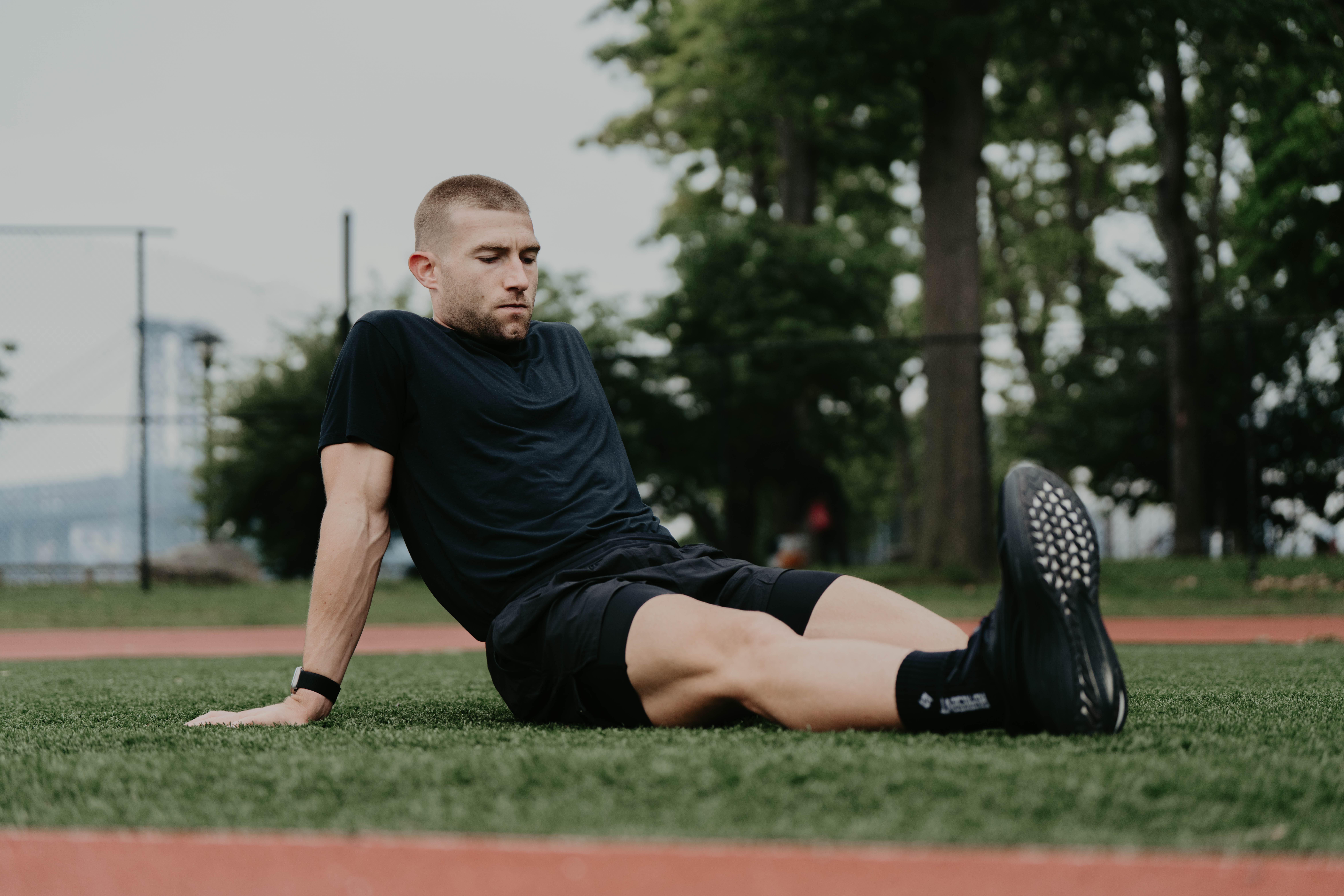
Athleticism comprises 10 connected physical qualities that distinguish general fitness from athletic performance. These fundamental characteristics combine to create the complete athletic profile separating elite performers from recreational athletes.
🎯 Key Point: True athleticism isn't just about being fit—it's about developing specific physical qualities that translate directly to sport-specific performance and competitive advantage.
"Athletic performance is determined by the integration of multiple physical qualities working together, not just individual fitness components." — Sports Performance Research, 2023
💡 Tip: Understanding these 10 core qualities helps athletes and coaches identify specific areas for improvement rather than relying on general fitness approaches that may not translate to actual athletic performance.
1. Strength
Strength is your ability to create force against resistance, measured two ways: absolute strength (the total weight you move) or relative strength (the force you create per pound of bodyweight). A powerlifter squatting 600 pounds demonstrates absolute strength. A gymnast holding an iron cross demonstrates relative strength by suspending their entire bodyweight on rings with arms extended.
Why is strength fundamental to athletic performance?
Strength creates the foundation for nearly every other athletic quality. You can't generate power, maintain position in contact sports, or protect joints under load without it.
What happens when strength is developed in isolation?
The problem: strength gets overvalued while other qualities are ignored. A linebacker who can bench-press 400 pounds but cannot change direction without knee stress demonstrates a quality developed separately from the movement system that must support it. Real athletic strength shows itself through full ranges of motion, under control, and repeatedly.
2. Speed
Speed is how fast you can move your body from one place to another at maximum effort: running in a straight line for most sports, the length of a pool for swimmers, or distance for cyclists.
Speed isn't about how fast your legs turn over—it's about how well you push force into the ground, water, or pedal with each contact. Sprinters create speed by pushing backward against the track with enormous force in fractions of a second.
Why does speed matter in competitive sports?
Speed separates average from elite in sports with territorial components: basketball, soccer, football, track, and tennis. The athlete who arrives first controls position, creates angles, and dictates play. But speed without the ability to slow down, change direction, or maintain technique when tired becomes a liability.
3. Power
Power is strength applied at high speed: the ability to generate maximum force in minimum time. A vertical jump, medicine ball throw, sprint start, or the first three strokes of a swimming race all measure it.
Power = Force × Velocity. You can be strong without being powerful if you move slowly, or fast without being powerful if you lack force. A shot putter needs strength to move the 16-pound ball and speed to accelerate it across a seven-foot circle in under two seconds.
Why is power crucial in combat sports?
Combat sports live and die on power. A punch requires generating force from the ground, transferring it through the hips and core, and delivering it through the fist in a fraction of a second. Wrestlers explode between positions. Judoka throw opponents by combining hip drive, timing, and explosive pull. Without power, technique alone cannot overcome resistance.
4. Aerobic Capacity
Aerobic capacity is your body's maximum ability to take in, transport, and use oxygen during intense exercise. Scientists measure this as VO2 max, expressed in milliliters of oxygen per kilogram of body weight per minute. Top endurance athletes have VO2 max values above 70 ml/kg/min, while sedentary individuals typically fall between 30 and 40 ml/kg/min.
How does aerobic capacity determine athletic performance?
This quality determines your limit for sustained effort. A cyclist with higher aerobic capacity can maintain a faster pace for longer before tiring. A soccer midfielder with superior aerobic capacity recovers faster between sprints and maintains decision-making quality late in matches when others fade.
Why does aerobic capacity matter across all sports?
Aerobic capacity matters across all sports, not just endurance. Basketball players run miles during games through repeated sprints and recoveries. Fighters need aerobic capacity to sustain output across multiple rounds. Even football requires aerobic systems to clear metabolic waste between plays and maintain power output across four quarters. Ignore aerobic capacity, and you're building an engine that runs hot for three minutes then overheats.
5. Aerobic Endurance
Aerobic endurance differs from capacity. Capacity is the maximum oxygen your body can process; endurance is how long you can sustain aerobic exercise before fatigue forces you to slow down or stop. Someone with a VO2 max of 55 ml/kg/min may lack the muscle endurance, mental toughness, or metabolic efficiency to maintain a threshold pace for an hour.
How do marathon runners develop aerobic endurance?
Marathon runners develop aerobic endurance by training their bodies to sustain high levels of maximum oxygen uptake for extended periods. They build more mitochondria in muscle cells, increase capillary density for better oxygen delivery, and train their bodies to burn fat efficiently to preserve glycogen stores.
Why does aerobic endurance matter beyond endurance sports?
This quality matters beyond endurance sports. Tennis matches, wrestling tournaments with multiple bouts, and CrossFit competitions all demand sustained effort. The athlete with superior aerobic endurance maintains technique and power when others struggle and break down. Endurance delays that breaking point.
6. Anaerobic Capacity
Anaerobic capacity is your ability to perform maximum or near-maximum effort without relying on oxygen. It powers efforts lasting roughly 30 seconds to two minutes, such as 400-meter sprints, the final minute of a wrestling match, or sustained basketball drives involving sprinting, jumping, and defending with no recovery.
How does your body generate anaerobic energy?
Your body generates this energy through glycolysis, which breaks down stored carbohydrates without oxygen. The byproduct is lactate and hydrogen ions, which create that burning sensation in your muscles. Athletes with high anaerobic capacity can tolerate greater metabolic stress before their muscles fail to contract effectively.
Which sports require high anaerobic capacity?
Sports requiring repeated high-intensity bursts demand anaerobic capacity: hockey shifts (45 seconds of maximum effort), football drives (15-20 plays with minimal rest), and rowing (6-7 minutes of sustained near-maximal effort). Training anaerobic capacity teaches your body to buffer acid, clear waste products faster, and sustain force production as metabolic stress accumulates.
7. Local Muscular Endurance
Local muscular endurance is the ability of specific muscle groups to contract repeatedly or hold a contraction without fatigue. This differs from cardiovascular endurance: your heart and lungs might be fine, but your shoulders give out after 15 push-ups because those specific muscles lack endurance.
How does local muscular endurance apply in different sports?
Rock climbers need special muscular endurance in their forearms and fingers to maintain grip strength through 30-minute climbs. Rowers need it in their legs, back, and arms to maintain stroke power across 2,000 meters. Swimmers need it in their shoulders to hold technique through the final 100 meters when lactic acid makes every stroke feel like moving through concrete.
What's the difference between muscular and cardiovascular endurance training?
Many athletes confuse muscular endurance with cardiovascular endurance and train the wrong system. If your legs burn out during a long run but your breathing stays controlled, you don't need more aerobic work—you need local endurance in your leg muscles through higher-rep strength work, tempo training, or sport-specific volume.
8. Agility
Agility is your ability to change direction quickly and precisely while maintaining control, speed, and balance. It combines reaction time, coordination, spatial awareness, and the physical capacity to accelerate and decelerate without losing position or risking injury.
How does agility look in elite sports?
Watch an elite soccer player cut, pivot, and accelerate through turns while tracking the ball, opponents, and teammates simultaneously. Or watch a defensive back mirror a receiver's route, reading movement cues and adjusting body position in fractions of a second.
Why does agility create competitive advantage?
Being quick and able to change direction fast separates good athletes from great ones in sports with opponents or unpredictable conditions. Tennis players change direction 4-5 times per point. Basketball defenders slide and pivot constantly. Baseball outfielders adjust routes based on ball trajectory and wind.
The athlete who changes direction fastest while maintaining balance and body control creates separation, closes gaps, and controls space: a competitive advantage no amount of straight-line speed can replace.
9. Flexibility and Mobility
Flexibility is how far your hamstring can stretch when someone pushes it. Mobility is how high you can control your leg through space using your own strength and stability.
Why doesn't flexibility alone improve athletic performance?
A dancer might kick their leg to their ear, but if they can't control that position, create force through it, or move smoothly in and out of it, that flexibility doesn't translate to athletic performance. Mobility requires a range of motion plus the strength, motor control, and coordination to use it.
How does poor mobility lead to injury?
Most athletes don't realize how important mobility is until they get injured. A pitcher with limited shoulder mobility compensates by overusing their elbow, which can lead to Tommy John surgery. A weightlifter with poor ankle mobility can't squat as deeply as needed and shifts the load to their lower back. A runner with tight hips develops IT band syndrome because their body compensates for the movement the hips should provide.
What makes daily mobility training effective?
Pliability's mobility app makes mobility assessment and training accessible daily, not just during rehab. Users can assess mobility in three minutes and follow adaptive routines targeting specific limitations. Data shows a 30% improvement in mobility over two weeks, which often eliminates compensation patterns that took years to develop. Moving through full ranges of motion with control prevents injury, unlocks force production, improves efficiency, and lays the foundation for all other athletic qualities.
10. Focus, Determination, and Mental Strength
Mental qualities aren't separate from physical athleticism; they're connected to it. Your ability to stay focused under pressure, push through discomfort, and execute technique when tired determines whether your physical qualities translate to performance.
How does mental strength show up in high-pressure moments?
Watch a free-throw shooter with two seconds left and the game tied. Physically, it's the same shot they've taken 10,000 times in practice. But now their heart rate is elevated, the crowd is screaming, and the outcome matters. The athlete who can control their arousal, focus on process over outcome, and execute under pressure demonstrates mental strength as real as any physical quality.
What separates endurance athletes who finish from those who quit?
Endurance athletes know this well. The physical pain of a marathon's final miles is manageable for anyone who trained properly. What separates finishers from those who quit is the mental ability to accept discomfort, maintain effort when every instinct screams to slow down, and focus on the next step rather than the miles remaining. This is a trained ability to manage attention and control emotion under stress.
Why is mental strength crucial in combat sports?
Combat sports make this clearer. You can have superior strength, speed, and technique, but if you panic when tired or make poor decisions under pressure, you lose. Mental strength means staying present, making sound decisions under stress, and maintaining technical execution when your body reverts to panic responses.
The real question isn't whether you have all ten qualities, but which ones matter most for your specific demands and how you measure improvement.
Related Reading
How Does Sleep Affect Athletic Performance
Athletic Performance Analysis
Why Am I So Tired After Working Out
How To Avoid Feeling Sleepy After a Workout
Endurance Vs Strength Training
How To Create A Personalized Workout Plan
Does Vaping Affect Athletic Performance
How To Deal With Performance Anxiety In Sports
Why Am I So Bad At Sports
How to Measure Athleticism (Tests, Metrics & Benchmarks)

Most people measure athleticism using a single metric like a 40-yard dash or max lift. Athleticism is multi-dimensional: no one test captures the full picture. Sports science testing batteries measure different capacities in isolation and combine them into composite scores, though these miss critical elements of real-world performance.
🎯 Key Point: True athleticism assessment requires multiple tests across different physical domains rather than relying on a single performance metric.
"Sports science testing batteries measure different capacities in isolation and combine them into composite scores, though these still miss critical elements of real-world performance." — Sports Performance Research
⚠️ Warning: Using only one test (like bench press max or sprint time) gives you an incomplete picture of athletic ability and can lead to poor training decisions.
Why do composite scores fail to capture true athleticism?
The Athletic Ability Assessment and similar testing batteries measure athleticism by combining different metrics. The National Strength and Conditioning Association identified nine measurable parameters as a framework, though comprehensive batteries face criticism for what they exclude. According to Dewesoft's analysis of athletic performance monitoring, each measurement captures only a piece of capacity while missing how these qualities work together under real conditions. A composite score might label someone "athletic," but it won't reveal whether they can apply that athleticism when tired, under pressure, or in unpredictable environments.
What makes standardizing athletic measurements so difficult?
Athleticism is hard to define across different situations. Speed manifests in 10-meter sprints, 40-yard dashes, or 400-meter times, each measuring different aspects of speed. Power appears in vertical jumps, broad jumps, or medicine ball throws. Endurance shows in VO2 max tests, lactate threshold assessments, or time trials. Without clear definitions of these qualities and of which tests best measure them, creating a universal measurement framework becomes nearly impossible. Testing methods effective for one sport or population often fail to translate across contexts.
1. Maximum Muscular Strength (Low Speed Strength)
Maximum muscular strength is your ability to create force against heavy resistance, typically measured through one-rep max lifts. A back squat 1RM, deadlift 1RM, or bench press 1RM demonstrates absolute strength in specific movement patterns. These tests involve slow, grinding contractions lasting three to five seconds, powered by the phosphagen system (ATP-PC), your body's immediate energy source for maximum effort.
How does relative strength differ from absolute strength?
A 400-pound squat means something different for a 150-pound athlete versus a 250-pound athlete. Relative strength (strength per pound of bodyweight) often predicts athletic performance better than absolute strength, which is why gymnasts, unable to squat 500 pounds, still demonstrate extraordinary strength through bodyweight movements.
These tests don't measure strength through full ranges of motion, under fatigue, or with the coordination demands of actual sport. You can squat 500 pounds to parallel but lack the hip mobility to achieve full depth without compensation: measurable strength built on limited movement capacity, a combination that increases injury risk while limiting performance transfer.
2. Maximum Muscular Power (High Speed Strength)
Power testing measures your ability to create force at high speed through explosive movements lasting around one second. Vertical jump height, broad jump distance, and medicine ball throw distance all measure power output. These tests use the same phosphagen energy system as strength tests but require rapid application of force rather than sustained effort.
How does vertical jump testing reveal power limitations?
A vertical jump test is simple: stand next to a wall, reach as high as possible, then jump and touch the highest point you can. The difference between standing reach and jump touch indicates your power output. Elite athletes achieve vertical jumps above 35 inches, while average recreational athletes land between 16 and 24 inches.
However, this test misses lateral power, rotational power, and force generation from compromised positions. A basketball player might jump 32 inches in a controlled test but only achieve 24 inches when jumping off one leg after a sprint and direction change. The gap between isolated testing and sport-specific application is where real performance lives.
3. Anaerobic Capacity
Anaerobic capacity is your ability to sustain high power output for efforts lasting 30 seconds to two minutes. A 500-meter row, a 400-meter sprint, or a two-minute max-rep test of Olympic lift variations all measure this quality. You're working in the glycolytic system, breaking down stored carbohydrates without oxygen and building up lactate and hydrogen ions that create the burning sensation in working muscles.
Why do traditional anaerobic tests miss sport-specific demands?
These tests show how well your body eliminates metabolic waste and maintains force production in acidic conditions. But they miss the repeated-sprint capacity that matters in most sports. A single 400-meter sprint represents a single maximal effort, whereas soccer, basketball, and hockey demand dozens of near-maximal efforts with little recovery between them. An athlete who tests well in isolated anaerobic capacity might still fade in the fourth quarter due to poor recovery between efforts.
4. Local Muscular Endurance
Local muscular endurance testing measures how many repetitions a specific muscle group can perform before fatigue prevents further contractions. Max pull-ups, max push-ups, a 100-kettlebell swing test, or holding a plank until failure all test this quality. Your cardiovascular system might be fine, but the targeted muscles accumulate fatigue, lose their ability to produce force, and eventually stop contracting effectively.
What are the limitations of isolated muscle endurance tests?
A pull-up test is straightforward: how many strict repetitions can you complete without rest? Twenty reps indicate excellent upper-body endurance; ten reps is solid; and five suggests a strength or endurance limitation that will appear in any sport requiring repeated pulling, climbing, or hanging.
What this test misses is how endurance holds up under other demands. A rock climber needs finger and forearm endurance while managing core stability, leg positioning, and route-selection decisions. Isolating one muscle group removes the complexity of how endurance degrades when multiple systems compete for resources under fatigue.
5. Aerobic Capacity and Endurance
Aerobic capacity is the maximum amount of oxygen your body can process, typically measured via VO2 max testing on a treadmill or bike, with gradually increasing intensity until exhaustion. The test measures milliliters of oxygen consumed per kilogram of body weight per minute at maximum effort. Elite endurance athletes achieve numbers above 70 ml/kg/min, while untrained adults typically fall between 30 and 40 ml/kg/min.
How can you test aerobic capacity without lab equipment?
Since lab testing isn't available to most people, field tests are a good alternative. A one-mile run time correlates well with aerobic capacity: sub-six minutes shows strong development, seven to eight minutes suggests moderate capacity, and above nine minutes reveals significant room for improvement. However, VO2 max does not capture running economy, lactate threshold, or psychological resilience. Two athletes with identical VO2 max scores can post vastly different race times because one has superior running mechanics and mental resilience. The number tells you the size of the engine, not how efficiently it runs or how well the driver operates it under pressure.
6. Agility and Body Control
Agility testing measures your ability to change direction quickly while maintaining balance and speed. The pro agility shuttle (5-10-5 drill) is the standard test: sprint 5 yards right, touch the line, sprint 10 yards left, touch the line, sprint 5 yards back to the start. Elite athletes finish in under 4.0 seconds; average recreational athletes need 4.5 to 5.0 seconds. The test reveals how well you accelerate, decelerate, change direction, and control your body.
Why don't agility tests predict real game performance?
What it misses is reactive agility—the ability to respond to unexpected stimuli. Pre-planned direction changes differ from reading an opponent's movement and reacting immediately. A defensive back might perform poorly on shuttle runs but excel at mirroring receivers because their reactive processing and decision-making under pressure are exceptional. Testing pre-planned agility alone reveals physical capacity but nothing about the perceptual-cognitive skills that separate good from elite in competitive environments.
7. Speed
Speed testing measures how fast you move across a fixed distance, typically through 10-meter sprints, 40-yard dashes, or 100-meter times. The 40-yard dash is the gold standard in American sports: elite athletes finish under 4.4 seconds, good athletes between 4.5 and 4.7 seconds, and average athletes above 4.8 seconds. The test captures acceleration in the first 10 yards and maximum velocity in the final 20 yards.
What are the limitations of speed testing?
Handheld stopwatches can introduce timing errors of up to 0.24 seconds, making precise benchmarking difficult without electronic timing. More importantly, straight-line speed in ideal conditions doesn't predict game speed. Game speed involves starting from various positions, accelerating in different directions, and maintaining speed while processing information and making decisions.
Speed tests miss everything beyond straight-line running: maintaining speed while fatigued, changing direction at velocity, and accelerating from non-standard positions. They cannot separate mechanical efficiency from raw power. Two athletes might post identical 40-yard times, yet one moves optimally through full ranges while the other compensates around stiff ankles and tight hip flexors. This distinction surfaces later as an injury or a performance plateau.
8. Mobility and Flexibility
Mobility testing checks how much you can move your body in different directions while staying in control. The sit-and-reach test measures hamstring and lower back flexibility. The overhead squat assessment reveals how well your hips, ankles, and upper back move and identifies movement problems. Functional movement screens find imbalances and tight spots that can hurt your performance or increase injury risk. Unlike strength or speed, mobility testing measures minimums: the basic ranges of motion you need for safe, efficient movement.
What do mobility tests miss in real performance?
What mobility tests miss is context. Passing a sit-and-reach doesn't mean you can use that hamstring flexibility during a loaded deadlift. Flexibility without motor control is a passive range that you cannot access. Most standard assessments fail to connect restrictions to functional performance. Poor ankle dorsiflexion, for example, limits squat depth, slows sprint mechanics, and forces knees into compensated positions that eventually break down.
9. Mobility and Flexibility
Balance testing measures your ability to stay steady through unstable positions. Single-leg stance tests, Y-balance assessments, and Turkish get-ups reveal stability problems and demonstrate proprioception, joint control, and resistance to perturbations while maintaining alignment.
Why do most balance tests miss dynamic stability demands?
Most balance tests are static or slow, missing the dynamic stability demands of sport. Standing on one leg for 30 seconds doesn't predict stabilization after a jump or spinal control during rapid direction changes. Balance testing also isolates stability from strength, though they're inseparable—you can't stabilize a position your muscles aren't strong enough to control.
Most athletes test what they're already good at and avoid exposing weaknesses. The gaps you ignore limit everything else.
Fix the Mobility Gaps Limiting Your Athletic Performance
You can test faster, jump higher, and lift heavier, but if restricted movement patterns force compensations, those numbers don't reflect true athletic capacity. The gap between isolated test performance and sustainable athletic output stems from mobility restrictions that are never included in standard testing protocols.
🎯 Key Point: A pitcher develops elbow pain not from arm weakness, but because limited shoulder and thoracic mobility forces the elbow to absorb rotational forces it wasn't designed to handle. A sprinter plateaus in their 40-yard dash not because of a lack of leg strength, but because ankle restrictions prevent optimal force application to the ground. Compensation patterns develop slowly, performance stalls quietly, and by the time pain appears, movement dysfunction has been reinforced through thousands of repetitions.
"Traditional athletic testing measures outputs while ignoring movement quality, creating a dangerous blind spot in performance assessment." — Sports Medicine Research, 2023
Traditional athletic testing measures outputs while ignoring movement quality. You can generate a 35-inch vertical jump by overextending your lower back because your hips lack mobility to extend—the test shows capability, but not the cost of producing it through compromised movement patterns.
⚠️ Warning: Our Pliability mobility app reveals restrictions before they become compensations and compensations before they become injuries. The system identifies specific limitations affecting your range of motion, then provides targeted sessions to address those gaps. Users typically see 30% mobility improvements within two weeks because they're targeting actual restrictions rather than guessing at what might help.
Download Pliability and start your 7-day free trial. Run your first assessment, complete one targeted session, and see where mobility is limiting your athletic output. Clear feedback about what's restricted and a structured path to fix it.
🔑 Takeaway: Performance built on a full, controlled range of motion doesn't just test better. It holds up under fatigue, adapts to unpredictable demands, and lasts for years rather than breaking down after seasons.
Related Reading
Best Core Exercises For Athletes
Strength Training Workout For Runners
Food For Athletes During Competition
Conditioning Workouts For Athletes
Hydration Tips For Athletes
Balance Exercises For Athletes
Exercises That Improve Muscular Endurance
How To Build Mental Toughness In Athletes
Speed Training For Athletes
Best Plyometric Exercises For Speed