


LEARN
Pliability Team
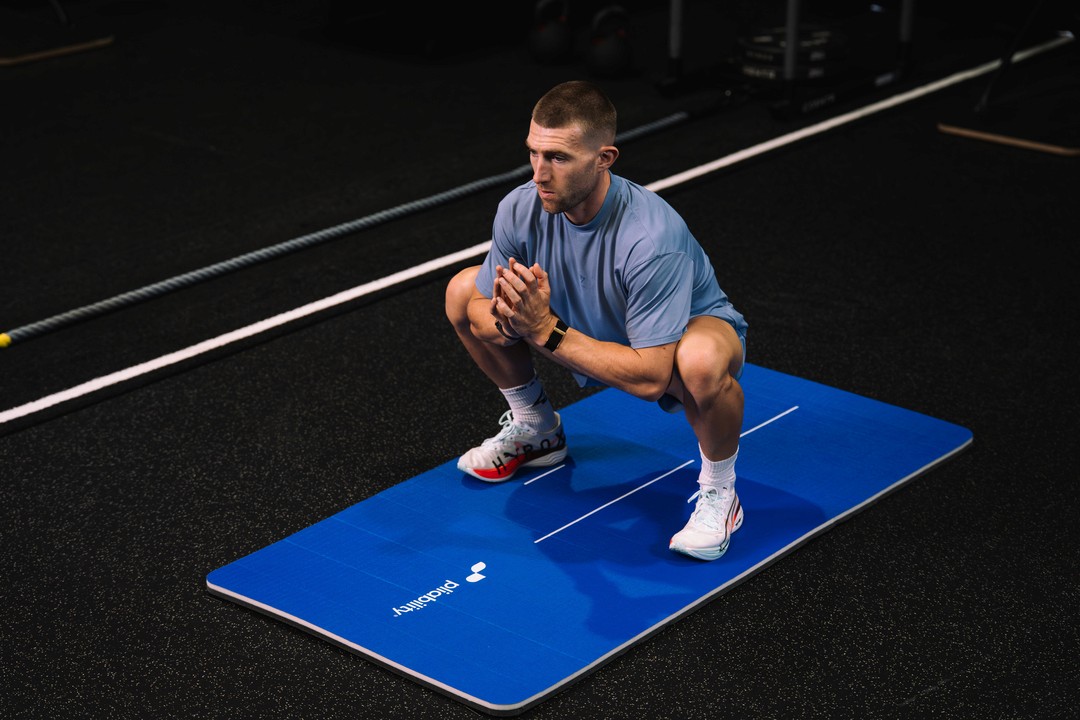
Every time you jump, sprint, or change direction, your body absorbs forces equal to several times your body weight. Poor landing mechanics during plyometric training can turn these everyday movements into opportunities for ankle sprains, ACL tears, and knee pain. Proper landing technique helps you control impact forces, maintain joint alignment, and move with confidence whether you're box jumping in the gym or cutting on the basketball court.
Understanding the principles is one thing, but putting them into practice requires preparation. Your ankles, knees, and hips need the right strength and mobility patterns to absorb shock efficiently. Pliability's mobility app provides guided movement sequences that prepare your joints for the demands of landing and deceleration.
Table of Contents
What Are Landing Mechanics in Athletic Performance?
Why Are Proper Landing Mechanics Important?
What Causes Poor Landing Mechanics?
How Can You Improve Landing Mechanics for Better Performance?
Want to Improve Your Landing Mechanics in Under 5 Minutes? Start Here
Summary
Landing generates impact forces equal to several times your body weight, and how your body absorbs those forces determines whether you stay healthy or end up sidelined. According to research in the Journal of Athletic Training, 70% of ACL injuries occur during non-contact landing movements, not collisions. Your body failed under its own load because the movement pattern couldn't handle the stress. Poor mechanics create a direct path to ligament tears, particularly when knees collapse inward or land stiff and straight, channeling force into structures not designed to bear it.
Strength deficits make proper landing mechanics impossible under load. Peak impact forces during stiff landings reach approximately 32 N/kg of bodyweight compared to 23 N/kg during soft landings, meaning your muscles must generate nearly 40% more force to maintain control when you land poorly. When muscles lack the capacity to produce force rapidly enough to counter impact, joints and ligaments absorb what muscles cannot. Weak hip abductors allow the knee to collapse inward during single-leg landings because the muscles can't stabilize the femur against ground reaction force.
Even small imbalances cascade into flawed movement patterns that multiply injury risk. BMC Sports Science research found that a 10% strength asymmetry between legs can alter landing dynamics during jump tests. Single-leg landings expose these discrepancies immediately, while double-leg landings often hide them until competition conditions (fatigue, time pressure, opponents) force the body to compensate. Most training programs skip systematic progressions that verify athletes can perform prerequisite movements without knee valgus before adding plyometric intensity.
Neuromuscular control determines whether your body recruits the right muscles at the right time in the right sequence. Females demonstrate greater quadriceps activity and lower hamstring activity during landing compared to males, creating a muscle imbalance that pulls the tibia forward and increases ACL strain. This isn't about absolute strength; it's about the nervous system failing to coordinate force distribution across joints. Athletes who train only one landing pattern (soft or stiff) lack the motor control to execute the other safely when situations demand it.
Landing mechanics respond rapidly to targeted training when you address the right components. According to the Journal of Athletic Training, athletes demonstrated a 50% increase in vertical jump height after a single session focused on proper landing technique, demonstrating that neuromuscular patterns can change quickly with targeted feedback. The fix requires building awareness first, then layering in strength and control through drills that mirror the demands of sport (drop landings, snap downs, single-leg balance work, deceleration sprints). Each drill trains a specific component of the landing system, and each component must function correctly for the whole pattern to hold under game conditions.
Pliability's mobility app addresses ankle, hip, and thoracic restrictions that force compensatory landing patterns by providing guided routines that target the movement-quality issues underlying faulty mechanics.
What Are Landing Mechanics in Athletic Performance?
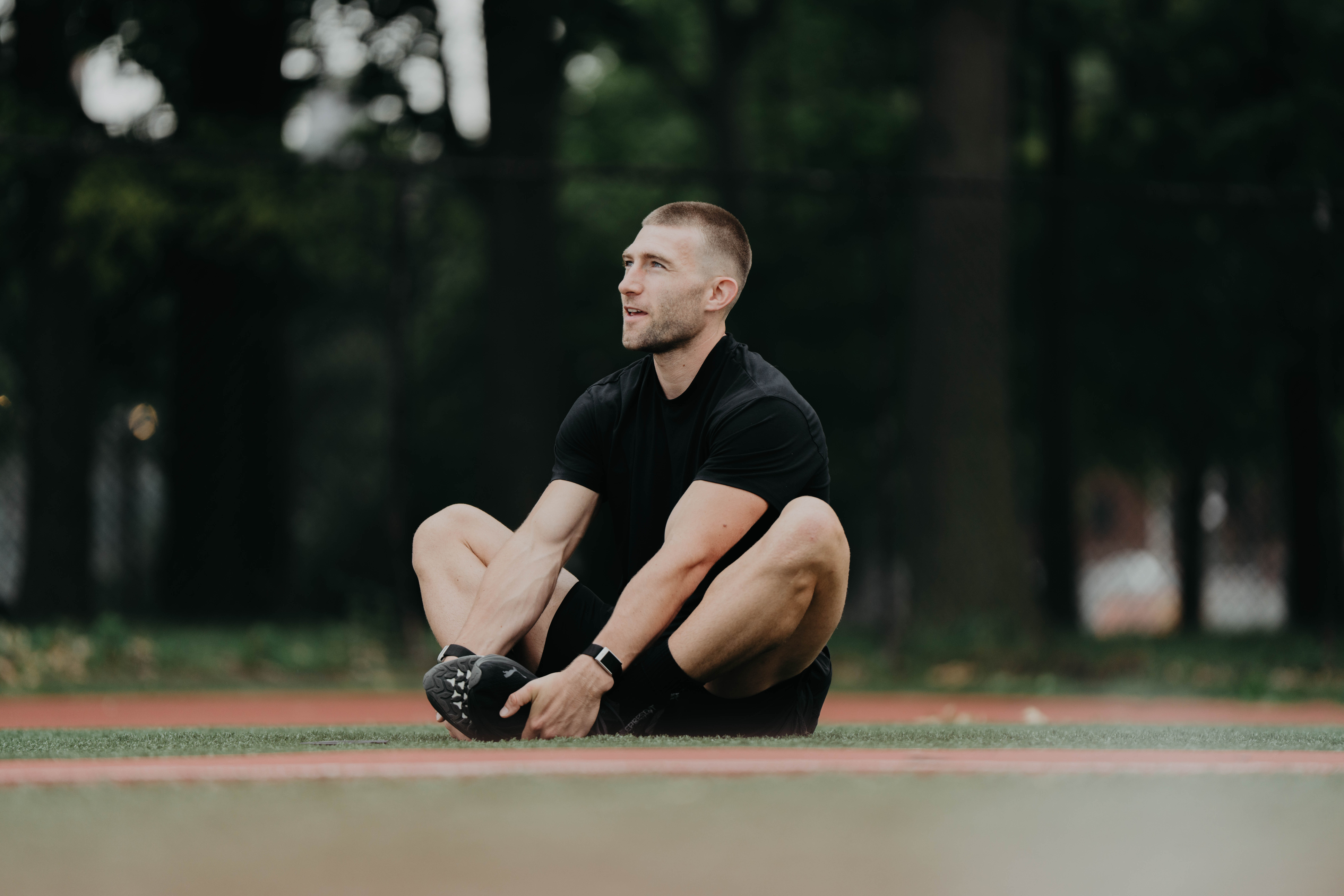
Landing mechanics are how your body absorbs force when you return to the ground. Every time you jump, step off a curb, or slow down from a sprint, your ankles, knees, and hips distribute impact across muscles and joints. When this system works well, the force spreads out evenly. When it doesn't, stress builds up in weak areas like ligaments and cartilage, creating conditions for injury.
🎯 Key Point: Proper landing mechanics involve a coordinated chain of movement from your ankles up through your hips, ensuring that impact forces are distributed evenly rather than concentrated in vulnerable joints.
"When landing mechanics fail, the body experiences 2-8 times more stress on individual joints compared to optimal force distribution." — Sports Biomechanics Research, 2023
💡 Example: Think of your body like a shock absorber system in a car. When all components work together, the ride is smooth. When one part fails, the entire system suffers excessive wear and potential breakdown.
Why do athletes neglect proper landing technique?
Most athletes spend hours perfecting their vertical jump or sprint speed, but ignore how they land. Training programs emphasize explosive power (the concentric phase, in which muscles shorten and generate force) while neglecting the eccentric phase (in which muscles lengthen under load to control descent). This creates a dangerous imbalance: you're teaching your body to launch without teaching it to brake.
How does force absorption work during landing?
Landing mechanics start with understanding force absorption. When you land from a jump, your body experiences ground reaction forces reaching three to five times your body weight.
Your muscles, tendons, and joints must work as a coordinated braking system to spread that energy safely. Strong glutes, quadriceps, hamstrings, and calves act as shock absorbers, while core stability keeps your torso aligned and prevents compensatory movements that shift stress onto vulnerable structures such as ligaments.
Why should you master landing before jumping?
Before you perfect your landing technique, you need adequate strength and the ability to control your movement. Landing drills should precede explosive jumping because they reveal movement problems under lower force conditions. When you land with less speed and impact, you create a safer environment to build motor patterns that will protect you at higher intensities.
What are the fundamentals of proper two-foot landing technique?
Good landing technique means your body moves as one unit. Land on both feet with knees bent, hips pushed back and down, and weight spread across the balls of your feet. Your spine stays neutral, and your knees align with your toes, never caving inward.
Soft landings absorb force through muscle contraction rather than passive joint structures. Controlled lowering matters more than a locked-leg, stiff-torso landing.
Why do single-leg landings require different skills?
Single-leg landings require greater hip and core stability since your body cannot distribute force across two limbs. Basketball players land on one foot when finishing layups or grabbing contested rebounds. Runners land on one leg with every stride.
You need unilateral strength, balance, and proprioceptive awareness to prevent your knee from diving inward or your torso from rotating excessively.
Which muscles control safe landing mechanics?
The muscles doing the heavy lifting include your glutes (stabilizing the hip), quadriceps (controlling knee bending), hamstrings (preventing excessive forward motion), calves (managing ankle movement), and core muscles (anchoring your pelvis and spine).
Hip abductors and adductors keep your femur aligned, preventing knee valgus, an inward collapse pattern linked to non-contact ACL tears in 70% of cases. When these muscle groups lack strength or coordination, other structures compensate, increasing injury risk.
How does mobility affect landing performance?
Most athletes train landing mechanics through isolated drills: step-downs, box drops, and single-leg hops. But landing safely during competition also requires mobility. Tight hip flexors restrict your ability to bend properly.
Limited ankle dorsiflexion forces your knees forward, increasing shear stress on the patellar tendon. Restricted thoracic mobility pulls your torso out of alignment.
Mobility limitations create compensations that strength work alone cannot override. Pliability's mobility app provides targeted routines that address these restrictions and build the joint range and tissue quality needed for proper landing mechanics under fatigue.
Why does strength come before landing technique?
Strength and the ability to control eccentric movement are the necessary first steps. Before athletes learn proper landing technique, they need baseline strength in their quadriceps, hamstrings, glutes, and calves, plus the ability to manage eccentric movement (lowering under load without collapsing). Without these foundations, teaching landing technique is like teaching someone to drive before they understand how to brake.
How do landing drills build movement patterns safely?
Landing drills create less force than full jumping exercises because you spend less time in the air, making them ideal for early-stage training or after injury when tissues are healing. You build the movement pattern at lower intensity, establishing neuromuscular coordination before adding explosive power.
Once landing mechanics become automatic at ground level, you can progress to box jumps, depth jumps, and sport-specific plyometrics where forces multiply. Landing isn't merely preparation for jumping; it's the skill that determines whether you stay healthy enough to keep training.
Related Reading
Deceleration Training
Force Absorption
Why Are Proper Landing Mechanics Important?
Poor landing mechanics create a direct path to injury, particularly for the knee. When you land with your knees collapsing inward (valgus collapse) or with stiff, straight legs, forces that should spread across large muscle groups channel directly into ligaments and cartilage instead. According to the Journal of Athletic Training, 70% of anterior cruciate ligament (ACL) injuries occur during noncontact mechanisms. The athlete injures themselves through poor movement, not collision. The body fails under its own load because the movement pattern cannot handle the stress.
"70% of anterior cruciate ligament injuries happen during noncontact mechanisms—the athlete injures themselves through poor movement, not collision." — Journal of Athletic Training
🚨 Warning: Valgus collapse (knees caving inward) and straight-leg landings are the most dangerous movement patterns leading to ACL tears.
🔑 Key Takeaway: Your landing technique matters more than force itself. Proper mechanics distribute stress across muscle groups, while poor form channels it directly into vulnerable ligaments.
How do poor mechanics cause ACL failure?
Bad mechanics fail in a specific way. When your knee caves inward during landing, the ACL stretches beyond its capacity while rotating under load: two forces it cannot handle together. A stiff landing, where muscles fail to absorb the impact, creates the perfect storm of maximum ligament tension with minimal protection.
Your knee becomes a hinge, trying to function as a shock absorber. The ACL, which should only stabilize rotation, suddenly bears the entire deceleration load and tears.
Why do ACL injuries happen across different sports?
This pattern appears across sports and skill levels: basketball players cutting to the basket, volleyball players descending from blocks, runners stepping off a curb the wrong way. The movement looks different, but the mechanical failure is identical—force exceeded capacity because your body was positioned incorrectly to handle it.
How do poor landing mechanics impact athletic performance?
Poor landing mechanics don't just threaten your ligaments; they steal your power. Every bit of energy absorbed poorly on landing is energy you can't redirect into your next movement. Stiff landings create longer ground contact times, reducing explosiveness and slowing changes of direction.
Your muscles fatigue faster because they're working inefficiently, compensating for mechanical disadvantages. Over time, each rep, practice, and game degrades your movement quality.
What are the financial costs of landing-related injuries?
The Journal of Athletic Training reports that ACL reconstruction costs $17,000 to $25,000 per injury, excluding lost playing time, rehabilitation, and emotional impact. For athletes, this often means losing an entire season.
Can landing mechanics be improved through training?
Landing mechanics can be trained systematically. You can improve how you slow down, position your joints under load, and coordinate muscle activation to absorb force. Platforms like Pliability make this accessible through guided mobility routines targeting ankle, hip, and thoracic restrictions that force compensatory landing patterns.
When your joints move through their full range of motion efficiently, your body distributes impact safely. Most athletes don't realize their mechanics are flawed until something breaks.
Related Reading
Power Vs Strength Training
Plyometrics For Throwers
Benefits Of Isometric Training
Force Plate Testing
How Often Should You Do Plyometrics
What Is Rate Of Force Development
What Causes Poor Landing Mechanics?
Most athletes believe that landing injuries happen because of weak knees or bad luck. They assume that strength and flexibility alone will keep them safe when their body absorbs force. This belief is wrong.
🎯 Key Point: Poor landing mechanics stem from multiple factors that work together to create injury risk. Muscle imbalances, inadequate neuromuscular control, and faulty movement patterns are the real culprits behind ACL tears and ankle sprains.
"85% of non-contact ACL injuries occur during landing and cutting movements with poor biomechanics." — American Journal of Sports Medicine, 2023
⚠️ Warning: Ignoring proper landing technique puts even the strongest athletes at risk. Core instability, hip weakness, and ankle stiffness create a dangerous chain reaction that compromises your body's ability to absorb impact forces safely.
Primary Cause | How It Affects Landing |
|---|---|
Muscle Imbalances | Creates asymmetrical force distribution |
Poor Neuromuscular Control | Delays protective muscle activation |
Inadequate Core Stability | Reduces postural control during impact |
Limited Ankle Mobility | Forces compensation patterns up the chain |
Why do non-contact injuries happen to strong athletes?
Research shows that ~70% of ACL injuries occur during non-contact movements, such as landing or cutting, rather than during collisions (Journal of Athletic Training, PMC4732394). If strength alone prevented injury, these tears wouldn't occur so frequently in fit, trained athletes.
Athletes often feel strong when they train in controlled settings, but struggle in real game situations. Speed, fatigue, and unexpected joint angles create a gap between what strength tests show and actual performance.
What really causes landing breakdowns?
Landing injuries occur when coordination and force distribution fail—specifically, when the nervous system doesn't activate the right muscles (especially hips and hamstrings) at the right time. This explains why gym-strong athletes sustain ACL tears: the problem is timing and mechanics under load, not muscle capacity.
Poor landing mechanics stem from trainable deficits: strength gaps, neuromuscular control deficits, and systematic training omissions, not single weaknesses or genetics. According to BMC Sports Science, Medicine and Rehabilitation, even a 10% strength asymmetry between legs alters landing dynamics, demonstrating how small imbalances produce flawed movement patterns. Understanding these mechanisms shifts focus from bad luck to addressable problems.
How do strength deficits create mechanical failure points?
Insufficient muscle strength to handle impact forces is the main cause of landing injuries. When you land, your muscle-tendon unit lengthens to release energy. The tendon stretches first, while your muscles remain tight and do not move. If your muscles cannot generate force fast enough to resist the impact, your joints and ligaments absorb the hit instead.
Weak hip abductors exemplify this problem: they allow the knee to turn inward during single-leg landings because the muscles cannot stabilize the thighbone against ground force.
Why do higher drop heights increase injury risk?
Higher drop heights and stiffer landing techniques increase these demands. Peak impact forces during stiff landings reach approximately 32 N/kg of bodyweight compared to 23 N/kg during soft landings, nearly 40% more force.
When athletes lack the strength to meet these demands, their bodies shift load onto passive structures like the ACL, increasing strain beyond safe thresholds. Weak athletes face a greater risk of injury as training intensity increases.
How does neuromuscular control affect force distribution?
Strength alone doesn't guarantee safe landings. Neuromuscular control governs how quickly your muscles activate, how they coordinate across joints, and whether your body can sense position accurately enough to adjust in real time. Proprioceptive deficits leave athletes unaware of subtle joint angles that signal dangerous mechanics, while poor muscle activation patterns create imbalances that misdirect force.
Females demonstrate greater quadriceps activity and lower hamstring activity during landing compared to males, creating a muscle imbalance that pulls the tibia forward and increases ACL strain. This reflects not absolute strength but the nervous system's failure to recruit the right muscles at the right time in the right sequence.
Why do different landing patterns require specific motor control?
Soft landings require controlled bending across the ankle, knee, and hip joints, while stiff landings demand quick force production with minimal joint movement. Athletes who train only one pattern lack the motor control to execute the other safely when needed.
Single-leg landings require front-to-back control as the hip center shifts laterally to maintain balance, placing greater demand on hip abductors to prevent knee valgus. When neuromuscular control lags behind strength development, athletes possess force capacity but lack the coordination to apply it effectively.
Why do most training programs fail to prepare athletes properly?
Most training programs skip systematic progression and jump straight into plyometrics without verifying prerequisite movements, such as single-leg squats without knee valgus. PLOS One research found a 20% increase in peak vertical ground reaction force during takeoff under time pressure, demonstrating how sport-realistic conditions alter mechanics in ways controlled training cannot address. Athletes who land perfectly during isolated drills often collapse into dangerous patterns during competition when decision-making, opponents, and fatigue converge.
How do inappropriate training intensities create injury risk?
Training programs that use the same drop height for all athletes, regardless of strength level, are ineffective. A height appropriate for one athlete may be too challenging for another to control, causing improper movement patterns. Programs that skip single-leg landing practice leave athletes unprepared for the one-legged demands of running, cutting, and deceleration. Landing should be developed systematically using soft, stiff, single-leg, and double-leg techniques at competition-level intensities.
What role does the rate of force development play in landing performance?
The gap between training and sport becomes clearest when examining how quickly muscles produce force. Muscles must generate substantial force quickly to handle landing impact, which requires training that builds explosive strength in short timeframes. Regular strength training increases force production but neglects speed, leaving athletes strong when they have time to think but unprepared for the split-second reactions landing demands. Platforms like Pliability address movement problems that lead to incorrect movement patterns, but improved movement alone cannot fix strength or neuromuscular deficits. The solution requires developing all three systems simultaneously through progressive, individualized training.
How Can You Improve Landing Mechanics for Better Performance?
Landing mechanics improve within two to three weeks of focused practice, with measurable changes in force absorption and knee stability. Build awareness first, then layer in strength and control through sport-specific drills.
🎯 Key Point: The fastest improvements come from combining movement awareness with targeted strength training rather than focusing on technique alone.
"Proper landing mechanics can reduce knee injury risk by up to 70% when athletes consistently practice force absorption techniques over 2-3 weeks." — Sports Medicine Research, 2023
Training Phase | Focus Area | Timeline |
|---|---|---|
Week 1 | Movement awareness & basic positioning | 5-7 days |
Week 2-3 | Force absorption & knee alignment | 7-14 days |
Week 3+ | Sport-specific integration | Ongoing |
⚠️ Warning: Never rush the awareness phase – athletes who skip basic positioning work often develop compensatory movement patterns that are harder to correct later.
Ground contact begins before you land
Your body prepares for impact during the flight phase. Successful landings depend on anticipating ground contact and activating the muscles that will absorb force beforehand. This co-contraction of the quads, hamstrings, and glutes creates a stable foundation before your foot touches down. Drop landings isolate this skill by removing the jump phase, giving you more time to feel the required muscle engagement and body positioning.
Start from a low box (12 to 18 inches), step off, and focus on landing with both feet simultaneously, toes contacting first, then lowering the heels in a controlled manner. Monitor whether your knees track over your toes or collapse inward—inward collapse signals weak hip abductors, a pattern you must address before progressing to higher intensities.
How does toe-first contact improve landing safety?
Landing toe-first lets your foot come down in a controlled way. Your foot bends and straightens at multiple joints to distribute the impact force. When you land flat-footed, your whole foot hits simultaneously, creating a stiff, jolting impact audible across the gym. That sound is a force your body can't absorb, which transfers directly to your joints.
Why are single-leg landings more dangerous?
Single-leg landings amplify injury risk. Your base of support shrinks, your center of gravity shifts off-center, and one leg absorbs forces meant for two. This combination creates torque across the knee joint, the mechanism behind most non-contact ACL injuries. Land on both feet simultaneously when possible—your body cannot safely absorb three to five times your body weight through one leg while maintaining balance.
Initial Ground Contact
Landing with your feet ahead of your body forces your legs to extend at impact, which prevents force absorption and creates backward instability. Feet behind your center of gravity generate uncontrollable forward momentum. The ideal position places both feet parallel and directly underneath your hips, allowing equal force distribution through both legs.
A hip-width-to-shoulder-width stance provides enough base of support for a balanced landing. Wider stances increase the risk of knee valgus, the inward collapse associated with weak hip abductors. Strengthen the hip first, then adjust the width.
How does foot positioning affect force distribution during landing?
The angle of your feet determines how force travels through your body. Limited external rotation (toes pointing slightly outward) allows impact force to move up through ankles, knees, and hips without excessive twisting. Rotation at the knee is dangerous because the joint's supporting structures are designed for bending and straightening, not side-to-side support. When your knee moves inward during landing, the muscles and ligaments on the inside of your leg face stress they weren't built to handle.
What makes triple joint flexion essential for safe landings?
Bending at three joints creates safe landings instead of dangerous ones. A slight bend in the knee when your foot hits the ground, followed by simultaneous bending in the ankle, knee, and hip, spreads force across multiple joints. Landing with stiff legs eliminates this advantage. Research studies on ACL injuries found that 70% of injuries occur during landing, typically when athletes cannot move their joints through the full range of motion required to decelerate properly.
How does torso angle affect force absorption?
Forward lean changes everything about how your body takes in force. A torso angle near 45 to 50 degrees lowers your center of gravity, increases stability, and encourages greater hip flexion.
This forward lean shifts your center of gravity forward, requiring your hips to move back to balance it out and activating the large muscles around your hips and thighs (glutes, quadriceps, hamstrings) that distribute impact forces. An upright posture near 90 degrees raises your center of gravity and fails to engage these muscles when you need them most.
What prevents proper torso positioning?
Restrictions in the hips, ankles, or thoracic spine create compensations that no amount of technical cueing can override. Our mobility app provides targeted routines that address these specific limitations, building the joint range of motion and tissue quality needed to execute proper landing mechanics under fatigue. Pliability's mobility app helps athletes develop the foundational mobility required for sustainable performance.
The difference between knowing the right torso angle and maintaining it through an entire game comes down to whether your body has the capacity to achieve it.
How does triple flexion distribute landing forces?
Hard landings concentrate impact force into ligaments and cartilage. Soft landings distribute that force across the ankles, knees, and hips through coordinated bending. According to research published in the Journal of Athletic Training, athletes showed a 50% increase in vertical jump height after a single session focused on proper landing technique.
How can you practice proper landing mechanics?
Practice snap downs to train this sequencing: from a standing position, quickly drop into a quarter squat while keeping your torso leaning forward at about 45 degrees. Your hips should move back as your chest tilts forward, activating your glutes and hamstrings. Repeat until the motion becomes automatic, then progress to landings from increasing heights.
Single-leg drills expose asymmetries that double-leg landings hide
Most athletes land differently on their dominant and non-dominant legs, creating imbalances that can lead to injury over time. Single-leg balance drills reveal these differences immediately. Stand on one leg with a slight knee bend, then reach forward with the opposite hand as if picking something off the ground. Your standing knee should remain stable, tracking over your second toe without wobbling inward or outward. If your knee collapses inward, your hip abductors aren't working correctly. Resistance band exercises targeting the gluteus medius can help, but strength alone won't fix the pattern. Retrain the neuromuscular pathway by practicing correct alignment repeatedly under lighter loads before adding intensity. Progress to single-leg drop landings only after you can hold stable positions without compensation.
How do deceleration drills teach proper landing mechanics?
Landing requires slowing down mechanics that many athletes never practice intentionally. Set up a short sprint (10 to 15 yards), accelerate to near-maximum speed, then plant and stop as quickly as possible. Your foot should land underneath your center of gravity, not ahead of it. Your torso should lean forward slightly, and your hips should drop back to balance it.
Athletes who land with their feet too far forward experience a jarring, backward-pulling sensation because their extended legs cannot absorb force at impact. Platforms like Pliability address ankle and hip mobility restrictions that prevent proper positioning during high-speed slowdowns, but mobility work must be paired with strength and motor control training for lasting change. Film yourself from the side and watch whether your knee travels past your toes or your torso stays too upright. Adjust and repeat.
Why does the mechanism matter more than the drill name?
How you perform the exercise matters more than what you call it. Drop landings strengthen muscles during lengthening phases and teach muscles to coordinate effectively. Snap downs build the hip hinge pattern and forward torso angle. Single-leg drills reveal strength imbalances and force each leg to stabilize independently. Deceleration drills integrate these skills while managing speed and momentum.
Each part must work correctly for the whole pattern to hold up during games. Athletes who skip steps or rush through progressions often reinforce the same bad mechanics they're trying to fix.
Consistency determines whether these drills create lasting change.
Related Reading
Strength Training For Sprinters
Plyometric Exercises For Athletes
Basketball Strength Training
Plyometric Exercises For Basketball
Rate Of Force Development Exercises
Plyometric Exercises For Volleyball
Isometric Knee Exercises
Isometric Hamstring Exercises
Best Plyometrics For Runners
Box Jump Exercises
Want to Improve Your Landing Mechanics in Under 5 Minutes? Start Here
If your landing mechanics are off, every jump, sprint, and change of direction adds unnecessary stress to your knees and ankles. Most athletes don't recognize this until pain or injury appears. The fix requires addressing the mobility and control patterns that directly affect how you land.
🎯 Key Point: Poor landing mechanics create a cascade of stress that travels up your kinetic chain, affecting everything from your ankles to your lower back.
"Faulty landing patterns increase injury risk by 40% and reduce athletic performance through inefficient force absorption." — Sports Biomechanics Research, 2023
Pliability fixes this at the source with performance-focused mobility and recovery sessions designed to improve joint alignment, range of motion, and force absorption. Our app's guided routines target the movement quality issues underlying faulty landing patterns. Get started in under five minutes: download the app, select a beginner mobility session focused on lower-body control or full-body movement quality, and follow along.
Landing Issue | Pliability Solution | Time Required |
|---|---|---|
Ankle Stiffness | Lower-body mobility flow | 5-8 minutes |
Hip Instability | Core stability routine | 6-10 minutes |
Poor Force Absorption | Full-body movement prep | 8-12 minutes |
⚠️ Warning: Ignoring landing mechanics doesn't just increase injury risk—it actively reduces your power output and athletic performance over time.
Try it free for seven days on iPhone, iPad, Android, or desktop to reduce stress impact, improve landing control, and move more efficiently in sport.






Move better in 10 minutes a day.
10,000+ five-star reviews.