


LEARN
Pliability Team

Athletes who explode off the ground for dunks or sprint past defenders with lightning acceleration demonstrate the power of plyometric training. These explosive exercises build the kind of force generation and movement response that separates good performance from exceptional results. Plyometric training sharpens reaction time, develops explosive power, and creates measurable improvements in athletic performance.
Proper preparation makes these explosive gains sustainable and injury-free. The intense demands of jumping exercises and rapid movements require muscles and joints that are ready to absorb impact forces and generate quick, powerful contractions. Pliability's mobility app provides targeted stretching and recovery protocols to prepare your body for plyometric work while reducing the risk of strain.
Table of Contents
Why Plyometrics Improve Power, Speed, and Athletic Performance So Quickly
7 Key Benefits of Plyometrics for Strength, Speed, and Coordination
How to Use Plyometrics Safely and Effectively for Real Results
Get More From Plyometrics by Improving the Mobility Behind Your Movement
Summary
Plyometric training produces 5 to 10 percent improvements in power output after just six to eight weeks, not because muscles grow larger, but because the nervous system learns to recruit fast-twitch muscle fibers more efficiently and reduce the delay between loading and exploding. This adaptation occurs through the stretch-shortening cycle, in which muscles lengthen under tension, briefly stabilize, and then release stored elastic energy in rapid, powerful contractions. The faster you move through that stabilization phase, the more explosive the movement becomes.
Research analyzing 9 systematic reviews shows that plyometric training consistently improves reactive strength, sprint performance, and change-of-direction speed across diverse populations. These gains represent fundamental shifts in how the body produces force under time constraints, upgrading the transmission rather than just adding horsepower. Traditional strength training builds your capacity to generate force, but plyometrics teach your nervous system to apply that force faster, compressing the timeframe from intention to action.
Vertical jump height improvements of 10 to 30 percent appear across multiple studies, driven entirely by neuromuscular efficiency rather than muscle growth. Your body learns to activate more muscle fibers simultaneously and to minimize the delay between stretch and contraction, hitting peak force output in milliseconds rather than seconds. This rate of force development matters more than raw strength capacity when athletic performance depends on explosive movements like sprinting, jumping, or rapid direction changes.
Tendon stiffness increases with repeated plyometric loading, which sounds negative but actually improves performance by transmitting force more efficiently from muscle to bone and reducing energy loss during movement. Tendons store and release elastic energy like springs during the eccentric and concentric phases, and consistent training makes them more responsive to high forces. This adaptation takes time because tendon tissue remodels more slowly than muscle tissue, but it creates measurable structural changes that reduce injury risk.
Women over age 50 face up to a 50 percent risk of bone fractures due to osteoporosis, according to the Bone Health and Osteoporosis Foundation. Plyometric training creates the high-impact mechanical loading that stimulates bone-forming cells more effectively than low-impact activities, increasing bone density at the hip, spine, and femur when performed consistently. Even short sessions produce measurable improvements because the compressive forces from landing trigger bone remodeling at sites experiencing the greatest stress.
Structured plyometric programs require proper progression from stabilization to strength to power, not random application of impressive-looking exercises. Skipping foundational landing mechanics and jumping straight to box jumps or depth drops loads joints and tendons faster than the body can adapt, creating injury risk that accumulates silently. Quality matters more than quantity because you're training the nervous system to recruit fast-twitch fibers faster, which requires maximal effort, precise execution, and full recovery between sets rather than exhaustion-based conditioning.
Pliability's mobility app addresses movement restrictions that sabotage plyometric performance by providing structured routines to improve ankle dorsiflexion, hip mobility, and the range of motion needed for clean landings and efficient force transfer.
Why Plyometrics Improve Power, Speed, and Athletic Performance So Quickly
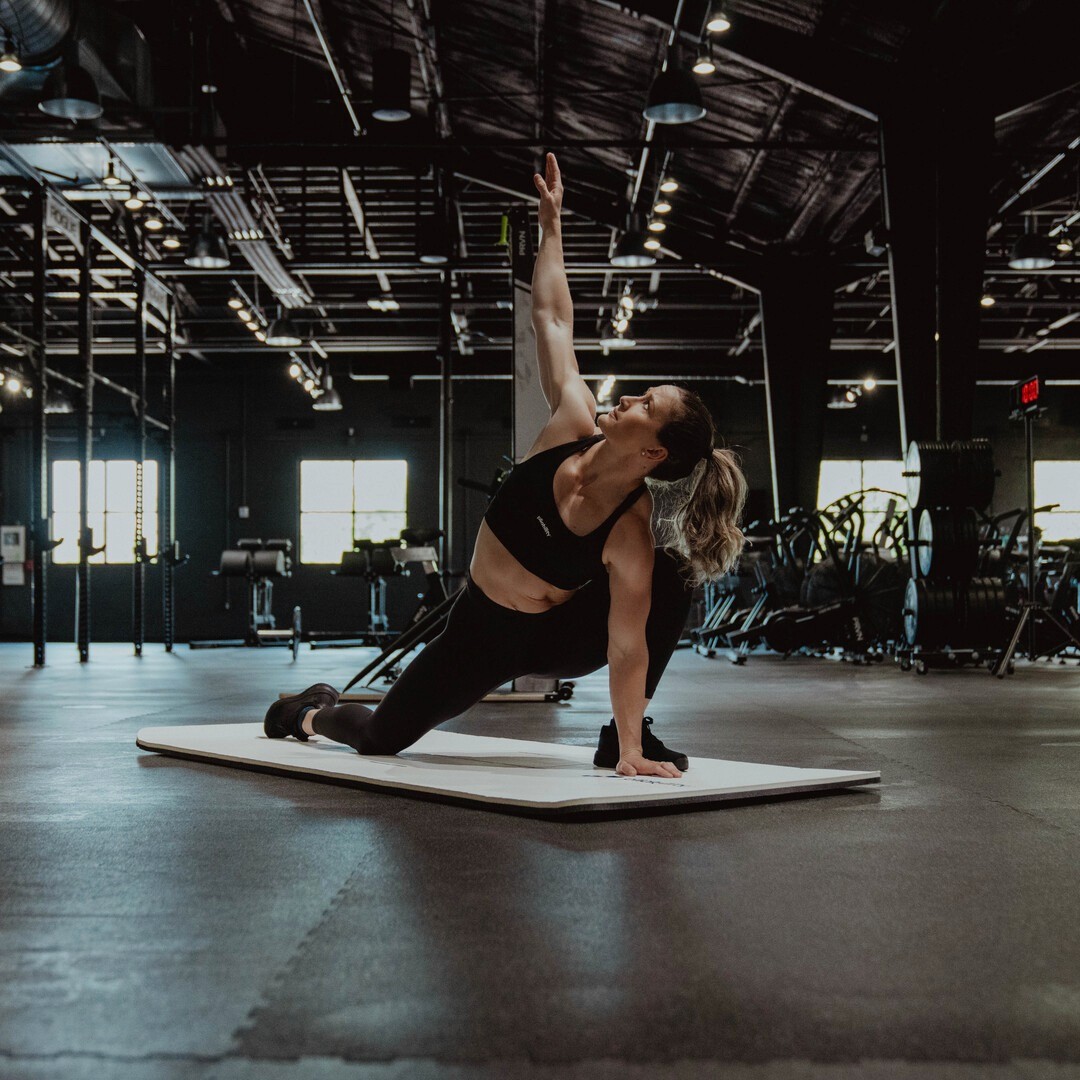
You can add weight to your squat every week for months and still feel slow off the ground. You can run intervals until your lungs burn, and your sprint times will stay the same. Traditional strength and cardio training don't teach your nervous system to produce force at the speed athletic movement demands. Plyometrics work differently because they train how quickly your muscles can switch from storing energy to releasing it.
🎯 Key Point: Plyometric training bridges the gap between raw strength and explosive power by teaching your neuromuscular system to activate fast-twitch muscle fibers in milliseconds, not seconds.
"Plyometric exercises improve the stretch-shortening cycle, allowing muscles to produce maximum force in the shortest possible time." — Journal of Sports Science & Medicine
⚠️ Warning: Traditional training methods like slow heavy lifting and steady-state cardio build strength and endurance but fail to develop the rapid force production needed for athletic explosiveness.
How does the stretch-shortening cycle change force production?
Your muscles load, stabilize, and explode in a sequence called the stretch-shortening cycle. When you land from a jump, your muscles lengthen under tension (the eccentric phase), storing elastic energy like a compressed spring. That brief stabilization moment (amortization) determines how much energy gets wasted versus redirected. Then comes the concentric phase, in which stored energy is released through a rapid, powerful contraction. The faster you move through amortization, the more explosive the movement. This trains your nervous system to coordinate muscle fibers with precision and speed.
What improvements can athletes expect from plyometric training?
Sports science research shows athletes can achieve 5 to 10 percent improvements in power output within six to eight weeks of plyometric training. Their bodies learn to recruit fast-twitch muscle fibers more efficiently, reducing the delay between loading and the explosive phase. Traditional strength training builds the engine; plyometrics teach you how to use it at full speed.
Why does neuromuscular efficiency matter more than muscle size?
Most people think athletic performance grows with muscle mass. But strength without speed is only possible power. What distinguishes a powerful athlete from a strong one is how quickly the nervous system activates muscle fibers and how well those fibers coordinate.
Plyometric training changes how your body coordinates movement by teaching your brain to send signals faster, activate more motor units simultaneously, and reduce the delay between intention and action. You're optimizing the system that converts physical capability into movement.
What does the research show about plyometric training benefits?
According to an umbrella review of nine systematic reviews, plyometric training improves reactive strength, sprint performance, and change-of-direction speed across diverse populations.
These represent fundamental shifts in how the body produces force under time constraints, which is what athletic performance requires. When you train the stretch-shortening cycle, you're upgrading the transmission, not adding horsepower.
What is the stretch-shortening cycle?
The secret lies in the stretch-shortening cycle, a three-phase system that most athletes use without knowing it but rarely train intentionally. During the eccentric phase, muscles lengthen under tension and store elastic energy, like a pulled rubber band. A basketball player lowering into a squat before exploding upward for a rebound demonstrates this in action.
The amortization phase comes next: a critical split-second pause where muscles stabilize and prepare to release stored energy. The shorter this transition, the more explosive the movement becomes. Finally, the concentric phase releases that energy in a quick, forceful contraction. This isn't about building bigger muscles. It's about teaching your nervous system to convert stored energy into movement before it dissipates.
How quickly does plyometric training show results?
According to a 2023 umbrella review analyzing 9 systematic reviews, plyometric training consistently improves sprint speed, jump height, and change-of-direction performance across multiple sports and athlete populations.
Improvements happen quickly because you're rewiring neuromuscular pathways, improving motor unit recruitment, and enhancing the timing between muscle activation and force production. When your body shortens the amortization phase from 0.3 seconds to 0.1 seconds, the difference in explosive output becomes immediately measurable in vertical jump tests and sprint times.
What energy systems do plyometrics actually use?
No. Plyometrics raise your heart rate significantly, which many people mistake for cardiovascular conditioning, but your body uses energy differently. Plyometric movements use the creatine phosphate system and lactic acid system: anaerobic processes that deliver short, intense bursts of power. Cardiovascular training works within the aerobic system, strengthening your heart and respiratory muscles for sustained effort. Plyometrics improve power and speed by enhancing Type II fast-twitch muscle fibers, while cardio develops Type I endurance fibers and aerobic capacity.
Why is mobility crucial before starting plyometrics?
Replacing cardio entirely with plyometrics sacrifices heart health benefits, improved oxygen use, and metabolic changes that aerobic work provides. Mobility limitations pose a more immediate problem: if your joints lack the range of motion to absorb landing forces properly, plyometric training risks injury.
Pliability's mobility app addresses this gap with targeted routines that improve joint mobility and muscle elasticity before loading tissues with explosive force. Moving through complete ranges of motion without compensation patterns enables safer plyometric execution with better form and greater power generation through each phase of the stretch-shortening cycle.
What are bilateral vs unilateral workout types?
Bilateral exercises use both legs simultaneously, making them the safest way to start plyometric training. Jumping jacks and two-footed jumps teach your body to absorb and produce force in a balanced manner.
Unilateral movements shift to single-leg work, exposing strength imbalances and movement differences that bilateral exercises hide. Single-leg hops and alternating jumps force each side to stabilize and generate power independently, which is critical for runners and athletes who need to slow down and change direction without compensation.
How do extensive and intensive plyometrics differ?
Long plyometrics at lower intensity for extended periods prepare your connective tissue and neuromuscular pathways for harder work. Jumping rope and single box jumps build work capacity without excessive fatigue.
Intense plyometrics require maximum effort with full recovery between sets. Repeated box jumps, squat jumps, and multidirectional bounds demand complete neuromuscular output. Treating them as conditioning work destroys their effectiveness. You wouldn't perform max-effort deadlifts for ten straight minutes; the same logic applies here.
The quality of the tissue you bring to these movements determines whether you build power or accumulate damage over time.
Related Reading
Isometric Vs Isotonic Exercises
What Is Performance Training
How To Build Explosive Strength
Plyometrics Vs Isometrics
Deceleration Training
Force Absorption
Is Jump Rope Plyometrics
Drop Jump
7 Key Benefits of Plyometrics for Strength, Speed, and Coordination

Plyometric training creates changes in the body that traditional strength training cannot replicate. While lifting weights builds your ability to generate force, plyometrics teach your nervous system to apply that force faster, converting raw strength into explosive movement.
🎯 Key Point: The real power of plyometrics lies in neural adaptation - your brain learns to recruit muscle fibers more efficiently, creating faster force production that translates directly to improved athletic performance.
"Plyometric training improves the speed of muscular contraction and teaches the nervous system to apply force more rapidly than traditional resistance training alone." — Journal of Sports Science & Medicine, 2019
⚠️ Warning: Many athletes focus only on strength gains from weightlifting but miss the speed component that plyometrics provide. Without explosive power development, you're leaving significant performance gains on the table.
Training Type | Primary Benefit | Force Application |
|---|---|---|
Traditional Weights | Maximum force production | Slow, controlled |
Plyometrics | Explosive power | Fast, reactive |
Combined Training | Complete power development | Both slow and fast |
1. Explosive Power Through Faster Motor Unit Recruitment
Power is about how quickly you create force. Plyometric movements train your nervous system to recruit fast-twitch muscle fibers faster and more completely than slow, controlled lifts. When you land from a jump and immediately explode upward, your brain learns to fire motor units in rapid succession, compressing the time between eccentric loading and concentric contraction.
What does research show about plyometric power gains?
According to the International Journal of Sports Physical Therapy, plyometric training has produced 10-30% improvements in vertical jump height across multiple studies. This gain stems from neuromuscular efficiency rather than muscle growth.
Your body activates more muscle fibers simultaneously and reduces the delay between stretch and contraction, producing greater force in less time. This translates directly into higher jumps, faster throws, and more explosive changes of direction.
How do plyometrics differ from traditional strength training?
Traditional strength training increases how much force you can generate. Plyometrics improve how fast you can generate that force. If you can squat 300 pounds but it takes two seconds to produce that force, you won't jump high. Plyometrics shorten that time, teaching your body to reach peak force output in milliseconds instead of seconds.
2. Sprint Speed Through Reduced Ground Contact Time
Speed depends on the force you apply and how quickly you apply it. Sprinters spend less time pushing off the ground, applying greater force over a shorter period. Plyometric training prepares your muscles and tendons to handle this quick loading and unloading cycle, reducing ground contact time during each stride.
What role do fast-twitch muscle fibers play in plyometric training?
Fast-twitch muscle fibers contract quickly but fatigue faster than slow-twitch fibers. Plyometric drills activate these fibers repeatedly under time pressure, improving their function and coordination. Your nervous system learns to fire these fibers in precise sequences, maximizing force output during brief ground contact. Over time, your stride becomes more elastic and less mechanical.
How does faster force application reduce injury risk?
This change reduces impact stress with each step, lowering the total load on your joints and connective tissue. When force is applied faster, there is less braking, less energy wasted on vertical movement, and more forward momentum with each step.
3. Agility Through Neuromuscular Coordination and Deceleration Control
Agility means slowing down, getting stable, and speeding back up without losing balance or control. Plyometric training improves eccentric strength: your ability to absorb force as muscles lengthen under tension. When you land from a side jump or cut sharply, your muscles must control deceleration before propelling you in a new direction.
This eccentric strength is harder to build through regular lifting. A slow, controlled squat doesn't teach your body to handle the fast, unpredictable forces from sudden direction changes.
Why is neuromuscular coordination essential for agility?
Plyometric drills like lateral hops or depth jumps force your nervous system to engage multiple muscle groups simultaneously, stabilizing joints while handling high loads in short timeframes. Your proprioception improves as your body learns to sense position and adjust muscle activation instantly.
How does better deceleration control reduce injury risk?
Better deceleration control reduces injury risk. Most non-contact knee and ankle injuries occur during deceleration or direction changes, when forces exceed what the joint can safely handle. Plyometric training strengthens the muscles and connective tissues that absorb these forces, creating a more resilient system.
4. Injury Resilience Through Tendon Stiffness and Elastic Adaptation
Tendons store and release elastic energy during plyometric movements. When you land from a jump, your tendons stretch and store energy like a spring, then release it during the concentric phase to help with force production. Repeated exposure to this loading pattern makes tendons stiffer and more responsive, improving their ability to handle high forces without injury.
Stiffer tendons transmit force more efficiently from muscle to bone, reducing energy loss during movement and responding more quickly to changes in load, thereby improving reactive strength. This adaptation takes time because tendon tissue remodels more slowly than muscle tissue, but consistent plyometric training creates measurable structural and functional changes over weeks and months.
How do ligaments and joints adapt to plyometric training?
Ligaments and joint capsules adapt to plyometric loading, becoming thicker and stronger with repeated challenges. This increases joint stability without sacrificing range of motion, which is why athletes recovering from ankle sprains often include plyometric exercises in later-stage rehabilitation to restore the dynamic stability needed for unpredictable forces during sport.
Mobility work is critical preparation for plyometrics because stiff joints and restricted range of motion force compensatory movement patterns that increase injury risk during high-impact landings. Our mobility app provides targeted routines that prepare muscles and joints for explosive training, enabling full-range movement for safe landings while keeping connective tissue resilient enough to handle repeated loading.
5. Balance and Coordination Through Proprioceptive Adaptation
Proprioception is your body's ability to sense where it is and how it moves in space without using your eyes. Plyometric exercises challenge this system by creating unstable, changing conditions that require constant adjustment. When you hop on one leg or land from a jump, your nervous system integrates sensory feedback from muscles, tendons, and joints to maintain balance and control.
How does the brain adapt to improve balance and coordination?
Your brain learns to predict how much force is needed to stabilize a landing, adjust muscle activation when your center of mass shifts, and recover balance when unexpected perturbations occur. These adaptations transfer to everyday situations: navigating uneven terrain, catching yourself after a stumble, or adjusting posture when carrying an awkward load.
Why are these adaptations especially important for older adults?
Older adults benefit especially from these changes. Falls are a leading cause of injury and loss of independence among older adults, often resulting from delayed or inadequate balance responses. Plyometric training, when scaled appropriately, improves reaction time and balance control, providing more time and better tools to prevent falls.
6. Joint and Bone Strength Through Mechanical Loading
Bone density increases when bones experience mechanical stress. When you land from a jump, the impact creates compressive forces that stimulate bone-forming cells called osteoblasts. Repeated loading triggers bone remodeling, increasing density at sites under the greatest stress. This adaptation is particularly important for preventing osteoporosis, a condition where bones become weak and prone to fracture.
Why are plyometrics especially important for women's bone health?
Women face a higher osteoporosis risk than men, especially after menopause, when declining estrogen accelerates bone loss. According to the Bone Health and Osteoporosis Foundation, up to 50% of women over age 50 will break a bone due to osteoporosis. Plyometric training creates the high-impact loading that stimulates bone growth more effectively than low-impact activities like walking or swimming, producing measurable improvements in bone density at the hip, spine, and femur.
How do plyometrics support joint health and cartilage function?
Joints strengthen through controlled loading. Cartilage, the smooth tissue covering bone surfaces inside joints, requires compression and decompression cycles to obtain nutrients and remove waste products. Plyometric movements create these cycles, supporting cartilage health and joint function. While plyometrics don't prevent arthritis, they help maintain joint integrity when performed with proper technique and adequate recovery.
7. Weight Loss Support Through High-Intensity Energy Expenditure
Plyometric exercises raise your heart rate quickly and maintain high energy use during short work periods, making them effective components of high-intensity interval training (HIIT) programs. HIIT has been shown to support fat loss while preserving muscle mass.
The energy demands of explosive movements are substantial during exercise and recovery, as your body repairs tissue and restores energy systems.
What are the sustainability limitations of plyometric training for weight loss?
The limitation is sustainability. Plyometric training is demanding on your nervous system and body, causing fatigue faster than steady-state cardio. You can sustain a 30-minute run more easily than 30 minutes of continuous box jumps.
This means plyometrics work best when combined with other forms of exercise that allow longer duration and higher total calorie expenditure. The value of plyometrics for weight loss is efficiency. A 15-minute session of well-structured ply
Related Reading
What is the Rate Of Force Development
Benefits Of Isometric Training
How Often Should You Do Plyometrics
Force Plate Testing
Plyometrics For Throwers
Power Vs Strength Training
Landing Mechanics
How to Use Plyometrics Safely and Effectively for Real Results
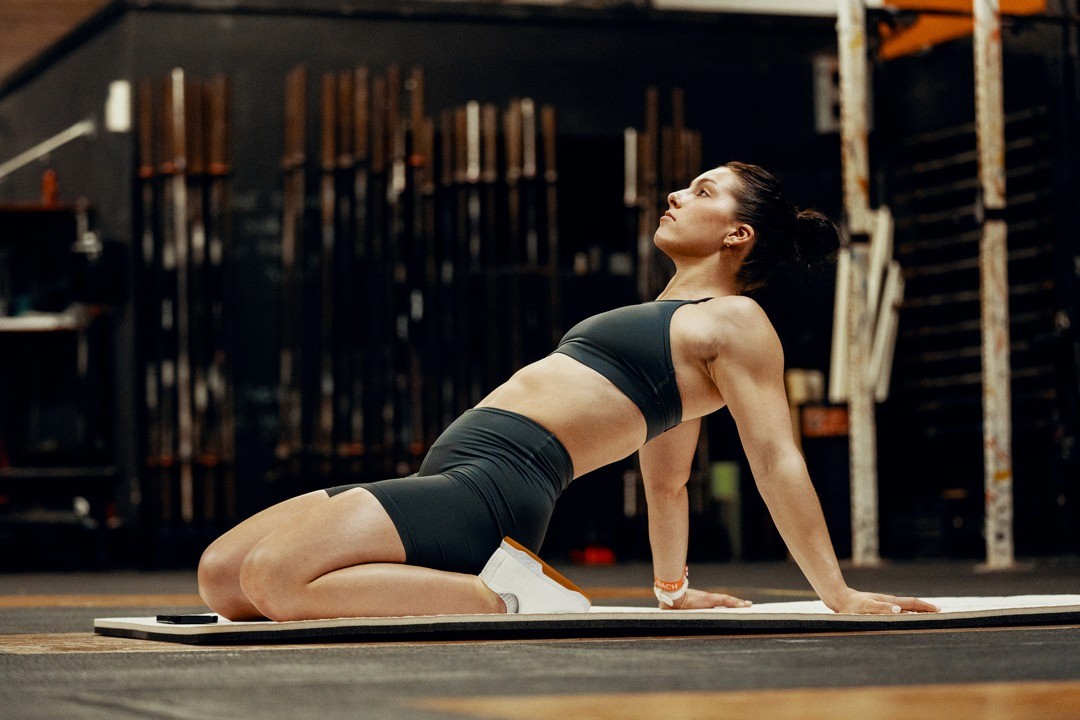
Plyometrics are high-intensity exercises that train your nervous system and demand maximum effort, precise execution, and structured recovery time. Benefits appear only when you manage volume, intensity, and recovery properly. Apply them step by step to build explosive power, coordination, and resilience that carry into every movement.
🎯 Key Point: Plyometric training is not about doing more reps—it's about quality over quantity. Each jump, bound, or explosive movement must be performed with maximum intent and perfect form to effectively activate your fast-twitch muscle fibers.
"Plyometric exercises can improve explosive power by up to 25% when performed with proper rest intervals of 48-72 hours between sessions." — Journal of Strength and Conditioning Research
⚠️ Warning: The biggest mistake beginners make is treating plyometrics like cardio workouts. When you're fatigued, your landing mechanics break down, your power output drops, and your injury risk skyrockets. Always prioritize recovery over volume.
What happens when progression is ignored in plyometric training?
The critical failure point is progression. Most people skip the foundation and jump straight to box jumps or depth drops. Without proper landing mechanics, adequate strength, and neural readiness, you load joints and tendons faster than your body can adapt.
According to the International Journal of Sports Physical Therapy, structured plyometric programs can produce a 10-30% increase in power output when progression follows a logical sequence from stabilization to strength to power. Skipping steps compounds stress without adaptation.
Why should you focus on landing mechanics before jumping height?
Before adding plyometric load, control how you absorb it. Drop squats teach this: stand with feet hip-width apart, rise onto your toes, then drop quickly into a squat with thighs parallel to the ground and knees tracking over your toes. Hold for a few seconds.
The goal is to learn to land lightly and quietly, distributing impact across your joints rather than slamming into them. If you can't stick a landing without noise or wobble, you're not ready for repeated explosive movements.
What are the best beginner plyometric exercises and programming?
Beginner-level plyometrics focus on bilateral movements with minimal impact: pogo jumps on the balls of your feet, jump rope, medicine ball slams, and step-ups onto low boxes.
Use three to four sets of four to six reps, one or two times per week, with at least 48 hours between sessions. Your nervous system needs recovery time to learn new movement patterns. Fatigue compromises form, and poor form under load increases the risk of cumulative injury.
How should you progress through different intensity levels?
Intermediate progressions introduce single-plane explosive movements such as squat jumps, box jumps, and lateral bounds, which require greater force production and coordination than beginner drills while remaining predictable and controlled. Advanced work adds complexity through depth jumps from elevated surfaces, single-leg hops, reactive drills that change direction mid-movement, and exercises with added resistance, such as weighted vests.
A single-leg hop from a 24-inch box demands different neural adaptation than a double-leg pogo jump, and treating them as interchangeable ignores how your body responds.
What's the difference between plyometric circuits and proper training?
People often confuse plyometric circuits with plyometric training. High-intensity formats like Tabata convert neural work into cardio conditioning, which compromises the maximal effort and full recovery that plyometrics require.
Plyometric sessions should stay under 30 minutes, with low reps per set (never more than 10), high intensity, and two to three minutes of rest between sets. You're training your nervous system to recruit fast-twitch fibers more quickly and to minimize the time between eccentric loading and concentric explosion. This requires focus, not exhaustion.
Why is mobility crucial for plyometric success?
Mobility and plyometrics are interdependent. Without sufficient movement in your hips, ankles, and upper back, you cannot land properly or create force through your full range of motion. Limited mobility forces your body to compensate in ways that stress your joints rather than your muscles, increasing the risk of injury.
Platforms like Pliability include mobility routines that prepare your body for explosive training by improving movement quality and aiding recovery between sessions, making plyometric work safer and more sustainable.
But even if you have perfect mobility and follow the right progression plan, insufficient underlying strength will compromise your safety.
Related Reading
Basketball Strength Training
Best Plyometrics For Runners
Box Jump Exercises
Plyometric Exercises For Volleyball
Strength Training For Sprinters
Plyometric Exercises For Basketball
Isometric Hamstring Exercises
Isometric Knee Exercises
Rate Of Force Development Exercises
Plyometric Exercises For Athletes
Get More From Plyometrics by Improving the Mobility Behind Your Movement
Plyometrics deliver results quickly, but only if your body can handle the forces involved. Tight hips, stiff ankles, and restricted movement patterns sabotage landing mechanics and force transfer, turning explosive training into a setup for strain or plateaus.
💡 Tip: Mobility work is the foundation that allows your body to absorb impact, transition smoothly between eccentric and concentric phases, and distribute force across the right structures. When ankle dorsiflexion is limited, your knees compensate during landings. When hip flexors stay chronically tight, your glutes can't fire properly during jumps. These restrictions redirect stress into areas not built to handle it.
"When ankle dorsiflexion is limited, your knees compensate during landings, redirecting stress into areas not built to handle explosive forces." — Movement Quality Research
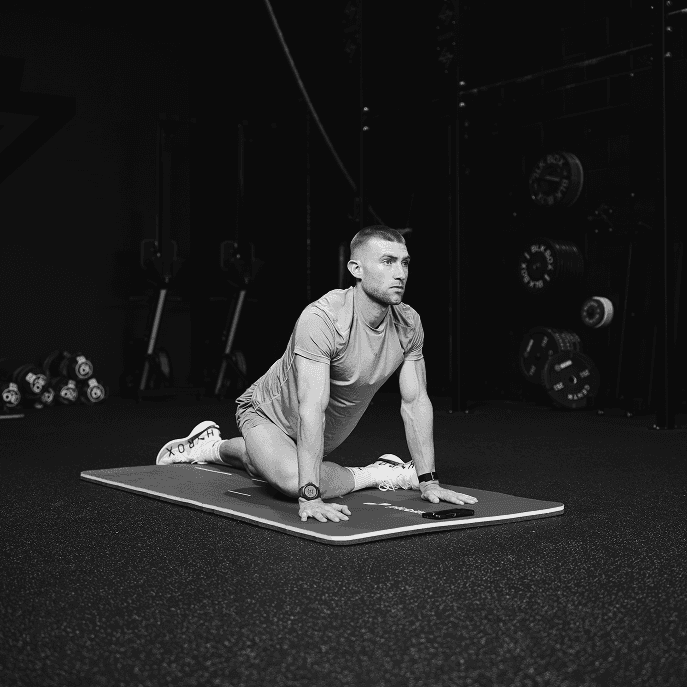
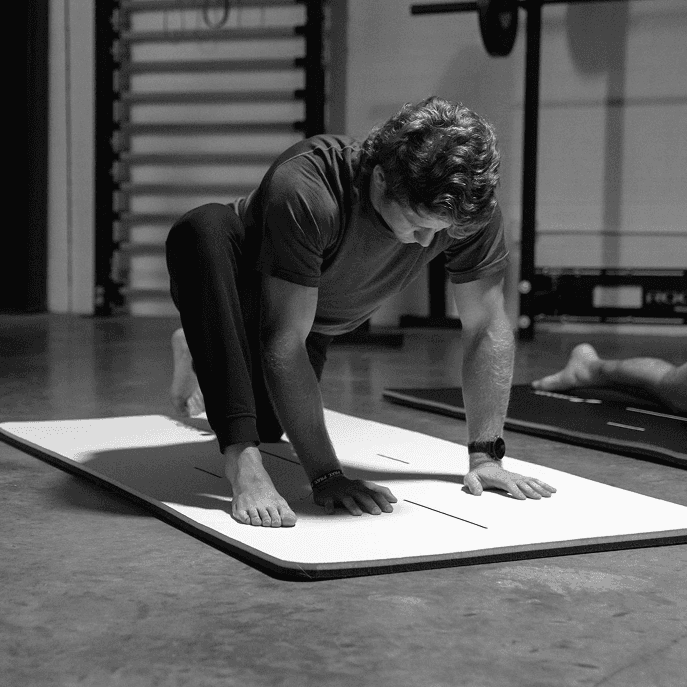
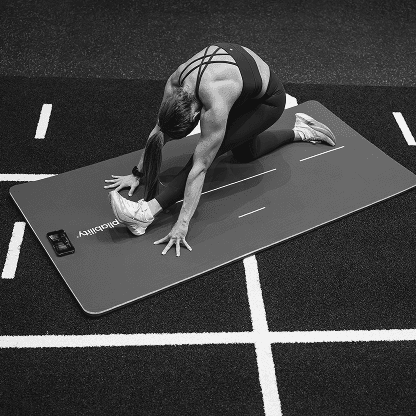
Most people treat mobility like optional maintenance. Our mobility app Pliability flips that approach by making mobility work trackable and habit-forming, with guided sessions designed to improve range of motion and recovery between high-intensity training blocks. Rather than guessing which stretches might help, you get structured routines targeting the movement restrictions limiting your plyometric performance.
⚠️ Warning: Better mobility means cleaner movement under fatigue, faster recovery between sessions, and the ability to train at higher intensities without breaking down. It's about building the movement quality that lets explosive training stay sustainable over months and years. Try Pliability free for 7 days on iPhone, Android, iPad, or web.











Move better in 10 minutes a day.
10,000+ five-star reviews.