


LEARN
Pliability Team

Athletes and fitness enthusiasts often face a critical choice between two fundamentally different training approaches: explosive movements that develop power or static holds that build strength. Plyometric exercises harness the stretch-shortening cycle to generate rapid force production, while isometric contractions create maximum tension without any joint movement. Each method triggers distinct adaptations in muscle function and nervous system response.
Understanding when to apply dynamic versus static training methods becomes essential for achieving specific performance goals. Plyometric training excels at developing explosive power and speed, while isometric exercises build rock-solid stability and strength endurance. Choosing the right approach depends on whether athletes prioritize rapid force generation or sustained muscular control, and many find success combining both methods with guidance from a mobility app.
Table of Contents
Why Your Strength Training Is Not Producing the Results You Expect
What Plyometrics Actually Do to Power, Speed, and Explosiveness
What Isometrics Actually Do and Why They Are Critical for Strength and Injury Control
Plyometric vs. Isometric Training Influences on Tendon Properties and Muscle Output
Stop Guessing Your Training and Start Moving With Purpose
Summary
Plyometric training delivers a 19% improvement in lower-limb explosive power by teaching the nervous system to recruit fast-twitch muscle fibers more rapidly, not by increasing muscle size. The adaptation occurs within the first 100 milliseconds of movement, when rapid motor-unit synchronization determines the amount of force an athlete can generate during jumps, sprints, or direction changes. Traditional strength training that relies on slow, grinding contractions never trains this firing pattern, which explains why some athletes can lift heavy weights but still lack explosiveness on the field.
Ground contact time determines speed more than leg turnover rate. Elite sprinters spend roughly 90 milliseconds in contact with the ground per stride at top speed, and athletes who take 150 milliseconds to organize force production will always be slower, regardless of their strength levels. Plyometric drills like depth jumps and bounding condition the body to minimize ground contact time and maximize force output by increasing tendon stiffness, allowing tissues to store and release elastic energy more efficiently rather than dissipating it as heat.
Isometric training produces an 8 mmHg reduction in systolic blood pressure, outperforming aerobic exercise, weight training, and high-intensity interval training according to cardiovascular research. The neural demand of holding maximal tension in a fixed position requires continuous motor unit activation without the assistance of momentum or elastic rebound. This sustained firing pattern creates adaptations that dynamic movements cannot replicate, particularly for building force capacity at specific joint angles where athletes are weakest and most vulnerable to injury.
Tendon stiffness increases by 14% through isometric training, while plyometric training increases active muscle stiffness without changing tendon properties. This difference matters because muscles generate force, while tendons transmit it, and a mechanical imbalance between the two can increase injury risk during high-velocity movements. Elite jumping athletes who trained exclusively with ballistic movements showed muscle strength gains but unchanged tendon stiffness, placing greater demand on connective tissue that couldn't efficiently handle the force their muscles could now produce.
Strength is not a single adaptation, and maximal force development operates on different neural pathways than explosive force production. Two athletes can back squat the same weight, but the one who generates more force in the first 100 milliseconds of ground contact will always finish the sprint faster. Rate of force development, not absolute strength, determines athletic performance in movements that require speed. Tendon stiffness alone accounts for 35% of variability in how quickly force appears during explosive actions.
Adding seven or eight kilograms of muscle mass increases joint load by roughly 20% and can slow reaction speed by 0.02 to 0.04 seconds. For athletes whose advantage comes from quick reads and lateral mobility, this delay flattens performance even as strength numbers climb. The body can handle more load physically, but the nervous system hasn't recalibrated to coordinate that new mass at game-speed conditions, creating a mismatch between gym strength and on-field explosiveness.
Pliability addresses this by providing daily mobility programs that align joint control and tissue recovery with the specific demands of plyometric and isometric training.
Why Your Strength Training Is Not Producing the Results You Expect

You're putting in the work. Weights are going up, sessions are consistent, and recovery is dialed in. But when you step onto the field or court, something feels off. Your vertical hasn't budged. Your first step feels heavy. You're late on rotations you used to read instinctively. The disconnect between what you can lift in the gym and how you move in competition creates a quiet, gnawing frustration that effort alone can't fix.
🎯 Key Point: Traditional strength training often builds isolated muscle strength without addressing the movement patterns and neuromuscular coordination required for athletic performance.
"The gap between gym strength and sport performance occurs when training doesn't match the speed, direction, and coordination demands of actual competition." — Sports Performance Research, 2024
⚠️ Warning: Many athletes fall into the trap of believing that bigger numbers on basic lifts will automatically translate to better athletic performance - this linear thinking ignores the complex nature of sport-specific movement.
Why doesn't gym strength translate to athletic performance?
This happens because strength is not a single adaptation. Your nervous system treats a slow, grinding squat differently than a reactive jump or sudden change of direction. Maximal force development operates on a different timeline and through different neural pathways than explosive force production. Two athletes can back squat the same weight, but the one who generates more force in the first 100 milliseconds of ground contact will finish the sprint faster. That gap—rate of force development—is where athletic performance lives.
How does the stretch-shortening cycle work?
During the stretch-shortening cycle, the muscle remains still while the tendon lengthens and springs back like a rubber band. Training this process teaches your muscle and tendon to store and release elastic energy efficiently at high speeds.
A stiffer tendon produces more recoil force when stretched to the same length. How much that recoil pushes back depends on how much force you apply and how stiff your tissues remain during the eccentric phase.
Why does tendon stiffness matter for explosive movements?
According to Nike's training research, explosive movements require you to create peak force almost instantly, before momentum builds. Tendon stiffness affects the time delay between muscle activation and force production.
Waugh's research showed that electromechanical delay is inversely related to tendon stiffness, whereas the rate of force development is positively related to it. Tendon stiffness accounts for 35% of the differences in force development speed.
How do coaches misinterpret muscle stiffness?
Coaches often see an athlete moving stiffly and assume the muscles need to relax. "Your shoulders are too stiff! Loosen up!" But the stiffness stems from inefficient co-contraction, in which opposing muscle groups fire simultaneously, locking the joint in a rigid position.
This is a coordination problem, not a flexibility issue. The athlete hasn't learned to properly sequence muscle activation at speed. Telling them to relax doesn't address the skill gap.
Why does added muscle mass reduce explosiveness?
Training consistently but not seeing more explosive signals means your program might be building the wrong adaptation. Adding seven or eight kilograms of mass increases joint load by roughly 20% and can slow reaction speed by 0.02 to 0.04 seconds.
For an athlete whose advantage came from quick reads and lateral mobility, that delay flattens performance even as strength numbers climb. The nervous system hasn't recalibrated to coordinate that new mass under game speed. You're not weaker. You're mismatched.
Understanding which type of stiffness you need and when explosive power diverges from grinding strength changes how you build a program from the ground up.
Related Reading
Isometric Vs Isotonic Exercises
What Is Performance Training
How To Build Explosive Strength
Plyometrics Vs Isometrics
Deceleration Training
Force Absorption
Is Jump Rope Pl
What Plyometrics Actually Do to Power, Speed, and Explosiveness

How does plyometric training rewire your nervous system for speed?
Plyometrics trains your nervous system to create force faster. The first 100 milliseconds of a jump, sprint, or throw determine power output. According to research from the American Journal of Men's Health, athletes who followed a structured plyometric program saw a 19% improvement in lower-limb explosive power.
This gain came not from muscle growth, but from the nervous system recruiting fast-twitch fibers more rapidly and coordinating movement patterns with less hesitation. The stretch-shortening cycle becomes automatic, elastic energy gets captured and released efficiently, and the delay between intent and action shrinks.
What makes explosive movements different from traditional strength training?
Traditional strength training teaches your body to push through resistance, while plyometrics teach it to explode through space. A heavy squat takes 800 milliseconds to reach maximum force output; a countermovement jump hits peak force in under 200 milliseconds.
Slow, grinding contractions rely on sustained motor unit activation. Explosive movements require fast, synchronized recruitment of high-threshold motor units. If you never train that firing pattern, your body won't access it when needed, regardless of muscle strength.
How does ground contact time determine your running speed?
Speed depends on how quickly you apply force into the ground, not how fast your legs move through the air. Sprinters spend roughly 90 milliseconds in contact with the ground per stride at top speed. If your nervous system takes 150 milliseconds to organize force production, you're already too slow.
Plyometric drills like depth jumps, bounding, and reactive hops condition your body to minimize ground contact time while maximizing force output. The faster you load and unload the stretch-shortening cycle, the faster you move.
Why does tendon stiffness matter for speed?
Tendon stiffness plays an important role in movement efficiency. Stiffer tendons store and release elastic energy more efficiently during fast movements: when you land from a jump and immediately bounce back, your Achilles tendon and patellar tendon act like springs.
If those tissues are flexible rather than stiff, energy dissipates as heat instead of propelling you forward. Plyometric training increases tendon stiffness over time, making your lower body work more efficiently during high-speed movements.
Why do fast-twitch fibers remain dormant without explosive training?
Most people have roughly equal amounts of slow-twitch and fast-twitch muscle fibers, but fast-twitch fibers remain inactive without specific training. Slow, controlled movements primarily use slow-twitch fibers because they resist fatigue and are easier for the nervous system to activate.
Fast-twitch fibers require more nerve power and activate only when force demands exceed slow-twitch capacity. Without explosive training, your nervous system never learns to access this extra capacity.
How do plyometrics force fast-twitch fiber recruitment?
Plyometrics force your nervous system to recruit fast-twitch fibers by creating demands that slow-twitch fibers cannot meet. During a maximum-effort vertical jump, your body must activate high-threshold motor units.
Over time, your nervous system becomes more efficient at this recruitment pattern: the threshold for activating fast-twitch fibers lowers, and coordination between muscle groups tightens. You don't get stronger. You get faster at being strong.
Most training programs treat explosive power as something you build after strength, despite the nervous system adaptations required for each being fundamentally different.
What Isometrics Actually Do and Why They Are Critical for Strength and Injury Control

Isometric training forces your nervous system to maintain the highest level of muscle fiber activation without momentum. When you hold a wall squat or maintain tension in a fixed position, your brain must continuously send signals to keep muscles contracted against resistance. There's no elastic rebound, no stretch reflex to help—only pure neural drive maintaining force output at a specific joint angle. This creates adaptations that plyometrics cannot match.
🎯 Key Point: Isometric exercises create unique neural adaptations by forcing continuous muscle activation without the assistance of momentum or stretch reflexes.
"Isometric training produces strength gains that are highly specific to the joint angle trained, making it essential for targeting weak points in movement patterns." — Sports Science Research
💡 Example: During a wall squat hold, your quadriceps, glutes, and core muscles must maintain constant tension for the entire duration of the exercise. This sustained activation teaches your nervous system to recruit motor units more efficiently and maintain force production under fatigue.
Force production happens at the angle you train
Your strength varies across a movement's range. You might be strong at the bottom of a squat but weak at parallel. Isometric holds build force capacity at the specific joint position. Research published in the Brief Review: Effects of Isometric Strength Training on Strength and Dynamic Performance found that isometric training causes less fatigue than dynamic work while producing significant strength gains. The adaptation is joint-specific because tendon stiffness increases at that precise angle, and motor units learn to fire maximally in that position.
Tendon stiffness determines how force is transferred
Muscles create force, but tendons carry it. Isometric training makes tendons stiffer, a mechanical property that determines how well force is transmitted from muscle to bone. Stiffer tendons lose less energy when transferring force, so more of your muscles' output moves your body. This matters for explosive movements, where fast force transfer is critical, and injury prevention, where tendons must handle sudden loads without excessive bending. Tendon adaptation is strength—it simply doesn't show up on a one-rep max test the way muscle growth does.
Stability under load protects joints in vulnerable positions
Injuries happen in positions where you're weakest: a shoulder at the end of its range of rotation, a knee collapsing inward when you slow down, a spine bending under tiredness. Isometric holds teach your nervous system to maintain structural integrity where dynamic movement becomes dangerous. Physical therapists prescribe isometric exercises for rotator cuff injuries because holding tension in compromised positions rebuilds the neural control needed to stabilize the joint. You're teaching your brain to protect the joint when it's most exposed.
The neural demand is higher than it appears
People assume static holds are easier because nothing moves. The opposite is true. When Dan Gordon, a professor of exercise physiology at Anglia Ruskin University, used 150kg isometric squat holds before track cycling, he achieved maximal motor unit activation without movement. Every motor unit fires continuously with no rest between reps and no momentum to share the load. According to BBC Future, isometric exercise produced an 8 mmHg reduction in systolic blood pressure, outperforming aerobic exercise, weight training, and high-intensity interval training.
Isometrics and plyometrics are not different intensities of the same adaptation.
Related Reading
How Often Should You Do Plyometrics
What is the Rate Of Force Development
Plyometrics For Throwers
Benefits Of Isometric Training
Force Plate Testing
Power Vs Strength Training
Landing Mechanics
Plyometric vs. Isometric Training Influences on Tendon Properties and Muscle Output
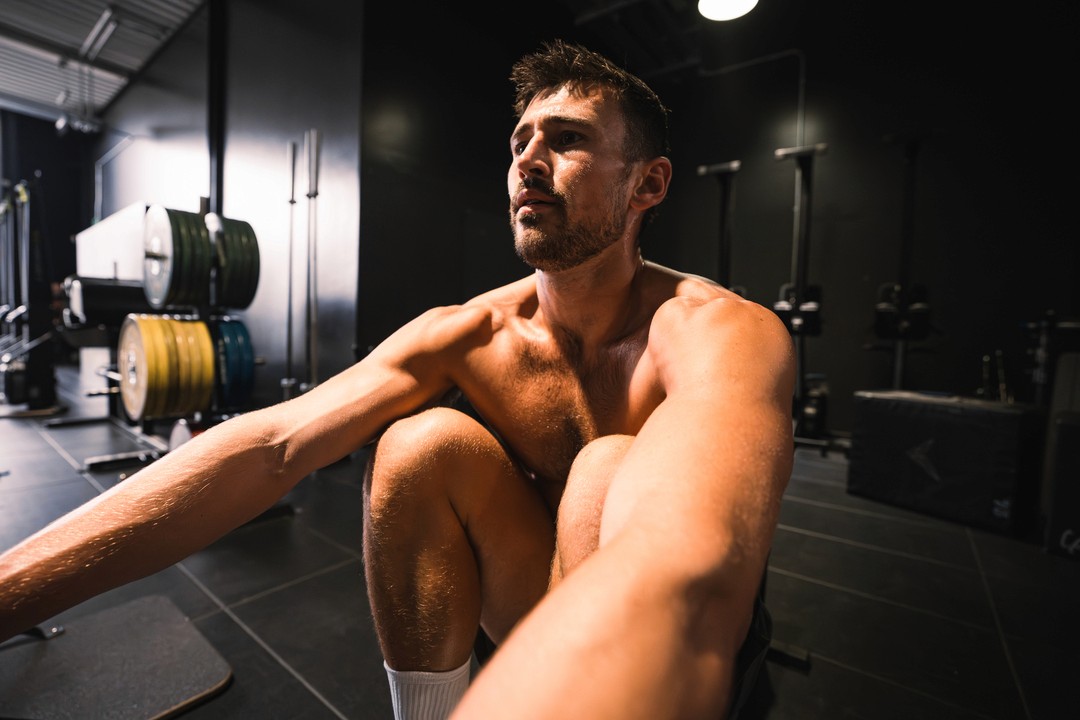
Plyometrics make muscles stiff during fast movement and train how quickly you can produce force. Isometrics make tendons stiff under steady weight and train how to control force while holding a position. Choose plyometrics for speed; choose isometrics for stability.
Training Type | Primary Focus | Muscle/Tendon Effect | Best For |
|---|---|---|---|
Plyometrics | Fast movement | Makes muscles stiff | Speed development |
Isometrics | Static holds | Makes tendons stiff | Stability & control |
🎯 Key Point: The fundamental difference lies in movement patterns - plyometric training develops explosive power through dynamic contractions, while isometric training builds sustained strength through static muscle engagement.
"Plyometric exercises target rapid force production, while isometric holds enhance force control and tendon stiffness under sustained load."
🔑 Takeaway: Your training choice should align with your specific performance goals - select plyometrics for athletic explosiveness and isometrics for postural stability and injury prevention.
Understanding Muscle Contractions: The Foundation of Movement
Your muscles contract in three different ways. A concentric contraction shortens the muscle as it tightens, like the upward phase of a bicep curl. An eccentric contraction resists as the muscle lengthens, controlling the weight back down without dropping it. Together, these form the basis of plyometric exercise. Isometric contractions produce no change in muscle length or joint angle: you hold a position against resistance. Wall sits, yoga poses, and planks create tension without movement, which is why isometric training is also called static strength training.
Exercise and Rate of Force Development
Rate of force development (RFD)—how fast your muscles create force—determines how quickly you can react, jump, or change direction. According to a 2007 PubMed study, 13 men trained their lower limbs with plyometric or isometric exercises 2 to 3 times weekly. The study revealed different changes in tendon properties and muscle output. Tendon stiffness controls RFD: loose tendons delay force transmission, while stiff tendons act like springs, transferring energy immediately. Regular training reorganizes collagen fibers in tendons, increasing stiffness and improving RFD. Stronger, faster muscles result not from larger fibers alone, but from tendons that efficiently handle and transfer force.
Plyometric Training Improves Muscle Stiffness
Plyometric exercises use the stretch-shortening cycle, where muscles rapidly lengthen and then contract. During this cycle, muscles tighten while the tendon stretches to store elastic energy, which is released during the contraction phase.
Plyometrics trains your muscles to stay stiffer, allowing the tendon to store and return energy. Research shows plyometric training increases musculotendinous stiffness, with some studies demonstrating improved endurance running performance after six weeks of training. The increase comes mostly from muscle stiffness rather than tendon stiffness: your muscles learn to stay firm while your tendons stretch and bounce back.
Why do you need both muscle and tendon stiffness?
Muscle stiffness by itself creates a problem. Elite jumping athletes who focused solely on ballistic training without heavy resistance training developed an imbalance between tendon stiffness and muscle strength over 1 year, increasing tendon demand and injury risk. You need both muscle and tendon stiffness to improve performance safely.
Isometric Training Targets Tendon Stiffness
Isometric training, specifically the push method against a fixed object, such as an isometric mid-thigh pull, effectively builds tendon stiffness. Multiple studies show that isometric training increases tendon stiffness more effectively than plyometric or heavy resistance training.
The Tendon Strength Fitness Blog documented a 14% increase in tendon stiffness from sustained isometric contractions, with longer durations per repetition (4 sets of 20 seconds versus 50 sets of 1 second) producing greater effects. Research recommends performing isometric training at 70 to 100% maximal voluntary contraction, sustaining each rep for 1 to 20 seconds, with at least 30 seconds of total contraction time per session.
Why are isometrics less effective for jump performance?
Even though isometric training increases tendon stiffness more effectively, it produces smaller gains in active muscle stiffness than plyometric training. This is why isometrics alone don't improve jump performance as well: the stretch-shortening cycle requires greater muscle stiffness than tendon stiffness.
Once you understand that these methods train different qualities, the question becomes how to combine them without creating interference or wasting effort.
How do plyometric and isometric training affect muscle stiffness differently?
According to research published in the Journal of Strength and Conditioning Research, 13 men trained their lower limbs using either plyometric or isometric exercises 2–3 times per week. Plyometric training increased active muscle stiffness, the ability of muscle fibers to resist lengthening during rapid stretching. Isometric training delivered a 14% increase in tendon stiffness, making connective tissue between muscle and bone more efficient at transmitting force without energy loss.
Why do muscles and tendons respond differently to explosive versus sustained contractions?
During a box jump, muscles lock into near-isometric tension during ground contact while tendons stretch and recoil like springs. This is why plyometrics improve muscle stiffness but leave tendon stiffness relatively unchanged. Conversely, a wall sit held at maximal effort sustains tension long enough to trigger collagen remodeling in the tendon, increasing its structural rigidity over weeks. Short, explosive contractions don't allow tendons sufficient time under tension to adapt.
Why does muscle stiffness alone create performance gaps?
Improving muscle stiffness without matching tendon stiffness creates a mechanical imbalance. Elite jumping athletes who trained only with ballistic movements gained muscle strength but not tendon stiffness, forcing the tendon to handle greater demand during high-velocity movements.
The muscle could generate more force, but the tendon couldn't efficiently transmit it, increasing injury risk. Both adaptations must develop together.
How does isometric training address tendon stiffness gaps?
Isometric training at 70-100% maximal voluntary contraction, held for 1-20 seconds per repetition with at least 30 seconds of total contraction time per session, produces the tendon stiffness gains that plyometrics miss.
Longer individual holds (20 seconds) appear more effective than accumulating the same total time through brief contractions, since tendons require sustained mechanical stress to reshape.
Why can't plyometrics and isometrics replace each other?
Plyometrics make you faster by teaching your muscles to resist lengthening during the stretch-shortening cycle. Isometrics strengthen your structure by increasing the tendon's ability to handle and transmit force without deformation.
If your vertical jump stops improving despite strength gains, you likely need more muscle stiffness through plyometrics. If you feel unstable at end ranges or experience tendon discomfort under load, isometric work targeting tendon stiffness is the missing piece. The question is: what adaptation does your system currently lack?
How do you combine them without canceling the benefits?
Understanding the difference is only half the decision. The other half is knowing when to use each one and how to combine them without creating fatigue that negates the benefit.
Stop Guessing Your Training and Start Moving With Purpose
The gap between understanding plyometrics and isometrics and using them correctly is where most training programs fail. You can understand the science and still program the wrong stimulus at the wrong time, leaving your body to adapt to nothing or recover from everything. Without structured guidance that aligns mobility, joint control, and recovery with your training demands, you guess rather than make progress.
⚠️ Warning: Programming the wrong stimulus at the wrong time leaves your body in a constant state of confusion—adapting to nothing while recovering from everything.
Pliability removes guesswork by providing daily mobility programs tailored to your body's needs after high-intensity plyometric sessions, isometric holds, or strength work that limits the range of motion. Sessions adapt to your training load, making recovery intentional rather than reactive. The body-scanning feature identifies restrictions, allowing you to address the actual limitation instead of stretching randomly.
"Recovery becomes intentional rather than reactive when mobility programs adapt to your specific training load and movement restrictions."
🎯 Key Point: The body-scanning feature targets specific limitations rather than generic stretching routines.
Most people don't lack effort. They lack a system that connects their training to the movement quality needed to express it. Pliability builds that connection in under two minutes per session. Download it, complete your first guided mobility routine, and start training with the joint stability and tissue resilience your programming assumes you already have.
Traditional Approach | Pliability System |
|---|---|
Random stretching | Targeted body scanning |
Reactive recovery | Intentional adaptation |
Generic routines | Training-specific programs |
Guesswork | Structured guidance |
Related Reading
Isometric Knee Exercises
Strength Training For Sprinters
Plyometric Exercises For Volleyball
Rate Of Force Development Exercises
Best Plyometrics For Runners
Basketball Strength Training
Plyometric Exercises For Athletes
Plyometric Exercises For Basketball
Box Jump Exercises
Isometric Hamstring Exercises













Move better in 10 minutes a day.
10,000+ five-star reviews.