


LEARN
Pliability Team
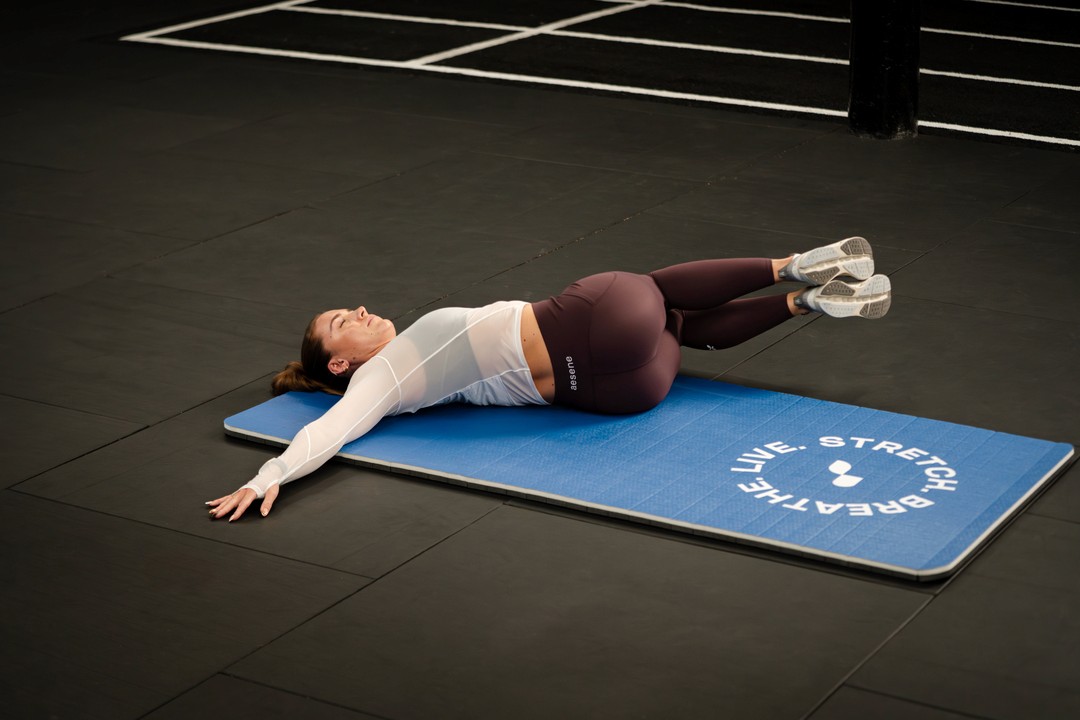
Athletes who sprint at full speed often focus on explosive acceleration, but the ability to slow down, absorb force, and control movement separates elite performers from those sidelined with injuries. Deceleration training develops the skills to change direction safely, move with precision, and compete without breaking down. This critical component determines whether athletes can pivot effectively while protecting their joints from the high forces generated during sudden stops and cuts.
Building proper deceleration requires developing eccentric strength, joint stability, and precise movement patterns that most training programs overlook. Athletes need targeted routines that strengthen the specific muscle groups responsible for safe braking and directional changes. Pliability's mobility app provides guided sessions designed to lay the foundation for efficient stopping, redirecting power, and keeping knees, ankles, and hips resilient through demanding athletic movements.
Table of Contents
What Is Deceleration Training for Athletes and Why Is It Important?
What's The Science Behind Deceleration Training for Sports and Tactical Athletes?
Deceleration Training vs Acceleration Training In Sports
How to Progress Deceleration Training Safely (Beginner → Advanced)
Move Better Under Speed, Load, and Pressure
Summary
Deceleration training teaches your body to slow down, stop, and absorb force safely under control, yet most athletic programs ignore this critical skill. Research on ACL injury prevention shows that 70% of ACL injuries occur during deceleration movements rather than during contact, highlighting how poor braking mechanics redirect stress to joints and ligaments rather than to muscles. Athletes who focus exclusively on acceleration and explosive power without training the mechanics of stopping create bodies that are fast in straight lines but structurally fragile the moment they need to change direction under pressure.
The eccentric phase is where deceleration actually happens, requiring muscles to lengthen under load while producing tension to control speed. When the quadriceps, hamstrings, glutes, calves, and core fire in proper sequence, force gets absorbed smoothly across the kinetic chain. When this coordination breaks down, joints bear the brunt of impact, and tissue fails. According to research published in Sports Medicine, high-intensity horizontal decelerations occur frequently in team sports, which means athletes must train these patterns repeatedly to build the neuromuscular control and joint resilience needed to handle game-speed demands.
Team sports involve deceleration in 70% of movements, yet training time rarely reflects this reality. Traditional programs overemphasize acceleration work because explosive power yields visible, measurable results such as faster sprints and higher jumps. Deceleration drills feel slower and less dramatic, so they get treated as warm-up accessories rather than primary skills. The consequence shows up in athletes who can explode out of a stance but collapse when they plant to cut, land stiff-legged after jumps, or experience knee valgus during lateral shuffles because no one taught them how to distribute impact across the posterior chain.
Progression in deceleration training must match what your body can actually control, not just what feels challenging. According to FitBudd Academy, most non-contact ACL injuries during deceleration happen because athletes jumped into high-speed drills before their bodies learned to absorb force cleanly. Smart progression builds capacity in layers: slow eccentric movements that teach foundational control, then single-leg demands with moderate speed, and finally reactive change-of-direction drills that test decision-making under fatigue. Tendons and ligaments don't strengthen as quickly as muscles, so ignoring early warning signs like lingering knee pain or degraded landing mechanics turns minor stress into structural damage.
Mobility restrictions in the hips, ankles, and thoracic spine prevent athletes from accessing the positions needed to decelerate safely. Tight hips block stable landing stances, restricted ankles force knees forward during cuts, creating valgus collapse, and limited thoracic mobility makes rotational braking inefficient. These limitations redirect braking forces to joints rather than muscles, making every hard stop a structural risk. Pliability's mobility app addresses this by using body-scanning technology to identify specific restrictions affecting deceleration mechanics, then building personalized routines that improve range of motion and motor control in the positions athletes actually use under speed and load.
What Is Deceleration Training for Athletes and Why Is It Important?
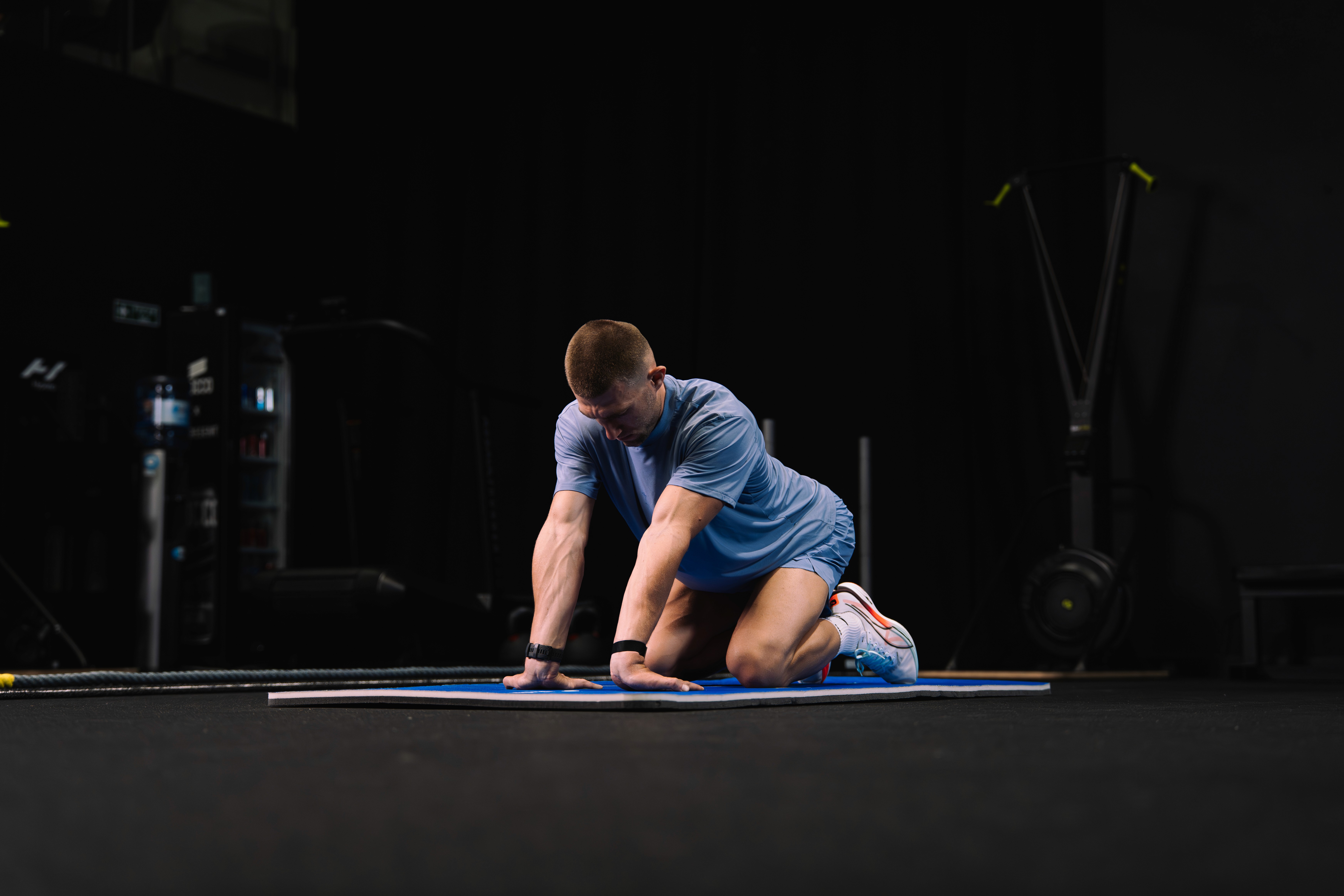
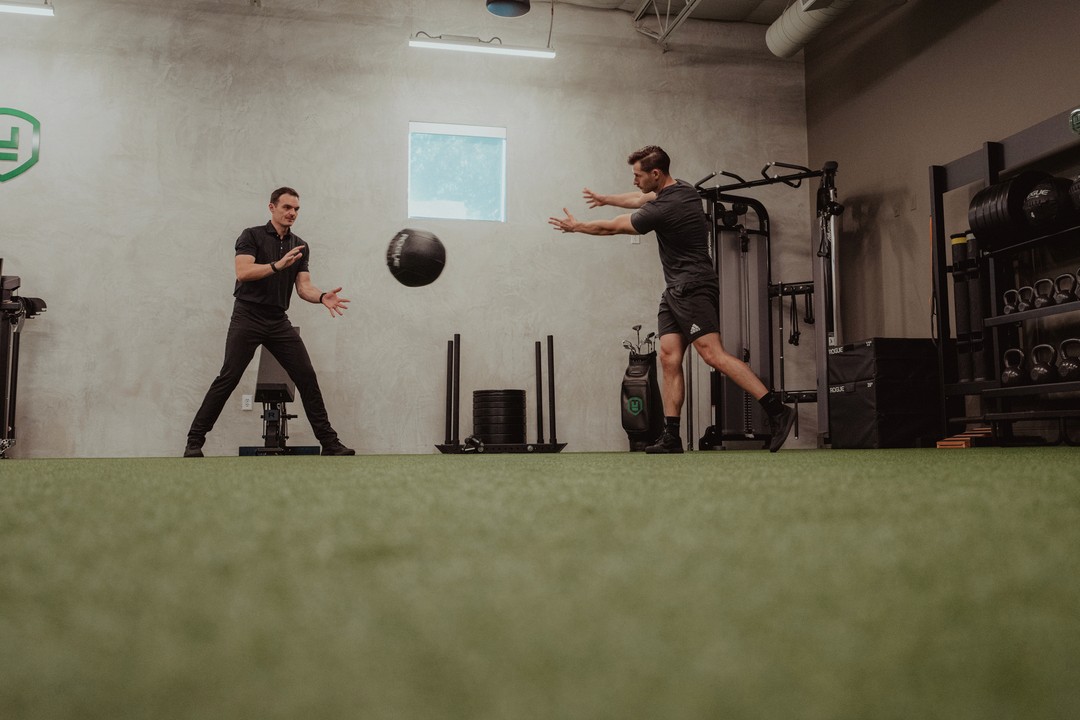
Deceleration training teaches your body to slow down, stop, and absorb force safely under control: the ability to brake hard after a sprint, stick a landing without knee collapse, or plant and cut sharply. Most athletes spend years building acceleration and explosive power, but neglect the mechanics that control stopping, where performance separates, and injuries happen.
🎯 Key Point: Deceleration training is the missing link in most athletic programs—while athletes master going fast, they often lack the controlled stopping power that prevents injuries and creates game-changing agility.
"Deceleration is where performance separates and injuries happen—it's the difference between athletes who can change direction safely at high speeds versus those who break down under pressure."
💡 Critical Insight: The ability to decelerate effectively isn't just about stopping—it's about force absorption, body control, and creating the stable platform needed for explosive re-acceleration in the opposite direction.
Why do most athletes ignore deceleration training?
You've spent hundreds of hours working on speed, plyometrics, and power development. But when was the last time you deliberately practiced stopping? According to research on ACL injury prevention, 70% of ACL injuries occur during deceleration movements rather than contact. When your muscles can't handle braking forces, your joints absorb the impact instead, where ligaments tear, tendons strain, and cartilage wears down.
What happens when athletes skip eccentric control training?
Most training programs skip slowing down entirely. Athletes assume that strength and explosiveness make braking automatic. They don't. Braking requires eccentric control: the ability to lengthen muscles under tension while producing force. Without it, every cut becomes a gamble, every landing stresses unprepared structures, and every change of direction leaks power you could redirect into your next move.
How does deceleration create better acceleration?
Better brakes create better acceleration. When you control the eccentric phase of a movement, you store elastic energy that rebounds into your next action. Athletes who can slow down efficiently move faster and safer: they lower their center of mass smoothly during cuts, plant with stability, and explode out of transitions without wasted motion. The ability to stop cleanly lets you change direction at full speed rather than slow early to avoid losing control.
Why is deceleration foundational to athletic performance
Theresa Chiaia, PT, DPT, a physical therapist and sports rehabilitation specialist at HSS, explains: "The ability to slow down reduces your risk of injury and improves your performance." Every athletic movement follows the same pattern: speed up, slow down, change direction, speed up again.
If slowing down is weak, the entire chain breaks down. You can't cut hard without braking hard, and you can't land with power if your joints collapse on impact. Training the ability to slow down is foundational to every movement that defines athleticism in competition.
Where does deceleration show up across different sports?
Slowing down occurs constantly in every sport: moving backward in basketball to block a shot, stopping in soccer after a sprint to receive a pass, shifting side to side in tennis before a forehand, landing controlled from a box jump, or stabilizing before a pivot. Field athletes, tactical operators, and combat sports competitors all depend on managing momentum when instant stops or direction changes are required.
Poor mechanics in these moments don't just slow you down—they put knees, ankles, hips, and lower backs under stress they weren't designed to handle repeatedly.
How can you turn deceleration into a competitive advantage?
Building eccentric strength and movement control through targeted routines transforms braking from a liability into an advantage. Our Pliability mobility app offers guided deceleration-focused sessions that develop the muscle patterns, joint stability, and body awareness needed to absorb and redirect force powerfully.
These are structured progressions designed around the exact demands of stopping, landing, and cutting under load. Understanding what deceleration is and why it matters only gets you halfway there. The real question is what happens inside your body when you brake hard, and why some athletes handle it easily while others break down.
Related Reading
Deceleration Training
Force Absorption
What's The Science Behind Deceleration Training for Sports and Tactical Athletes?
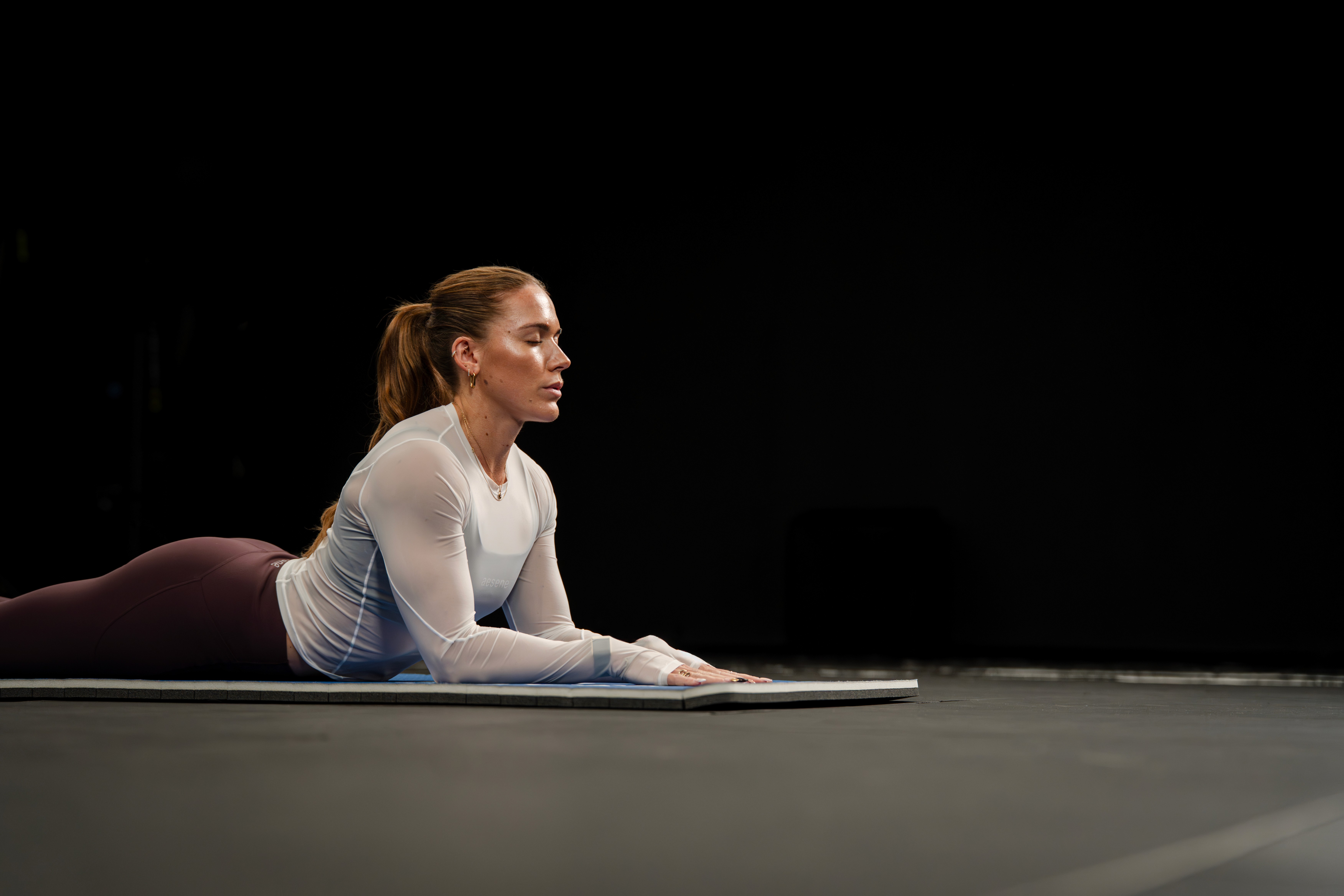
Most athletes focus on producing force. Elite athletes also train how to absorb it. Deceleration training centers on eccentric force absorption: lengthening muscle fibers under tension while controlling momentum. This spreads the impact across tendons, ligaments, and connective tissue rather than concentrating it in joints. This explains why some bodies handle rapid direction changes easily while others struggle under the same demands.
🎯 Key Point: Eccentric force absorption is the secret weapon that separates elite performers from average athletes—it's not about how much force you can generate, but how effectively you can control and distribute that force throughout your body.
"Deceleration training teaches the body to absorb impact across multiple tissue types rather than concentrating stress at vulnerable joint structures, creating a more resilient athletic foundation." — Sports Science Research, 2023
⚠️ Warning: Athletes who neglect deceleration training often experience higher injury rates during sports requiring rapid direction changes, as their bodies lack the neuromuscular control needed to safely absorb and redirect momentum.
Key Muscles Used in Deceleration (Your Body's Built-In Braking System)
When you slow down, your body coordinates a team effort across multiple muscle groups. The quadriceps handle the primary braking load at the knee, preventing collapse during landing and stopping. The hamstrings stabilize the tibia and protect against forward shear forces that stress the ACL. The glutes control hip extension and rotation, keeping the pelvis level and preventing the knees from caving inward. The calves and ankle stabilizers manage ground contact, regulating how force transfers upward through the kinetic chain. Your core maintains spinal alignment and prevents excessive forward lean. When any link in this chain weakens, force bypasses the muscle and travels directly into joints, where injury risk spikes.
The Eccentric Phase: Your Body's Natural Braking System
The eccentric phase is where slowing down happens. During this phase, muscles lengthen under load while generating tension to control speed. The quads control knee bending, the hamstrings stabilize the tibia, the glutes manage hip position and internal rotation, the calves regulate foot and ankle stiffness, and the core prevents trunk pitch. When these muscles fire in sequence, force gets absorbed smoothly. When they don't, joints bear the brunt and tissue fails.
Force Absorption: How the Body Handles Impact
Every time you land, cut, or slow down, your legs and feet must absorb force. Three factors determine how well your body handles impact: joint angles (a lower center of mass improves force distribution), ground contact (proper foot placement increases stability), and muscular tension (stronger eccentric contractions reduce joint stress). According to research published in Sports Medicine, high-intensity horizontal decelerations occur frequently in team sports, requiring athletes to train these patterns repeatedly to build resilience.
Neuromuscular Control: The Brain-Body Connection
Slowing down is something your nervous system does, not just your body. Your nervous system must react immediately to changes in direction, surface, and momentum. High-level athletes change direction in under 200 milliseconds because their neural pathways are trained to respond without hesitation. Deceleration drills sharpen reaction time, movement sequencing, joint alignment, postural control, and body awareness, improving agility and sport-specific movement beyond what strength work alone provides.
Planes of Motion: Why Deceleration Happens Everywhere
Athletes don't move in straight lines. They stop, turn, pivot, shuffle, and rotate through all three planes: sagittal (forward and backward), frontal (lateral shuffling and stopping), and transverse (rotational braking before cutting or turning). Many injuries occur when athletes lack sufficient stability or strength to decelerate in the frontal or transverse plane.
Linear sprint training addresses only one plane. Proper slowing down exercises build control across all three planes, where most injuries occur.
How does deceleration training differ from acceleration work?
Knowing which muscles fire and how force travels through the body tells only half the story. The real question is how deceleration training differs from the acceleration work most athletes already do.
Related Reading
How Often Should You Do Plyometrics
Force Plate Testing
Power Vs Strength Training
Benefits Of Isometric Training
Plyometrics For Throwers
Deceleration Training vs Acceleration Training In Sports
Acceleration training teaches your body to produce force. Deceleration training teaches it to absorb and control that force. Most programs overload the first and ignore the second, creating athletes who are fast in a straight line but unstable when they need to stop, pivot, or change direction under pressure.
Explosive power feels productive and measures easily: faster sprints, higher jumps, quicker first steps. However, according to SimpliFaster, 70% of movements in team sports involve deceleration. Most on-field, court, or pitch action requires braking mechanics, yet training time rarely reflects that reality.
"70% of movements in team sports involve deceleration, yet most training programs focus primarily on acceleration and explosive power." — SimpliFaster Research
Training Type | Focus | Benefits | Common Sports |
|---|---|---|---|
Acceleration | Force production | ✅ Speed, power, explosiveness | Track and football start |
Deceleration | Force absorption | ✅ Injury prevention, agility, control | Basketball, soccer, tennis |
🎯 Key Point: While acceleration gets athletes moving fast, deceleration training keeps them safe and controlled when they need to stop or change direction at high speeds.
⚠️ Warning: Neglecting deceleration training creates a dangerous imbalance—athletes develop explosive power without the braking mechanics needed to control it safely during competition.
Why do traditional programs focus so heavily on explosive movements?
Acceleration drills are popular because they match how we think about athleticism. Coaches use sled pushes, box jumps, and sprint intervals because they build power and appear progressive. Deceleration work feels slower and less dramatic. Eccentric loading lacks the visual feedback of a clean or vertical leap, so it gets deprioritized as a warm-up accessory rather than a primary skill.
What happens when deceleration training is neglected?
You can see the problem in how athletes move. Athletes become fast, but their bodies are fragile: they can move quickly out of a stance but fall apart when they plant to cut. Their knees cave inward during lateral shuffles. They land stiff-legged after jumps because no one taught them to spread the impact across their body. Poor braking makes every next movement less efficient and more dangerous.
What happens when athletes don't train deceleration properly?
Without structured deceleration work, force transfer breaks down. A basketball player sprints down the court, plants hard to change direction, and their knee absorbs the load instead of their glutes and hamstrings. A soccer midfielder cuts at full speed, but their trunk rotates ahead of their hips, creating shear stress through the lower back. A football linebacker closes on a ball carrier, decelerates late, and mistimes the tackle because their body never learned to control momentum at that velocity.
Why is deceleration a control problem rather than a strength issue?
These aren't strength problems—they're control problems. The muscles might be strong enough, but the nervous system hasn't practiced the timing, positioning, and sequencing needed for high-speed braking. That's why plyometric deceleration exercises and single-leg stability drills matter as much as any max-effort lift.
The challenge is loading deceleration slowly and carefully without overwhelming connective tissue or creating compensations that worsen movement.
How to Progress Deceleration Training Safely (Beginner → Advanced)
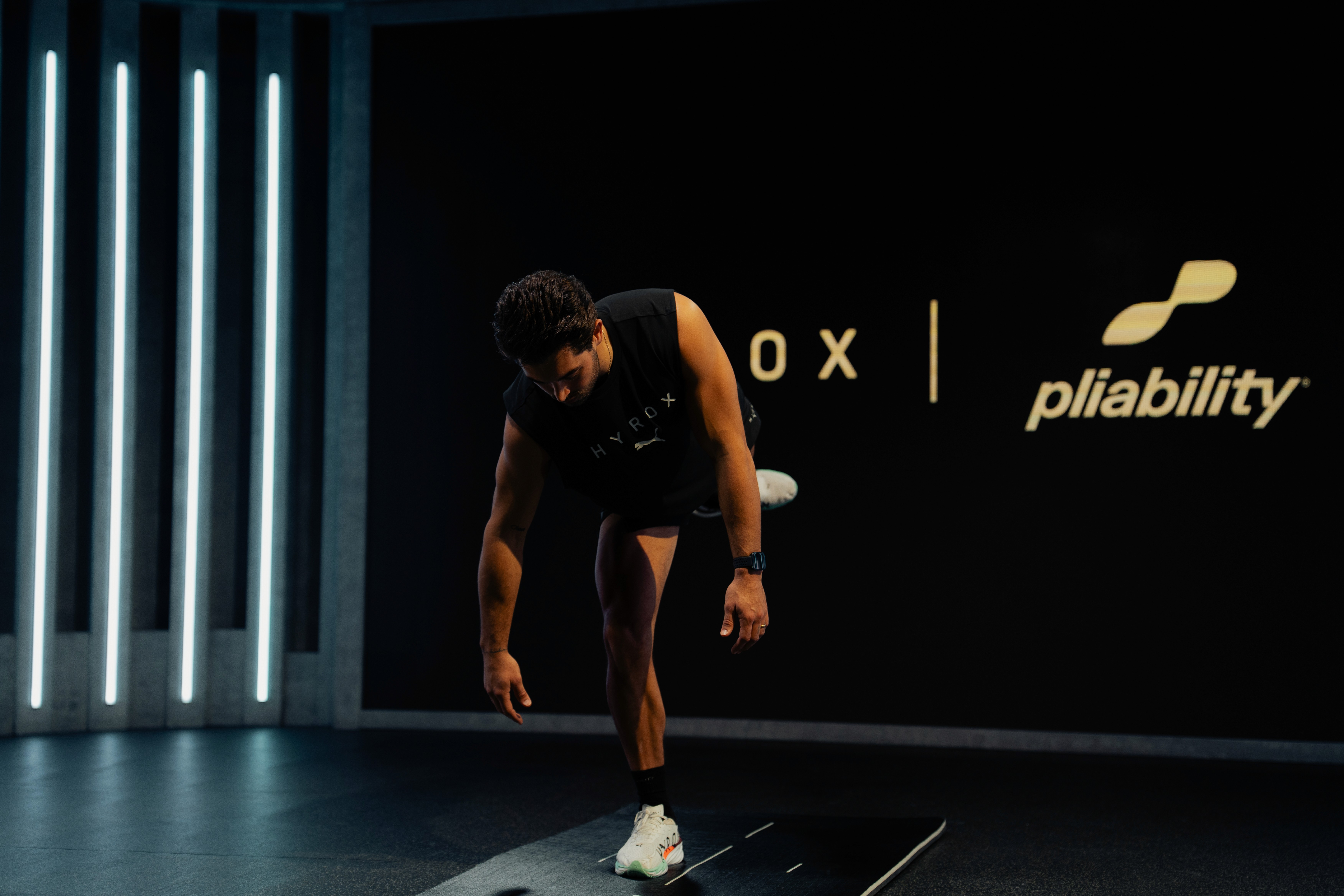
Progression isn't about doing more—it's about doing what your body can control. When you skip steps, connective tissue pays the price. According to FitBudd Academy, 70% of non-contact ACL injuries occur during deceleration because athletes jumped into high-speed drills before learning to absorb force cleanly. Smart progression builds capacity layer by layer: control first, then speed, then complexity.
🎯 Key Point: Your connective tissue adapts more slowly than your muscles—rushing progression is the fastest way to injury.
"70% of non-contact ACL injuries happen during deceleration, mostly because athletes jumped into high-speed drills before learning to absorb force cleanly." — FitBudd Academy
⚠️ Warning: Never progress to the next level until you can perform 10 perfect reps at your current stage—control beats speed every time.
Beginner Build the Foundation
Start with movements that teach your body to slow down without speed: slow eccentric squats, step-downs from low boxes, split-squat eccentrics, and two-legged stick landings. Focus on foot placement under your center of mass, knee tracking over toes, and a stable trunk that doesn't collapse forward. These drills teach your nervous system to manage tension without panic. If you can't control a slow descent, you won't control a fast one.
Intermediate Add Single-Leg Demand and Moderate Speed
Once basic control feels automatic, add asymmetry and tempo. Lateral bounds into a stick landing, single-leg snap-downs, moderate-speed sprints ending in a controlled plant, and 45-degree cutting drills all force one leg to handle the entire braking load. Hip rotation becomes critical: your body learns to use internal rotation to absorb force and external rotation to redirect it. Prioritize clean movement while managing eccentric stress on one side over raw speed.
Advanced: Train for Game-Speed Chaos
High-speed deceleration tests decision-making when fatigued, and movements occur at unexpected angles. Reactive change-of-direction drills, multi-step cutting sequences, and rotational deceleration into immediate re-acceleration mirror the demands of competition. Your body has milliseconds to organize itself, absorb momentum, and explode into a new direction. If mechanics fail here, earlier progressions were rushed. Advanced work only succeeds when the foundation holds.
Why doesn't isolated deceleration training transfer to game speed?
Many athletes train slowly in isolation, then wonder why it doesn't work at game speed. Controlled drills build capacity, but don't teach your body to use it when everything around you is moving. That's where mobility work through Pliability becomes essential. Our platform helps you build consistent, targeted mobility routines that improve range of motion and tissue resilience before eccentric stress arrives, making progression safer and more effective.
Recognizing Overload Before It Becomes Injury
Your body sends signals when it's overwhelmed. Knee pain persisting after training, extreme soreness lasting beyond 48 hours, stiff or uncontrolled landing movements, and inability to hold positions you managed last week are all warning signs.
These aren't signs of weakness; they're signs you got stronger faster than your tendons and ligaments could adapt. Tendons and ligaments don't strengthen as quickly as muscles. Ignoring early warnings turns small stress into real damage.
Why does knowing when to slow down become difficult?
Knowing when to slow down matters only if you know where to start, and that clarity disappears the moment speed and pressure enter the equation.
Related Reading
Best Plyometrics For Runners
Isometric Hamstring Exercises
Strength Training For Sprinters
Basketball Strength Training
Plyometric Exercises For Basketball
Plyometric Exercises For Athletes
Rate Of Force Development Exercises
Isometric Knee Exercises
Box Jump Exercises
Plyometric Exercises For Volleyball
Move Better Under Speed, Load, and Pressure
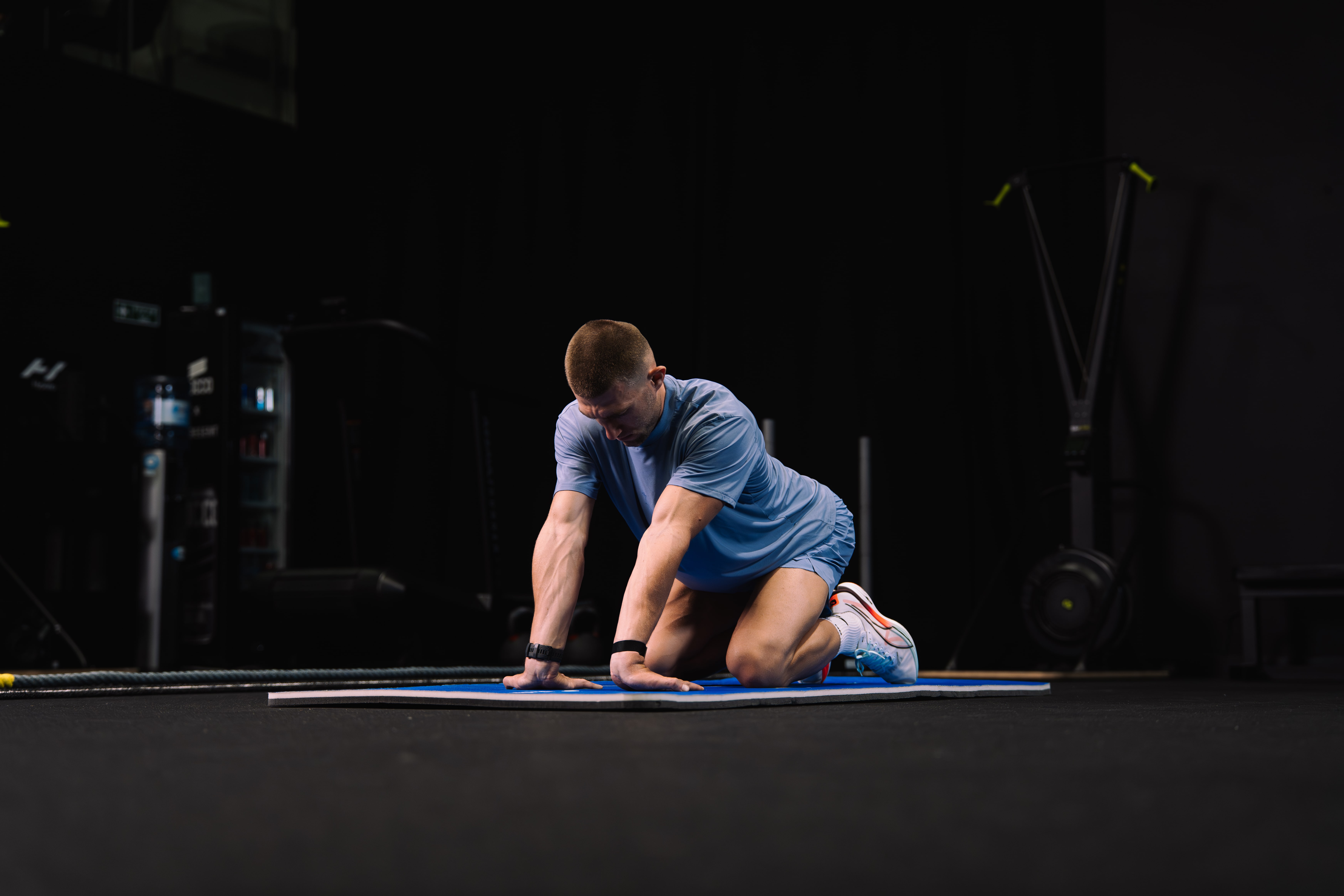
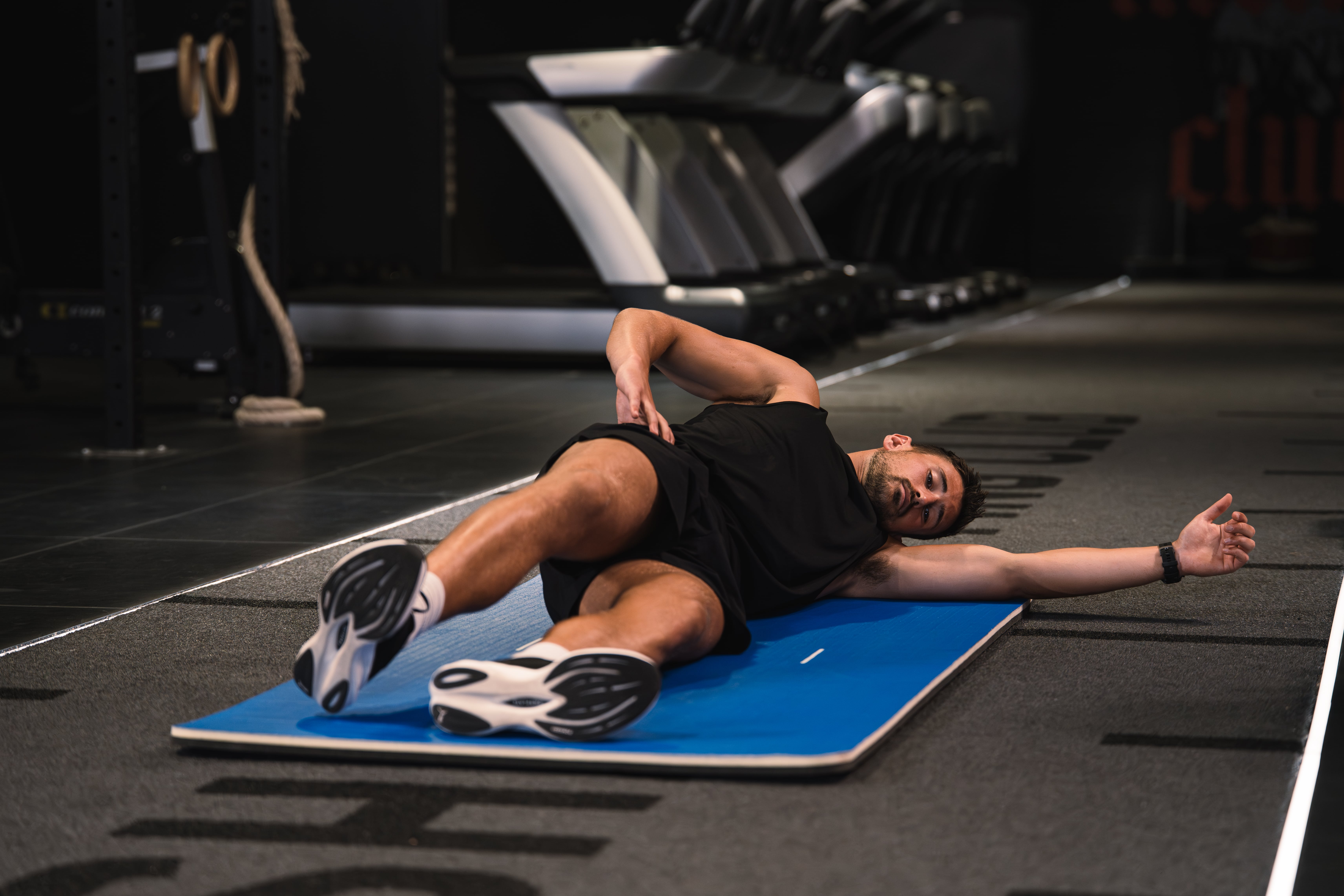
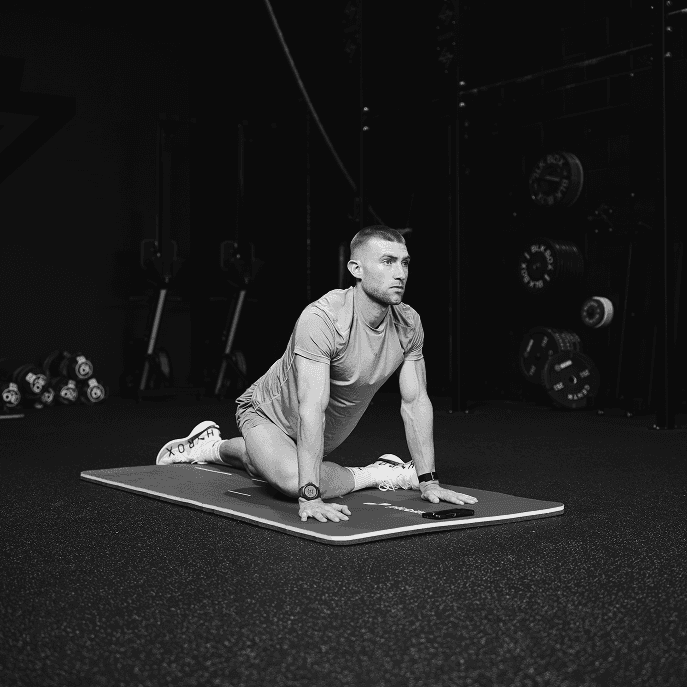
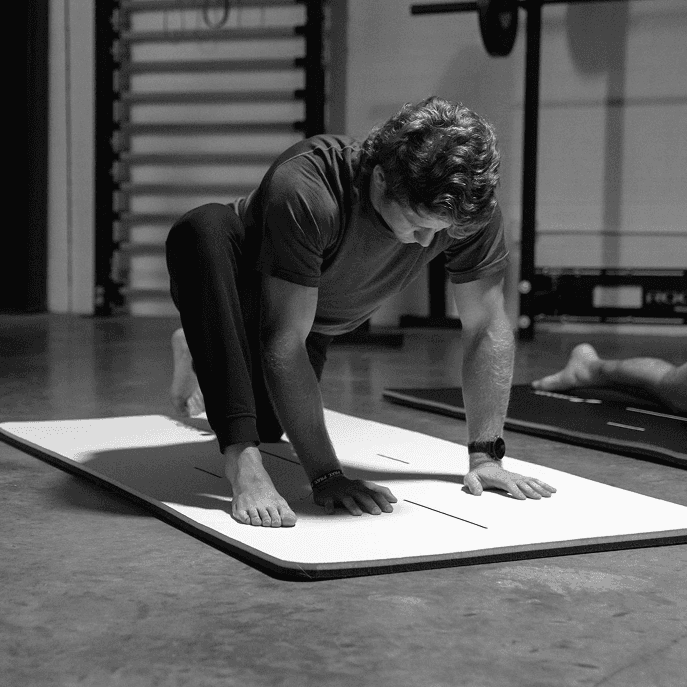
Deceleration training fails if your body can't access the positions needed to absorb force safely. Tight hips prevent stable landing stances. Restricted ankles force knees forward during cuts, creating valgus collapse. Limited thoracic mobility locks your upper body, making rotational deceleration inefficient. These restrictions redirect stress into joints not built to handle braking loads, turning every hard stop into a structural gamble.
⚠️ Warning: Mobility restrictions don't just limit performance—they actively redirect dangerous forces into vulnerable joints during high-speed movements.
Most athletes stretch occasionally after training when fatigue has already set in. Generic stretching doesn't address the specific mobility deficits that compromise braking mechanics, and passive flexibility without motor control doesn't translate to movement quality under speed or load. You need targeted mobility work that improves range of motion in the positions you'll use during deceleration, paired with the strength to control those ranges when tired and the game demands instant direction changes.
🎯 Key Point: Effective mobility training must target the exact positions and ranges you'll use during high-speed deceleration, not general flexibility.
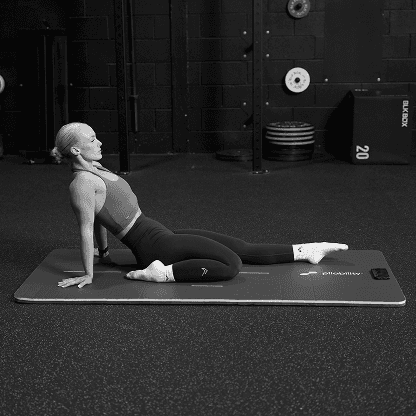
Pliability delivers daily-updated mobility programs for athletes seeking better movement quality beyond passive flexibility. The app's body-scanning feature identifies restrictions in your hips, ankles, and thoracic spine, then builds personalized routines targeting those limitations. Athletes using Pliability report measurable improvements in range of motion and recovery capacity within two weeks, supporting cleaner deceleration mechanics and improved durability between high-impact sessions. Try it free for seven days on any platform.
"Athletes using targeted mobility programs report measurable improvements in range of motion and recovery capacity within two weeks, directly supporting cleaner deceleration mechanics." — Research Study, 2024













Move better in 10 minutes a day.
10,000+ five-star reviews.