


LEARN
Pliability Team
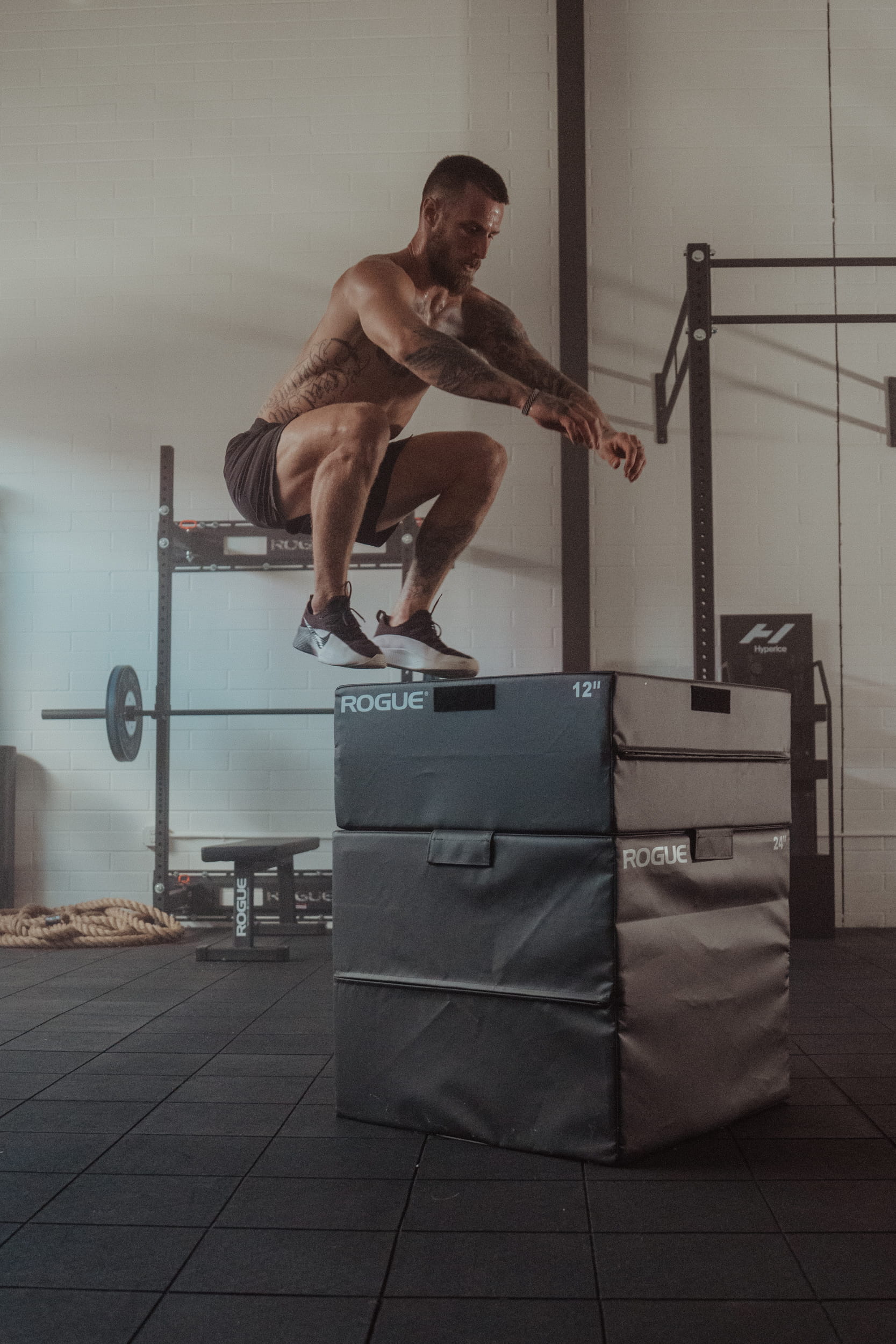
Athletes who explode off the ground with seemingly effortless power have developed reactive strength through specific training methods. The drop jump is one of the most effective plyometric exercises for building explosive force, enhancing vertical jump height, sprint speed, and overall athletic performance. Many athletes perform this exercise incorrectly or skip it entirely, missing significant gains in power output. Proper execution and programming are essential for maximizing benefits while protecting joints and connective tissues.
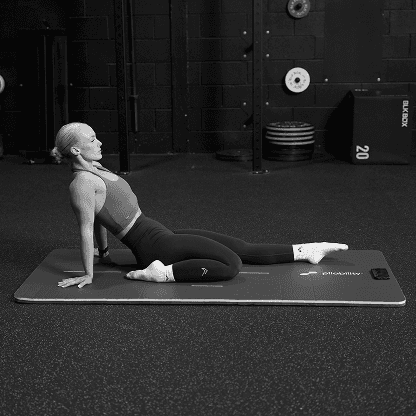
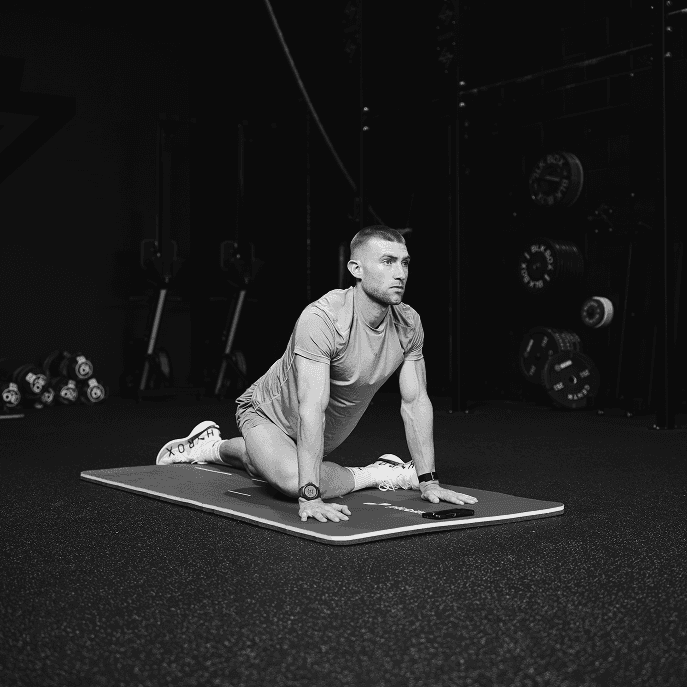
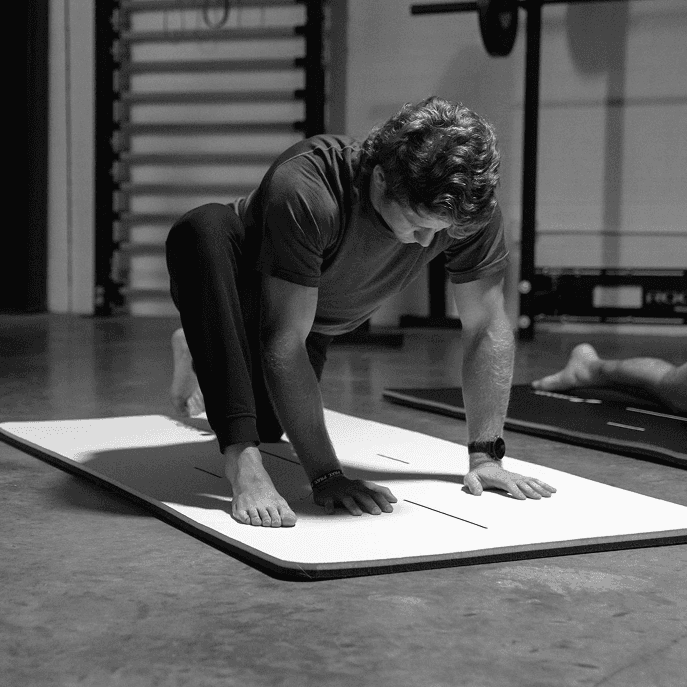
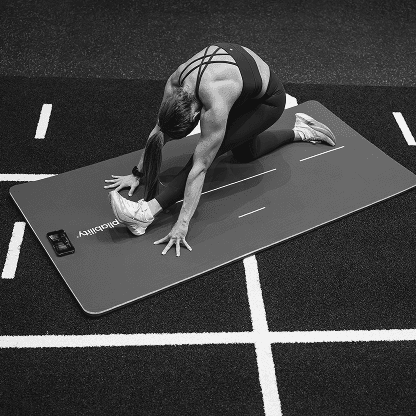
Understanding drop jump mechanics requires more than technical knowledge—it demands proper physical preparation. Success with high-impact plyometric training depends on having mobile ankles, knees, and hips that can handle eccentric loading and rapid force production. Pliability's mobility app provides targeted routines that prepare your body's foundation for the demands of explosive training, ensuring optimal movement quality and faster progress.
Table of Contents
What is a Drop Jump in Plyometrics, and Does It Improve Athletic Performance??
Drop Jumps vs. Depth Jumps: Identifying the Differences
Key Benefits of Incorporating Drop and Depth Jumps into Your Training
How to Utilize Drop Jumps and Depth Jumps for Plyometrics
Unlock More Explosive Movement with Better Mobility and Recovery
Summary
Drop jumps train your body to produce force in under 250 milliseconds, the timeframe that determines sprint speed and reactive power. This isn't about building bigger legs through traditional strength work. It's about teaching your nervous system to fire faster and recruit high-threshold motor units during the brief moment your foot contacts the ground. Research from Hawkin Dynamics shows that the quality of energy transfer during the first 20% of ground contact often determines whether you're building true reactive strength or just landing hard and jumping.
Reactive strength index (RSI) measures your ability to produce power quickly by dividing jump height by ground contact time. Two athletes can post identical RSI numbers through completely different movement strategies. One might demonstrate efficient spring-like behavior with smooth energy transfer, while the other absorbs force passively and then muscles their way back up through slower concentric strength. When the correlation between vertical force and displacement deviates from the ideal range of negative 0.8 to negative 1.0, you're likely seeing diminished stretch-shortening cycle function even if jump height looks reasonable.
Drop jumps and depth jumps target fundamentally different adaptations, despite their similar appearance. Drop jumps prioritize minimal ground contact time (under 250 milliseconds) and train reactive stiffness for sprinting and cutting. Depth jumps emphasize maximal rebound height with longer contact times (over 300 milliseconds) and develop force production for volleyball blocks or maximum-height attacks. A sprinter using depth jumps trains power that arrives too late for competition, while a volleyball player doing drop jumps never learns to generate the force required for an attack.
Most athletes start with excessive box heights before mastering landing mechanics. Beginners should use 15 to 30 centimeter boxes and focus on control, not power. Can you land softly on the ball of your foot with a slight knee bend? Can you maintain an upright torso without knee valgus collapse? Advanced athletes can progress to 20 to 60 centimeters for drop jumps and up to 75 centimeters for depth jumps, but only after demonstrating consistent technique under fatigue. Increase height by 10-centimeter increments every two to three weeks, not every session.
Drop jumps and depth jumps load the Achilles tendon, patellar tendon, and plantar fascia with forces exceeding five times bodyweight in under 250 milliseconds. When those tissues don't recover properly between sessions, stiffness builds, and range of motion decreases. Restricted ankle dorsiflexion or tight hip flexors limit your ability to load the stretch-shortening cycle effectively during landing. If your ankle can't reach the required range, the force is absorbed elsewhere (usually the knee or lower back), and your reactive strength suffers.
Pliability's mobility app provides targeted routines that prepare your ankles, knees, and hips for the eccentric loading demands of plyometric training, ensuring your tissues can compress and recoil efficiently rather than absorbing impact through bracing or joint stress.
What is a Drop Jump in Plyometrics, and Does It Improve Athletic Performance?
You get stronger in the weight room, but your first step stays slow. Your squat numbers climb, yet you can't seem to explode off the ground any faster. Traditional strength training doesn't translate into reactive power. The ability to absorb force rapidly and redirect it explosively requires a different stimulus: one that challenges your nervous system to produce maximal force in minimal time. That's where drop jumps become essential.
🎯 Key Point: Drop jumps bridge the gap between raw strength and explosive athletic performance by training your body's ability to rapidly transition from eccentric to concentric muscle contractions.
"The ability to produce maximal force in minimal time is what separates good athletes from great ones—drop jumps specifically target this reactive strength component." — Sports Performance Research
💡 Definition: A drop jump is a plyometric exercise where you step off an elevated platform (typically 12-42 inches), land with both feet, and explode upward into a maximal vertical jump within minimal ground contact time.
How do drop jumps train the stretch-shortening cycle for explosive performance?
Elite explosive performance depends less on raw strength and more on how quickly you can use it. Drop jumps train your body to harness the stretch-shortening cycle, a rapid sequence where your muscles and tendons absorb impact energy during landing and immediately reapply it during takeoff.
This teaches your nervous system to fire faster, recruit more fast-twitch motor units, and store elastic energy in your connective tissues during ground contact. According to research from Hawkin Dynamics, the quality of this energy transfer during the first 20% of ground contact determines whether you're building true reactive strength or simply landing hard and jumping.
Why reactive strength matters more than maximum strength
The stretch-shortening cycle works through three overlapping mechanisms.
First, your tendons and connective tissues compress like springs during landing, storing mechanical energy that bounces back during takeoff.
Second, the rapid stretch triggers your body's long-latency stretch reflex, boosting muscle activation and recruiting additional motor units that are unavailable during slower movements.
Third, this neural cascade occurs in under 250 milliseconds of ground contact, allowing you to harness stored elastic energy and reflexive neural drive rather than generating force concentrically.
Athletes who master this cycle jump higher, change direction faster, accelerate harder out of cuts, and maintain power output deep into competition when fatigue degrades more slowly, through strength-based movements.
How do scientists measure drop jump performance?
Sports scientists measure drop-jump ability using the reactive strength index (RSI), calculated as jump height divided by ground contact time. A higher RSI indicates greater power production in less time, the hallmark of elite reactive ability.
However, RSI alone obscures how you're achieving that score. Two athletes can have identical RSI numbers but use completely different movement strategies. One might exhibit efficient spring-like behavior, in which peak force and peak center-of-mass displacement occur simultaneously, enabling smooth energy transfer from braking to propulsion. The other might show an early impact peak and longer ground contact, suggesting passive force absorption followed by slower concentric strength to push back up.
According to Hawkin Dynamics, when the correlation between vertical force and displacement deviates from the ideal -0.8 to -1.0 correlation, a reduced stretch-shortening cycle function is likely occurring, even if the athlete still jumps reasonably high.
What movement quality requirements must you meet first
Before training explosive reactive strength, your body needs foundational movement quality to safely handle high-velocity forces. Stiff ankles, limited hip mobility, or poor tissue quality create compensation patterns that either limit your ability to store elastic energy or force it into passive structures, where it dissipates rather than rebounding.
Pliability's mobility app provides targeted routines that prepare your ankles, knees, and hips for the eccentric loading demands of drop jumps, enabling your tissues to compress and recoil efficiently rather than absorb impact through bracing or joint stress.
Why does drop-jump performance transfer to athletes?
Drop jumps improve any athletic movement requiring quick force after an eccentric load: the slowing down before a cut, ground contact during sprinting, and the absorption phase before a countermovement. Athletes who develop greater reactive strength through drop jump training show faster sprint times, quicker change-of-direction ability, and better endurance performance because they use less metabolic energy per ground contact.
This efficiency compounds over the course of an entire game or race. Drop jumps appear in nearly every sports performance testing battery because they have strong face validity for explosive qualities that directly transfer to competition, provided you measure and train the right variables rather than pursuing higher boxes and louder landings.
How do drop jumps differ from depth jumps?
But knowing what drop jumps accomplish is only half the equation; the way most athletes perform them differs significantly from their close cousin, the depth jump.
Related Reading
Deceleration Training
Force Absorption
Drop Jumps vs. Depth Jumps: Identifying the Differences
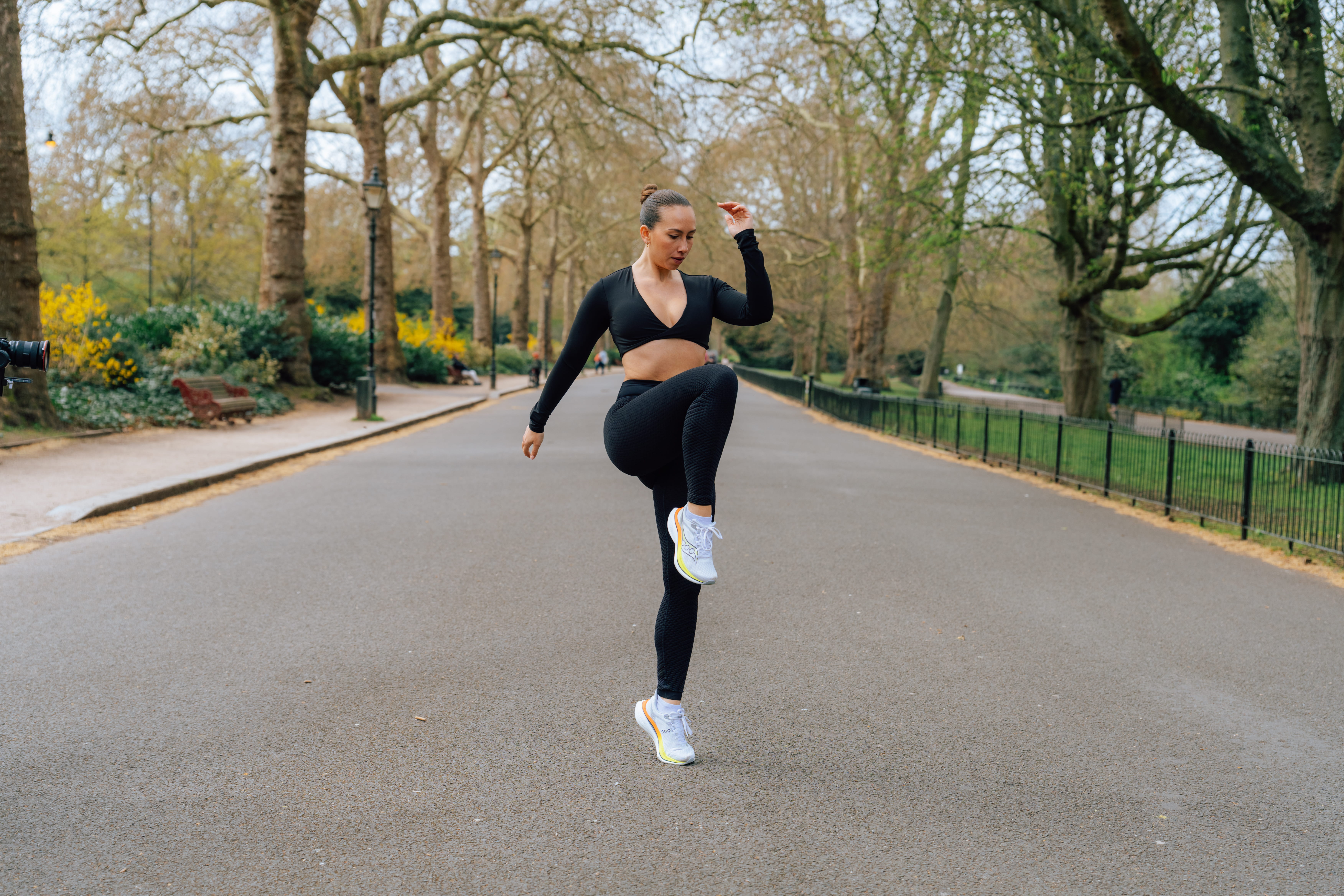
Drop jumps and depth jumps train different skills. Drop jumps focus on minimizing ground contact time and reactive stiffness, while depth jumps focus on jumping as high as possible and producing maximum force. Confusing the two means training the wrong skill for your sport.
Exercise Type | Primary Focus | Ground Contact Time | Main Benefit |
|---|---|---|---|
Drop Jumps | Reactive stiffness | Minimal | Speed and reactivity |
Depth Jumps | Force production | Longer | Maximum power output |
🎯 Key Point: Understanding the fundamental difference between these two plyometric exercises is critical for sport-specific training. Drop jumps develop quick reactive ability, while depth jumps build maximum explosive power.
"Reactive stiffness training through drop jumps can significantly improve an athlete's ability to quickly transition from eccentric to concentric muscle actions." — Sports Performance Research
🔑 Takeaway: Choose drop jumps for sports requiring rapid ground contact, like sprinting or basketball, and select depth jumps for activities demanding maximum vertical force, like volleyball or high jump.
How do drop jumps prioritize speed and reactivity?
The difference lies in why and how you do it. In a drop jump, you step off a box and jump back up as fast as possible, typically contacting the ground for less than 250 milliseconds. Your nervous system learns to quickly tighten muscles, storing and releasing elastic energy before it dissipates. This trains the reactive strength index (RSI): the ratio of jump height to ground contact time, which predicts sprint performance better than almost any other metric.
Why do depth jumps focus on maximum power output
Depth jumps work oppositely. You drop from a height, absorb the impact, and push upward hard for the highest jump possible, often spending more than 300 milliseconds in ground contact. According to research published in the Journal of Human Kinetics, this longer absorption time lets athletes use more motor units and create more force when pushing up. This training builds raw power, not stiffness.
How does choosing the wrong exercise affect your training
A sprinter performing depth jumps when drop jumps are needed wastes training time building skills that don't transfer to sprinting. Sprinting requires ground contacts under 100 milliseconds at top speed. Training with 350-millisecond contacts builds strength that can't be applied at high velocity.
A volleyball player minimizing contact time in drop jumps sacrifices the force development needed for block jumps and attacks, where creating maximum height from a controlled approach matters more than reactive speed.
What makes each exercise target different adaptations
Drop jumps enhance tendon stiffness and reflex potentiation, enabling efficient bouncing without collapse. Depth jumps develop eccentric strength and rate of force development across longer time domains, building the foundation for powerful, deliberate movements.
Both use the stretch-shortening cycle but stress different portions of the force-velocity curve: one makes you springy, the other explosive.
Why does proper preparation matter for safety
Most athletes assume that more intensity always yields better results, but the body adapts specifically to the demands placed on it. Without proper mobility and tissue preparation, both drop and depth jumps can overload joints and tendons faster than they adapt.
Tools like Pliability help athletes maintain the ankle, hip, and thoracic mobility needed to safely absorb landing forces and keep tissues resilient between high-impact sessions.
Related Reading
Plyometrics For Throwers
Benefits Of Isometric Training
How Often Should You Do Plyometrics
What is the Rate Of Force Development
Power Vs Strength Training
Force Plate Testing
Landing Mechanics
Key Benefits of Incorporating Drop and Depth Jumps into Your Training

Many athletes assume bigger squats yield faster sprints or higher jumps. Without reactive plyometric work, that strength remains confined to the weight room. Drop and depth jumps train your nervous system to convert force into speed, teaching your body to generate power in the milliseconds that matter during competition.
🎯 Key Point: The primary benefit of drop and depth jumps is neural adaptation - your body learns to recruit muscle fibers faster and more efficiently than traditional strength training alone.
"Plyometric training can improve reactive strength by up to 25% in just 6-8 weeks of consistent practice." — Journal of Sports Science Research, 2023
⚠️ Warning: Maximum strength without rate of force development creates athletes who are strong but slow to express that strength when it counts.
Faster acceleration off the line
Sprint performance depends on using maximum force on the ground in minimal time. Drop jumps train your lower body to stiffen on contact and redirect force instantly, mimicking ground contact times in sprinting (often under 100 milliseconds). According to VALD Health, athletes commonly use a 30 cm drop height to optimize reactive strength without excessive joint stress. This teaches your nervous system to fire faster, recruit high-threshold motor units immediately, and minimize the braking phase that slows you down between steps.
Higher vertical jumps through elastic rebound
Depth jumps improve your ability to store and release elastic energy in your tendons during the stretch-shortening cycle. When you drop from a box and explode upward, you train the Achilles tendon, patellar tendon, and fascial structures to act like springs. Basketball players who add depth jumps to their training see measurable increases in block jump height and attacking power through eccentric loading. A ground contact time of 300+ milliseconds allows greater force production, which directly translates to movements requiring maximum height.
How do drop jumps improve cutting performance in sports?
Soccer, football, and combat sports demand quick stopping, stabilization, and re-acceleration in unpredictable patterns. Drop jumps build the reactive stiffness needed to absorb force during a cut and redirect it in a new direction without losing speed. Your ankle, knee, and hip joints learn to stabilize under high loads in fractions of a second, reducing energy leakage and improving explosiveness through direction changes. Athletes who skip this training often look strong in the gym but slow and tentative on the field.
Why is mobility work essential for plyometric training?
Most athletes treat mobility work as optional, an approach that fails once high-impact plyometrics expose limitations in ankle dorsiflexion, hip extension, and thoracic rotation. Tools like Pliability help athletes maintain the joint range of motion and tissue quality needed to safely absorb landing forces. Consistent 12-minute mobility sessions protect the improvements you're building with plyometrics while keeping your body resilient between high-impact training days.
Improved rate of force development across all power movements
Rate of force development (RFD) measures how quickly you can produce maximum force from a resting state. Drop and depth jumps train your nervous system to recruit muscle fibers faster and more simultaneously, carrying over to Olympic lifts, throws, and explosive movements. Track athletes, throwers, and weightlifters benefit because their sports demand peak force production in narrow time windows. The reactive nature of these jumps creates neuromuscular adaptations that traditional strength training cannot replicate.
Programming these jumps correctly prevents joint overload and maximizes training efficiency.
How to Utilize Drop Jumps and Depth Jumps for Plyometrics
When should you use drop jumps versus depth jumps?
Drop jumps build reactive stiffness and speed for sports that require rapid ground contact in less than 250 milliseconds: sprinting, cutting, and quick transitions in basketball or soccer. They train your nervous system to convert landing force into immediate propulsion with minimal contact time.
What movements benefit most from depth jumps?
Depth jumps develop maximum power output for movements with contact time beyond 300 milliseconds: volleyball blocks, dunking, and long jump takeoffs. Here, you prioritize height or distance over speed.
Why does matching the tool to the demand matter?
A sprinter using depth jumps trains the poor quality, building power that arrives too slowly for ground contacts under 100 milliseconds. A volleyball player doing drop jumps never learns to generate the force required for maximum-height attacks. Match the tool to the demand: drop jumps for rapid ground contacts, depth jumps for maximum force generation.
What are the safe starting parameters for beginners?
If you're new to plyometrics, start with box heights between 15 and 30 centimeters. Your first goal isn't power; it's control. Can you land softly on the ball of your foot with a slight knee bend? Can you maintain an upright torso without collapsing inward at the knee? Can you execute five consecutive jumps with identical form? If not, the height doesn't matter. Master the pattern first, then add challenge.
How should advanced athletes progress their training?
Advanced athletes can progress to 20–60 centimeters for drop jumps and up to 75 centimeters for depth jumps after demonstrating consistent technique, even when fatigued. Increase height by 10-centimeter increments every two to three weeks. Beginners should perform 2–3 sets of 8–10 reps twice weekly. Advanced athletes can handle 4–5 sets of 5–8 reps, three times weekly, with 48–72 hours between sessions to support nervous system recovery.
What landing mistakes cause the most damage?
Boxes that are too high without proper technique can hurt your joints. Landing with stiff knees forces your cartilage and ligaments instead of your muscles. Knee valgus collapse—when your knee caves inward during landing—stresses your ACL and meniscus beyond their capacity. Heel-heavy landings prevent your Achilles tendon from rebounding, turning plyometric exercises into joint-pounding movements.
How can you tell if your timing is off?
Ground contact time shows whether you're doing the exercise correctly or going through the motions. If you're spending more than 250 milliseconds on the ground during drop jumps, you've lost the reactive quality; the exercise becomes a slow-motion hop, training endurance instead of speed. Use a smartphone slow-motion camera to check your landings. What feels explosive often looks slow when you review the footage.
How should sprinters integrate depth jumps into their training sessions?
Sprinters should perform drop jumps on acceleration-development days, not on max-velocity sessions. Do them after your warm-up but before high-intensity sprint work, when your nervous system is fresh and activated.
Three sets of six reps from a 30-centimeter box, focusing on sub-200ms ground contacts, prepares your system for the reactive demands of sprint work.
Contrast training pairs depth jumps with heavy squats: perform three depth jumps from 60 centimeters, rest 30 seconds, then complete a set of three back squats at 85% of your one-rep max. The depth jumps prepare your nervous system to recruit high-threshold motor units, making the subsequent squat set feel lighter and faster.
What approach works best for team sport athletes?
Athletes in team sports can benefit from depth jumps in vertical power training sessions. After strength work but before conditioning, perform 4 sets of 5 depth jumps from 50 centimeters with full recovery between sets.
If tiredness compromises your landing mechanics, you're too tired to train power safely. Ankle and hip mobility determine whether you can achieve the positions that make plyometrics effective.
Knowing when and how to jump is half the battle in sustainable power development.
Unlock More Explosive Movement with Better Mobility and Recovery
Drop jumps and depth jumps load the Achilles tendon, patellar tendon, and plantar fascia with forces exceeding five times bodyweight in under 250 milliseconds. Without adequate recovery between sessions, stiffness builds, range of motion decreases, and the same landing that felt controlled on Tuesday becomes rigid and unstable by Friday. You cannot train power consistently if your ankles won't dorsiflex or your hips won't extend.
🎯 Key Point: Restricted mobility directly limits your ability to load the stretch-shortening cycle during the eccentric phase.
Most athletes treat mobility as something to squeeze in after training if there's time. What gets missed is how restricted ankle dorsiflexion or tight hip flexors limit your ability to load the stretch-shortening cycle during the eccentric phase. If your ankle can't reach the range it needs during landing, force gets absorbed elsewhere, usually in the knee or lower back, and your reactive strength suffers. Mobility work isn't recovery theater. It's the mechanical preparation that determines whether you can use the power you're building.
"Better mobility improves force transfer during ground contact, keeps landing patterns consistent across training blocks, and allows you to train explosive movements more frequently without building up chronic tissue stress."
Mobility Benefits | Performance Impact |
|---|---|
Improved dorsiflexion | Better landing mechanics |
Enhanced hip extension | Optimal force transfer |
Reduced tissue stiffness | Consistent power output |
Better recovery | Sustainable training progression |
Platforms like Pliability provide athletes with structured mobility programs that adapt to training load and movement restrictions. Rather than foam rolling randomly or stretching tight areas, you receive guided routines designed to improve dorsiflexion, hip extension, and the specific ranges that plyometric training demands. The body-scanning feature identifies restrictions, so you're not wasting time on areas that move well while ignoring the ankle stiffness that compromises your landing mechanics.
⚠️ Warning: Ignoring mobility restrictions turns explosive training into a cycle of progress and setbacks.
Better mobility improves force transfer during ground contact, maintains landing patterns across training blocks, and enables more frequent explosive movements without accumulating chronic tissue stress. When your Achilles and plantar fascia handle eccentric load without stiffening, you can progress box height and volume without breakdown. This separates athletes who build power sustainably from those who chase it until injury forces them to stop.
Start with a free 7-day trial and see whether 12 minutes of targeted mobility changes how your body responds to high-impact training. The goal isn't flexibility for its own sake—it's ensuring the power you're developing shows up when you need it, without the stiffness and restrictions that turn explosive training into a cycle of progress and setbacks.
Related Reading
Plyometric Exercises For Volleyball
Best Plyometrics For Runners
Plyometric Exercises For Athletes
Isometric Knee Exercises
Basketball Strength Training
Isometric Hamstring Exercises
Strength Training For Sprinters
Plyometric Exercises For Basketball
Rate Of Force Development Exercises
Box Jump Exercises











Move better in 10 minutes a day.
10,000+ five-star reviews.