


LEARN
pliability
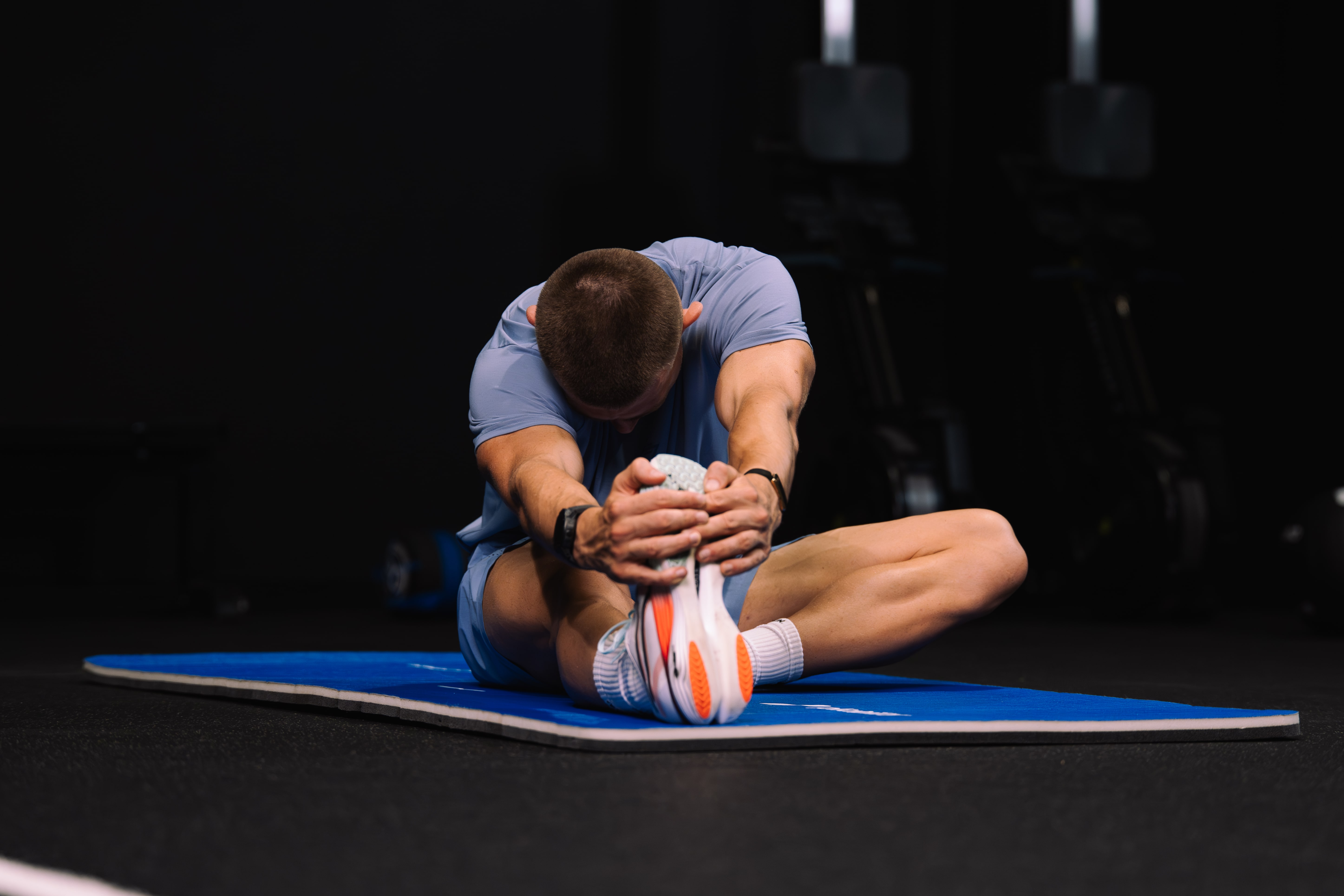
Runners often focus on speed and endurance, but neglecting stretching can lead to stiffness, decreased performance, and injury. This isn’t just about avoiding aches; it’s about running faster and longer while keeping your body in top shape. In this article, we’ll explore the best stretching exercises explicitly tailored for runners, designed to enhance your performance and keep you injury-free.
The Pliability mobility app is a fantastic resource for runners looking to enhance their stretching routine. It offers targeted exercises that can help you achieve your running goals, ensuring you run farther and faster without injuries.
Why Should Runners Stretch?
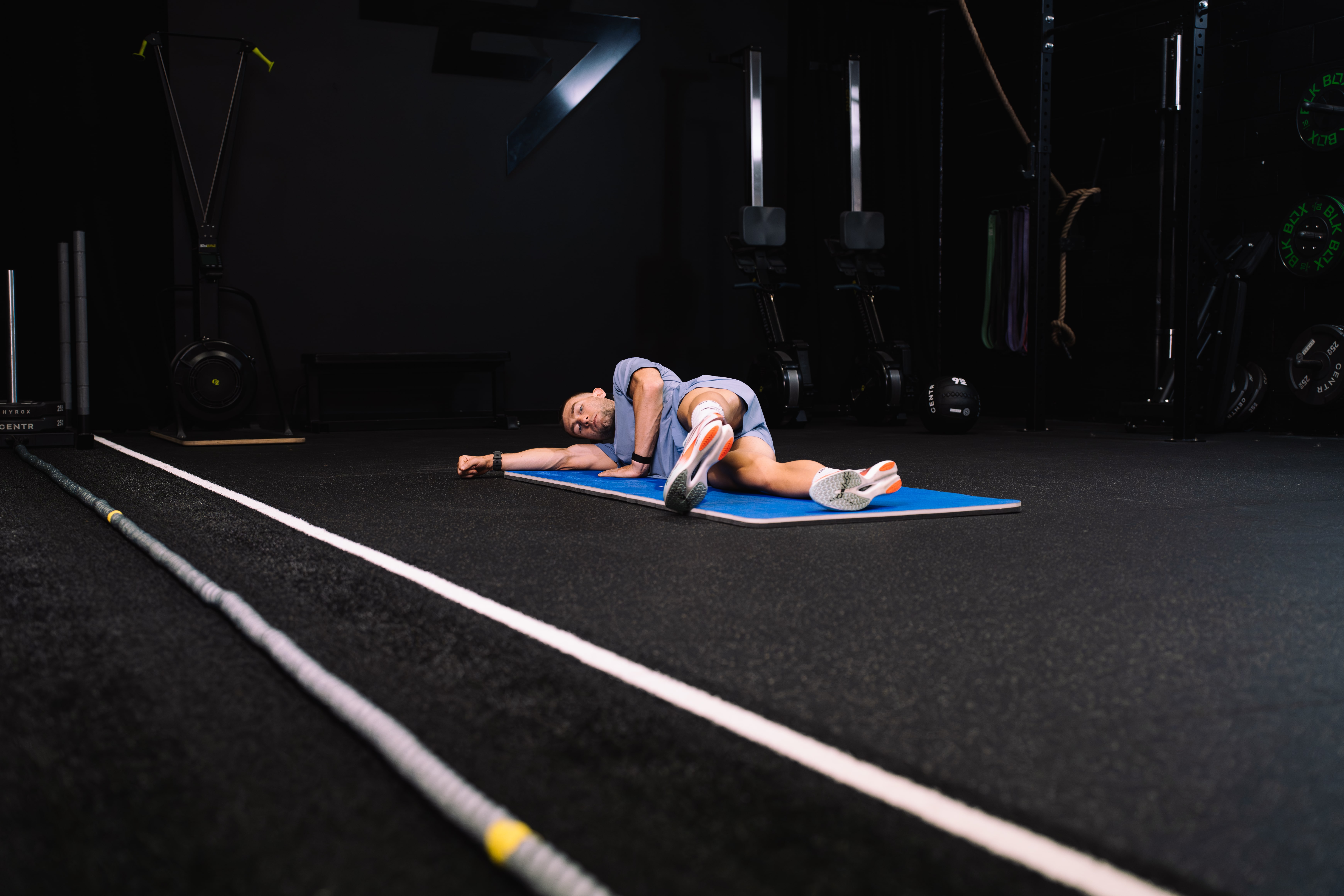
Whether you’ve just ticked off a fast 5K on the treadmill or a leisurely 20 miles out on the trails, your following activities will likely include showering, eating, drinking, and proceeding with the rest of your day. But does stretching cut?
An important post-run activity that is often ignored, stretching helps to improve our recovery and flexibility and even reduces our risk of injury. What’s more, it’s neither as dull nor as time-consuming as some runners may think.
Benefits of Post-Run Stretching
Above all, stretching after a run helps to promote blood flow to the muscles, which enables them to repair and recover more quickly from the workout. It also helps to remove lactic acid and waste products and reduce any muscle and joint soreness that could negatively impact your next run.
In addition, gentle post-run stretching can improve the flexibility of your running muscles and your range of motion, leaving you less susceptible to muscle strains and overuse injuries.
Dynamic vs. Static Stretches for Runners
Don’t forget to integrate dynamic stretches into your pre-run routine, too, to prepare your body for the activity ahead. Just like post-run stretches, these dynamic warm-up movements can reduce your risk of muscle strain injuries and contribute to better running performance.
Although static stretches are recommended post-run, it is actually counter-productive to do them pre-run, so always stick to the dynamic kind before you head out to clock some miles.
Static Stretching vs. Dynamic Stretching
Static stretching involves moving a joint or muscle as far as you can and then holding it there for a period of time. For example:
Reaching down to touch your toes, and once you’ve gone as far as you can, holding that position for a set duration.
Dynamic stretching involves moving your joints or muscles in specific motions for a set number of reps. For example:
Swinging each of your legs back and forth 10 to 15 times before a run.
There’s been a bit of back and forth in the fitness and research community regarding which type of stretching is better to do pre-workout. But the consensus seems to be that dynamic stretching is most helpful pre-run, and static stretching is most beneficial post-run.
What Is The Best Way To Stretch?
You don’t have to be a stretching expert to perform a stretch well. To make the most of the movements and to avoid any risk of injuring yourself, you’ll do well to consider the following advice.
Ease into each stretch, don’t bounce on it or force it.
Never push a stretch to such an extent that you’re in discomfort or pain.
Hold each post-run stretch for up to 30 seconds. If you’re stretching your legs, repeat the stretch once or twice on each side.
Avoid stretches that can hamper your performance or increase your risk of a pull or tear.
The stretches outlined below are great options for runners. Again, stick to dynamic stretches before a run and save the static stretches for after you've finished.
Related Reading
The Dos and Don’ts of Stretching for Runners
Many runners overlook stretching, which can lead to tight, imbalanced muscles and increase the risk of injury. Sarajean Rudman, a yoga instructor and runner, emphasizes the importance of stretching to improve performance and prevent injuries.
Stretching keeps your body flexible, allowing it to move more efficiently. This helps you avoid fatigue and perform better during your runs.
Why Stretching Before and After a Run Isn’t Enough
Rudman notes that many runners only stretch around their workouts, which isn’t enough to maintain flexibility and prevent injuries. To see real benefits, you need to stretch consistently throughout the day.
Rudman recommends starting your day with dynamic stretches and incorporating them into your routine at midday and before bed. This helps keep your body limber and ready for your runs.
Dynamic Stretches Are Key
Dynamic stretches involve movement to improve flexibility and prepare your body for exercise. Rudman explains that dynamic stretching builds long-lasting flexibility because it consists of moving joints through their full range of motion.
On the other hand, static stretches, where you hold a position for some time, don’t offer the same benefits and can even cause problems if done incorrectly, such as aggravating inflamed areas.
Pain-Free Stretching
Stretching should never be painful. Rudman warns against pushing past your limits, as this can lead to injury and decreased performance. Instead, aim to find your “edge”, a point where you feel a stretch without discomfort. Stay at your edge and breathe through the stretch to help improve flexibility over time.
Balance Your Stretches
Avoid focusing on just one muscle group when you stretch. Rudman advises that you stretch both the front and back of a muscle group to avoid imbalances. For example, if you’re stretching your quads, make sure also to stretch your hamstrings. This will help you stay flexible and reduce your risk of injury.
Dos and Don’ts of Stretching for Runners
To get the most out of your stretching routine, follow these tips from Rudman:
Do stretch daily
Don’t focus solely on static stretching
Do stretch frequently, not just once a day
Don’t overstretch one muscle group
Do stretch the front and back muscles evenly
Don’t stretch until it hurts
Do stay aware as you stretch, keeping your breath steady
Don’t skip stretching for a longer run
Do use mostly dynamic stretches
Don’t do the same stretches every day
Do incorporate foam rolling and self-myofascial release techniques
Don’t try to stretch an injury; seek medical attention if needed
Do what feels suitable for your body
Don’t stress about being “good” at stretching. A little every day will get you where you need to go
A Simple Stretching Routine for Runners
Here’s a quick and effective stretching routine for runners. Perform the stretches in the order listed, as they follow a natural progression. Hold each stretch for 2–4 seconds, then return to the start position and repeat 8–12 times.
You can do this routine before a run to prepare your muscles or after to help them recover. Remember to be gentle and encourage your muscles to lengthen without forcing the stretch.
Related Reading
Golf Shoulder Stretches
Stretching for Bodybuilders
Golf Stretches for Back
Static Stretches for Football
Stretching for Runners
Golf Stretches for Rotation
Stretches for Gymnastics
Pre Golf Stretches
25 of the Best Stretches for Runners
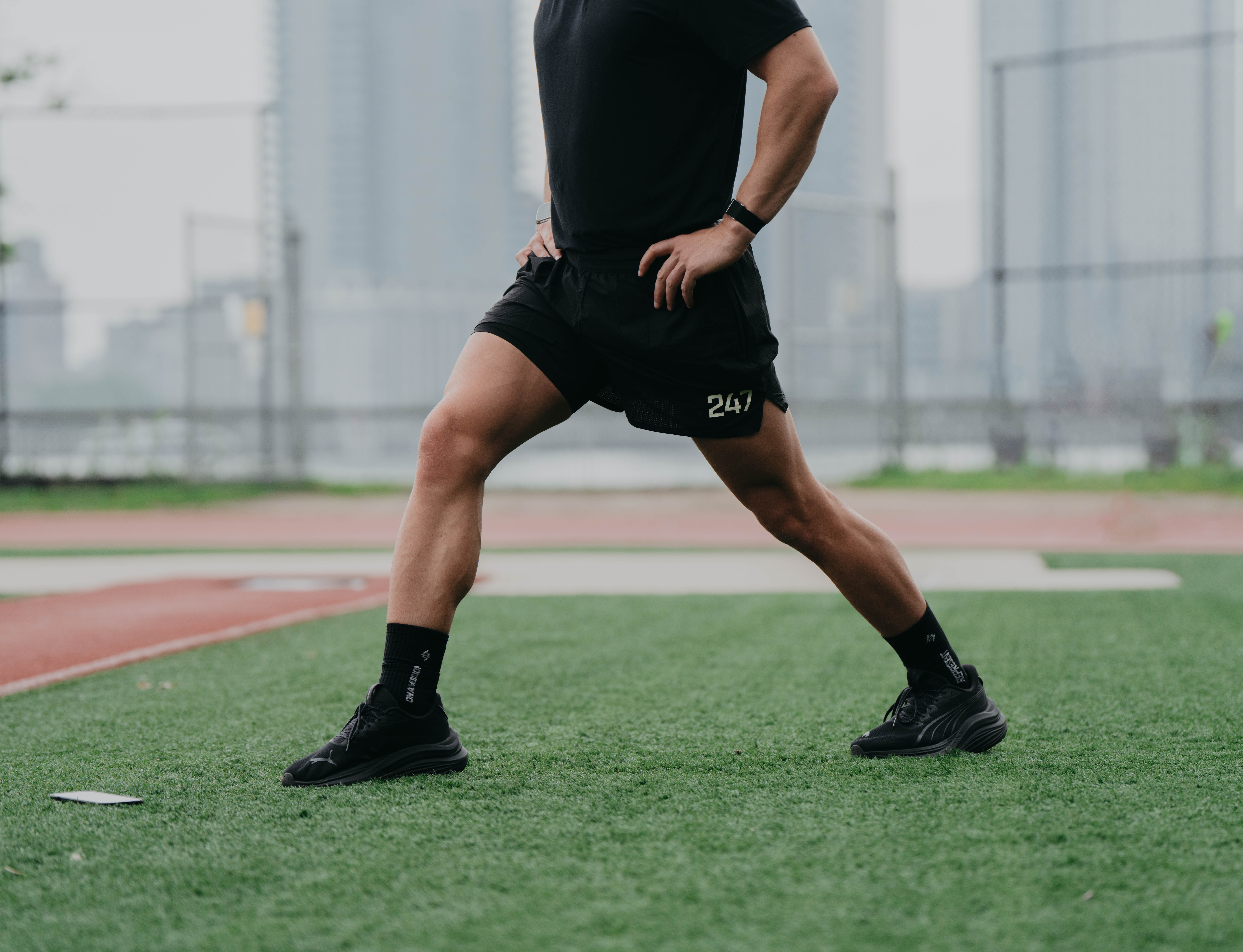
These stretches are designed to target various muscle groups and can be used before or after your run to help improve flexibility, reduce the risk of injury, and enhance performance. Follow along with these step-by-step instructions to incorporate each stretch into your routine.
1. Lying hamstring stretch
Targets: Hamstrings
How to:
Lie on your back with both legs straight
Bend one knee and pull it towards your chest
Straighten the leg as much as you can without pain, keeping the other leg flat on the floor
Use a non-stretching band or cord around the foot of your bent leg to help with the stretch. You should feel the stretch along the back of your thigh.
This stretch is great for after your run to help release tension in your hamstrings.
2. Straight leg calf stretch
Targets: Calves
How to:
Stand facing a wall
Place your left foot forward with the knee bent and your right leg straight back
Press your right heel into the floor and lean forward until you feel a stretch in your calf
Use this stretch after your run to target your calves and release any tightness.
3. Soleus (lower calf) stretch
Targets: Soleus muscle (lower calf)
How to:
Begin in the same position as the straight leg calf stretch
Bend both knees and lean back slightly, keeping your heels on the floor. You should feel the stretch in your lower calf.
Include this stretch after your run to target the lower calf muscle.
4. Lying glute stretch
Targets: Glutes
How to:
Lie on your back with your knees bent and feet flat on the floor
Place the ankle of one leg on the opposite knee and grasp the thigh of your bottom leg, pulling both legs into your chest. You'll feel a stretch in the muscles around the side of your buttocks.
This stretch is great for after your run to help release tension in the glutes.
5. Groin stretch
Targets: Groin muscles
How to:
Sit on the floor and place the soles of your feet together, letting your knees drop out to the sides.
To intensify the stretch, bring your feet closer to your body.
This stretch is great for before or after your run to target the groin muscles.
6. Standing quadriceps stretch
Targets: Quadriceps
How to: Stand on one leg and bend the knee of your opposite leg, grasping your ankle with one hand. Keep your body straight and flex your foot to maximize the stretch. You can use a wall for balance.
Use this stretch before or after your run to target your quadriceps.
7. Kneeling quadriceps stretch against a wall
Targets: Quadriceps
How to:
Kneel on the floor with a wall behind you
Bend the knee of your rear leg and rest the toes of your rear foot against the wall
Extend forward from the hips to feel a stretch at the front of the thigh
Use this stretch after your run to target your quadriceps.
8. Bent-leg standing hamstring stretch
Targets: Hamstrings
How to:
Stand on one leg and place the other foot on a chair or ledge, bending your upper leg deeply
Keep your chest low and gently try to straighten your upper leg.
This stretch is great for after your run to target the hamstrings.
9. Cross-legged sitting glute stretch
Targets: Glutes
How to:
Sit in a cross-legged position with your back upright
Keep your shins parallel to your body and bend forward with your arms outstretched
This stretch is great for after your run to target the glutes.
10. Downward-facing dog
Targets: Hamstrings, calves, Achilles tendons, back, and shoulders
How to:
Start on all fours with your hands shoulder-width apart and feet hip-width apart
Keep your legs straight and hips high as you lengthen your heels towards the ground
Press your palms and fingers flat into the ground
Enhance the stretch by bending alternate knees
This stretch is great for after your run to target multiple areas.
11. Lying spinal twist
Targets: Glutes, lower back, upper back, shoulders, arms, and chest
How to:
Lie on your back with both legs straight
Hug one knee towards your chest and hook that foot behind the opposite knee
Roll to one side so your knee touches the floor
Extend your arm towards the floor on the opposite side and turn your head to look along it
This stretch is great for after your run to target multiple areas.
12. Forward-bend shoulder stretch
Targets: Hamstrings, calves, shoulders, chest, and arms
How to:
Stand with your feet hip-width apart and fold over your body at the hips, interlacing your fingers together
Keep your head facing the ground, quads tensed, and neck relaxed
This stretch is great for after your run to target multiple areas.
13. Single-leg pelvic tilt stretch
Targets: Low back and gluteus maximus
How to:
Lie on your back with your legs straight
Flex one knee and pull it towards the chest
Place your hands behind your thigh to assist
This stretch is great for after your run to target the lower back and glutes.
14. Long adductor stretch
Targets: Adductor longus, adductor magnus, gracilis
How to:
Lie on your back with your legs extended and wrap a rope around the arch of one foot
Point the opposite foot inward and lift the leg to the side with the help of the rope
This stretch is great for before or after your run to target the adductors.
15. Hip flexor stretch
Targets: Rectus femoris, psoas
How to:
Kneel on one knee and place the other foot forward
Keep your pelvis and back steady and move forward while squeezing your butt and hamstrings
Use your hands to pull the heel towards your buttocks if you can, gently
This stretch is great for before or after your run to target the hip flexors.
16. Short adductor stretch
Targets: Pectineus, adductor brevis, proximal adductors
How to:
Sit with the soles of your feet pressed together
Tighten the muscles on the outside of your hips to spread your thighs apart
Use your arms to press down between your knees
This stretch is great for before or after your run to target the short adductors.
17. Composite upper calf, hamstrings-neural stretch
Targets: Gastrocnemius, hamstrings
How to:
Sit with legs extended and six inches apart
Loop the rope around the ball of one foot
Straighten the leg and pull the toes toward you
For a deeper stretch, lean forward
This stretch is great for after your run to target the calves and hamstrings.
18. Bent-knee calf stretch
Targets: Achilles tendon, soleus
How to:
Stand on one leg with the knee slightly bent
Place the other foot behind the calf and hold the stretch
This stretch is great for after your run to target the Achilles tendon and soleus.
19. Standing quad stretch
Targets: Quadriceps
How to:
Stand with your feet together
Raise one foot and grab it with the same-side hand
Pull the heel towards your glutes
This stretch is great for before or after your run to target the quadriceps.
20. Pigeon stretch
Targets: Hip flexors
How to:
Sit on the floor with your feet together and knees out wide
Adjust your positioning so one foot and shin stay put while the other leg is straightened behind you
Lower your upper body towards the ground
This stretch is great for after your run to target the hip flexors.
21. Figure-four hip flexor stretch
Targets: Hip flexors
How to:
Lie on your back with your feet planted and knees bent
Bring one foot over the opposite knee
Raise the opposite leg and hold onto the back of the thigh
Gently draw the thigh towards you
This stretch is great for after your run to target the hip flexors.
22. Seated single-leg calf stretch
Targets: Calves
How to:
Sit on the floor with your feet together and knees out wide
Straighten one leg and hinge at the hip towards it
Grab the big toe and flex the foot
This stretch is great for after your run to target the calves.
23. Downward-facing dog
Targets: Low back, hamstrings, calves, and feet
How to:
Start on all fours and push your glutes up
Straighten your arms and legs to create an inverted V-shape
Paddle out your feet to deepen the stretch
This stretch is great for after your run to target multiple areas.
24. Child’s pose
Targets: Back of the torso and shoulders
How to:
Kneel on a mat with the toes pointed behind you
Bend forward at the waist and lower your chest to your knees
Stretch the arms above the head
This stretch is great for after your run to target the back and shoulders.
Related Reading
Golf Shoulder Stretches
Stretches Before Bench Press
Stretching for Bodybuilders
Golf Stretches for Back
Golf Stretches for Seniors
Static Stretches for Football
Stretching for Runners
Stretches for Weightlifting
Golf Stretches for Rotation
Stretches for Gymnastics
Dynamic Stretches Before Workout
Pre Golf Stretches
Improve Your Flexibility with Our Mobility App Today | Get 7 Days for Free on Any Platform

Pliability offers a fresh take on yoga, tailored for performance-oriented individuals and athletes. Our app features a vast library of high-quality videos designed to improve flexibility, aid recovery, reduce pain, and enhance range of motion.
Pliability: Daily Mobility & Recovery App
Pliability provides daily-updated custom mobility programs for those interested in optimizing their health and fitness. It also includes a unique body-scanning feature to pinpoint mobility issues. If you're feeling limited by pain or the ability to move, Pliability aims to complement your existing fitness routine and help you move better.
Sign up today to get 7 days absolutely for free, on iPhone, iPad, Android, or on our website to improve flexibility, aid recovery, reduce pain, and enhance range of motion with our mobility app.
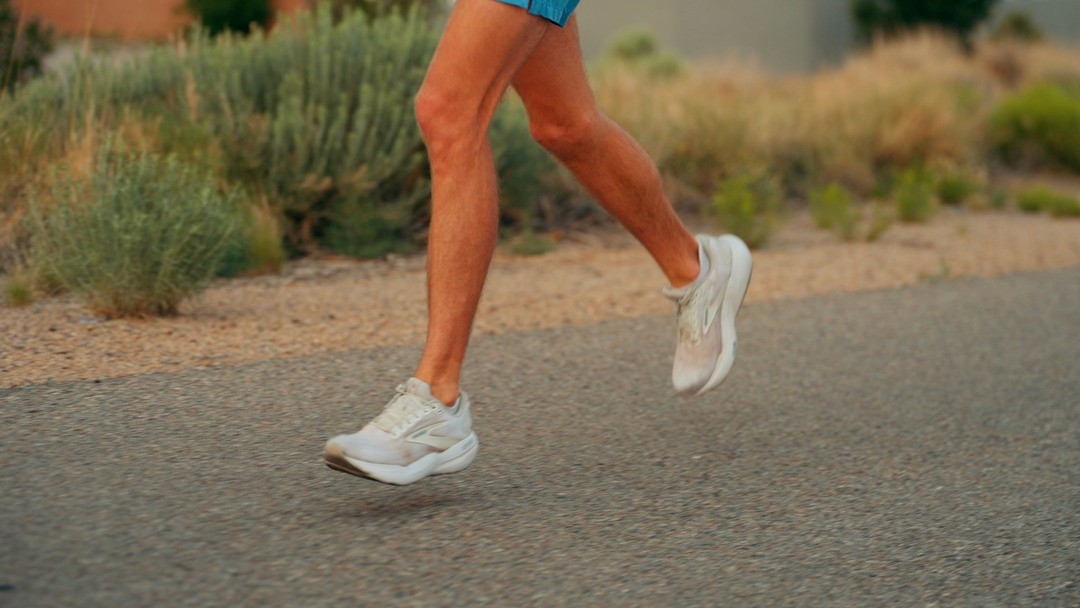





Move better in 10 minutes a day.
10,000+ five-star reviews.