


LEARN
pliability
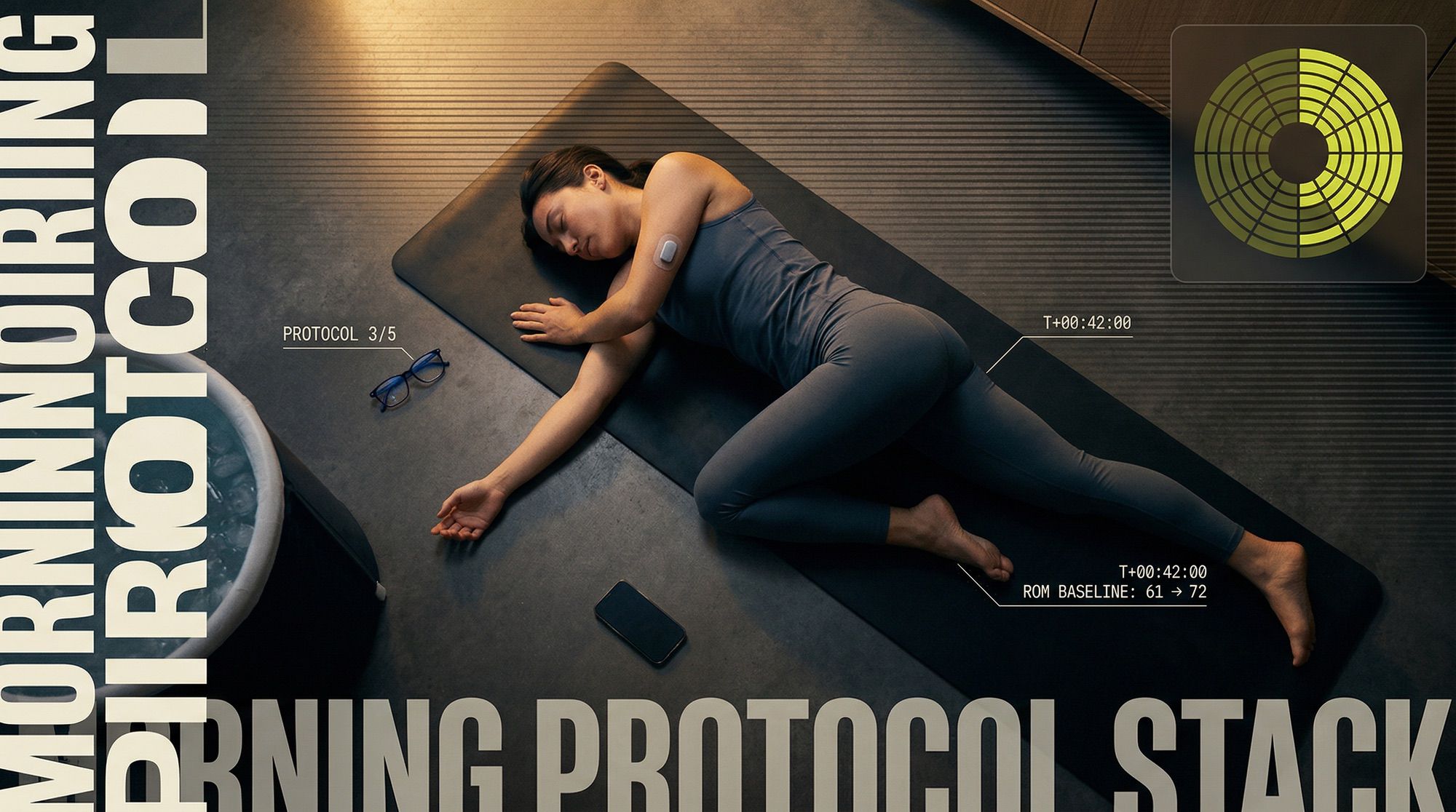
I've been deep in the optimization game for about four years now.
It started the way it starts for most people — a Huberman episode, a Peter Attia podcast, a growing sense that there were levers for health and performance that I wasn't pulling. By 2023, I had what I thought was a dialed-in morning protocol: cold plunge, morning sunlight, zone 2 cardio three times a week, a supplement stack I'd built through trial and error.
I was tracking everything. HRV trending upward. Resting heart rate in the low 50s. Sleep scores consistently above 85. Glucose flat and stable on my CGM.
On paper, I was optimized.
In practice, something wasn't adding up.
I was 36 and already noticing that my body felt different. Stiffer in the mornings. Tighter after workouts. My squat depth had been creeping upward for months. My shoulders felt restricted during overhead work. I'd started unconsciously modifying movements in the gym — not because anything hurt, exactly, but because my range wasn't there anymore.
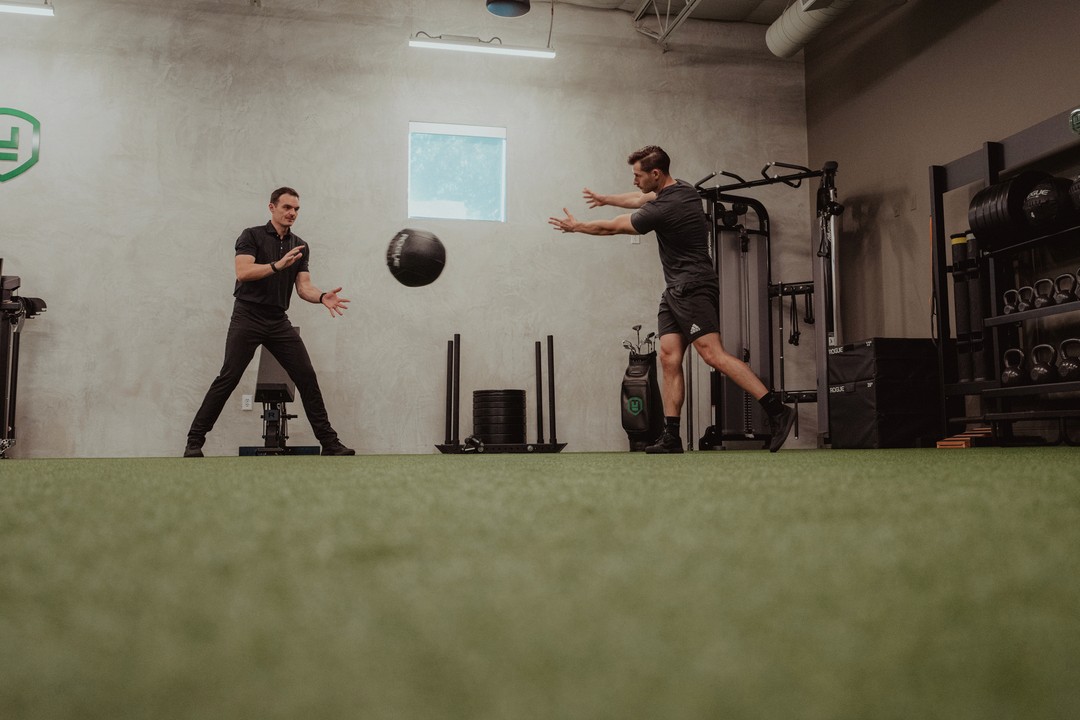
I mentioned it to a friend who competes in HYROX — a global fitness race that combines running with functional fitness stations. He asked me a question that stuck with me: "When's the last time you actually measured your mobility?"
I didn't have an answer. I'd spent four years measuring everything else. My mobility had never been on the list.
The gap nobody talks about
I started digging into the research and found something that surprised me.
A landmark study from 2012 — published in the European Journal of Preventive Cardiology — tested over 2,000 adults aged 51 to 80 on their ability to sit down on the floor and rise back up without using hands, knees, or forearms for support. The subjects who scored lowest had a significantly higher mortality risk over the study's follow-up period compared to those who scored highest.
The researchers weren't measuring cardio fitness or muscular strength. They were measuring something more basic — the ability to move through a full range of motion with control.
Additional research has reinforced the connection. Studies published in aging and physical activity journals have found that musculoskeletal flexibility — particularly through the hips, spine, and shoulders — is independently associated with reduced mortality risk, fall prevention, and functional independence as we age.
None of this was new to sports medicine. Physical therapists and movement specialists have understood it for years. But it was completely absent from the biohacking and longevity conversation I'd been immersed in.
I was optimizing around a blind spot.
Think about it: zone 2 cardio strengthens the cardiovascular system. Resistance training builds muscle and preserves bone. Cold exposure triggers hormetic stress adaptations. These are all valuable. But none of them restore the structural mobility that starts degrading after 30.
Every year, adults lose measurable range of motion — in the hips, spine, shoulders, ankles. It's slow. It's invisible. And it compounds. The stiffness most people attribute to "getting older" isn't inevitable aging. It's accumulated mobility debt that nobody bothered to address because nobody was measuring it.
I was pouring cold water on my body every morning while my hip flexors were quietly shortening, my thoracic rotation was declining, and the foundational range of motion I'd taken for granted in my twenties was eroding underneath all the optimized metrics.
What I was missing from the protocol
When I looked at what sports medicine physicians actually recommend for long-term movement health, the prescription was clear and well-established:
Daily exposure to a combination of passive stretching — long, gravity-supported holds that lengthen deep connective tissue and fascia — alongside active mobility work that builds strength and control within range of motion. Layered with breathwork for nervous system downregulation, which supports tissue recovery and flexibility adaptation.
The science behind it is straightforward. Passive holds create structural change in fascia and connective tissue over time. Active mobility reinforces joint stability in newly accessed ranges. Breath-led recovery shifts the nervous system from sympathetic (stress, output) to parasympathetic (recovery, adaptation) — which is when the actual remodeling happens.
Physical therapists prescribe this routinely. The challenge is that structured mobility work through a PT runs $80 to $150 per session, with two sessions per week recommended for meaningful progress. Over three months, that's $2,000 to $3,600 — plus scheduling, commuting, and fitting it around training and work.
And most of us aren't injured. We don't have a referral. We don't have insurance coverage for "I want to maintain range of motion as I age." We just have a slow decline that hasn't become a problem yet.
What I needed was a structured, measurable system I could run daily on my own time — the way I use a CGM for glucose or a wearable for HRV. A way to baseline, follow a protocol, and track whether it was working.
I found one.
Adding the third piece to the stack
A few months ago, I started using pliability — an app built around stretching and mobility programming that's structured more like a training system than a casual stretch library.
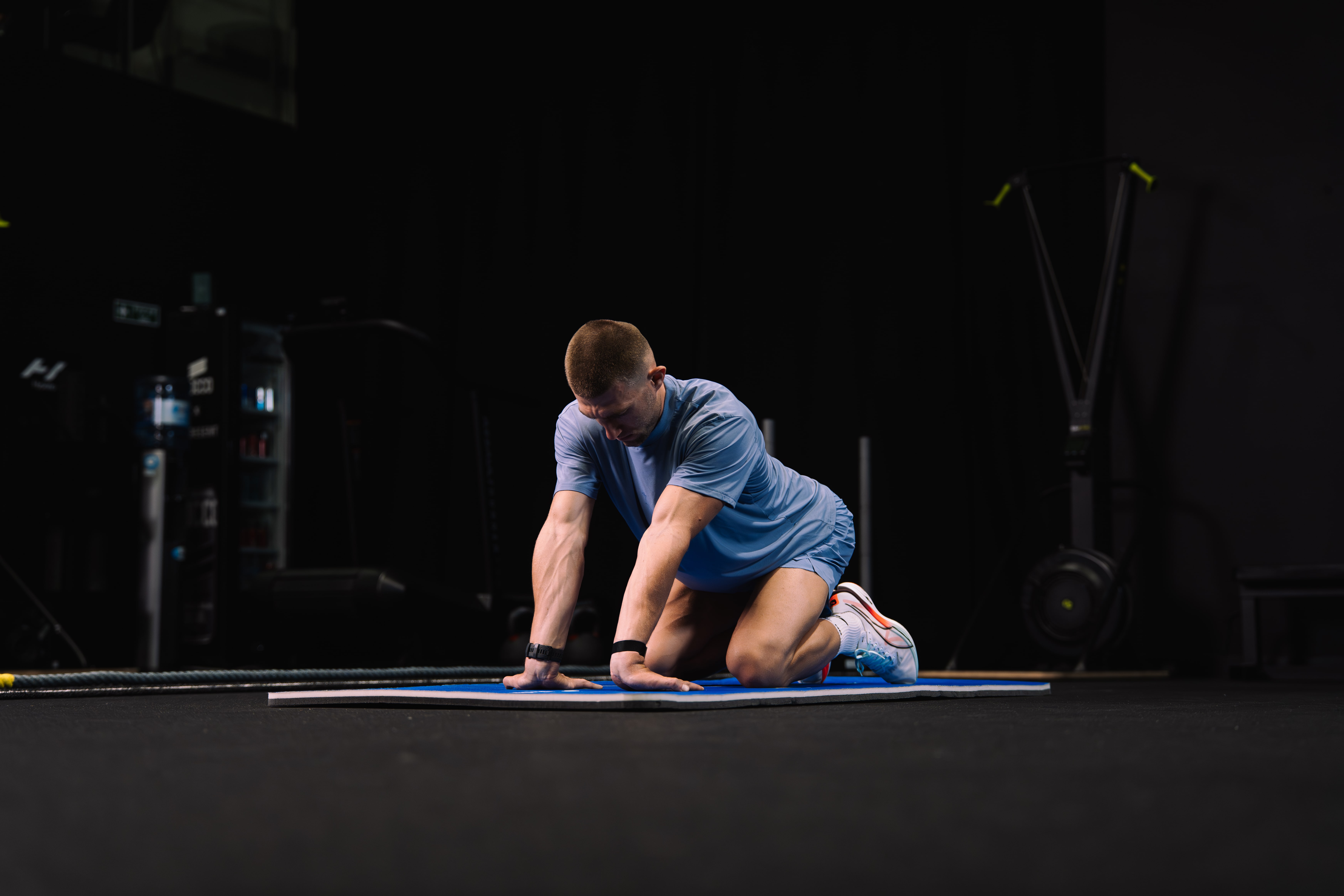
The first thing I did was take their Mobility Test. It's a three-minute movement assessment — no equipment, just you on the floor — that evaluates range of motion across your major joints. You get a score on a 0 to 100 scale.
I scored 61.
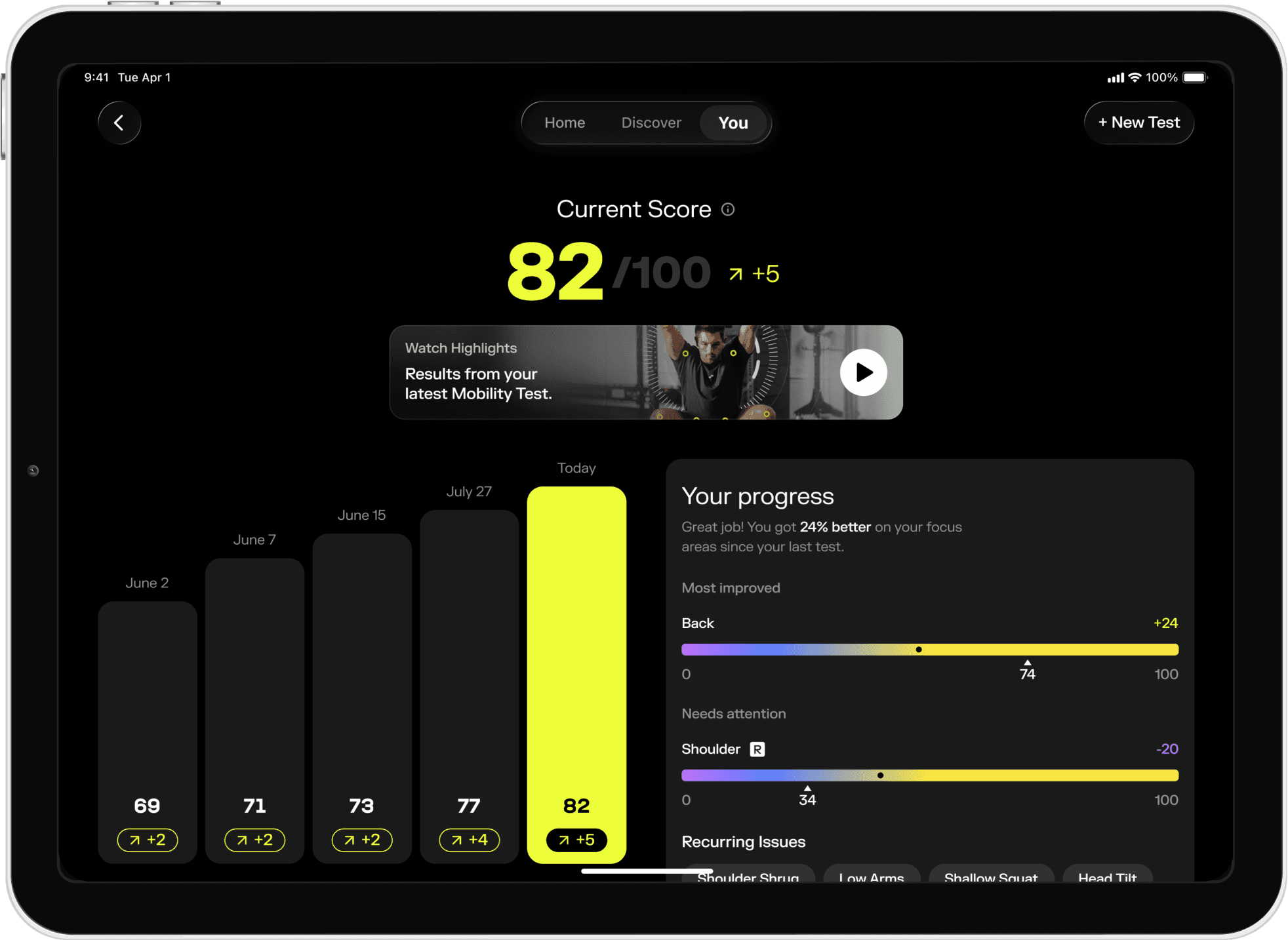
For context, I'd spent four years optimizing every measurable aspect of my health. I'd invested thousands in wearables, supplements, and protocols. And my structural mobility scored a 61 out of 100.
That number landed differently than a bad HRV day or a glucose spike. Those fluctuate. A mobility score of 61 represents years of accumulated restriction — and it doesn't improve on its own.
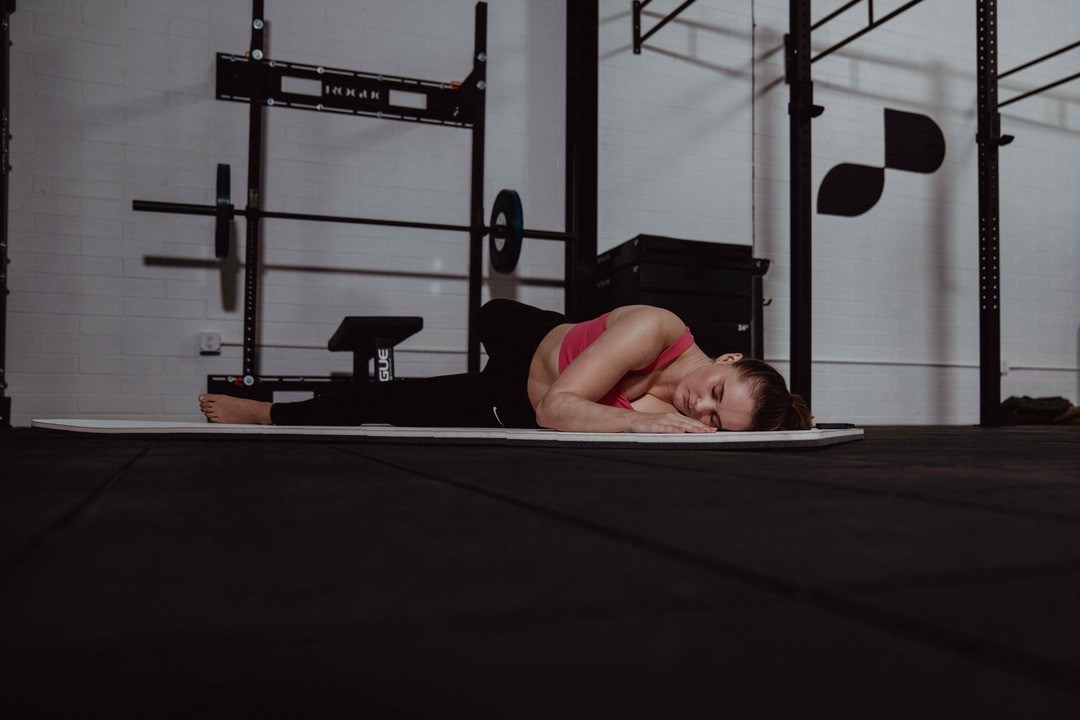
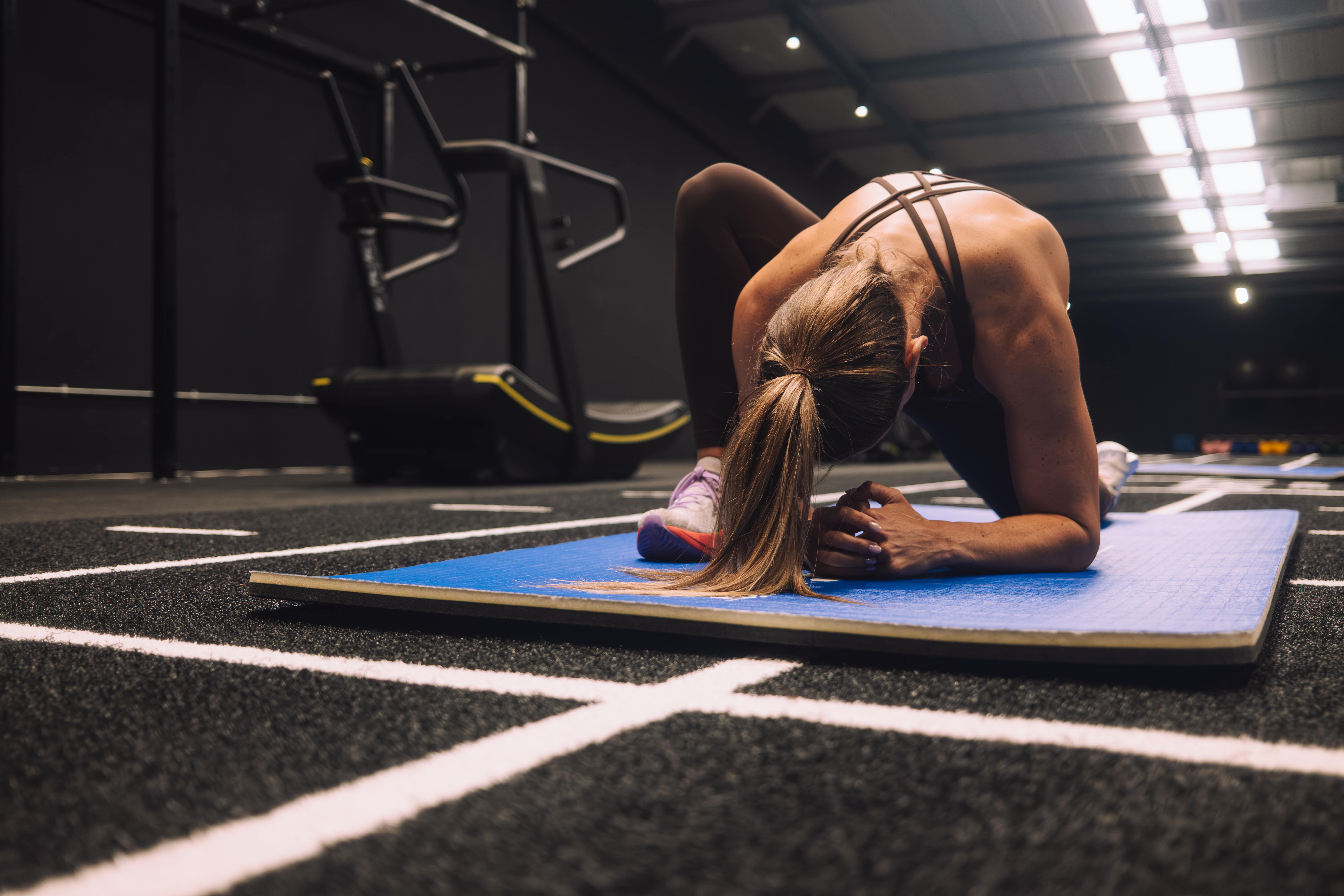
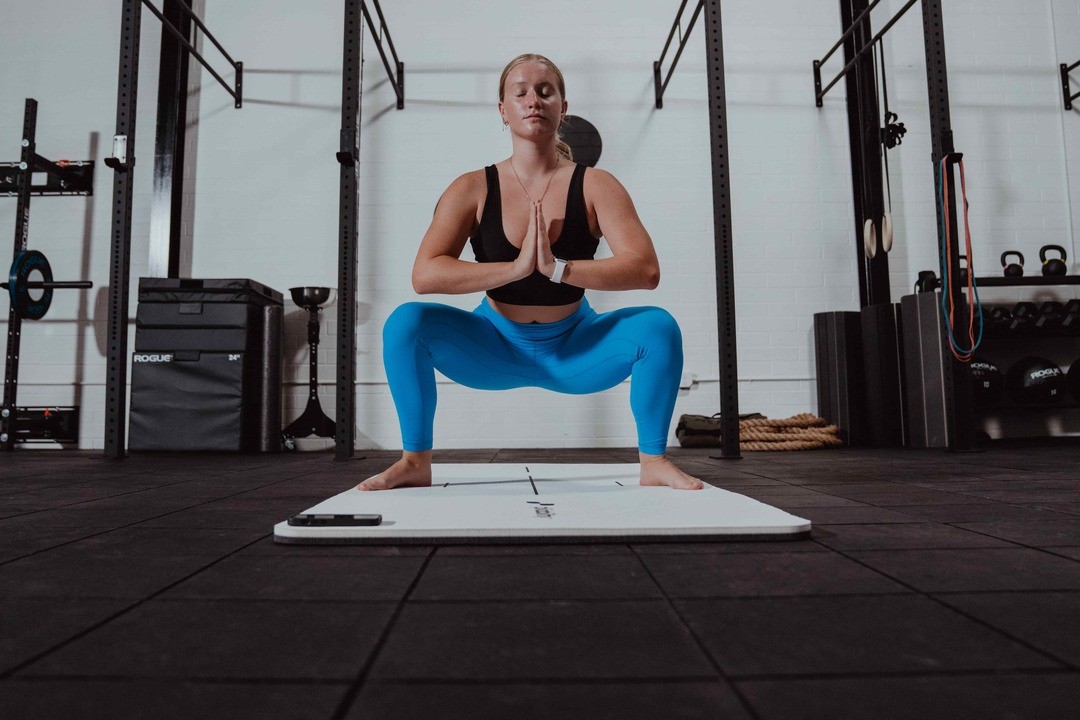
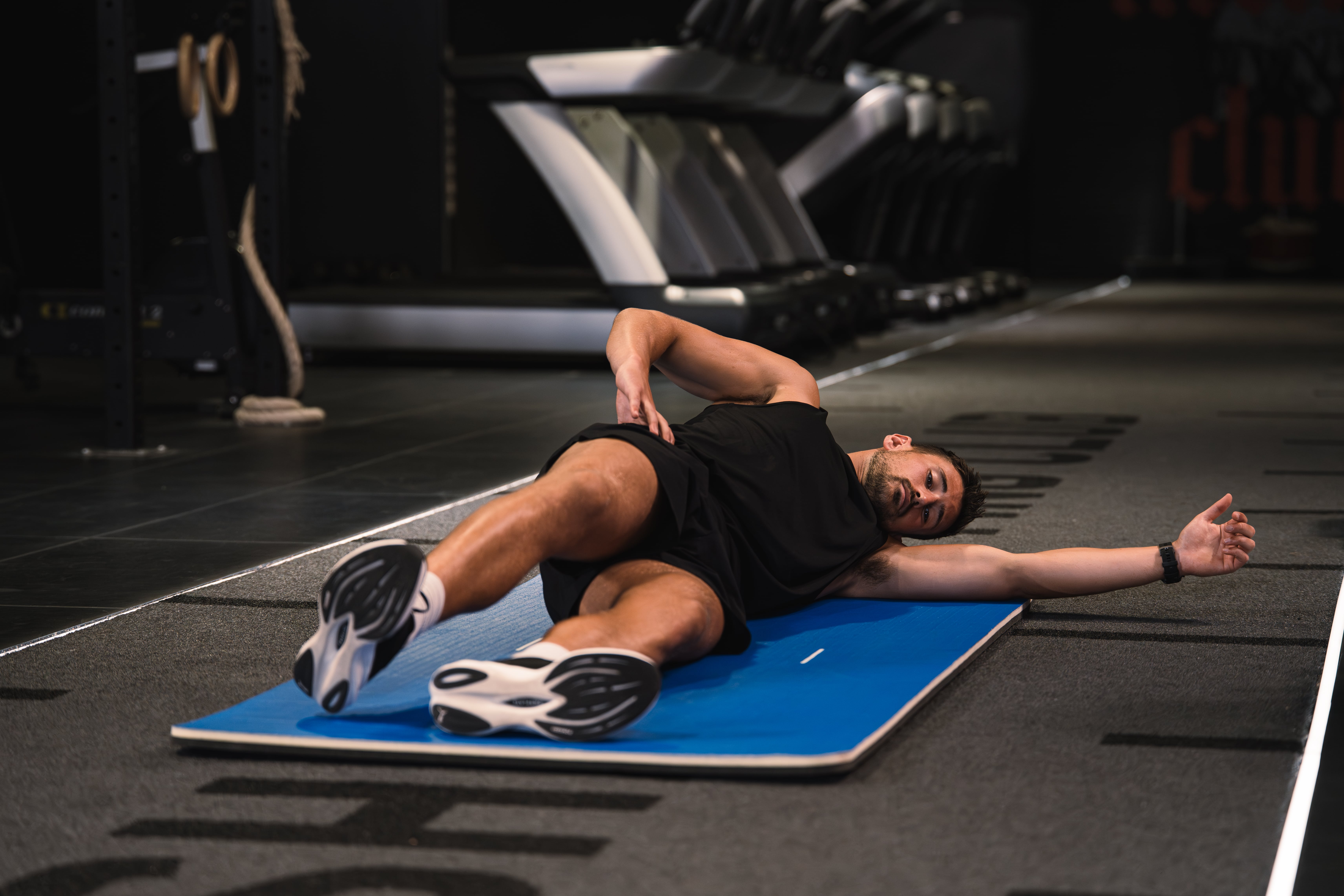
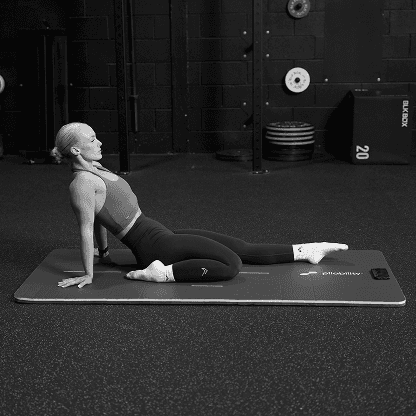
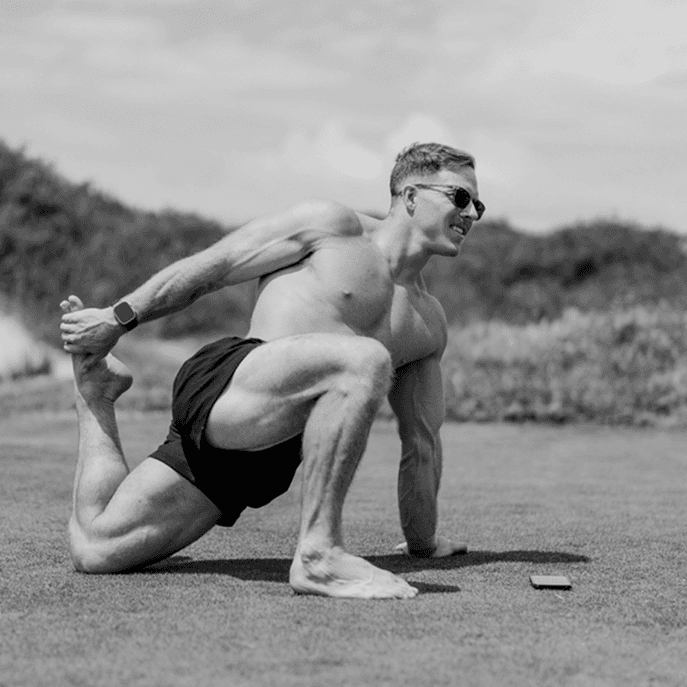
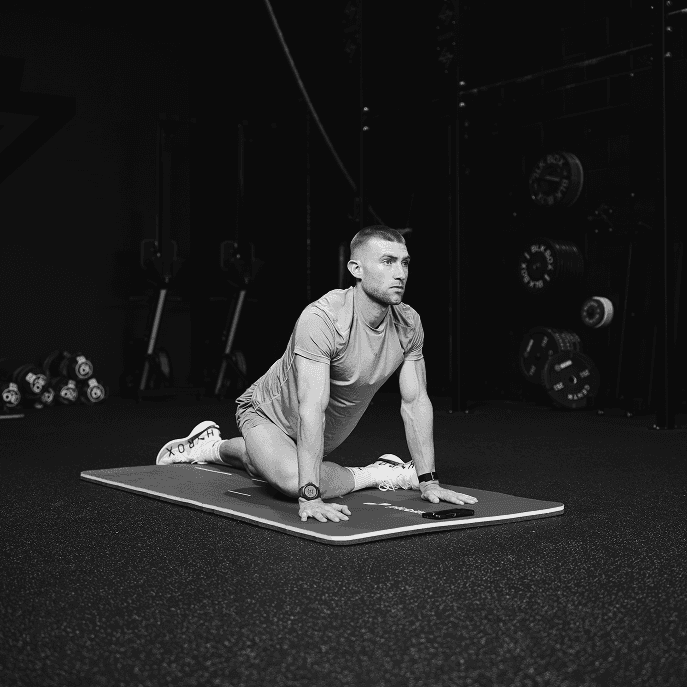
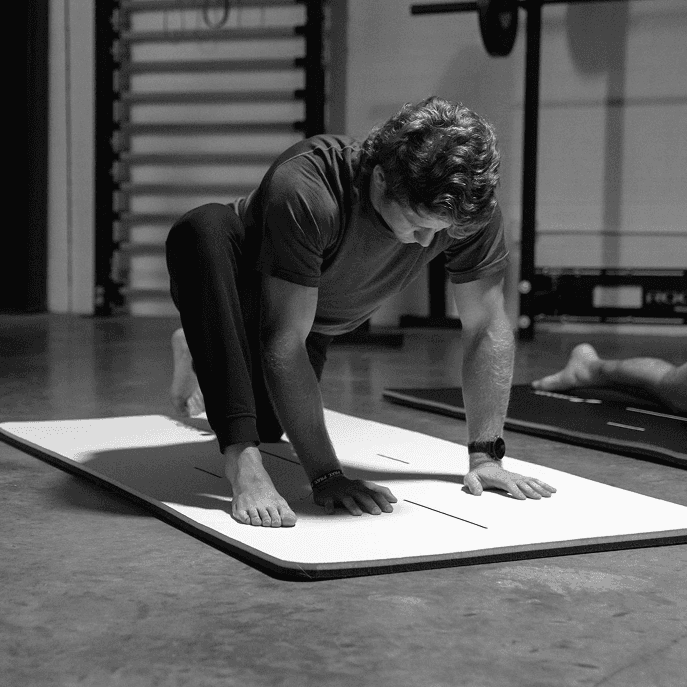
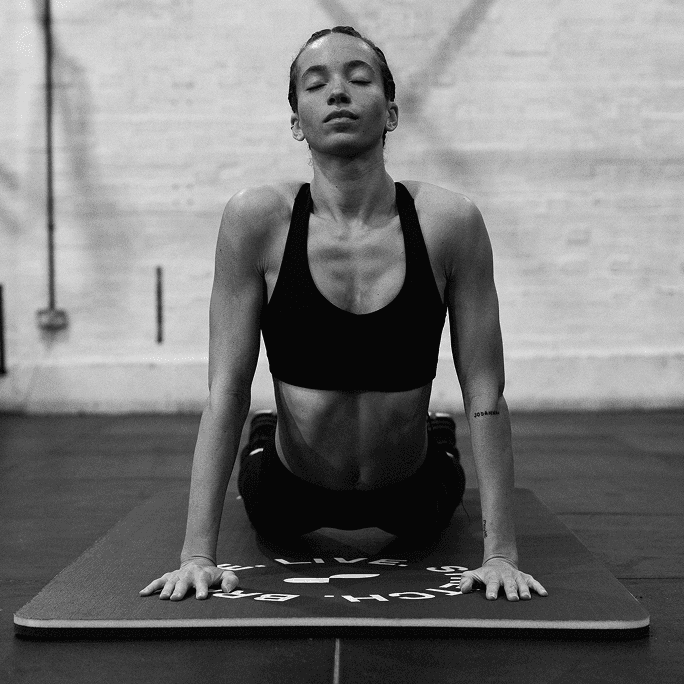
The app built me a personalized daily program based on that score. Sessions run 10 to 15 minutes. They combine passive stretching (long holds that target fascia and deep connective tissue), active mobility (controlled movements that build strength within range), and breath-focused recovery (nervous system downregulation that supports the adaptation).
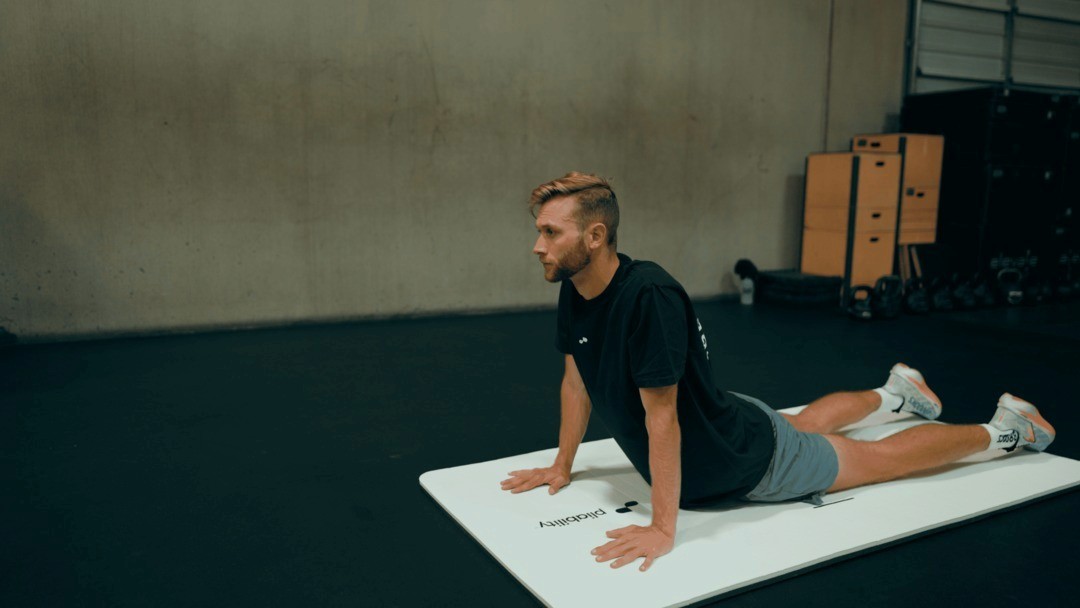
I added it to my morning stack. Cold plunge. Sunlight. Then 10 minutes of guided mobility work on the floor.
pliability is the official stretching partner of HYROX — their programming is used by competitive athletes — but the core method applies to anyone. It's built on the same sports science principles physical therapists use, just delivered through an app that costs less per month than a single PT session.
What changed — and what I can measure
Here's where it gets concrete.
After six weeks, I retested. My score went from 61 to 72. That's not a subjective feeling — it's a measurable improvement in range of motion across specific joints.
The things I noticed in daily life tracked with the numbers. My squat depth improved without changing my strength programming. Overhead pressing felt more natural — my shoulders had room they didn't have before. The morning stiffness I'd been attributing to "just getting older" was largely gone by week three.
But the thing that shifted my perspective most was the realization that I could measure this the way I measure everything else.
I check my HRV every morning. I look at my sleep score. I track glucose response after meals. Now I have a mobility score that sits alongside those numbers — and it's the one that's actually improving in a structural, compounding way.
The cold plunge feels great. I still do it every morning. But it's a signal — a short-term nervous system stimulus. The mobility work is structural. I'm building range of motion that I would otherwise be losing every year. That's not a feeling. It's a measured trend line moving in the right direction.
What other people are finding
I'm not an isolated case. Since I started talking about this publicly, I've heard from dozens of people in the longevity and fitness space who had similar blind spots.
A 42-year-old CrossFit athlete who'd been competing for eight years and never once assessed mobility. She scored 59. After two months of daily sessions she retested at 73 and said her overhead squat — a movement she'd been scaling for years due to restriction — was finally at full depth.
A 48-year-old executive who ran a disciplined health protocol — sauna, cold plunge, CGM, quarterly bloodwork — but had never considered structural health. He scored 54. He described it as the most jarring health data point he'd received in years because everything else looked optimized. He's three months in and tracking at 67.
A 34-year-old runner who'd been through two rounds of physical therapy for hip tightness. Sessions were $120 each and the gains faded between appointments. She started pliability as a daily maintenance protocol and has maintained her PT-level range improvements for four months at a fraction of the cost.
These aren't dramatic transformation stories. They're what happens when you apply the same principle to mobility that the biohacking community already applies to everything else: measure it, build a protocol around it, track the trend, and compound the gains.
The assessment takes three minutes
If you've built any kind of health or longevity protocol and you've never baselined your mobility, there's a gap in your data.
It might be a small gap. Maybe you're naturally mobile and your score reflects it. But most people who train hard, sit at desks, or are simply north of 30 find that their structural health is quietly lagging behind the metrics they've been watching.
The Mobility Test is free. Three minutes. You get a number — an actual, specific, testable score that represents where your structural health stands today. From there, you can decide whether it warrants the same attention you give your sleep, your heart rate, and your metabolic health.
I wish I'd taken it four years ago when I started building my stack. I would have caught the decline earlier and started compounding in the other direction sooner.
The one metric I wasn't tracking turned out to be the one my body needed most.
If you want to get your own 3 minute mobility assessment, visit the pliability mobility test page.






Move better in 10 minutes a day.
10,000+ five-star reviews.